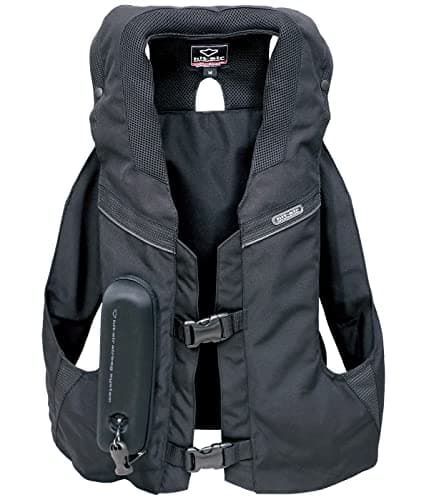
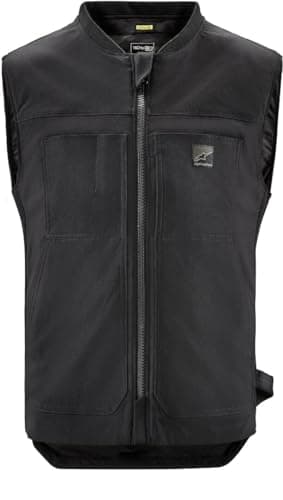
An airbag vest is the closest thing motorcycling has to a seatbelt: in a crash it inflates around your neck, chest and spine in a fraction of a second, spreading and absorbing force across the parts of you that matter most. Independent research and racing experience both point the same way — it is the single biggest protection upgrade a street rider can add. The two vests here are mechanical (tethered) systems, and prices have finally fallen far enough to take seriously.
The Helite Zip'Free is the more refined pick — wide coverage, a proven mechanical trigger and a reusable CO2 system. The Airobag Lite is the value route into airbag protection at well under the usual price. Both work by a tether clipped to the bike: leave the seat unexpectedly and the cord fires the CO2 cartridge. The one rule that matters — clip the tether every single ride, because an unclipped airbag is just a vest.
The short answer
| # | Product | Best for | Score | Price |
|---|
| 01 | Helite Zip'Free Airbag VestA mechanical airbag vest that fires from a tether clipped to the bike: leave the seat unexpectedly and it inflates around your neck, chest and spine in a fraction of a second. The biggest single protection jump a street rider can buy. | Best mechanical airbag vest | | $759.00·Amazon |
| 02 | Airobag Lite VestA lower-cost tethered airbag vest certified to EN 1621, and a genuine way into airbag protection at well under the flagship price. The trade is a lighter build and less refinement. | Best value airbag vest | | $360.00·Amazon |
#ad · Live prices from the Amazon Product API, as of Jul 18, 2026. Where we have no verified live price we show none — we would rather leave a gap than print a number that has rotted.
In detail
Best mechanical airbag vest
Tethered triggerNeck + chest + spineCO2 inflationReusable
A mechanical airbag vest that fires from a tether clipped to the bike: leave the seat unexpectedly and it inflates around your neck, chest and spine in a fraction of a second. The biggest single protection jump a street rider can buy.
- Protection
- 9.4
- Ease of use
- 7.8
- Coverage
- 9.4
- Comfort
- 8
- Value
- 7.8
Pros
- +Inflates around the neck, chest and back — far more coverage than any hard armor
- +Simple, proven mechanical tether — no batteries to charge
- +Reusable: replace the CO2 cartridge and it's ready again
Cons
- −You must remember to clip the tether every ride
- −Expensive, and the tether can catch if you forget to unclip
Don't buy this if…
…you'll forget to clip the tether every time — an unclipped airbag is just a vest.
Best value airbag vest
Tethered triggerEN 1621 certifiedCO2 inflationLightweight
A lower-cost tethered airbag vest certified to EN 1621, and a genuine way into airbag protection at well under the flagship price. The trade is a lighter build and less refinement.
- Protection
- 8.6
- Ease of use
- 7.8
- Coverage
- 8.4
- Comfort
- 8.2
- Value
- 9
Pros
- +Airbag protection at a fraction of the usual price
- +EN 1621-certified inflatable protector
- +Light and wearable over normal gear
Cons
- −Less coverage and refinement than a premium vest
- −Still requires clipping the tether
Don't buy this if…
…you want the widest coverage and build quality — the premium vests do more.
How tethered airbags work
A coiled cable connects the vest to a fixed point on the motorcycle. In a normal dismount you unclip it; in a crash, the sudden separation pulls a pin that punctures a CO2 cartridge and inflates the vest in roughly 100 milliseconds — before you hit anything. After deployment you replace the cartridge and it's ready again. There are also more expensive electronic airbag systems that use sensors instead of a tether; they need no cable but cost considerably more.
The catch, stated plainly
A tethered vest only protects you if you clip the tether. Build the habit the way you build the habit of a helmet strap — clip on when you sit down, unclip when you stop. If you know you'll forget, an electronic system (not covered here) removes that step at a price. Either way, an airbag complements a back protector; it doesn't replace your jacket's armor.
How we picked
Everyone in this category says they tested twenty helmets. We haven't tested any — and we say so. What we do instead: compile the published DOT, ECE 22.06 and Snell certifications, the manufacturer's fit, weight and shell specs, the CE armor levels, and reputable published reviews, then score each pick against a published rubric. The scores are judgments from documented research — not measurements we took, because we do not run a lab and we are not going to pretend we do. Every certification and spec claim traces to a source we name and link.
Questions
Are motorcycle airbag vests worth it?+
For the protection they add — inflating around the neck, chest and spine in a crash — they are among the highest-value upgrades a street rider can make, and prices have dropped a lot. The main requirement is discipline: a tethered vest only works if you clip the tether every ride.
Tethered vs electronic airbag — what's the difference?+
A tethered vest fires from a cable clipped to the bike; it's simpler, cheaper and needs no charging, but you must remember to clip it. An electronic vest uses sensors and an algorithm to detect a crash and inflate automatically — no cable, but more expensive. Both protect well; the choice is convenience versus cost.
Can I reuse an airbag vest after it deploys?+
Yes — mechanical vests like these are designed to be re-armed by replacing the spent CO2 cartridge (and letting the airbag deflate and repack per the maker's instructions). That makes them a one-time purchase with a cheap consumable, not a single-use item.
Receipts
We do not run a testing lab, and we do not pretend to. Our picks are built from published certifications, manufacturer spec sheets, the standards documents themselves, and reputable published reviews — named and linked above. Where we could not verify something, we say so on the page rather than quietly leaving it out. Read our full method.