Ankle + shift
Motorcycle Boots
Ankle armor and a sole that grips a peg. Short vs tall, waterproof or not, and what actually protects.
We earn a commission when you buy through our Amazon links, at no extra cost to you. It never affects our rankings, and we say so when the cheaper gear is the better buy. How this works.
Ankles are small, complicated joints that heal slowly and hurt forever when they are done wrong. A motorcycle boot exists to stop your foot from folding in a crash and to keep a 400-pound bike from crushing it in a tip-over — jobs a hiking boot or sneaker simply cannot do.
The standard here is EN 13634, the CE certification for motorcycle boots, which tests the whole boot for abrasion, crush and torsional rigidity. Beyond the label, look for a stiff sole that resists twisting, ankle armor on both sides, reinforced toe and heel cups, and a shift pad that survives a season of upshifts. Height matters: a taller boot protects more of the shin and ankle, a shorter boot is easier to walk in.
The category divides by use. Touring/street boots balance protection and walkability with a waterproof membrane; adventure boots are taller and stiffer for standing on the pegs off-road; cruiser boots trade some armor for a classic look and all-day comfort; and race boots go maximum-protection with toe sliders. Price buys a real waterproof membrane, better armor and a sole that lasts — a $90 boot and a $300 boot protect very differently.
There is one more category between a boot and a sneaker. A riding shoe is sneaker-shaped footwear built on a certified chassis — CE EN 13634, with named ankle protection, a rigid insert in the sole and a reinforced toe and heel — for riders whose day has no room for a boot. It protects less than anything else in this hub and a great deal more than the sneakers most commuters actually ride in. Our riding shoes ranking sorts them by the certification each maker is willing to publish.
Women's boots get their own ranking for a reason that is not size range: several men's lines already reach EU 36. What a women's boot changes is the last, the heel, instep and calf shape the boot is built around, and the number on the box, since Alpinestars and Sidi convert the same EU size to US sizes two full sizes apart. Our women's boots ranking applies the same EN 13634 gate to five women's-specific boots and explains how to size by centimeters instead.
The mistake is riding in fashion boots or sneakers because "it's just a short trip" — most crashes happen close to home. Buy a CE-rated boot that fits your riding and read how to choose a boot before you shop the deals.
Everything in this hub
Boots guides & picks
Roundup
The Best Motorcycle Boots
Sport to cruiser boots ranked on ankle protection, sole stiffness and value.
4 picks · 4 with live prices
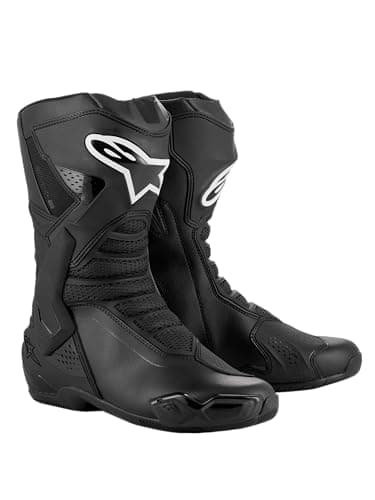
Top pick: Alpinestars SMX-6 V3
$349.95AmazonHead to head
Short vs Tall Motorcycle Boots
Tall vs short boots, decided on protection, coverage and off-bike comfort.
2 picks · 2 with live prices
Top pick: Alpinestars SMX-6 V3
$349.95Amazon- Buyer's guide
Buyer's guide
How to Choose Motorcycle Boots
The boot buying decision in order: certification, armor, sole, height, fit.
Roundup
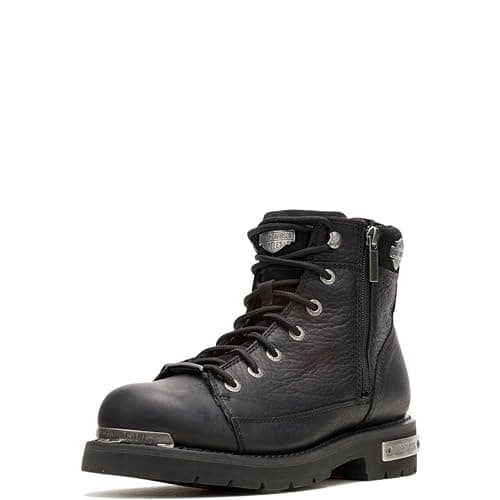
The Best Cruiser Motorcycle Boots
Leather, over-the-ankle riding boots that suit cruiser style, ranked on protection, build and value.
3 picks · 3 with live prices
Top pick: Harley-Davidson Chipman
$119.97Amazon- Buyer's guide
Buyer's guide
Do You Need Motorcycle Boots?
What motorcycle boots protect that sneakers don't — and how to choose a first pair.
Roundup
The Best Touring Motorcycle Boots
Long-haul boots ranked on all-day comfort, weather sealing, ankle armor and sole stiffness.
3 picks · 3 with live prices
Top pick: Alpinestars SMX-6 V3
$349.95Amazon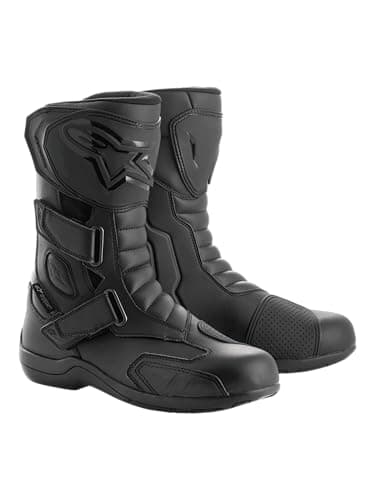
Roundup
The Best Waterproof Motorcycle Boots
Waterproof boots ranked on membrane type, CE EN 13634 certification, and ankle and shin protection.
4 picks · 4 with live prices
Top pick: Alpinestars Radon Drystar
$259.95Amazon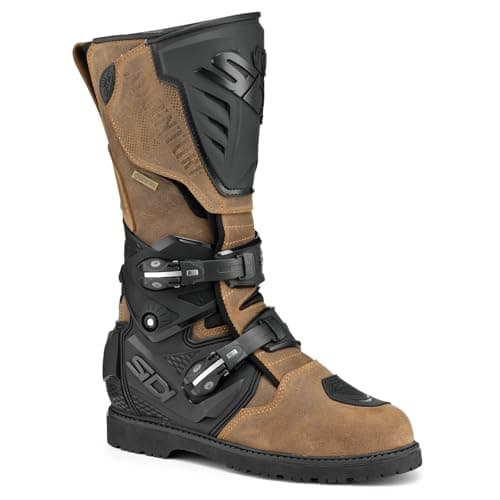
Roundup
The Best Adventure Motorcycle Boots
Adventure boots ranked on published CE EN 13634 certification, shaft height, shin protection and membrane.
4 picks · 4 with live prices
Top pick: Sidi Adventure 2 Gore-Tex
$449.99Amazon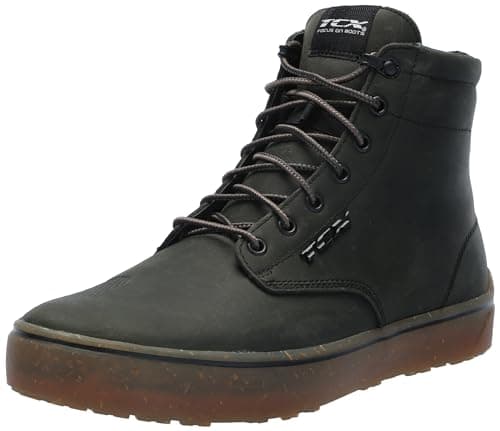
Roundup
The Best Motorcycle Riding Shoes
Riding shoes ranked on published CE EN 13634 certification, ankle protection, sole rigidity and weather sealing.
5 picks · 5 with live prices
Top pick: TCX Dartwood WP
$197.10Amazon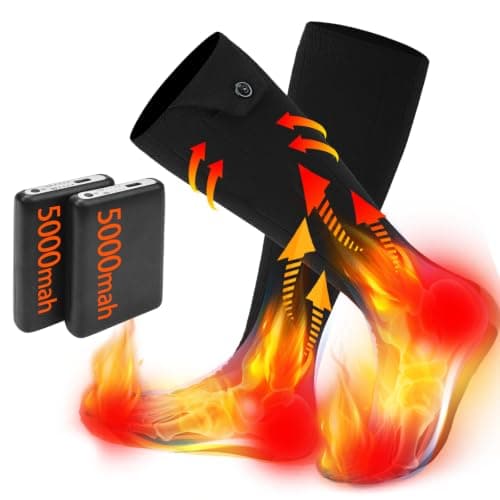
Buyer's guide
How to Keep Your Feet Warm on a Motorcycle
The fit and conduction problems behind cold feet, fixed in order of cost, with heated socks and insoles as the last step.
3 picks · 3 with live prices
Top pick: Rechargeable Heated Socks
$42.99Amazon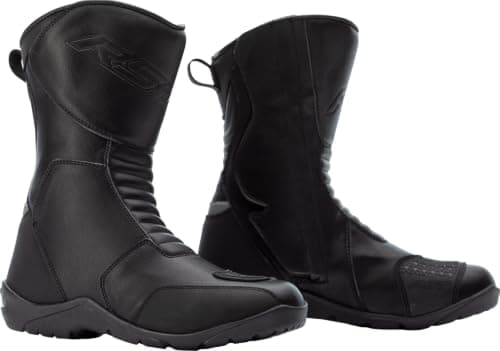
Roundup
The Best Women's Motorcycle Boots
Women's-specific boots ranked on published EN 13634 certification, fit and sizing, protection hardware and weather.
5 picks · 5 with live prices
Top pick: RST Axiom CE Ladies Waterproof
$149.99AmazonBuyer's guide
EN 13634 Explained
How to read a motorcycle boot's EN 13634 certification: the four rated properties, what the level digits mean, and the things the standard never tests.
3 picks · 3 with live prices
Top pick: Sidi Adventure 2 Gore-Tex
$449.99Amazon- Buyer's guide
Buyer's guide
How Should Motorcycle Boots Fit?
The fit checks for motorcycle boots - EU sizing, calf and instep volume, ankle armor position, and the on-the-bike tests before you commit.
Roundup
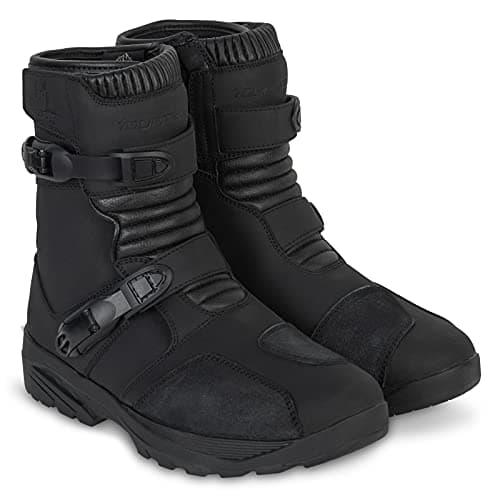
The Best Beginner Motorcycle Boots
First-pair boots ranked on published protection and on wearability - because the boot you leave at home protects nothing.
4 picks · 4 with live prices
Top pick: Tourmaster Break Trail WP
$149.99AmazonBuyer's guide
How to Break In Motorcycle Boots
What breaks in on a motorcycle boot and what does not - plus the methods that work, how long to give it, and the return-it-now signs.
3 picks · 3 with live prices
Top pick: Alpinestars SMX-6 V3
$349.95Amazon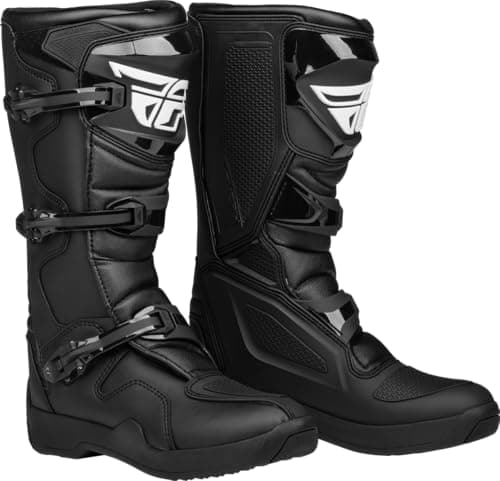
Roundup
The Best Dirt Bike Boots for Trail and Enduro Riding
Trail, enduro and dual-sport boots ranked on shin coverage, hinge and sole stiffness - the three things dirt actually tests.
4 picks · 4 with live prices
Top pick: FLY Racing Maverik LT
$147.96Amazon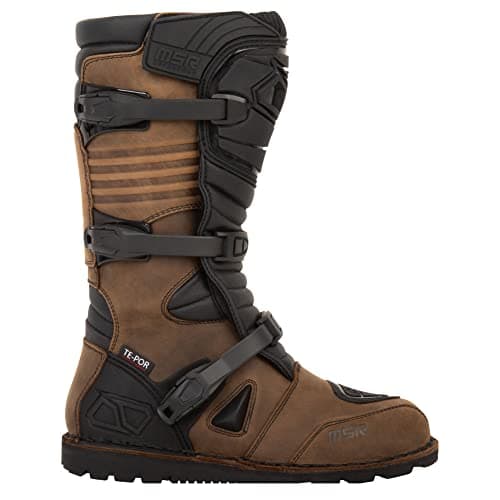
Buyer's guide
How to Care for Motorcycle Boots
Cleaning, drying, conditioning and reproofing riding boots - sorted by what the boot is actually made of.
3 picks · 3 with live prices
Top pick: MSR Waterproof Adventure Boot
$215.99Amazon