Skip to content
LID & LEATHER

Spine + chest · Armor

Airbag Vest vs Back Protector

Both protect your torso, but they're not the same purchase. Here's what each actually covers, what it costs, and which one to buy first — with live prices.

By Stephen V.Updated How we research
#ad

We earn a commission when you buy through our Amazon links, at no extra cost to you. It never affects our rankings, and we say so when the cheaper gear is the better buy. How this works.

"Should I get an airbag vest or a back protector?" is one of the most common questions in rider gear — and the honest answer is that they solve overlapping but different problems. A back protector is a passive, always-on shield for your spine. An airbag vest is an active system that inflates around your torso in the split-second before impact, covering far more area but at a higher cost and complexity. We didn't crash-test either; we compiled the CE standards, coverage and mechanisms, then laid out which one fits which rider.

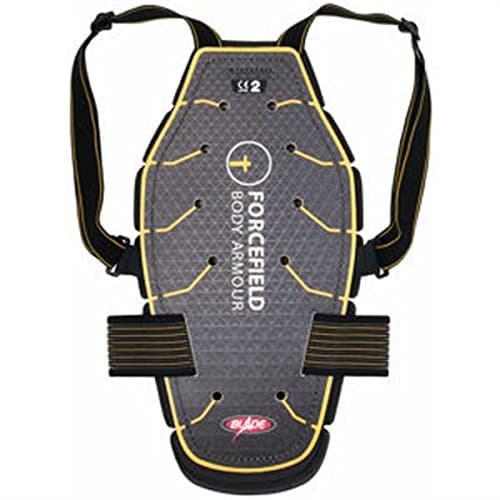
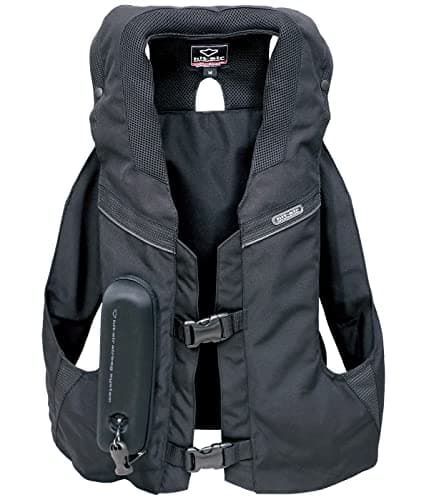
The back protector — represented here by the CE Level 2 Forcefield Blade— is simple, affordable, always working, and focused squarely on the spine, the highest-stakes part of the torso. There's nothing to trigger, charge, or reset; you put it on and it protects. Its limit is coverage: it protects the back and little else. The airbag vest — the value Airobag Wise here — wraps chest, ribs, back and often the neck and collarbones in an inflated cushion, a genuinely higher level of protection, in exchange for cost, a trigger mechanism (tethered or electronic), and the need to rearm or recharge after deployment.

What each one protects

A back protector covers the spine — vertebrae from the base of the neck to the lower back — and is certified to EN 1621-2. A CE Level 2 protector transmits roughly half the force of a Level 1 in the standard test. It does nothing for your chest, ribs or collarbones.

An airbag vest inflates to cushion a much larger area — typically the chest, ribs, back and neck — and is certified under the airbag standard EN 1621-4. That broad, high-level coverage is its whole point. Its trade-off is that it must sense the crash and inflate in time (tethered systems pull a pin as you leave the bike; electronic systems use sensors), and it needs rearming or recharging afterward.

The short answer

Quick picks

#ProductBest forScorePrice
01
Airobag Airobag Wise Vest
Airobag Wise Vest

A tethered mechanical airbag vest at roughly half the flagship's price, and the certification is the reason to take it seriously: EN 1621-4 for the airbag itself, with an EN 1621-2 Level 2 back protector built into the vest so it still protects when it hasn't fired.

Best value airbag vest
8.6
$369.00Amazon
02
Forcefield Forcefield Blade Level 2
Forcefield Blade Level 2

A proper standalone back protector: CE Level 2 certified, worn on its own harness so it fits any jacket, and flexible enough to forget you have it on. The one to buy if your jacket only has a foam pad.

Best standalone back protector
8.9
$129.99Amazon

#ad · Live prices from the Amazon Product API, as of Sep 4, 2026. Where we have no verified live price we show none — we would rather leave a gap than print a number that has rotted.

In detail

The picks, in full

01
Airobag Airobag Wise Vest

Best value airbag vest

Airobag Wise Vest

EN 1621-4 certifiedEN 1621-2 L2 back padTethered CO2 trigger1.3 kg
8.6/10

A tethered mechanical airbag vest at roughly half the flagship's price, and the certification is the reason to take it seriously: EN 1621-4 for the airbag itself, with an EN 1621-2 Level 2 back protector built into the vest so it still protects when it hasn't fired.

Protection
9.2
Ease of use
7.8
Coverage
9
Comfort
7.6
Value
9.2

Pros

  • Certified to EN 1621-4 — the standard written for motorcycle airbags — plus EN 17092 for the outer fabric
  • Integrated TRIFLEX viscoelastic back protector rated EN 1621-2 Level 2, so it is never doing nothing
  • Purely mechanical: the tether pulls the pin and punctures the CO2 cartridge, with no electronics to charge
  • Airobag publishes a re-arm you do yourself in under a minute for under $5 a cartridge

Cons

  • Still needs the tether clipped to the bike every single ride
  • 1.3 kg of high-resistance polyester worn over your jacket, and Airobag recommends a fresh cartridge every 18 months

Don't buy this if…

you'll forget to clip the tether — an unclipped airbag is just a vest.

$369.00View on Amazon

Price as of Sep 4, 2026. Prices change — Amazon's is the one that counts.

#ad · we may earn a commission from this link to Airobag Wise Vest

02
Forcefield Forcefield Blade Level 2

Best standalone back protector

Forcefield Blade Level 2

EN 1621-2 Level 2Worn on a harnessFlexibleFull-back coverage
8.9/10

A proper standalone back protector: CE Level 2 certified, worn on its own harness so it fits any jacket, and flexible enough to forget you have it on. The one to buy if your jacket only has a foam pad.

Protection
9.4
Fit/coverage
9
Comfort
8.6
Ventilation
8.2
Value
8.4

Pros

  • CE Level 2 — absorbs more impact energy than the Level 1 baseline
  • Its own harness means it works with any jacket, or on its own
  • Flexible, ventilated construction you actually keep wearing

Cons

  • Costs more than an insert
  • A harness is one more thing to put on

Don't buy this if…

your jacket already has a good back-protector pocket — a slot-in insert may be simpler and cheaper.

$129.99View on Amazon

Price as of Sep 4, 2026. Prices change — Amazon's is the one that counts.

#ad · we may earn a commission from this link to Forcefield Blade Level 2

Which should you buy?

Buy a back protector first.It's affordable, always on, and covers the highest-stakes part of the torso — the best value in protective gear and the right starting point for almost every rider. Wear it on a harness or in your jacket pocket, and you've closed the biggest gap in typical gear. See the field in best back protectors.

Step up to an airbag vest when you want maximum coverage. Touring riders, high-mileage commuters and anyone who wants chest, rib and neck protection on top of the spine will get a real jump in protection from an airbag vest. Many riders end up wearing both — a back protector under an airbag vest — which is the most complete torso setup. Whichever you choose, fit is critical: an airbag must sit close to work, and a back protector must stay over the spine.

How we picked

We don't test helmets. Here's what we do instead.

Everyone in this category says they tested twenty helmets. We haven't tested any — and we say so. What we do instead: compile the published DOT, ECE 22.06 and Snell certifications, the manufacturer's fit, weight and shell specs, the CE armor levels, and reputable published reviews, then score each pick against a published rubric. The scores are judgments from documented research — not measurements we took, because we do not run a lab and we are not going to pretend we do. Every certification and spec claim traces to a source we name and link.
Questions

Frequently asked

Is an airbag vest better than a back protector?
An airbag vest protects far more of the torso — chest, ribs, back and often the neck — so in coverage it's a higher level of protection. But it costs more, must trigger and inflate in time, and needs rearming after use. A back protector is simpler, cheaper and always on. Many riders wear both; if buying one, start with the back protector.
Can I wear a back protector and an airbag vest together?
Yes, and it's the most complete torso setup — a slim back protector under an airbag vest gives always-on spinal coverage plus the vest's broad inflated protection. Just make sure both fit properly layered, as an airbag needs to sit close to the body to work.
Do airbag vests work without electronics?
Many do — mechanical (tethered) vests connect to the bike with a cord that pulls a trigger pin when you're thrown clear, inflating the vest with a CO2 cartridge, no batteries required. Electronic vests use sensors instead and don't tether to the bike. Both are certified under EN 1621-4; see best airbag vests.

Keep reading

Receipts

Sources

We do not run a testing lab, and we do not pretend to. Our picks are built from published certifications, manufacturer spec sheets, the standards documents themselves, and reputable published reviews — named and linked above. Where we could not verify something, we say so on the page rather than quietly leaving it out. Read our full method.