Skip to content
LID & LEATHER

Intercom + music · Comms

The Best Motorcycle Earplugs

Wind noise under a helmet is loud enough to do permanent damage on an ordinary commute. Ranked on the attenuation number each maker publishes - and on whether you will still hear a siren.

By Stephen V.Updated How we research
#ad

We earn a commission when you buy through our Amazon links, at no extra cost to you. It never affects our rankings, and we say so when the cheaper gear is the better buy. How this works.

Every other page in this hub is about hearing something better. This one is about still being able to hear anything in twenty years. Wind noise under a helmet is not a comfort problem that happens to be annoying — it is a sustained, broadband, high-frequency load on your ears for the entire time the bike is moving, and it is the one hazard in motorcycling that does its damage quietly, a little at a time, with no crash to blame afterward.

The scale of it is documented. A UK research program run by ISVR Consulting with the Department of Aeronautics and Astronautics and Hampshire Constabulary, on behalf of the Home Office, put instrumented police riders on the road and in a wind tunnel and concluded that "daily noise exposures of working motorcyclists without hearing protection may regularly exceed 90 dB(A)". Their advice to riders was blunt: if your hearing sounds muffled after a ride, or your ears ring, that is temporary damage which becomes permanent if you repeat it, and you should consider wearing earplugs under the helmet.

Put that next to the exposure limits the US uses at work. OSHA's permissible exposure limit is 90 dBA averaged over an eight-hour day, with a 5 dBA exchange rate. NIOSH recommends a considerably tighter 85 dBA over eight hours, with a 3 dBA exchange rate — meaning every 3 dB increase halves the time you should spend in it. A long day in the saddle is not an eight-hour office shift, but the arithmetic points the same way: the noise a rider takes at highway speed sits in the range where an employer would be legally required to hand out hearing protection.

So this page ranks hearing protection the way we rank everything else on this site: on the number the maker is willing to publish, against a named standard, and on whether the product is one you will actually keep wearing. The Alpine MotoSafe Sport wins because it publishes SNR 20 under EN 352-2 and filters rather than seals, which keeps sirens and intercom speech usable. The EarPeace Moto gives you three filter strengths in one box. The 3M Peltor Sport Tri-Flange is the cheap reusable with a genuine US NRR on the package. The Decibullz Custom Molded set molds to your own ear when nothing else stays put. And the Howard Leight Maximum foam plug carries the highest published rating of the lot, NRR 33, for pennies a pair — with the trade-off that it takes your awareness down with the wind.

One thing we do not do, here or anywhere else on this site: we did not run these through an acoustic lab, and we are not going to pretend otherwise. Every attenuation figure below is the number its manufacturer publishes, under the standard we name next to it, and the sources are listed at the bottom of the page. Where a maker publishes a European SNR and no US NRR, we say that instead of quietly converting one into the other.

How we ranked motorcycle earplugs

Published attenuation first, because a plug with no number against a named standard is a piece of foam with a marketing claim attached. Then awareness— whether horns, sirens and intercom speech survive the attenuation, which is the single reason a rider should ever choose a lower number on purpose. Then fit under a helmet: profile, stem length, and whether the plug stays seated when a chin bar slides past your ear. Then comfort and reuse, and finally value, which in this category spans two orders of magnitude between the cheapest and the dearest pick.

What we deliberately did not rank on: brand-specific claims about "preserving the sound of the engine" or "concert-quality clarity". Those are real design goals and they are also unfalsifiable in a spec sheet. If a maker publishes a frequency curve we will read it; if it publishes an adjective, we ignore it.

The short answer

Quick picks

#ProductBest forScorePrice
01
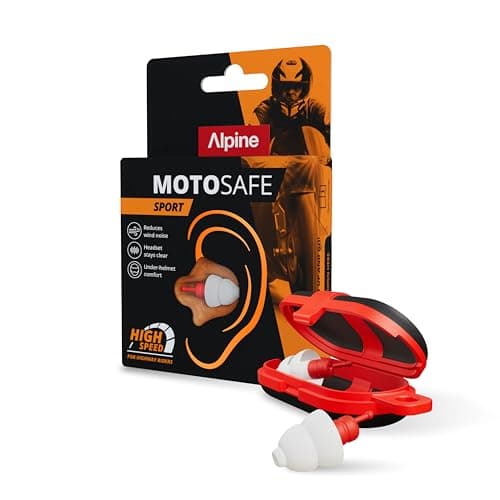
Alpine Alpine MotoSafe Sport
Alpine MotoSafe Sport

The plug built for this exact job. Alpine publishes SNR 20 tested to EN 352-2, the filter is tuned to pull the wind roar down while leaving traffic, sirens and intercom speech in, and the low-profile body vanishes under a helmet. If you buy one pair of riding plugs, buy these.

Best overall
8.6
$19.99Amazon
02
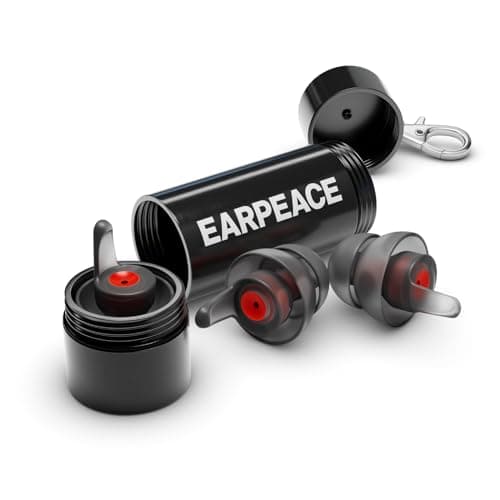
EarPeace EarPeace Moto
EarPeace Moto

The set that lets you choose your own attenuation. Three swappable filter sets - 17, 20 and 26 dB SNR - plus two earplug sizes and an aluminum case, so a light filter covers town riding and the strongest one covers a long day on the interstate.

Best for dialing in attenuation
8.4
$31.95Amazon
03
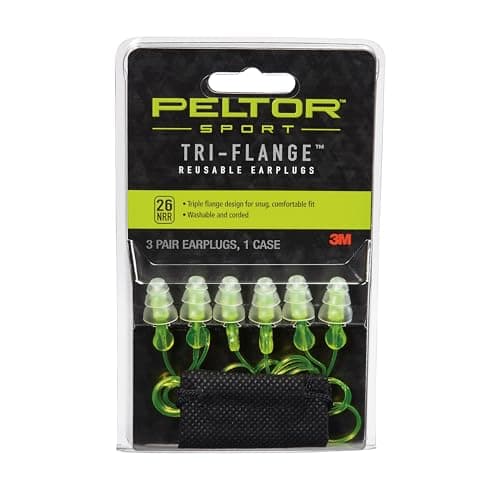
3M 3M Peltor Sport Tri-Flange
3M Peltor Sport Tri-Flange

The cheapest way to get a real US label number into your ears. 3M publishes NRR 26, the flanged stem is washable and reusable, and the pack holds three pairs, so losing one is an inconvenience rather than a purchase.

Best value reusable
8.2
$14.95Amazon
04
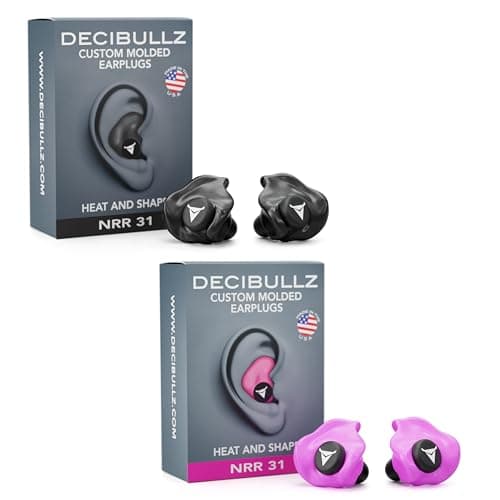
Decibullz Decibullz Custom Molded
Decibullz Custom Molded

Thermoplastic earpieces you heat in boiling water and shape to your own ears, published at NRR 31 to ANSI S3.19. The answer when plugs work loose under a helmet or your ear canals are awkward, and if the first mold is wrong you reheat and start again.

Best fit and retention
8.1
$39.50Amazon
05
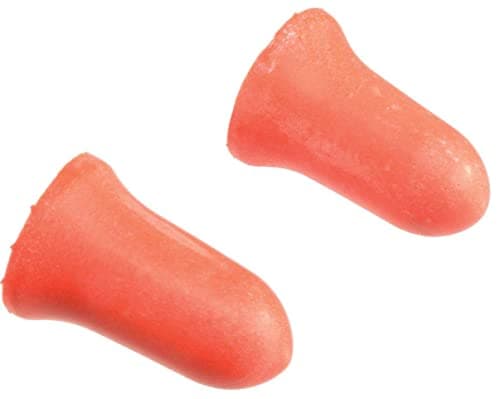
Honeywell Howard Leight Maximum
Howard Leight Maximum

The highest published number here, and the cheapest protection per pair by a distance: Honeywell rates its Maximum polyurethane foam plug at NRR 33. It is an industrial bulk box, it muffles everything without discrimination, and on raw attenuation nothing else on this page touches it.

Highest published attenuation
7.9
$38.68Amazon

#ad · Live prices from the Amazon Product API, as of Sep 4, 2026. Where we have no verified live price we show none — we would rather leave a gap than print a number that has rotted.

In detail

The picks, in full

01
Alpine Alpine MotoSafe Sport

Best overall

Alpine MotoSafe Sport

SNR 20 (EN 352-2)Filtered, not sealedSilicone-free materialRated 100+ wears
8.6/10

The plug built for this exact job. Alpine publishes SNR 20 tested to EN 352-2, the filter is tuned to pull the wind roar down while leaving traffic, sirens and intercom speech in, and the low-profile body vanishes under a helmet. If you buy one pair of riding plugs, buy these.

Attenuation
7.5
Awareness
9.2
Helmet fit
9
Comfort
9
Value
8.2

Pros

  • Alpine publishes SNR 20 against a named standard, EN 352-2, rather than a bare marketing decibel claim
  • Filtered attenuation: Alpine states traffic, navigation and intercom audio stay audible through it
  • Low-profile body in Alpine's hypoallergenic, silicone-free AlpineThermoShape material, rated for more than 100 wears

Cons

  • SNR is the European number. Alpine publishes no ANSI-tested NRR for it, so it cannot be lined up directly against an NRR-labeled plug
  • A filter attenuates less than a sealed foam plug by design, so at sustained interstate speed you are still riding in real noise
  • One pair for the money, and a single lost plug costs you the set

Don't buy this if…

you want the biggest number on the shelf and do not care what it does to speech and sirens. A foam plug beats it on published attenuation for a fraction of the money.

$19.99View on Amazon

Price as of Sep 4, 2026. Prices change — Amazon's is the one that counts.

#ad · we may earn a commission from this link to Alpine MotoSafe Sport

02
EarPeace EarPeace Moto

Best for dialing in attenuation

EarPeace Moto

17 / 20 / 26 dB SNR filtersTwo sizes in the boxHypoallergenic siliconeAluminum case
8.4/10

The set that lets you choose your own attenuation. Three swappable filter sets - 17, 20 and 26 dB SNR - plus two earplug sizes and an aluminum case, so a light filter covers town riding and the strongest one covers a long day on the interstate.

Attenuation
8
Awareness
9
Helmet fit
8.6
Comfort
8.6
Value
7.6

Pros

  • Three filter sets published at 17, 20 and 26 dB SNR cover everything from town speeds to interstate droning
  • Small and standard shells are both in the box, and a plug that does not match your ear canal is the most common cause of a bad seal
  • Keyring-sized aluminum case, which is the difference between owning earplugs and having them with you

Cons

  • Every figure EarPeace publishes for these is SNR; there is no ANSI-tested NRR on the product page
  • The filters are small, and swapping them at a gas stop is a good way to lose one
  • Costs more than a single-filter riding plug, and far more than foam

Don't buy this if…

you already know the attenuation you want and will never swap a filter, because then you are paying for flexibility you do not use.

$31.95View on Amazon

Price as of Sep 4, 2026. Prices change — Amazon's is the one that counts.

#ad · we may earn a commission from this link to EarPeace Moto

03
3M 3M Peltor Sport Tri-Flange

Best value reusable

3M Peltor Sport Tri-Flange

NRR 26 (3M published)Washable + reusableCordedThree pairs per pack
8.2/10

The cheapest way to get a real US label number into your ears. 3M publishes NRR 26, the flanged stem is washable and reusable, and the pack holds three pairs, so losing one is an inconvenience rather than a purchase.

Attenuation
8.8
Awareness
6.8
Helmet fit
8
Comfort
8
Value
9.4

Pros

  • NRR 26 is a US label figure, directly comparable against every other NRR-rated plug on the shelf
  • Washable, reusable and sold in threes, so the running cost is close to nothing
  • The soft triple-flange stem seats immediately, with none of the roll-and-hold routine foam needs

Cons

  • No acoustic filter, so it pulls speech and sirens down along with the wind
  • The cord has to be routed somewhere under a helmet and a jacket collar, and it can transmit rustle
  • A general-purpose industrial hearing protector: nothing about it is tuned for wind noise

Don't buy this if…

you hold intercom conversations on the move, because a filtered plug keeps speech noticeably more intelligible at the same road speed.

$14.95View on Amazon

Price as of Sep 4, 2026. Prices change — Amazon's is the one that counts.

#ad · we may earn a commission from this link to 3M Peltor Sport Tri-Flange

04
Decibullz Decibullz Custom Molded

Best fit and retention

Decibullz Custom Molded

NRR 31 (ANSI S3.19)Re-moldable thermoplasticFoam + flange tipsCarry pouch
8.1/10

Thermoplastic earpieces you heat in boiling water and shape to your own ears, published at NRR 31 to ANSI S3.19. The answer when plugs work loose under a helmet or your ear canals are awkward, and if the first mold is wrong you reheat and start again.

Attenuation
9.4
Awareness
6.2
Helmet fit
9.2
Comfort
8.2
Value
7.4

Pros

  • Decibullz publishes an independently lab-tested NRR of 31 against ANSI S3.19, the second-highest figure in this ranking
  • Molds to your ear in about five minutes, and re-molds as many times as you like if the first attempt sits wrong
  • A shape cut to your own ear resists the slow working-loose that helmet straps, chin bars and jaw movement cause

Cons

  • The published 31 goes with the Max Isolation foam tips fitted, and the silicone flange tips in the same box are a different seal
  • No acoustic filter, so awareness drops much the way it does with foam
  • Molding is a kitchen job with a stove and a timer, and a careless mold costs you the rating you paid for

Don't buy this if…

you want to open the package in a parking lot and ride. This pick needs boiling water, five minutes and an unhurried first fitting.

$39.50View on Amazon

$51.9824% off

Price as of Sep 4, 2026. Prices change — Amazon's is the one that counts.

#ad · we may earn a commission from this link to Decibullz Custom Molded

05
Honeywell Howard Leight Maximum

Highest published attenuation

Howard Leight Maximum

NRR 33 (Honeywell published)Polyurethane foamSingle useBulk box
7.9/10

The highest published number here, and the cheapest protection per pair by a distance: Honeywell rates its Maximum polyurethane foam plug at NRR 33. It is an industrial bulk box, it muffles everything without discrimination, and on raw attenuation nothing else on this page touches it.

Attenuation
9.8
Awareness
5.5
Helmet fit
8.5
Comfort
6
Value
9.5

Pros

  • NRR 33 is the highest rating offered in a disposable plug, and Honeywell publishes it on the product itself
  • Cheapest per pair on this page by an order of magnitude, with a clean pair for every ride and nothing to wash
  • Nothing to maintain and nothing to guard: spare pairs live in a jacket pocket, a tank bag and the garage

Cons

  • Attenuates broadly, so horns, sirens and intercom speech come down along with the wind
  • Only reaches its rating if you roll it thin and seat it deep, and a half-inserted foam plug is worth a fraction of its label
  • Single use and sold in an industrial quantity, which is a lot of disposable foam over a riding career

Don't buy this if…

you ride with an intercom, or in traffic where hearing a siren early matters. The filtered picks above trade attenuation for exactly those cues.

$38.68View on Amazon

Price as of Sep 4, 2026. Prices change — Amazon's is the one that counts.

#ad · we may earn a commission from this link to Howard Leight Maximum

NRR and SNR are two different numbers, and you cannot swap them

The single most useful thing to understand before you buy: the attenuation figure on the package is either a US NRR or a European SNR, and they are not interchangeable. The Noise Reduction Rating is the US figure, created when the EPA developed labeling requirements for hearing protectors in 1979 and measured under the ANSI method that requirement points at. The Single Number Rating is the European equivalent, derived from testing under EN 352-2, the standard for earplugs.

They measure the same physical thing through different procedures and different math, and for the same plug the SNR usually reads a few decibels higher than the NRR. That matters here because the two purpose-built riding plugs on this page — the Alpine and the EarPeace — are European products that publish SNR only, while the three general-purpose protectors publish NRR. An SNR 20 riding plug and an NRR 33 foam plug are not 13 dB apart. They are further apart than that comparison suggests in one direction, and the gap is not the point anyway: what separates them is what each one does to the sounds you need.

Whatever the label says, you will not get all of it

OSHA is unusually direct about this in its own technical manual. It adopted the NRR and then "later recognized that the NRR listed on hearing protectors often did not reflect the actual level of protection", because the laboratory fit that produces the rating is not the fit people achieve in the field. The number is a ceiling produced by a trained fitter in a quiet booth, not a promise about your ears in a parking lot in February.

For a rider, three things close most of that gap. Insert before the helmet, never after — a plug pushed in past a helmet's cheek pad is a plug that is not seated. Roll a foam plug properly: crease-free into the thinnest possible cylinder, ear pulled up and back, plug seated well inside the canal and held while it expands. And check the seal by ear: cup your hands over both ears, and if the sound gets noticeably quieter, your plugs are not doing their job yet. Our guide to wearing a helmet correctly covers the order of operations for glasses, plugs and comms.

Filtered or sealed: the decision that actually matters

A filtered plug — the Alpine and the EarPeace here — has a deliberate acoustic channel through it. The maker's claim is that it attenuates the loud broadband wind energy while letting more of the speech range through, so traffic, sirens and intercom audio stay usable. That is a design goal we can describe and attribute, and it is why both makers publish a modest number rather than the biggest one they could engineer.

A sealed plug — foam, flanged or custom-molded — blocks without discrimination. It gets you the higher rating, and it takes horn and siren cues, spoken navigation and intercom conversation down with it. That is a real trade, not a scare: plenty of experienced riders run foam on the interstate precisely because there is nothing to hear out there but roar, and switch to something lighter in town.

The honest summary is that the right answer is task-dependent, and both are far better than nothing. If you only ever buy one pair, buy the filtered one: it is the pair you will keep wearing on the days you would otherwise skip protection because you wanted to hear what was around you.

Earplugs and an intercom are not mutually exclusive

The most common objection we see to riding with plugs is that they cancel the point of a headset. In practice riders run both, for a specific reason: an intercom competing with 95 dB of wind has to be turned up to overcome it, so you end up with the noise and a loud speaker. Plugs lower the whole noise floor, which lets you run the intercom volume down and often makes speech clearer rather than quieter.

Two practical notes. Speaker placement matters more with plugs in, so square the speakers over your ear canals when you fit them — our intercom install guide walks through the pockets and the routing. And if you are choosing between attenuation levels, a filtered plug preserves intelligibility better than a sealed one, which is why the two filtered picks score highest on awareness here. If you have not chosen a headset yet, start with our motorcycle intercom ranking.

A quiet helmet is not a substitute

Helmet design does move the number. The same ISVR work found that simple modifications to a helmet can cut noise at the ear by 5 to 8 dB, and a well-sealed neck roll, a taller screen and a chin curtain all help. But nothing in that range takes a 90-plus dB(A) exposure down to a level you can ride in indefinitely, which is exactly why the researchers recommended plugs under the helmet rather than a quieter helmet instead of them. Our quietest helmet ranking makes the same point from the other end: buy the quiet lid, then wear plugs in it.

What to buy first

If you have never ridden with hearing protection, buy a bulk box of foam and a pair of filtered plugs at the same time. The foam costs almost nothing, lives in every jacket you own, and covers the day you forget the good ones. The filtered pair is what you reach for on a route where hearing traffic matters. Between them you will find out, within a month, which attenuation you actually want — and that is a far better basis for the more expensive purchase than any ranking, including this one.
How we picked

We don't test helmets. Here's what we do instead.

Everyone in this category says they tested twenty helmets. We haven't tested any — and we say so. What we do instead: compile the published DOT, ECE 22.06 and Snell certifications, the manufacturer's fit, weight and shell specs, the CE armor levels, and reputable published reviews, then score each pick against a published rubric. The scores are judgments from documented research — not measurements we took, because we do not run a lab and we are not going to pretend we do. Every certification and spec claim traces to a source we name and link.

Questions

Frequently asked

Do I need earplugs if I already have a quiet helmet?
Yes. A quiet helmet reduces the noise reaching your ears — the ISVR research found helmet modifications worth 5 to 8 dB — but it does not take highway wind noise below the level where sustained exposure does damage. That is why the same researchers advised riders to wear earplugs under the helmet. Buy the quiet lid from our quietest helmets ranking and wear plugs in it; the two are additive, not alternatives.
Can you use earplugs with a Bluetooth intercom?
Yes, and most long-distance riders do. Plugs lower the noise floor so the intercom does not have to shout over 95 dB of wind, which usually improves intelligibility rather than hurting it. Filtered plugs preserve speech better than sealed foam. Position the speakers squarely over your ear canals when you install them — see our install guide.
Is NRR 33 better than SNR 20?
They are not directly comparable. NRR is the US rating measured under the ANSI method behind the EPA's labeling requirement; SNR is the European rating derived under EN 352-2. For the same plug the SNR typically reads higher than the NRR, so you cannot subtract one from the other and call the difference protection. What is true is that sealed foam attenuates more than a filtered riding plug — and that the filtered plug gives that up on purpose, to keep sirens and speech audible.
Are earplugs legal to wear while riding?
It depends on the state. There is no federal rule, state vehicle codes differ, and a handful restrict wearing devices in both ears while driving or riding — restrictions that riders' groups have challenged, as NPR reported in 2015. Several of those states carve out hearing protection that still allows you to hear horns and sirens. Check your own state's code before you ride, particularly if you travel across state lines.
Foam or reusable earplugs for motorcycling?
Foam gives you the highest published attenuation for the least money and a fresh pair every ride, at the cost of awareness and a bin full of disposables. Reusable plugs — filtered, flanged or custom-molded — cost more up front, keep more of the sound you want, and are the ones you are more likely to have with you. Owning both is cheap and covers every ride.
How much do motorcycle earplugs reduce wind noise?
By roughly the amount on the label, minus whatever your fit gives away — and OSHA says plainly that the labeled rating "often did not reflect the actual level of protection" because field fit is not laboratory fit. Treat the published NRR or SNR as a ceiling, seat the plugs before the helmet goes on, and check the seal by cupping your hands over your ears: if it gets quieter, they are not in properly.

Keep reading

Receipts

Sources

We do not run a testing lab, and we do not pretend to. Our picks are built from published certifications, manufacturer spec sheets, the standards documents themselves, and reputable published reviews — named and linked above. Where we could not verify something, we say so on the page rather than quietly leaving it out. Read our full method.