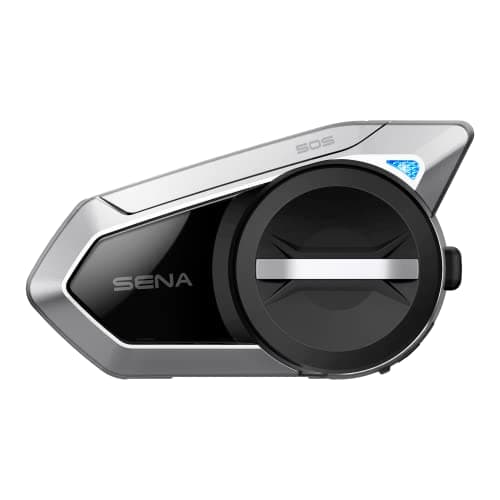
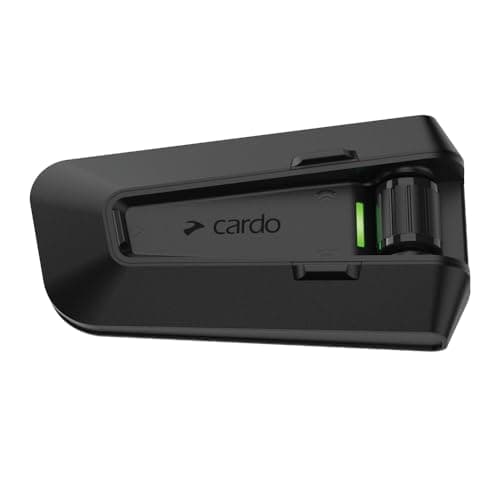
Yes — a Cardo will talk to a Sena, over standard Bluetooth intercom, and it has done for years. What it will not do is join the other brand's mesh. Cardo runs DMC and Sena runs Sena Mesh; both are proprietary and neither bridges to the other. So a mixed group works, but it works as a Bluetooth group, which means you give up the self-healing network that is the main reason to own either unit. If the group is already mixed and nobody is replacing anything, the Cardo Packtalk Pro and the Sena 50S are the two flagships that mix most gracefully, because both keep a full Bluetooth stack alongside their mesh. If you are buying into a group that already runs one brand, buy that brand.
What to look for before you mix brands
Three things decide whether a mixed pair is pleasant or miserable, and all three are published on the maker's spec page before you buy:
- Does the unit keep a standard Bluetooth intercom channel alongside its mesh? Current Cardo Packtalk and Sena 50-series units do, which is why they can bridge a mixed group at all. A mesh-only or stripped-down unit cannot, and entry units sometimes cap how many Bluetooth intercom partners they will remember.
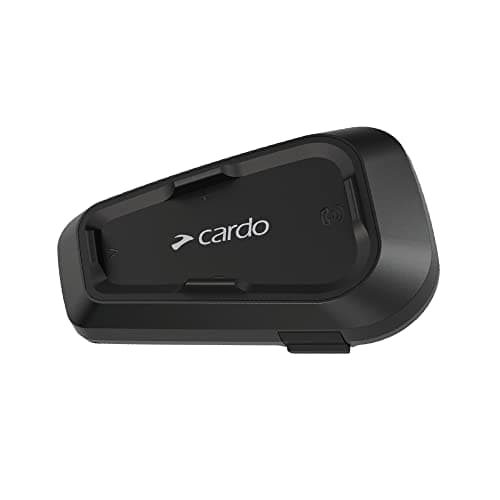
- How many Bluetooth intercom partners does it store? This is a published number and it is the ceiling on your group. Entry units are commonly two riders; the Cardo Spirit HD here publishes a two-rider maximum and 600 m of range, which is honest and also a hard limit.
- Who is the bridge? In a mixed group, one rider has to be paired to both camps and relay. That rider needs the unit with the most Bluetooth intercom slots and the best battery, because bridging is the most demanding job in the group.
We have not bench-tested radios or measured range. Everything below is drawn from the makers' published specifications and the documented behaviour of the two protocols, and where a figure is not published we say so rather than estimating it.
What connects, and what does not
| Feature | Cardo to Cardo | Sena to Sena | Cardo to Sena |
|---|
| Two-way intercom | Yes | Yes | Yes, over standard Bluetooth |
| Self-healing mesh group | Yes (DMC) | Yes (Sena Mesh) | No |
| Auto-reconnect after a dropout | Yes | Yes | Manual, in practice |
| Phone, GPS and music | Yes | Yes | Unaffected — those are your own pairings |
| Voice assistant and app control | Yes, own app | Yes, own app | Each rider uses their own app only |
Why mesh will not bridge, and why that matters more than it sounds
Cardo DMC and Sena Mesh are not two versions of the same thing. They are separate proprietary radio protocols, each owned by its maker, each handling the hard parts of group audio — who relays to whom, what happens when a rider rides out of range, how the network reforms when they come back — in its own way. There is no standard underneath them to meet on, and no setting or firmware update makes one speak the other.
The practical consequence is the part riders feel. On a mesh network, a rider who stops for fuel simply rejoins when they catch up; nobody presses anything. On a Bluetooth intercom chain, the connection is held between specific pairs in a specific order, so when a rider drops out the riders downstream of them lose the riders upstream, and somebody has to re-establish it — usually at the next stop, usually while everyone waits. Our Bluetooth vs mesh guide covers the mechanism in detail. For a mixed pair it barely matters. For a mixed group of five on a twisty road, it is the whole ride.
How to set up a mixed group so it mostly stays up
If you are stuck with a mixed group, you can make it work, and the method is the same whichever brand is in the majority:
- Let each brand form its own native group first. All the Cardos join one DMC network, all the Senas join one Sena Mesh network. Both networks are self-healing internally, so you are preserving the good behaviour inside each camp.
- Nominate one bridge rider in each camp. Those two riders pair to each other over standard Bluetooth intercom. Audio now crosses between the two meshes through that single Bluetooth link.
- Put the bridge riders in the middle of the formation. The Bluetooth link between them is the weakest point of the whole group, and rider-to-rider Bluetooth range collapses around corners and over hills.
- Agree who re-pairs, and when. The bridge will drop. Decide in the car park that the two bridge riders rebuild it at the next stop, rather than four people trying at once at a set of lights.
Expect the bridged link to add a little latency and to clip the first syllable of whoever speaks. That is normal for a Bluetooth relay and not a fault with either unit.
If you are buying rather than bridging
The single most useful piece of advice about mixed-brand groups is to not create one. Comms are the one piece of gear where matching your riding partners beats buying the better product, because the capability you are paying for — mesh — only exists inside its own brand. If your regular group runs Sena, buy Sena. If it runs Cardo, buy Cardo. If you ride alone or two-up and nobody else is in the equation, buy on the merits and our Cardo vs Sena comparison is the page for that.
One exception worth knowing: Sena publishes an open mesh mode intended to let riders on compatible Sena-family units join without pairing, and Cardo has shipped interoperability features of its own across generations of DMC. Those features operate inside their own ecosystems. Neither is a cross-brand bridge, and treating either as one is how mixed groups end up stopped at the side of the road with five phones out.
Which unit should the bridge rider carry?
Whoever bridges should have the strongest unit in the group. The Cardo Packtalk Pro is our first pick for the job: DMC mesh for its own camp, a full Bluetooth stack for the bridge, JBL 45 mm speakers and a waterproof body for the ride where it all goes wrong. The Sena 50S is the equivalent on the other side, with Mesh 2.0 alongside Bluetooth, Harman Kardon speakers and fast charge. And the Cardo Spirit HDis the honest entry unit: 600 m of published range, two riders maximum, 40 mm HD speakers and a two-year warranty — a good first intercom and specifically not the one to hand your bridge rider, because two riders is where it stops. For the wider field, our intercom ranking and budget intercom ranking cover both ends.