Skip to content
LID & LEATHER

The lid · Helmets

The Best Shoei Motorcycle Helmets

A short lineup, deliberately. Shoei builds three things most makers do not: hand-laid multi-fiber shells, five shell sizes, and a Snell certification on most of the range. Live prices.

By Stephen V.Updated How we research
#ad

We earn a commission when you buy through our Amazon links, at no extra cost to you. It never affects our rankings, and we say so when the cheaper gear is the better buy. How this works.

The best Shoei is the RF-1400 — DOT and Snell M2020 on a hand-laid fiberglass composite shell, for the rider who wants one road helmet and does not want to think about it again for five years. It is also the cheapest way into the lineup, which is the unusual and genuinely useful thing about this brand: Shoei's entry helmet is its best-value helmet, so there is no budget tier to compromise into. The Neotec II is for touring riders who want a flip-up chin bar and a quiet cabin; the Hornet X2 is for adventure riders who want Snell on a peaked lid. We have not crash-tested any of them — we do not run a lab — so every figure below is Shoei's published spec or the retail listing, and the table below carries a live Amazon price stamped with the date it was pulled.

Shoei is the brand against which the rest of this hub gets measured, and the reasons are specific rather than mystical. Shell construction:Shoei's AIM and AIM+ shells are hand-laid multi-fiber composites — fiberglass with organic and high-performance fibers in defined layers — rather than injection-molded polycarbonate. That buys stiffness at lower mass. Shell count: Shoei builds its road helmets in multiple shell and multi-density EPS sizes, so a small head gets a small shell rather than a large shell packed with thicker foam. And certification stack: most of the range carries Snell as well as DOT, which is rare at any price and effectively unheard of below it.

How this ranking was built, and what it leaves out

Three picks, not six, because three is how many Shoei road and adventure helmets we can currently buy on Amazon with a verified listing — and we would rather publish a short, real list than pad it with models we cannot link to. Shoei's catalog is wider than this: the GT-Air, the X-Fifteen, the Glamster and the current Neotec 3 all exist, and the Neotec II ranked here is explicitly the previousgeneration of Shoei's touring modular, which its card below says in those words. If you want the current one, buy the Neotec 3 from a dealer.

The same now applies at the top of the list. Shoei introduced the RF-1500in November 2026 as the successor to the RF-1400 ranked first below, and it is already listed on Amazon at a few hundred dollars more. We have not moved it into the ranking, because what Shoei publishes about it does not yet beat the helmet it replaces on this page's own rubric: the RF-1500 carries the newer Snell M2025Dalongside DOT and adds a sixth shell size, but Shoei's headline claim for it is airflow — roughly 90% more through the top vent and 40% more through the chin vents, figures nobody outside Shoei has measured — and the published weight went up, not down. Buy the RF-1500 if you want the current generation or the newer Snell revision. The RF-1400 is the better-value way into the same shell family while it is still stocked.

Within the three, the order is published certification first (DOT plus Snell M2020 beats DOT alone), then shell construction and published weight, then fit granularity, then features and value. Nothing is scored on a test we ran; the rubric is on our methodology page. One honest note that applies to the whole brand: Shoei does not publish ECE 22.06 on its US-market helmets — the US range is certified to DOT FMVSS 218 and, on most models, Snell. If the 22.06 label specifically is what you want, our DOT vs ECE vs Snell explainer sets out what each standard actually tests, and our overall ranking includes helmets that carry it.

The short answer

Quick picks

#ProductBest forScorePrice
01
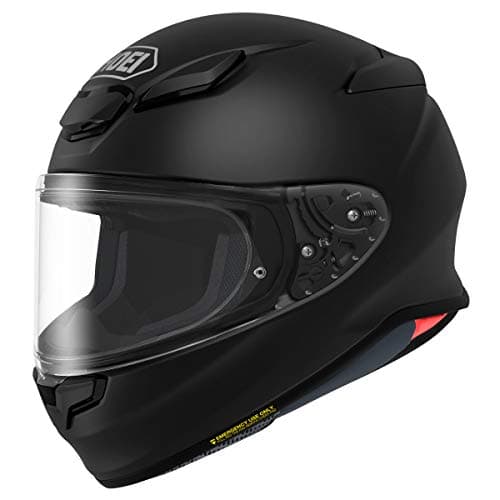
Shoei Shoei RF-1400
Shoei RF-1400

The reference full-face, and now the outgoing generation: Shoei introduced the RF-1500 in November 2026 and it is already on sale at a few hundred dollars more. The RF-1400 is unchanged — DOT and Snell M2020 certified, a hand-laid fiberglass composite shell, and a fit-and-finish nobody at this price beats — and it still ranks first here, because the successor is dearer and heavier and the thing it mainly adds is airflow.

The all-round best
9.1
$499.99Amazon
02
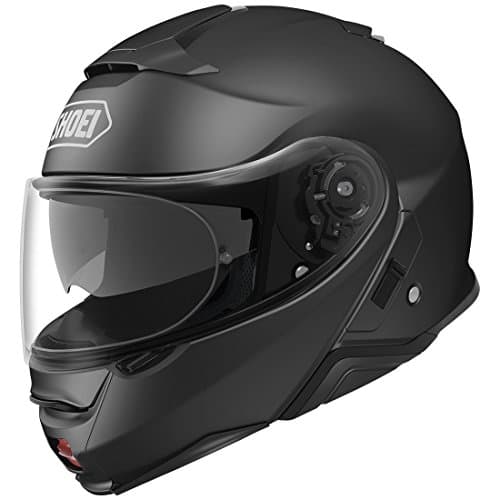
Shoei Shoei Neotec II
Shoei Neotec II

The touring modular the rest are measured against — though it is no longer Shoei's newest. Shoei now lists the Neotec 3 alongside it, so the II is the older generation: a multi-composite shell, an internal sun visor, a genuinely quiet cabin and a drop-in SRL2 Sena comms option that keeps the lines clean.

Best touring modular
8.6
$599.99Amazon
03
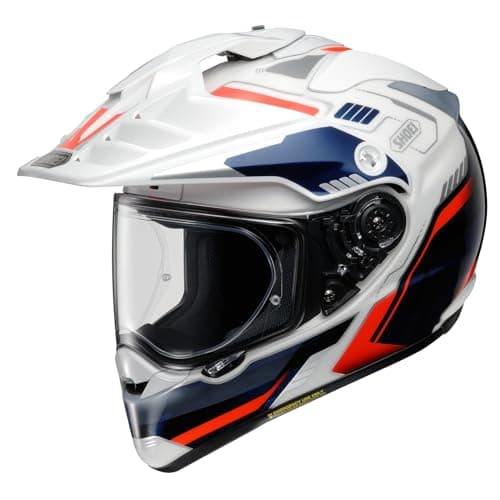
Shoei Shoei Hornet X2
Shoei Hornet X2

The premium adventure benchmark: an AIM+ multi-fiber composite shell carrying both DOT and Snell M2020, with an aerodynamically tuned peak that does not try to tear your head off at highway speed.

Premium pick
8.2
$819.99Amazon

#ad · Live prices from the Amazon Product API, as of November 19, 2026. Where we have no verified live price we show none — we would rather leave a gap than print a number that has rotted.

In detail

The picks, in full

01
Shoei Shoei RF-1400

The all-round best

Shoei RF-1400

DOT · Snell M2020AIM+ fiberglass shell~3.7 lb / 1,680 gPinlock included
9.1/10

The reference full-face, and now the outgoing generation: Shoei introduced the RF-1500 in November 2026 and it is already on sale at a few hundred dollars more. The RF-1400 is unchanged — DOT and Snell M2020 certified, a hand-laid fiberglass composite shell, and a fit-and-finish nobody at this price beats — and it still ranks first here, because the successor is dearer and heavier and the thing it mainly adds is airflow.

Certification
9.6
Shell/weight
9.2
Noise/aero
9
Fit range
8.6
Value
8

Pros

  • Both DOT and Snell M2020 certified — a genuinely rigorous pair
  • Multi-ply matrix fiberglass shell in five sizes, so small heads get a small shell
  • Emergency quick-release cheek pads and excellent aero/noise control

Cons

  • Premium price
  • Intermediate-oval fit does not suit round heads
  • Superseded by the RF-1500, which carries the newer Snell M2025D and six shell sizes

Don't buy this if…

…you have a round head shape or a tight budget — a helmet that fits your head beats a prestige badge that does not. Skip it too if you want Shoei's current generation or the newer Snell M2025D label, which means the RF-1500.

$499.99View on Amazon

$549.999% off

Price as of November 19, 2026. Prices change — Amazon's is the one that counts.

#ad · we may earn a commission from this link to Shoei RF-1400

02
Shoei Shoei Neotec II

Best touring modular

Shoei Neotec II

DOTMulti-composite shellInternal sun visorSRL2 comms-ready
8.6/10

The touring modular the rest are measured against — though it is no longer Shoei's newest. Shoei now lists the Neotec 3 alongside it, so the II is the older generation: a multi-composite shell, an internal sun visor, a genuinely quiet cabin and a drop-in SRL2 Sena comms option that keeps the lines clean.

Certification
8.4
Shell/weight
8.6
Noise/aero
9.4
Fit range
8.6
Value
7.8

Pros

  • DOT certified with a refined multi-ply composite shell
  • One of the quietest modulars made, with a sealed chin bar
  • Integrated sun visor and a clean factory Sena SRL2 comms path

Cons

  • Expensive
  • Heavier than a full-face (all modulars are)
  • No longer Shoei's newest touring modular — the Neotec 3 now sits above it in Shoei's lineup

Don't buy this if…

…you specifically want Shoei's current-generation touring modular — that is the Neotec 3 now. The II is the previous generation, still listed by Shoei and still excellent.

$599.99View on Amazon

$699.9914% off

Price as of November 19, 2026. Prices change — Amazon's is the one that counts.

#ad · we may earn a commission from this link to Shoei Neotec II

03
Shoei Shoei Hornet X2

Premium pick

Shoei Hornet X2

DOT · Snell M2020AIM+ composite shellDual-layer EPSAero peak
8.2/10

The premium adventure benchmark: an AIM+ multi-fiber composite shell carrying both DOT and Snell M2020, with an aerodynamically tuned peak that does not try to tear your head off at highway speed.

Certification
9.6
Weight
7
Versatility
8.8
Ventilation
9.2
Value
6.6

Pros

  • Snell M2020 as well as DOT — the toughest certification pair on this page
  • AIM+ fiberglass-and-organic-fiber shell with a dual-layer, multi-density EPS liner
  • The peak is wind-tunnel shaped, so head buffeting at speed is far better controlled than on a motocross-derived lid

Cons

  • Costs three times the mid-field picks
  • Shoei lists 3.99 lb in a medium — the peak and the big eye port add mass

Don't buy this if…

…your ADV riding is mostly pavement — a road full-face is lighter, quieter and cheaper for the same certified floor.

$819.99View on Amazon

Price as of November 19, 2026. Prices change — Amazon's is the one that counts.

#ad · we may earn a commission from this link to Shoei Hornet X2

Which Shoei is for which rider

One road helmet, any bike: the RF-1400. Snell M2020 and DOT, a composite shell, a shield that seals properly and the best fit-and-finish at the price. The single thing that decides whether you should buy it is head shape: the RF-1400's interior is intermediate-oval, so a genuinely round head will feel it at the temples and a long-oval head will feel it front to back. That is not a defect, it is a shape — and it is why the next section of this page is about measuring rather than money.

Long days with a passenger, glasses or a full beard: the Neotec II. The flip-up chin bar is the reason — you can put the helmet on over glasses, talk at a fuel stop and drink without taking it off. It is quieter than almost any other modular, it has an internal sun visor, and the SRL2 Sena unit drops in without hanging a box off the shell. It is heavier than a full-face, as every modular is, and it is the older generation. Compare it in our modular helmet ranking and read modular vs full-face before you commit to a hinge.

Adventure and dual-sport: the Hornet X2. Snell M2020 on a peaked helmet is the headline, and the peak is wind-tunnel shaped so it does not pull at your neck on the highway the way a motocross peak does. The cost is mass — Shoei lists 3.99 lb in a medium — and money. If your adventure riding is mostly pavement, a road full-face is lighter, quieter and cheaper for the same certified floor; our adventure helmet ranking covers the cheaper peaked options.

Fit is the whole decision with this brand

A Shoei that does not fit your head is worth less than a certified budget helmet that does, because fit is what keeps the shell on your head and the liner against it in an impact. Shoei's road shells are cut intermediate oval — the most common head shape, which is why the brand works for so many riders and feels wrong for a minority very quickly. Measure your circumference with our measuring guide, identify your shape with head shapes explained, and expect a new helmet to feel firm and to break in by roughly half a size over the first few hundred miles — how a helmet should fitdescribes what "firm but not painful" actually feels like. If a Shoei pinches your temples, the honest answer is a rounder shell — our Bell ranking is the place to start.

How we picked

We don't test helmets. Here's what we do instead.

Everyone in this category says they tested twenty helmets. We haven't tested any — and we say so. What we do instead: compile the published DOT, ECE 22.06 and Snell certifications, the manufacturer's fit, weight and shell specs, the CE armor levels, and reputable published reviews, then score each pick against a published rubric. The scores are judgments from documented research — not measurements we took, because we do not run a lab and we are not going to pretend we do. Every certification and spec claim traces to a source we name and link.
Questions

Frequently asked

Why are Shoei helmets so expensive?
Three published reasons, not one. The shells are hand-laid multi-fiber composites rather than injection-molded polycarbonate, which costs more to make and weighs less. The road helmets are built in multiple shell and multi-density EPS sizes rather than two or three, which multiplies tooling cost. And most of the range is certified to Snell as well as DOT, which is a second, separately paid-for test program. Whether that is worth the money depends on how many hours a year you spend in the helmet — our are expensive helmets safer answers the question directly.
Are Shoei helmets ECE 22.06 certified?
Not in the US market, as far as Shoei publishes. The US range carries DOT FMVSS 218 and, on most models including the RF-1400 and Hornet X2, Snell M2020. European-market Shoeis are homologated to ECE; the helmets sold here are not labeled with it. If you specifically want ECE 22.06 — which adds a rotational-impact test Snell does not run — buy from a brand that prints it, and see ECE 22.06 explained for what the revision changed.
RF-1400 or Neotec II?
The RF-1400 if you want the lighter, quieter, better-certified helmet and you do not need the chin bar to open — it carries Snell M2020, the Neotec II does not. The Neotec II if the flip-up is the point: glasses, a beard, a passenger to talk to, long days with frequent stops. It is heavier and it is the previous generation of Shoei's touring modular, which is worth knowing before you pay.
Is a Shoei worth it over an HJC or a Scorpion?
On certification, often yes — Snell plus DOT is a stronger published stack than DOT alone. On fit, it depends entirely on your head: a Scorpion or an HJC that matches your shape protects you better than a Shoei that does not. Our Shoei vs HJC comparison works through the premium-versus-value question with real spec sheets, and the Scorpion ranking covers what that brand publishes instead.

Keep reading

Receipts

Sources

We do not run a testing lab, and we do not pretend to. Our picks are built from published certifications, manufacturer spec sheets, the standards documents themselves, and reputable published reviews — named and linked above. Where we could not verify something, we say so on the page rather than quietly leaving it out. Read our full method.