Skip to content
LID & LEATHER

Abrasion + armor · Jackets

EN 17092 Explained

The CE class on a jacket rates the garment, not the armor inside it. Here is what AAA, AA, A, B and C actually mean - and what it means when a maker publishes nothing.

By Stephen V.Updated How we research
#ad

We earn a commission when you buy through our Amazon links, at no extra cost to you. It never affects our rankings, and we say so when the cheaper gear is the better buy. How this works.

EN 17092 is the European standard that certifies motorcycle jackets and trousers as garments, and it sorts them into five classes: AAA, AA, A, B and C. The single most important thing to understand is what it is notrating. It says nothing about the armor in the shoulders, elbows and back — that is a different standard, EN 1621 — and nothing about waterproofing, warmth or fit. It rates the shell: how the fabric and the seams survive abrasion, tearing and bursting. A jacket can carry Level 2 armor in every pocket and still publish no garment class at all, and that combination is extremely common.

If you want the short answer for shopping: for general road riding look for Class AA or better, and treat Class A as the lighter, hot-weather compromise it is. The jackets on this page are ranked by what their makers publish, which is why the Alpinestars Bogota Pro Drystarleads — AA class, Nucleon Flex Pro CE Level 2 armor and a Drystar membrane, with all three stated by the maker rather than inferred from a product photo. Our CE armor levels guide is the companion to this page: it covers EN 1621, the armor side, where this one covers the shell.

A word on where the standard applies. EN 17092 is a European CE standard and it is the legal route to selling riding kit as personal protective equipment in the EU and UK. In the US there is no equivalent requirement, so an American-market jacket can be sold with no garment certification whatsoever and no law broken. That is the actual reason so much of the gear sold here publishes nothing: not that it failed, but that nobody made the maker pay for the test. Which means a published class is genuinely useful evidence, and its absence is ambiguous rather than damning.

What to look for on a jacket's CE claim

  1. A class letter, from the maker. AAA, AA, A, B or C. Alpinestars publishes "EN 17092 AA class" on the Bogota Pro; KLIM publishes "CE AA to EN 17092-3" on the Carlsbad. If a page says only "CE approved" or "CE Cat. II," you have been told almost nothing about the shell.
  2. The numbered part, if it is given. EN 17092 is published in parts and the number tells you the class: -2 is AAA, -3 is AA, -4 is A, -5 is B and -6is C. So "EN 17092-3:2020 Class AA" is the same claim twice, stated precisely. A maker writing the part number is showing you the certificate rather than the marketing line.
  3. Which configuration was certified. This one catches people. The Alpinestars Halo Drystar publishes its AA class with the sleeves on— it is a convertible jacket, and run as a vest it is not the garment that was tested. Read the qualifier, not just the letter.
  4. Whether the armor is rated separately, and at what level. A garment class and an armor level are two different certifications and you want both. KLIM publishes D3O CE Level 2 including the back on the Carlsbad; Alpinestars publishes Nucleon Flex Pro CE Level 2 on the Bogota Pro. Many jackets ship an uncertified foam pad in the back pocket.
  5. The year. "EN 17092-3:2020" names the revision. It is a small signal and it correlates strongly with a maker who has the certificate in front of them.

We have not abrasion-tested, tear-tested or burst-tested any garment, and we do not have a lab. Every class, level and construction detail below is the maker's own published wording, sourced at the bottom of the page and scored against our published rubric.

The short answer

Quick picks

#ProductBest forScorePrice
01
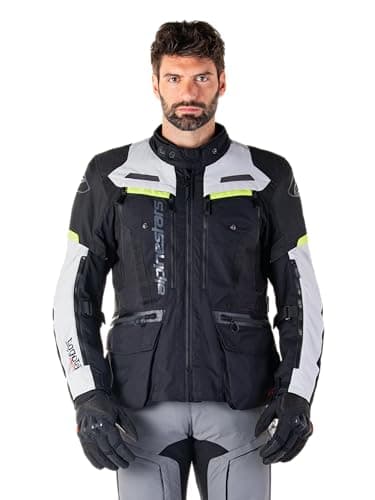
Alpinestars Alpinestars Bogota Pro Drystar
Alpinestars Bogota Pro Drystar

CE Category II certified to EN 17092 AA class with CE Level 2 shoulder and elbow armor and a Drystar membrane — a genuine four-season touring shell that publishes every number that matters.

Best waterproof jacket overall
9.0
$485.00Amazon
02
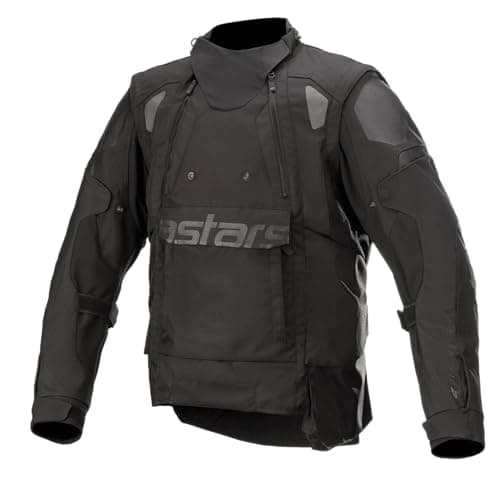
Alpinestars Alpinestars Halo Drystar
Alpinestars Halo Drystar

The most complete published spec sheet on this page: Alpinestars certifies the Halo as a CE AA class garment under EN 17092, fits it with Nucleon Flex Pro armor, and makes the Drystar membrane removable so one textile shell covers wet and dry riding.

Best textile jacket overall
8.8
$570.00Amazon
03
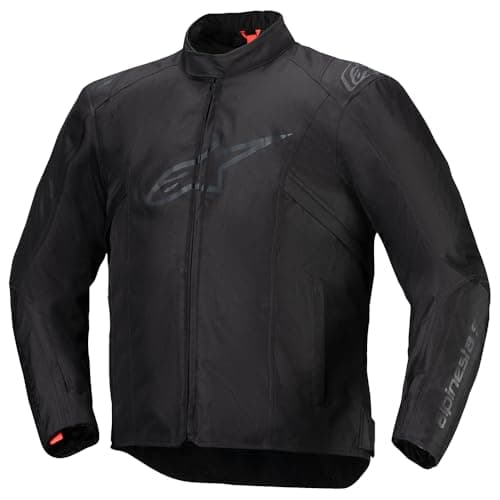
Alpinestars Alpinestars T-SPS V2 Waterproof
Alpinestars T-SPS V2 Waterproof

A fully seam-taped waterproof membrane in a jacket that still publishes its garment class — CE Category II to EN 17092 A class — with CE Level 1 EN 1621-1 armor and a removable thermal liner.

Best mid-price waterproof
8.8
$229.95Amazon
04
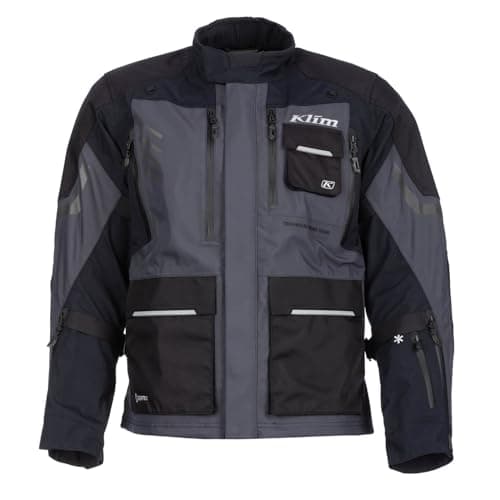
KLIM KLIM Carlsbad
KLIM Carlsbad

The strongest published protection stack we could verify in a textile jacket: CE AA certified to EN 17092-3, D3O CE Level 2 at the shoulders, elbows and back, and a named fabric on every panel. You pay for all of it.

Best published spec sheet
8.7
$799.99Amazon

#ad · Live prices from the Amazon Product API, as of October 19, 2026. Where we have no verified live price we show none — we would rather leave a gap than print a number that has rotted.

In detail

The picks, in full

01
Alpinestars Alpinestars Bogota Pro Drystar

Best waterproof jacket overall

Alpinestars Bogota Pro Drystar

EN 17092 AA classNucleon Flex Pro CE L2Drystar membraneTech-Air ready
9.0/10

CE Category II certified to EN 17092 AA class with CE Level 2 shoulder and elbow armor and a Drystar membrane — a genuine four-season touring shell that publishes every number that matters.

Certification
9.7
Waterproofing
9.4
Armor
9.4
Versatility
9.2
Value
7.4

Pros

  • AA garment class plus CE Level 2 shoulder and elbow armor — the strongest published pair here
  • Three-layer liner-to-drop system reconfigures for wet, cold or dry without changing jackets
  • Tech-Air 5 and Tech-Air 3 ready, with a back-protector pocket in the lining

Cons

  • The most expensive jacket on this page by a wide margin
  • Back protector is sold separately despite the pocket

Don't buy this if…

…your wet riding is an occasional commute — you are paying for a four-season touring shell you will not use.

$485.00View on Amazon

Price as of October 19, 2026. Prices change — Amazon's is the one that counts.

#ad · we may earn a commission from this link to Alpinestars Bogota Pro Drystar

02
Alpinestars Alpinestars Halo Drystar

Best textile jacket overall

Alpinestars Halo Drystar

EN 17092 AA class (sleeves on)Nucleon Flex Pro armorRemovable Drystar membraneTech-Air 5 ready
8.8/10

The most complete published spec sheet on this page: Alpinestars certifies the Halo as a CE AA class garment under EN 17092, fits it with Nucleon Flex Pro armor, and makes the Drystar membrane removable so one textile shell covers wet and dry riding.

Protection
9
Weather range
9
Comfort/fit
8.8
Features
8.8
Value
8.2

Pros

  • Alpinestars publishes a CE AA garment class — the rung above the A-class jackets most riders own
  • Nucleon Flex Pro shoulder and elbow protectors are published as CE Level 2 to EN 1621-1:2012
  • The Drystar membrane is packable and removable, so the same shell works in July and November
  • Tech-Air 5 ready if you add an airbag vest later, plus PU shoulder reinforcement on the outer fabric

Cons

  • The back protector is a separate purchase — you get the pocket, not the protector
  • Alpinestars rates it AA with the sleeves on and Class A in vest mode, so the headline number is conditional
  • No published shell denier, so you are trusting the class rating rather than a fabric number

Don't buy this if…

…you want a certified back protector included in the box — the Klim and the Firstgear both ship one and this does not.

$570.00View on Amazon

Price as of October 19, 2026. Prices change — Amazon's is the one that counts.

#ad · we may earn a commission from this link to Alpinestars Halo Drystar

03
Alpinestars Alpinestars T-SPS V2 Waterproof

Best mid-price waterproof

Alpinestars T-SPS V2 Waterproof

EN 17092 A classNucleon Flex Plus CE L1Seam-taped membrane600D poly shell
8.8/10

A fully seam-taped waterproof membrane in a jacket that still publishes its garment class — CE Category II to EN 17092 A class — with CE Level 1 EN 1621-1 armor and a removable thermal liner.

Waterproofing
9.2
Certification
8.8
Armor
8.4
Versatility
8.8
Value
8.8

Pros

  • Publishes a real EN 17092 garment class at a mid-range price
  • Fully seam-taped membrane rather than a zip-in rain liner
  • Removable thermal liner turns it into a three-season commuter shell

Cons

  • A class rather than AA — this is a commuting and touring jacket, not a fast-road one
  • Level 1 armor where the Bogota gets Level 2

Don't buy this if…

…you want maximum abrasion class — step up to the AA-rated Bogota Pro, which is the same maker's four-season shell.

$229.95View on Amazon

Price as of October 19, 2026. Prices change — Amazon's is the one that counts.

#ad · we may earn a commission from this link to Alpinestars T-SPS V2 Waterproof

04
KLIM KLIM Carlsbad

Best published spec sheet

KLIM Carlsbad

CE AA to EN 17092-3D3O CE Level 2 incl. backFPL400 + 630D CorduraGore-Tex Performance Shell
8.7/10

The strongest published protection stack we could verify in a textile jacket: CE AA certified to EN 17092-3, D3O CE Level 2 at the shoulders, elbows and back, and a named fabric on every panel. You pay for all of it.

Protection
9.6
Weather range
9.2
Comfort/fit
8.4
Features
9
Value
7.2

Pros

  • Klim publishes the certification outright: CE AA rating certified to EN 17092-3
  • D3O CE Level 2 shoulder, elbow and back protectors are all included — no back-protector upsell
  • FPL400 main chassis with 630D Cordura twisted-yarn overlays on the shoulders and elbows
  • Gore-Tex Performance Shell laminate, so the outer fabric never wets out and gets heavy

Cons

  • By far the most expensive jacket on this page
  • The laminate cannot be unzipped out, so hot weather is handled by vents rather than by removing a layer
  • Adventure cut and adventure weight — it is a lot of jacket for a short urban commute

Don't buy this if…

…your riding is mostly short warm-weather trips — you would be paying for expedition-grade fabric you never load.

$799.99View on Amazon

Price as of October 19, 2026. Prices change — Amazon's is the one that counts.

#ad · we may earn a commission from this link to KLIM Carlsbad

The five classes, and who each one is for

ClassPart of the standardWhat it is intended forTypical gear
AAAEN 17092-2The highest protection the standard defines, for riding at speedOne-piece leather suits and the heaviest touring kit
AAEN 17092-3Strong all-round road protection — the sensible targetSerious touring, adventure and sport jackets; certified riding jeans
AEN 17092-4Lighter protection, usually traded for airflow or weightMesh and summer jackets, lighter commuter gear
BEN 17092-5Abrasion only — no impact-protector requirementGarments sold without armor pockets
CEN 17092-6An armor carrier — holds protectors, no abrasion claimArmored base layers and under-vests

Two things in that table surprise most riders. The first is that B and C are not simply "worse" than A— they are different kinds of garment. A Class C armor carrier is not a failed jacket; it is a vest whose job is to hold protectors under something else, and rating it for abrasion would be meaningless. The second is how rare AAA is. Across every jacket and pant we rank on this site, not one publishes AAA. The top of the ladder lives in race suits and heavy leather, and we say so rather than letting the existence of a class imply that you can buy it on Amazon.

What the standard actually tests

The headline test is impact abrasion— the fabric is run against an abrasive surface and the standard measures how long it takes to fail, with the required time rising as you go up the classes. Alongside that it tests tear strength and seam strength, which matter more than riders expect: a shell is only as good as the stitching holding it together, and a garment that survives the slide but splits at a seam has not protected you. Different zones of the garment are tested to different requirements, on the sensible basis that a shoulder meets the road before an underarm panel does.

What the standard does not test is the longer list: waterproofing, breathability, insulation, ventilation, fit, armor coverage, armor level, reflectivity and durability over time. Every one of those is either a separate standard or a marketing claim. This is exactly the same shape of problem as EN 13634 on boots and EN 13594 on gloves, and the three pages together are the whole CE garment picture.

Garment class versus armor level: the mistake to avoid

The most common error we see is treating a "CE Level 2" claim as a statement about the jacket. It is not. EN 1621 Level 1 and Level 2 rate the protector — the insert at the shoulder, elbow or back — and nothing else. You can buy a jacket with Level 2 armor in a shell nobody has ever abrasion-tested, and you can buy a Class AA shell with an uncertified foam pad in the back pocket. Both are half a jacket. The combination to look for is a published class and a published armor level, and the picks on this page have both.

A worked example from our own rankings: the Tourmaster Ridgecrest Mesh publishes EN 1621-1 Level 2 shoulder and elbow armor — a genuinely good claim — and no EN 17092 class at all, with an EVA foam pad rather than a certified protector at the back. The FLY Racing Terra Trek publishes Level 1 armor and no class either. Neither is a bad jacket and we rank both; what they cannot tell you is how their shells resist abrasion. Our armored jacket ranking and textile jacket ranking both state the class, or its absence, on every pick for this reason.

Which class should you actually buy?

  • Commuting and general road riding: aim for Class AA with at least Level 1 armor, ideally Level 2 at the back. The Bogota Pro and the Carlsbad on this page are both there.
  • Hot weather: Class A is a reasonable, honest trade. The Alpinestars T-SPS V2 publishes A class; the Stella SMX Air publishes EN 17092-4 A class on a mesh-and-450D shell. You are buying airflow with abrasion time, knowingly. See our summer jacket ranking.
  • Fast road and track: you want AAA, and that means looking outside the textile market at leather suits. Our leather jacket rankingis the closest this site gets — the Alpinestars GP Force V2 Airflow publishes EN 17092 AA.
  • Riding jeans: the same ladder rates trousers, and it is how you separate certified riding denim from ordinary jeans with a logo. Three of the pairs on our armored jeans ranking publish Class AA to EN 17092-3; one publishes nothing.

If a jacket publishes no class at all

Do not read it as a failure, and do not read it as fine either. In the US market there is no legal requirement, so plenty of well-built gear has never been submitted. What you can do is read the next layer down: the published fabric denier and where the reinforcement is, the armor standard and levelby number, and whether the seams are described at all. A maker who publishes 600 denier polyester with 1000 denier ripstop on the shoulders and EN 1621-1 Level 2 armor is telling you something real, even without a class. A maker whose only claim is "CE armor" and "premium material" is telling you nothing. Our how to choose a jacket guide works through that decision in full, and how a jacket should fit covers the part no certification measures.
How we picked

We don't test helmets. Here's what we do instead.

Everyone in this category says they tested twenty helmets. We haven't tested any — and we say so. What we do instead: compile the published DOT, ECE 22.06 and Snell certifications, the manufacturer's fit, weight and shell specs, the CE armor levels, and reputable published reviews, then score each pick against a published rubric. The scores are judgments from documented research — not measurements we took, because we do not run a lab and we are not going to pretend we do. Every certification and spec claim traces to a source we name and link.

Questions

Frequently asked

What does AA rated mean on a motorcycle jacket?
It means the garment was certified to EN 17092 at Class AA — published as EN 17092-3 — which is the strong all-round road class for abrasion, tear and seam strength. It is the sensible target for general riding. It says nothing about the armor inside the jacket, which is rated separately under EN 1621.
Is AAA better than AA?
Yes, in abrasion terms — AAA is the highest class the standard defines and is intended for riding at speed. It also means heavier, hotter and usually leather. Nothing we rank on this site publishes AAA; the class lives in race suits and the heaviest touring kit.
What is the difference between EN 17092 and EN 1621?
EN 17092 rates the garment — the shell's abrasion, tear and seam performance — in classes AAA to C. EN 1621 rates the impact protectors that go inside it, at Level 1 or Level 2. You want both published. Our CE armor levels guide covers the EN 1621 side in detail.
What do EN 17092-2, -3 and -4 mean?
They are the numbered parts of the standard, one per class: -2 is AAA, -3 is AA, -4 is A, -5 is B and -6 is C. So "EN 17092-3:2020 Class AA" states the same thing twice. A maker who prints the part number is quoting the certificate.
Are Class B and Class C jackets unsafe?
They are different kinds of garment, not worse versions of the same one. Class B is abrasion-rated with no impact-protector requirement; Class C is an armor carrier with no abrasion claim — an armored vest or base layer whose job is to hold protectors under something else. Neither is intended to be your only layer.
Why do so many jackets publish no EN 17092 class?
Because there is no US requirement. EN 17092 is the CE route to selling riding gear as PPE in Europe and the UK; an American-market jacket can be sold with no garment certification at all. So an absent class usually means nobody paid for the test, not that the jacket failed one. Read the published fabric, armor standard and armor level instead.

Keep reading

Receipts

Sources

We do not run a testing lab, and we do not pretend to. Our picks are built from published certifications, manufacturer spec sheets, the standards documents themselves, and reputable published reviews — named and linked above. Where we could not verify something, we say so on the page rather than quietly leaving it out. Read our full method.