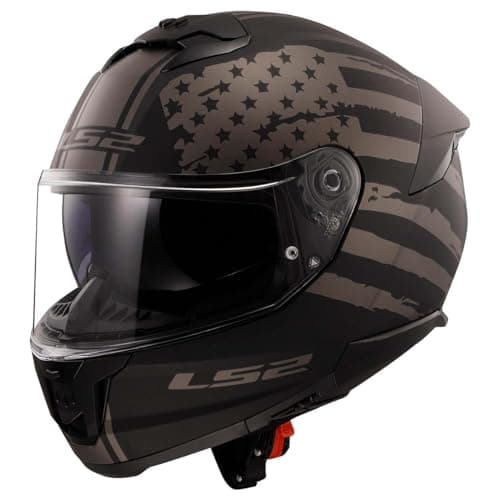
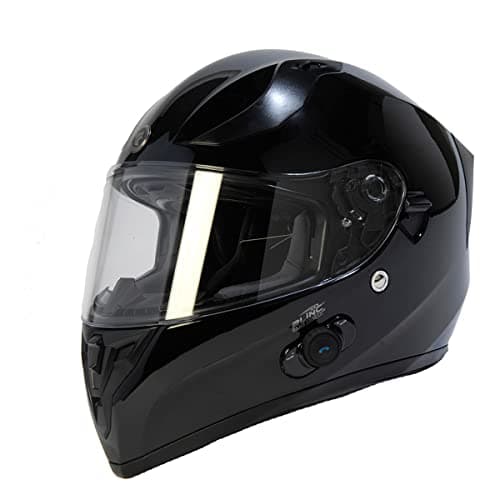
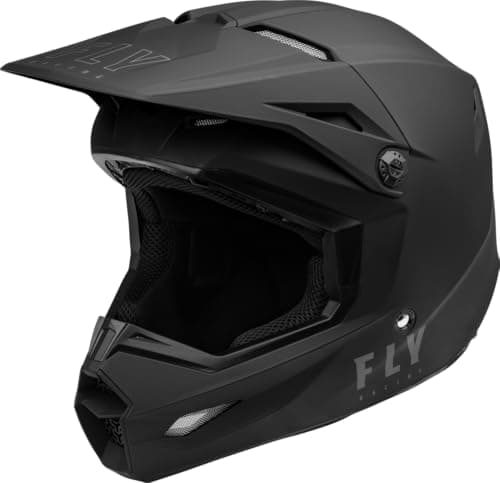
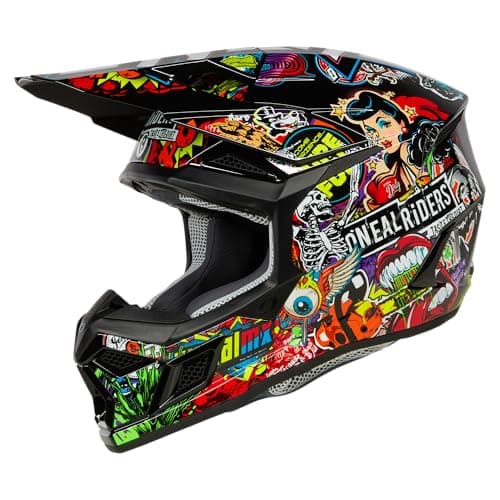
The best motorcycle helmet under $200 is the LS2 Stream II— a full-face that publishes ECE 22.06 and DOT FMVSS 218, three shell sizes with five EPS liners, a real gram weight and a drop-down sun visor, which is more documentation than most helmets twice its price put in writing. It is the pick for a street rider who wants one lid for commuting and weekends. The budget pick is the ILM WS902 Dual Sport, the cheapest helmet here that still does a defined job: a DOT-only ABS dual-sport shell with a drop-down sunshield and a removable peak, tied on price with the HJC IS-Cruiser below it. We have not tested any of these helmets and we are not going to pretend otherwise — every certification, shell count and weight on this page comes from the maker's published spec sheet, and every price in the table is a live Amazon figure stamped with the date it was pulled.
The price ceiling, checked
As of November 23, 2026, all 8 of the helmets below with a verified live price were listed at or under $200. Amazon prices move daily; the comparison table below always shows the current figure, and shows nothing where we have no verified price.
The one fact that shapes this whole page
There is no cheap certification and no expensive certification. There is one floor. A helmet sold for road use in the United States has to meet FMVSS No. 218, and FMVSS 218 does not have tiers. A $110 ABS shell that carries the DOT mark cleared the same peak-acceleration criteria as a $1,100 carbon shell. So the honest question under $200 is not “how safe can I get” — it is which helmet type, and how much of the spec sheet does the maker print?
That is why this page is deliberately not eight full-face helmets. Under $200 you can buy a modular, a half helmet, an off-road lid, a dual-sport with a peak, a built-in-Bluetooth full-face or a conventional street full-face — and the type you choose will change your riding more than any spec on this list. The helmet types guide covers the trade-offs; this page prices them.
How this ranking was built
First, what certifications the maker actually prints.DOT alone is the floor. DOT plus a named ECE revision is better, and the revision number matters: ECE 22.06 added rotational and oblique-impact testing and a wider range of impact points that ECE 22.05 never required. Two picks here publish 22.06 — the LS2 Stream II and the FLY Racing Kinetic — and one publishes three homologations across two continents. Where a maker publishes DOT and nothing else, the card says so instead of implying more.
Second, shell and EPS size counts.This is the spec that separates a cheap helmet from a cheap-feeling helmet, and almost nobody explains it. A maker who builds three shell sizes and five EPS liners across the size run is giving an XS rider a small shell; a maker who builds one shell for every head is giving the XS rider a large shell packed with thicker foam — more mass, more leverage on the neck and a worse fit. The Stream II publishes three shells and five EPS; the Kinetic publishes four and four; several picks here publish neither number.
Third, published weight.Grams on a spec sheet are checkable; “light weight” in a bullet point is not. Where a weight exists we print it, including the size it was measured at, because a weight with no size attached is marketing.
Then the practical hardware, then value.A drop-down internal sun visor is the single most useful feature in this price band and five of these eight have one. A Pinlock-ready shield matters more than it sounds in cold weather. Nothing here is scored on a test we ran — the rubric is on our methodology page.
What $200 buys, and what it does not
It buys the current ECE revision. That is genuinely new. It buys a working modular— the HJC i90 is a DOT and ECE flip-front with an internal sun visor at a price where modulars used to be unsafe novelties. It buys comms without a stick-on pod, in the TORC T15B. And it buys published shell counts, which is the fit granularity most riders do not know to ask for.
What it does not buy is Snell. Not one helmet on this page carries a Snell M2020 certification, and if that is your requirement our Snell-certified rankingis the page you want instead. It does not buy a composite or carbon shell — everything here is polycarbonate, ABS or polymer, which means more grams. It does not buy a quiet cabin: wind noise is the clearest difference between this band and the quietest helmets we rank, and no helmet under $200 solves it. And it does not buy P/J dual homologation on the modular, so the i90 is certified with the chin bar down, not up.
If you would rather shop against a hard ceiling than against a value judgment, our best helmets under $200 ranking is the same shelf with a cap on it — and it deliberately ranks across helmet types rather than stacking up full-faces, because under $200 the money buys the type rather than a higher certification floor.
If $500 is more than you want to spend, the band below is covered the same way: our best helmets under $200 ranking uses the same request-time ceiling check and finds two helmets that publish ECE 22.06 under that cap.
If the photo test came out closer to a circle than an oval, this is the wrong page and we have the right one: our helmets for round heads ranking covers the HJC and Bell shells that suit a round-oval skull, and explains why sizing up never fixes forehead pressure.
Pick by what you ride, not by what is on sale
One street helmet, best documentation: the LS2 Stream II.For the rider who wants a single full-face for commuting and weekend miles and wants to read the spec sheet first. ECE 22.06 and DOT, three shells and five EPS liners, 1,550 g, chin and top vents with a rear exhaust, and a drop-down sun visor. The compromise is weight and noise — it is a polycarbonate helmet and it sounds like one at highway speed.
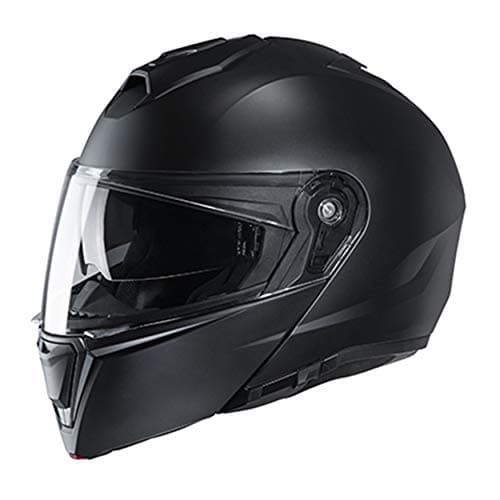
Flip-front convenience: the HJC i90.For the commuter who takes the lid off at lights, wears glasses, or talks to people at fuel stops. DOT and ECE, internal sun visor, Pinlock-ready, touring fit. It is certified chin-bar-down only, so ride it closed — our modular safety page explains exactly what P/J homologation means and which helmets have it.
Off-road, best fit granularity: the FLY Racing Kinetic Solid.For the trail or track-day dirt rider. FLY publishes DOT and ECE 22.06 approval for all regions, four shells and four EPS sizes, and 1,450 ± 50 g at size L. Remember an open eye port makes goggles a separate, mandatory purchase.
Built-in comms: the TORC T15B.For the rider who wants intercom and music without buying a headset. DOT, Blinc Bluetooth integrated, drop-down sun visor. Range and sound are nowhere near a standalone unit and there is no mesh networking — if group riding is the point, an intercom under $200 bolted to a better helmet is the stronger buy.
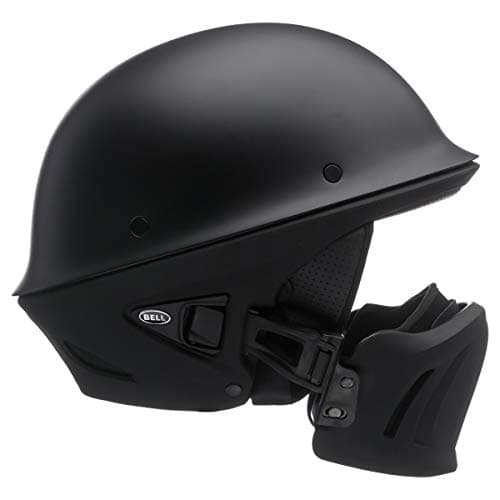
Minimum helmet, maximum air: the Bell Rogue.For the cruiser rider who will wear a half helmet and nothing else. Three shell sizes — the most published of any half helmet we rank — and a removable magnetic muzzle that covers some of your face, which nothing else in the category does. It is still a half helmet: our half helmet ranking is blunt about what you are giving up.
Three homologations, cheapest off-road: the O'Neal 3 SRS.For a first dirt helmet or a spare. DOT, ECE 22-05 and AS/NZS printed together, ~1,340 ± 50 g at L, washable liner. The ECE revision is the old one, which is stated on its card rather than glossed.
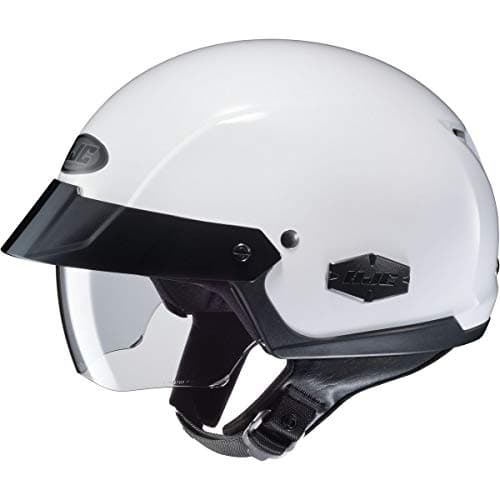
Open face with a real interior: the HJC IS-Cruiser.For the slow-speed, hot-weather, around-town rider. Polycarbonate composite shell, retractable sun visor, removable antibacterial liner. No chin bar, so no chin or jaw protection at all — our open-face ranking covers that trade honestly.
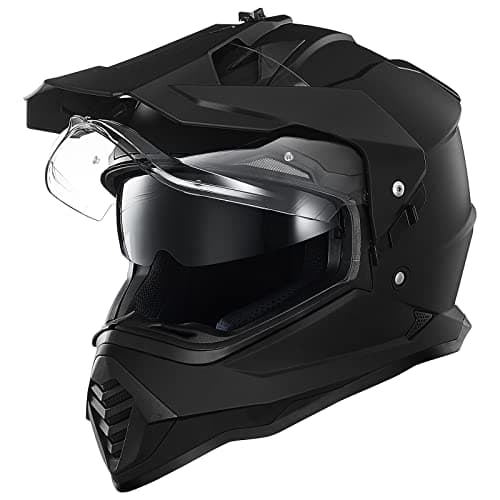
The cheapest thing here that still does a job: the ILM WS902 Dual Sport. For the rider buying a second helmet for a dual-sport or a very tight first budget. FMVSS 218 compliant, drop-down sunshield, Pinlock-30-compatible shield, removable peak. DOT only, no published shell count, no published weight — all three stated on its card. It is on this page because a certified helmet you own beats an ECE 22.06 helmet you are still saving for.
The thing to spend the saved money on
Fit, and it is free. The helmet that fits is the helmet that works, and in this price band riders buy whatever size is in stock. Measure first with our measuring guide, learn your head shape before you pick a brand, and run the roll-off and cheek-pressure checks in how a helmet should fit. A correctly fitted $130 helmet outperforms a badly fitted $600 one on the only test that counts.
Then a Pinlock lens and earplugs. Two cheap purchases that change every cold or long ride: an anti-fog insert stops the visor-up-at-every-light habit, and filtered earplugs do more about noise in this band than any helmet on the page.