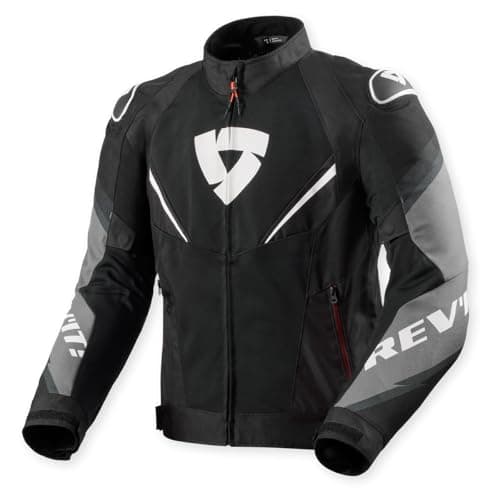
The best mesh motorcycle jacket is the REV'IT! Quantum 3 Air— and the reason is one line on its spec sheet: REV'IT! publishes it at Class AA under EN 17092-3:2020 despite being a mesh jacket, because the mesh is placed where you do not slide and tough polyester is placed where you do. It is the pick for a sport or sport-touring rider riding somewhere hot who will not give up a certified garment to get airflow. The budget pick is the ScorpionEXO Cargo Air Women's, the cheapest jacket here: a Rhino-Mesh chassis with 600-denier panels, Safe Tech CE Level 1 shoulder and elbow armor included, and a back pocket already cut for a Sas-Tec Level 2 insert. We have not tested any of these jackets. Every garment class, denier figure and armor level below comes from the maker's published spec sheet, and every price in the table is a live Amazon number stamped with the date it was pulled.
The one fact that shapes this whole page
A mesh jacket can carry an EN 17092 garment class, and most do not bother. That is the finding this ranking is built on. EN 17092rates the finished garment — abrasion resistance, seam strength, tear strength and impact-cut resistance, zone by zone — and the intuitive assumption is that a jacket made of holes cannot pass. Two jackets here disprove it: the Quantum 3 Air at Class AA and the Stella SMX Air at A class under EN 17092-4:2020.
The mechanism is placement, not magic. The standard tests specific zones, and the zones that matter in a slide — shoulders, outer arms, flanks — are a small part of a jacket's surface. Put the open mesh on the chest, the inner arms and the back panel where you are not sliding, and put a tough woven fabric on the zones that are tested, and a genuinely airy jacket clears a class. Which means a mesh jacket with nopublished class is not making an engineering trade for your benefit — it simply has not been certified, and three of the five here are in that position. Their cards say so.
How this ranking was built
First, the published EN 17092 class.AAA, AA, A, B or C — the actual letter, with the part number and year where the maker prints them. A class beats no class, and a higher class beats a lower one. This is the only spec on a jacket that rates the jacket rather than a pad that slots into it.
Second, where the mesh is and what the solid panels are. With or without a class, a mesh jacket should be able to tell you what fabric covers the slide zones. A maker who prints 600-denier panels with 1000-denier honeycomb ripstop on the shoulders, elbows and forearmshas told you something checkable. Denier is a weak proxy — it is yarn weight, not abrasion resistance, and we will keep saying so — but it beats silence.
Third, the armor level in the box. Published EN 1621-1 Level 2shoulder and elbow protectors beat Level 1, which beats a bare “CE armor” claim with no level, which beats foam. CE armor levels explained has the detail, including why a Level 2 pad in a cheap jacket cleared exactly the same bar as a Level 2 pad in a flagship.
Then the back-protector provision, then value. Almost every mesh jacket ships a foam pad in the back pocket, which is a placeholder rather than a protector. What separates the picks is whether the pocket is cut for a certified insert and whether the maker namesthe insert that fits — a jacket that names its upgrade path has solved your next purchase for you.
What a mesh jacket is for, and when it is the wrong jacket
Mesh exists for one problem: moving air through the jacket at low speed.A vented textile jacket flows air when you open the vents and you are moving; a mesh jacket flows air in stop-start traffic at 20 mph in August, which is when riders actually take gear off. That is the whole case for the category, and it is a strong one — the safest jacket is the one you are still wearing in a heatwave.
It is the wrong jacket for rain and for cold, and no liner fixes that properly. A drop-in waterproof liner inside a mesh shell keeps the water off you and leaves you wearing a wet jacket; mesh plus a thermal layer is still a jacket with air blowing through it. If your riding is three-season rather than summer, a textile jacket with real vents is the better buy, and mesh vs textile is the argument in full. Our summer jacket ranking is the broader hot-weather page, including the vented textiles this page deliberately excludes.
Which jacket, for whom
Hot-weather sport riding, certified: the REV'IT! Quantum 3 Air. For the sport or sport-touring rider in a hot climate who wants the class letter. Published at Class AA under EN 17092-3:2020, with the mesh placed away from the slide zones and tough polyester over them. It is the most jacket on this page and it is priced like it.
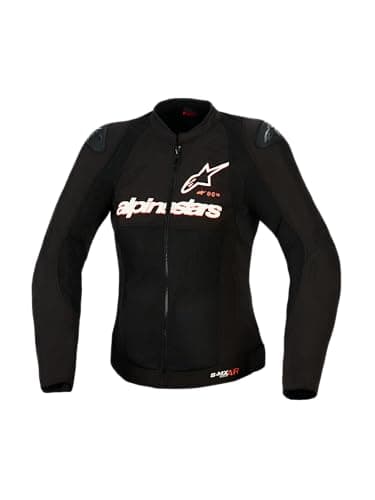
Women's cut, certified, airbag-ready: the Alpinestars Stella SMX Air. For a woman riding in heat who wants a garment class rather than just an armor level. CE Category II to EN 17092-4:2020, A class, on a women's-specific chassis with Nucleon Flex Plus CE Level 1 armor and a mesh-and-450D construction built to expand around a Tech-Air 5 airbag. Our women's jacket ranking covers the cut question across the whole price range.
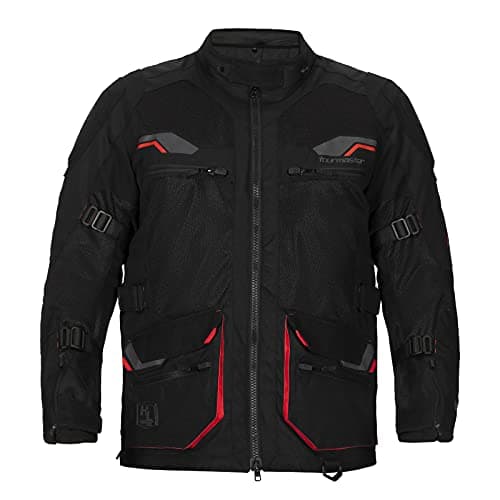
Hot-weather adventure riding, Level 2 armor: the Tourmaster Ridgecrest Mesh Adventure. For the ADV or dual-sport rider who rides unsealed roads in summer. A 600-denier and hi-flow mesh shell with 1000-denier honeycomb ripstop on the shoulders, elbows and forearms, EN 1621-1 Level 2 shoulder and elbow armor, a waterproof zip-out liner and a thermal vest — at the lowest adventure price we rank. Tourmaster publishes no garment class, which is on its card. Our adventure jacket ranking has the documented versions.
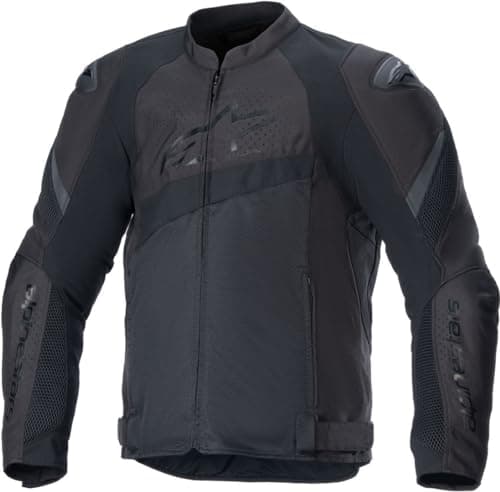
Mesh-and-textile for traffic: the Alpinestars T-GP Plus V4 Airflow.For the commuter or canyon rider who wants a sport fit and real airflow without going full mesh. A heavily vented mesh-and-textile shell with CE armor and a back-protector pocket. It ranks fourth because it publishes an armor level and not a garment class — which is the exact gap this page is built to expose.
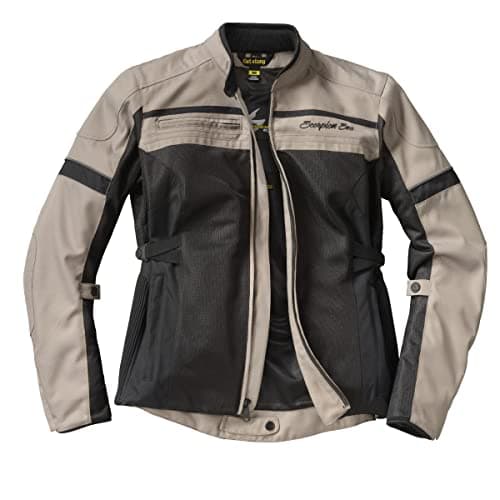
The cheapest mesh jacket we would recommend: the ScorpionEXO Cargo Air Women's.For a woman commuting in heat on a tight budget. A properly ventilated Rhino-Mesh chassis with 600-denier panels, Safe Tech CE Level 1 shoulder and elbow armor included, and a back pocket already sized for a Sas-Tec Level 2 insert — which is the clearest named upgrade path on this page. It is Level 1 where the top picks are Level 2 or classed, and mesh has no answer for cold or rain.
The two purchases that finish a mesh jacket
A certified back protector.Not one of these five includes one and every one of them has a pocket for one, so the honest way to read these prices is jacket plus insert. It is the highest-value add-on in motorcycling because the spine is the one item on the list that does not heal — our back protector ranking covers the EN 1621-2 Level 1 and Level 2 inserts that drop into these pockets.
Then something for your legs, and a plan for rain. A mesh jacket in August usually means jeans, and armored riding jeans are the only protective legwear most street riders will actually wear in heat. For the thunderstorm that ends a hot day, a packable rain layer beats a drop-in liner, because a liner inside a mesh shell leaves you wearing a soaked jacket. Fit matters more than any of it: our jacket fit guide runs the armor-position checks, because a Level 2 shoulder protector halfway down your bicep is protecting your bicep.