Skip to content
LID & LEATHER

Abrasion + armor · Jackets

The Best Textile Motorcycle Jackets

Textile is a description, not a rating. What separates a $180 shell from an $800 one is what the fabric is certified to - and most brands never print it.

By Stephen V.Updated How we research
#ad

We earn a commission when you buy through our Amazon links, at no extra cost to you. It never affects our rankings, and we say so when the cheaper gear is the better buy. How this works.

"Textile" tells you what a jacket is made of, not how well it protects. Cordura, ballistic nylon, poly-fabric, ripstop and the knit panels on a sport jacket are all textile, and they span everything from a $60 marketplace shell to an $800 expedition jacket. The one spec that genuinely separates them is a class most listings never mention: the garment's EN 17092 CE rating.

EN 17092 rates the whole garment — the fabric, the seams and the way the panels are zoned — on abrasion, tear and seam strength. AAA is the highest class, for sport and fast touring. AA is the strong all-round road rating. A is lighter protection, common on hot-weather gear. That is a different claim from the CE level printed on the armor inside, which only describes how the shoulder, elbow and back protectors absorb an impact. Our CE armor levels guide takes both standards apart properly.

Here is the awkward part, and the reason this ranking is ordered the way it is: most textile jackets sold in the US publish no garment class at all. Two of the four picks below do. The other two publish fabric deniers or armor levels instead, and we have scored them on what is actually documented rather than on what the marketing copy implies. We do not crash-test jackets and we do not own an abrasion rig — we read the published certifications, the spec sheets and reputable reviews, and we tell you where the paperwork runs out.

The Alpinestars Halo Drystar takes the top spot for the most complete published sheet at a sane price: CE AA class, Nucleon Flex Pro armor, and a Drystar membrane you can pull out in summer. The KLIM Carlsbadhas the strongest specs on the page — CE AA to EN 17092-3 with D3O Level 2 armor including the back — and the highest price to match. The Firstgear Kilimanjaro 2.0 is the armor-per-dollar pick, with SAS-TEC Level 2 protection at all three points and no published shell class at all. And the ScorpionEXO Yosemiteis the budget answer that still shows its working: real denier numbers and Level 2 limb armor for well under half the Halo's price.

The short answer

Quick picks

#ProductBest forScorePrice
01
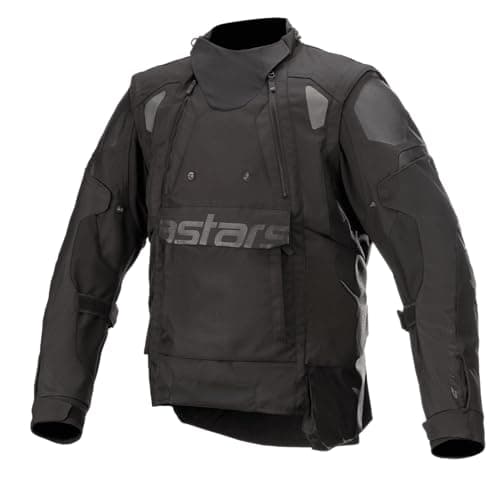
Alpinestars Alpinestars Halo Drystar
Alpinestars Halo Drystar

The most complete published spec sheet on this page: Alpinestars certifies the Halo as a CE AA class garment under EN 17092, fits it with Nucleon Flex Pro armor, and makes the Drystar membrane removable so one textile shell covers wet and dry riding.

Best textile jacket overall
8.8
$574.95Amazon
02
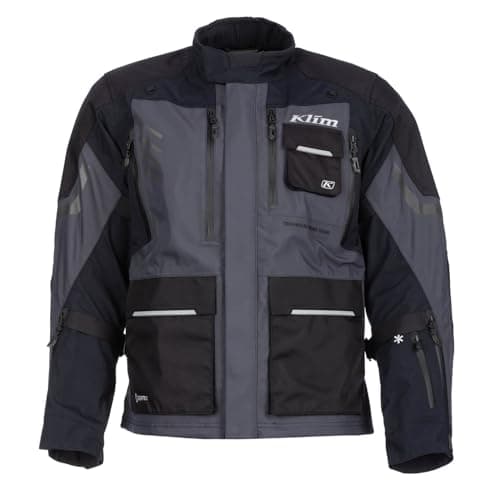
KLIM KLIM Carlsbad
KLIM Carlsbad

The strongest published protection stack we could verify in a textile jacket: CE AA certified to EN 17092-3, D3O CE Level 2 at the shoulders, elbows and back, and a named fabric on every panel. You pay for all of it.

Best published spec sheet
8.7
$799.99Amazon
03
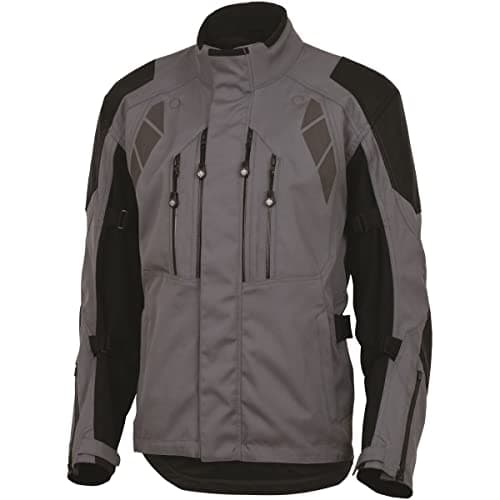
Firstgear Firstgear Kilimanjaro 2.0
Firstgear Kilimanjaro 2.0

The best armor-per-dollar here. Firstgear puts SAS-TEC CE Level 2 protection at the shoulders, elbows and back in the box at a mid-range price — then publishes nothing at all about what the shell itself is rated to.

Best CE Level 2 armor for the money
8.6
$308.87Amazon
04
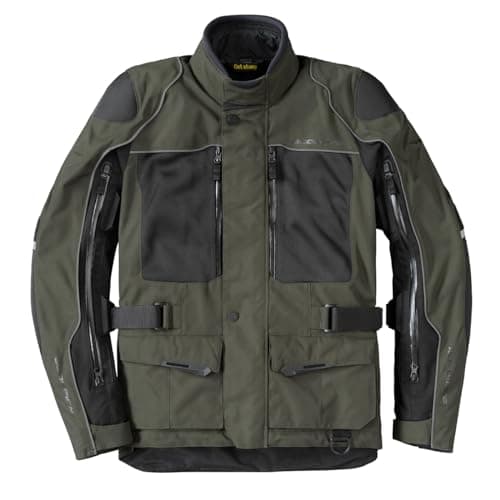
ScorpionEXO ScorpionEXO Yosemite
ScorpionEXO Yosemite

The budget pick that still shows its working. Scorpion publishes the fabric numbers most cheap textile jackets hide — 500 denier nylon body, 1680 denier abrasion zones — and fits Sas-Tec CE Level 2 shoulder and elbow armor.

Best budget textile
8.4
$205.95Amazon

#ad · Live prices from the Amazon Product API, as of Sep 4, 2026. Where we have no verified live price we show none — we would rather leave a gap than print a number that has rotted.

In detail

The picks, in full

01
Alpinestars Alpinestars Halo Drystar

Best textile jacket overall

Alpinestars Halo Drystar

EN 17092 AA class (sleeves on)Nucleon Flex Pro armorRemovable Drystar membraneTech-Air 5 ready
8.8/10

The most complete published spec sheet on this page: Alpinestars certifies the Halo as a CE AA class garment under EN 17092, fits it with Nucleon Flex Pro armor, and makes the Drystar membrane removable so one textile shell covers wet and dry riding.

Protection
9
Weather range
9
Comfort/fit
8.8
Features
8.8
Value
8.2

Pros

  • Alpinestars publishes a CE AA garment class — the rung above the A-class jackets most riders own
  • Nucleon Flex Pro shoulder and elbow protectors are published as CE Level 2 to EN 1621-1:2012
  • The Drystar membrane is packable and removable, so the same shell works in July and November
  • Tech-Air 5 ready if you add an airbag vest later, plus PU shoulder reinforcement on the outer fabric

Cons

  • The back protector is a separate purchase — you get the pocket, not the protector
  • Alpinestars rates it AA with the sleeves on and Class A in vest mode, so the headline number is conditional
  • No published shell denier, so you are trusting the class rating rather than a fabric number

Don't buy this if…

you want a certified back protector included in the box — the Klim and the Firstgear both ship one and this does not.

$574.95View on Amazon

Price as of Sep 4, 2026. Prices change — Amazon's is the one that counts.

#ad · we may earn a commission from this link to Alpinestars Halo Drystar

02
KLIM KLIM Carlsbad

Best published spec sheet

KLIM Carlsbad

CE AA to EN 17092-3D3O CE Level 2 incl. backFPL400 + 630D CorduraGore-Tex Performance Shell
8.7/10

The strongest published protection stack we could verify in a textile jacket: CE AA certified to EN 17092-3, D3O CE Level 2 at the shoulders, elbows and back, and a named fabric on every panel. You pay for all of it.

Protection
9.6
Weather range
9.2
Comfort/fit
8.4
Features
9
Value
7.2

Pros

  • Klim publishes the certification outright: CE AA rating certified to EN 17092-3
  • D3O CE Level 2 shoulder, elbow and back protectors are all included — no back-protector upsell
  • FPL400 main chassis with 630D Cordura twisted-yarn overlays on the shoulders and elbows
  • Gore-Tex Performance Shell laminate, so the outer fabric never wets out and gets heavy

Cons

  • By far the most expensive jacket on this page
  • The laminate cannot be unzipped out, so hot weather is handled by vents rather than by removing a layer
  • Adventure cut and adventure weight — it is a lot of jacket for a short urban commute

Don't buy this if…

your riding is mostly short warm-weather trips — you would be paying for expedition-grade fabric you never load.

$799.99View on Amazon

Price as of Sep 4, 2026. Prices change — Amazon's is the one that counts.

#ad · we may earn a commission from this link to KLIM Carlsbad

03
Firstgear Firstgear Kilimanjaro 2.0

Best CE Level 2 armor for the money

Firstgear Kilimanjaro 2.0

SAS-TEC CE Level 2, all three pointsRemovable waterproof linerIntake + exhaust zip ventsHeated-gear wiring loops
8.6/10

The best armor-per-dollar here. Firstgear puts SAS-TEC CE Level 2 protection at the shoulders, elbows and back in the box at a mid-range price — then publishes nothing at all about what the shell itself is rated to.

Protection
8.6
Weather range
8.6
Comfort/fit
8.4
Features
8.6
Value
8.8

Pros

  • SAS-TEC CE Level 2 protection panels at the shoulders, elbows and back, all included
  • Removable waterproof liner plus intake and exhaust zip vents give it a genuinely wide weather band
  • Internal loops and wiring routing for Firstgear heated gear, which few jackets at this price bother with
  • Adjustable armor pockets let you move the protectors to where your body actually is

Cons

  • Firstgear publishes no EN 17092 garment class, so the shell's abrasion rating is simply unstated
  • Drop-liner waterproofing — the outer shell soaks through and gets heavy in sustained rain
  • No published denier for the outer fabric either; the armor is the documented part, not the textile

Don't buy this if…

you want a published garment class on the label — Klim and Alpinestars state theirs and Firstgear does not.

$308.87View on Amazon

Price as of Sep 4, 2026. Prices change — Amazon's is the one that counts.

#ad · we may earn a commission from this link to Firstgear Kilimanjaro 2.0

04
ScorpionEXO ScorpionEXO Yosemite

Best budget textile

ScorpionEXO Yosemite

500D nylon body / 1680D zonesSas-Tec CE Level 2 shoulder + elbowAirGuard waterproof linerEverHeat thermal liner
8.4/10

The budget pick that still shows its working. Scorpion publishes the fabric numbers most cheap textile jackets hide — 500 denier nylon body, 1680 denier abrasion zones — and fits Sas-Tec CE Level 2 shoulder and elbow armor.

Protection
8.2
Weather range
8.2
Comfort/fit
8.2
Features
8.4
Value
9.2

Pros

  • Publishes real fabric numbers: 500 denier nylon main body with 1680 denier nylon abrasion zones
  • Sas-Tec CE Level 2 shoulder and elbow armor at an entry-level price, which is rare in this bracket
  • Two removable full-sleeve liners — AirGuard waterproof/windproof and EverHeat thermal

Cons

  • The back pad is PE foam; the Level 2 Sas-Tec back protector is sold separately
  • No EN 17092 garment class published, so the deniers are the only shell evidence you get
  • Scorpion describes it as water resistant with a zip-in liner, not a laminate — it is not a storm jacket

Don't buy this if…

you need a certified back protector in the box — budget for the Sas-Tec insert on top, or step up to the Klim.

$205.95View on Amazon

Price as of Sep 4, 2026. Prices change — Amazon's is the one that counts.

#ad · we may earn a commission from this link to ScorpionEXO Yosemite

What EN 17092 actually rates — and why so few textile jackets carry it

EN 17092 is the CE standard written specifically for motorcycle clothing. It divides the garment into impact zones, then tests abrasion resistance, tear strength and seam strength in each zone, and awards a class based on the weakest result. AAA, at the top, is what heavy sport leathers and flagship touring shells target. AA is the class most serious road jackets aim for. A is lighter and shows up on hot-weather gear, where airflow is worth a real trade. There are also B and C classes further down: B covers garments that provide abrasion protection with no impact protectors fitted, and C covers armor-carrier garments that hold protectors but make no abrasion claim at all.

Certification costs money and it is not legally required to sell a jacket in the United States, so plenty of genuinely decent textile jackets simply skip it. That is not proof a jacket is bad. It does mean the abrasion performance is unverified, and on a page ranking textile shells specifically, a stated class has to outrank a confident product description. Both Alpinestars and Klim publish theirs. Firstgear and Scorpion do not, and both say so in their cons above.

Denier is the fallback number, not a substitute for a class

When there is no garment class, the next-best evidence is the fabric spec. Denier measures the linear density of the yarn — the weight in grams of 9,000 meters of it — so a higher number means a thicker, heavier thread. The Yosemite's 500 denier nylon body with 1680 denier abrasion zones and the Carlsbad's 630D Cordura overlays on the shoulders and elbows are both telling you the same thing in different words: the panels that hit the road first are built from heavier yarn than the panels that do not.

Treat it as a proxy and nothing more. Denier says nothing about the weave density, the coating, the fiber type or how the seams are stitched, and a well-constructed 500D Cordura panel can out-slide a loosely woven 1000D polyester one. A published denier is a useful sign that a brand knows what it built; a published EN 17092 class is a measured result. Prefer the result.

Read what is in the box, not what is in the pocket

This is where textile jackets quietly diverge. Every jacket here has a back-protector pocket. Only two of them — the Carlsbad and the Kilimanjaro 2.0 — actually put a certified back protector in it. The Halo Drystar and the Yosemite ship with the pocket and a foam placeholder, which means the sticker price is not the finished price.

Budget accordingly. A CE Level 2 back insert is the single highest-value protection upgrade you can make to any jacket, and the spine is the one area where the difference between certified armor and a foam pad is not subtle. Our back protector ranking covers both the jacket-insert and harness styles, and best armored jackets sorts the whole category by what protection you get out of the box.

Waterproofing is a separate axis — do not let it decide the shell

Three of these four jackets are weatherproofed in some form, and the constructions are not equivalent. The Carlsbad uses a Gore-Tex Performance Shell laminate bonded to the outer fabric. The Halo Drystar uses a removable Drystar membrane. The Kilimanjaro and the Yosemite both use zip-in liners, which keep you dry while the outer shell soaks up water and gets cold and heavy.

A laminate stays light in hour three of rain; a drop liner does not. But a laminate also cannot be taken out when it is 95 degrees, which is why laminated jackets come with bigger vents. If rain is the variable that actually decides your purchase rather than shell rating, our waterproof jacket ranking sorts this same field by membrane construction instead.

Fit decides whether any of the above matters

Armor only works where it sits. A jacket that is too roomy lets the shoulder protector slide off the shoulder and the elbow protector rotate to the inside of your arm, and a certified Level 2 insert two inches out of position protects nothing. Check the fit in a riding posture, not standing up straight: arms forward, shoulders rolled, back curved.

The Kilimanjaro's adjustable armor pockets exist for exactly this reason, and every jacket here has some combination of waist, bicep and forearm adjusters. Use them. The other thing a riding posture reveals is sleeve length — a jacket that covers your wrists standing up will often ride up and expose a gap above your gauntlet gloves once you reach for the bars.

What each price bracket buys

At the entry end, around what the Yosemite costs, you can now get published fabric deniers and CE Level 2 limb armor, but the certified back protector and any garment class will be missing. At the mid range, where the Kilimanjaro sits, the typical upgrade is a full CE Level 2 set including the back plus a much better vent and liner system — still usually without an EN 17092 class.

Above that, you are buying certification and construction. The Halo Drystar's premium over the Kilimanjaro largely buys the published AA class, airbag compatibility and a removable membrane. The Carlsbad's premium over the Halo buys named panel fabrics, a Gore-Tex laminate and the included D3O Level 2 back pad. Prices move constantly, so we show the live Amazon number on each card rather than quoting one here; if you want to see how the whole budget lands across a full kit, our gear cost guide breaks it down.

Which one should you buy?

Buy the Alpinestars Halo Drystar if you want the best-documented all-rounder: a published AA garment class, Level 2 limb armor, a membrane you can remove for summer, and a jacket that will take a Tech-Air 5 airbag later. Add a back protector to it. Buy the KLIM Carlsbadif you want the strongest published stack in one purchase and the budget allows — AA class, D3O Level 2 including the back, named fabrics on every panel, Gore-Tex laminate — and you ride enough weather to justify it.

Buy the Firstgear Kilimanjaro 2.0 if armor coverage is your priority and you would rather have SAS-TEC Level 2 at all three points than a certificate for the shell. Buy the ScorpionEXO Yosemite if you are equipping yourself on a real budget: Level 2 limb armor and honest denier numbers for entry money is a good trade, as long as you plan to fill the back pocket properly. And if you are still weighing the material itself, our leather vs textile comparison is the page to read before any of these.

How we picked

We don't test helmets. Here's what we do instead.

Everyone in this category says they tested twenty helmets. We haven't tested any — and we say so. What we do instead: compile the published DOT, ECE 22.06 and Snell certifications, the manufacturer's fit, weight and shell specs, the CE armor levels, and reputable published reviews, then score each pick against a published rubric. The scores are judgments from documented research — not measurements we took, because we do not run a lab and we are not going to pretend we do. Every certification and spec claim traces to a source we name and link.

Questions

Frequently asked

Are textile motorcycle jackets as safe as leather?
They can be. Leather has excellent abrasion resistance per dollar, but a textile jacket with a published EN 17092 AA or AAAclass has been measured to a standard most leather jackets on Amazon never publish. Impact protection comes from the CE armor in both cases. Compare the classes and the armor levels, not the material names — our leather vs textile page works through the rest of the trade-offs.
What EN 17092 class should a textile jacket have?
For general road riding, aim for at least AA. AAA is worth it for fast road or track use. Ais a reasonable trade on hot-weather gear where airflow keeps you wearing the jacket at all. If no class is published, the jacket is not necessarily poor — its abrasion performance is simply unverified, and you should weigh the fabric specs and armor instead.
What does denier mean on a motorcycle jacket?
Denier is the weight in grams of 9,000 meters of the yarn, so a higher number means thicker, heavier thread. A 500D body with 1680D panels at the shoulders and elbows tells you the brand reinforced the zones that hit first. It is a useful proxy, but it says nothing about weave, coating or stitching — a measured EN 17092 class beats any denier figure.
Do textile jackets come with a back protector?
Often not. Most ship with a pocket and a foam placeholder. Of the picks here, the Klim Carlsbad and the Firstgear Kilimanjaro 2.0 include a certified back protector; the Alpinestars Halo Drystar and the ScorpionEXO Yosemite do not. Adding a CE Level 2 back insert is the highest-value upgrade you can make to any jacket.
Is a textile jacket too hot for summer riding?
A membrane jacket with the vents shut is very warm. A laminated shell handles heat with vents only; a jacket with a removable liner lets you strip the membrane out entirely. If most of your riding is hot, a mesh or perforated shell is the better tool — see mesh vs textile and our summer jacket picks.
How long does a textile motorcycle jacket last?
The shell fabric outlives the systems attached to it. Waterproof membranes and DWR coatings degrade with dirt and washing long before the nylon wears out, and armor hardens or compresses over the years. Wash it correctly, reproof the outer, and replace the jacket after any crash that scuffed the fabric — our jacket care guide covers reproofing properly.

Keep reading

Receipts

Sources

We do not run a testing lab, and we do not pretend to. Our picks are built from published certifications, manufacturer spec sheets, the standards documents themselves, and reputable published reviews — named and linked above. Where we could not verify something, we say so on the page rather than quietly leaving it out. Read our full method.