Cold hands are not a comfort problem. Past a certain point your fingers stop reporting what the levers are doing, fine control disappears, and you find yourself grabbing a brake you meant to squeeze. Every rider who has ridden home in January knows the feeling of arriving with hands that will not work — and knows that the last twenty minutes of that ride were the least safe of the day. Heated gloves solve that problem completely, which is why they are worth talking about seriously.
But we have to lead with the awkward part, because this site is built on published specs and this is where the category falls down: none of the heated gloves we could find publishes an EN 13594 certification— the CE standard for motorcycle protective gloves. Heated gloves are built around wiring, batteries and insulation, and submitting a heated glove for abrasion and seam-burst testing is apparently a step most makers do not take. That does not make them useless. It does mean you should read the protection claims for what they are: features, not certifications.
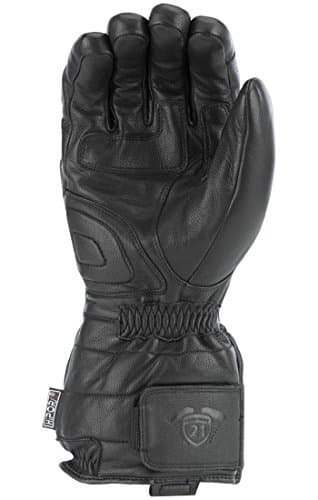
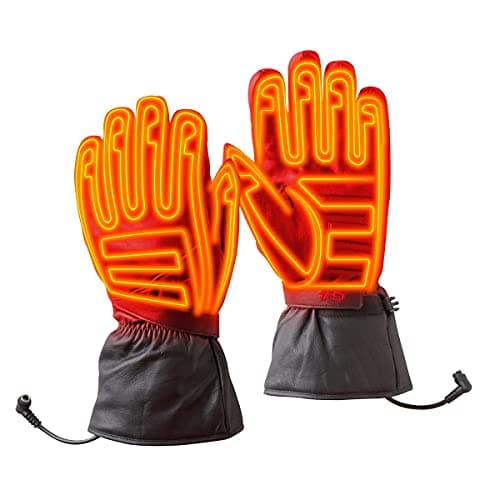
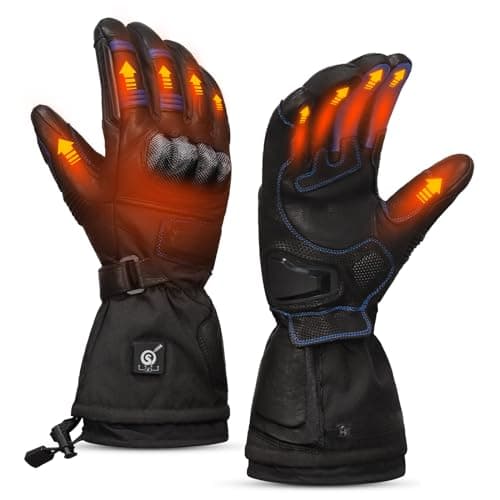
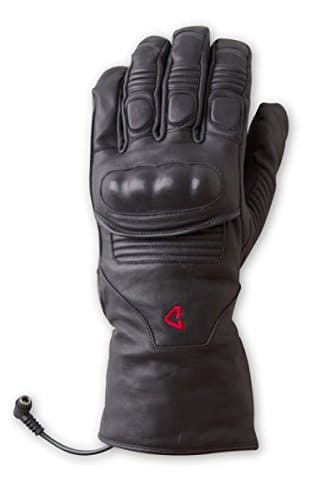
With that stated, the rankings. The Gerbing 12V Vanguard takes the top spot because a hardwired glove never runs out of heat and Gerbing puts real protective features on it. The Highway 21 Radiant is the best-built cordless option. The Gerbing G4 is the women's-pattern pick. And the Savior Heat is the cheapest honest way to find out whether heated gloves change your winter.
The certification gap, and the two ways around it
EN 13594is the CE standard for motorcycle gloves, and it tests abrasion, cut resistance, tear strength and seam burst at Level 1 or Level 2. It is the number we look for on every other glove on this site — see our main gloves ranking, where every pick publishes one. Heated gloves, as a category, generally do not.
There are two sensible responses. The first is to buy the heated glove with the most actualprotective construction — leather rather than synthetic, a hard or floating knuckle, palm reinforcement — and accept an uncertified but visibly serious glove. The Gerbing Vanguard and the Highway 21 Radiant are both leather gauntlets with knuckle protection, and that is a genuinely different object from a heated ski glove.
The second is to separate the two jobs: buy a thin heated liner and wear a certified riding glove over it, or buy a certified winter glove and add heated grips to the bike. Heated grips warm your palms, which is where the bars pull heat out of you, and they cost less than most of the gloves here. That combination gets you an EN 13594 glove and warm hands, which is the outcome the certification-first reader actually wants. Our winter gloves ranking is where to start on the certified side.
12V hardwired vs battery: the decision that shapes everything
Hardwired 12Vgloves — the Gerbing Vanguard — take power from the bike through a controller wired to the battery. The advantages are decisive if cold is a serious problem for you: unlimited run time, higher sustained heat (135F at 13W on the Vanguard), and no charging routine. The costs are that you have to install a harness, and you are tethered to the bike — unplugging at a fuel stop means unplugging.
Batterygloves — the Highway 21, the Gerbing G4, the Savior Heat — carry 7V or 7.4V lithium packs in the cuffs. They work on any bike with no installation, and they keep working when you walk away. The trade is run time, and it is a real trade: independent testing of the Highway 21 Radiant found roughly four hours on low falling to about two and a half on high. On a two-hour commute that is fine. On a cold all-day ride, it is not.
The honest rule: if your cold rides are short and varied, buy batteries. If your cold rides are long, wire the bike.
Where the heat needs to be
Cold starts at the fingertips and the back of the hand, not the palm — the palm is pressed against a grip that is either heated or at least shielded from the wind. A heating element that stops at the first knuckle leaves the exact tissue that goes numb first with no help at all.
This is why Gerbing publishes that its microwire runs to the tip of every finger, and it is the specification to look for. If a listing shows a heating diagram, check where the wire actually ends. If it does not show one, assume the coverage is partial.
Insulation still does most of the work
A heated glove is not a substitute for insulation; it is insulation plus a heat source. The numbers to compare are grams of Thinsulate or equivalent: the Gerbing Vanguard publishes 150 g, the Highway 21 Radiant 100 g. More insulation means the heating element works less hard to hold temperature, which on a battery glove translates directly into longer run time.
The trade is bulk, and bulk costs you lever feel. There is no way around it: a glove warm enough for 30F weather will never feel like a summer glove on the controls. That is one more argument for heated grips plus a thinner certified glove if control feel matters to you more than absolute warmth.
Windproofing and waterproofing are separate problems
Wind chill at 60 mph is what actually strips heat from your hands, so a windproof membrane matters as much as the heating element. Water is worse still: a wet glove conducts heat away faster than a dry one and will beat any heating element you can buy. The Highway 21 uses a Hipora waterproof and windproof liner; the Savior Heat publishes a waterproof, windproof shell; the Gerbing G4 is described as water-resistant, which is a weaker claim and we scored it as one.
Watch the cuff too. A gauntlet that seals over your jacket sleeve keeps the weather out of the whole system — see short vs gauntlet gloves for why that matters more in winter than any other season.
Which one should you buy?
Buy the Gerbing 12V Vanguardif cold is a serious, recurring problem and you are willing to wire a controller to the bike — unlimited heat, fingertip coverage and the most protective build here. Buy the Highway 21 Radiant if you want warm hands with no installation and the best cordless construction: leather, armored knuckles, waterproof liner. Buy the Gerbing G4 Women'sif a men's glove has never fit your hand, because heat that sits in the wrong place is wasted heat. And buy the Savior Heatif you want to test the idea cheaply — but wear them alongside a certified glove rather than instead of one, because this is a heated glove first and a riding glove second. If the certification gap bothers you, and it reasonably might, the right answer is a certified winter glove plus heated grips.