Skip to content
LID & LEATHER

Abrasion + armor · Jackets

High-Visibility Motorcycle Gear

Fluorescent works by day, retroreflective works at night, and they are not the same material. What to look for, and where to put it.

By Stephen V.Updated How we research
#ad

We earn a commission when you buy through our Amazon links, at no extra cost to you. It never affects our rankings, and we say so when the cheaper gear is the better buy. How this works.

The verdict: buy reflective material low on your body and on the parts that move — ankles, calves, wrists — and treat a fluorescent yellow shell as a daylight tool only. If you want one purchase, a hi-viz vest over whatever jacket you already own is the cheapest and most flexible answer, because it keeps your jacket choice free and can come off when you do not want it. Of the gear we rank, the Joe Rocket Blaster is the mid-price textile jacket that publishes reflective panels rather than mentioning visibility in passing, and the Tourmaster Sentry Evo rain pant publishes 3M reflective transfers at exactly the height that matters.

Almost every conversation about hi-viz goes wrong because two completely different materials get called the same thing.

  • Fluorescent— the eye-watering yellow, green and orange fabrics. These work by converting ultraviolet light you cannot see into visible light, which makes them appear brighter than their surroundings. That mechanism needs UV, so fluorescent material is at its best in daylight and particularly in the dull, flat, overcast conditions where a dark bike disappears. At night it does almost nothing, because there is no UV to convert.
  • Retroreflective— the silver-grey tape and printed transfers that light up white when a headlight hits them. Glass beads or microprisms bounce light back toward its source, which means it only works when there is a light pointed at you and the driver is sitting near that light. That is exactly the night-time car-headlight case, and it is why retroreflective material is the one that matters after dark.

You want both, and they are not interchangeable. A fluorescent jacket with no reflective detail is a daytime garment; a black jacket with good reflective panels is a night-time garment. The gear worth owning publishes both.

Where it goes matters more than how much there is

  1. Low and moving beats high and static. Reflective material on your ankles, calves and wrists moves in a pattern no other road object makes, and human perception is very good at picking out biological motion. A reflective strip across your shoulders is static and reads as part of the vehicle; strips on your legs read as a person. This is why the two legwear picks below are on a page about jackets.
  2. Break up the outline. A single bright blob is harder to interpret than a shape a driver can recognize as a rider. Reflective detail at the shoulders, elbows, calves and ankles gives a driver geometry to work with at a glance.
  3. Your helmet is the highest point you own. A light-colored or reflective-marked helmet sits above the traffic at exactly the height of a car mirror. Our commuting helmets ranking covers lids suited to the riding where this matters most.
  4. Do not let hi-viz replace lane position. Conspicuity is one layer. Being where a driver is already looking, covering the mirrors, and assuming you have not been seen are the others, and no garment substitutes for them.

What to look for on a listing — and what to ignore

Worth paying for:a named reflective technology, which in practice almost always means 3M; reflective detail described by location ("at the calves", "on the shoulders") rather than as a vague feature; and a published garment class under EN 17092 or published CE armor, because a visible garment with no protective value is the wrong trade.

Ignore:"high visibility" as a styling word on a dark garment with a thin piped edge; claims of ANSI or EN ISO 20471 class on motorcycle gear unless the maker states the class and the standard (those are workwear standards about area and placement of material, and motorcycle makers very rarely certify to them); and any suggestion that hi-viz is a substitute for protection. A fluorescent mesh vest over an uncertified hoodie is a visibility solution attached to nothing.

We have not measured the reflectivity of anything on this page and we do not run a photometric lab. Every claim below is the maker's own published description of its reflective material, and the picks are ranked on how specific that publication is.

The short answer

Quick picks

#ProductBest forScorePrice
01
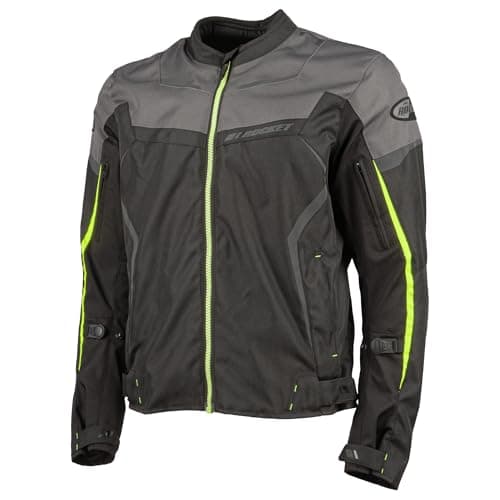
Joe Rocket Joe Rocket Blaster
Joe Rocket Blaster

A lot of protective jacket for the money. A textile shell with CE armor, a removable liner and reflective panels — the sensible mid-price default for a commuter.

Best mid-price textile
8.1
$179.99Amazon
02
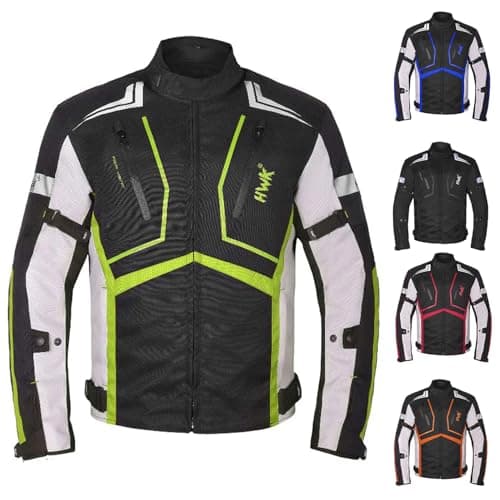
HWK HWK Cordura Textile Jacket
HWK Cordura Textile Jacket

The budget starter jacket done right: a Cordura shell with armor pockets, a waterproof liner and vents, for less than the cost of filling a tank with premium a few times over.

Cheapest we'd recommend
7.8
$69.99Amazon
03
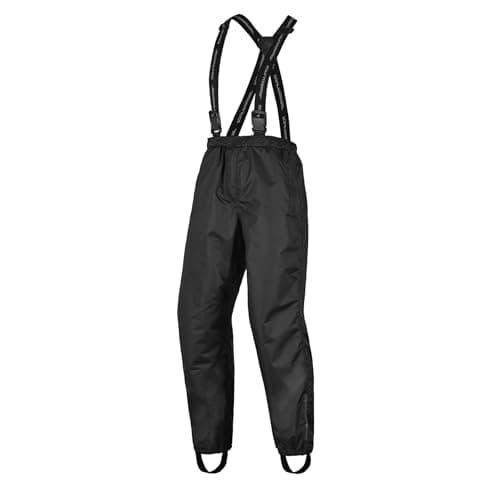
Tourmaster Tourmaster Sentry Evo Rain Pants
Tourmaster Sentry Evo Rain Pants

A laminated, fully seam-sealed rain pant from a motorcycle brand with 3M reflective transfers and stirrup straps that stop the legs riding up - the sensible middle of this page.

Best value from a moto brand
8.3
$59.99Amazon
04
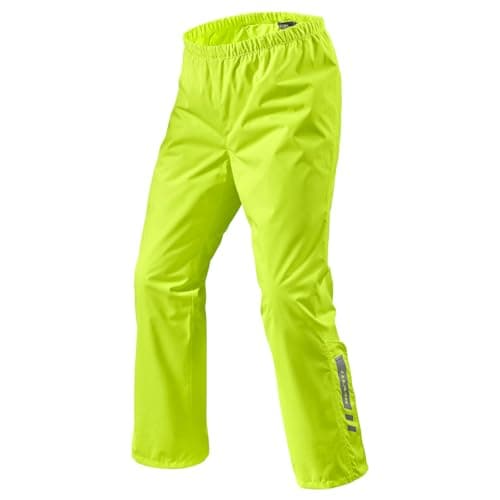
REV'IT! REV'IT! Acid 4 H2O Rain Pants
REV'IT! Acid 4 H2O Rain Pants

The only laminated shell here. REV'IT! builds the Acid 4 H2O around hydratex|Lite rather than a coating, publishes a real size run with hip and inseam measurements, and packs it into a carrier bag small enough to live under the seat.

Best laminate and best sizing data
8.6
$60.40Amazon

#ad · Live prices from the Amazon Product API, as of October 19, 2026. Where we have no verified live price we show none — we would rather leave a gap than print a number that has rotted.

In detail

The picks, in full

01
Joe Rocket Joe Rocket Blaster

Best mid-price textile

Joe Rocket Blaster

Textile shellCE armorRemovable linerReflective panels
8.1/10

A lot of protective jacket for the money. A textile shell with CE armor, a removable liner and reflective panels — the sensible mid-price default for a commuter.

Protection
8
Weather range
7.6
Comfort/fit
8.2
Features
8
Value
8.8

Pros

  • CE-certified armor at a commuter-friendly price
  • Removable liner adds some weather flexibility
  • Reflective detailing for visibility in traffic

Cons

  • Not fully waterproof
  • Back protector is a foam pad you should upgrade

Don't buy this if…

…you need a guaranteed-waterproof shell for daily wet-weather commuting.

$179.99View on Amazon

Price as of October 19, 2026. Prices change — Amazon's is the one that counts.

#ad · we may earn a commission from this link to Joe Rocket Blaster

02
HWK HWK Cordura Textile Jacket

Cheapest we'd recommend

HWK Cordura Textile Jacket

Cordura textileArmor includedWaterproof linerVented
7.8/10

The budget starter jacket done right: a Cordura shell with armor pockets, a waterproof liner and vents, for less than the cost of filling a tank with premium a few times over.

Protection
7.4
Weather range
8
Comfort/fit
7.6
Features
7.8
Value
9.4

Pros

  • Cordura abrasion-resistant shell at a rock-bottom price
  • Comes with armor and a removable waterproof liner
  • Zippered vents for warm-weather airflow

Cons

  • Armor is basic — upgrade to CE Level 2 when you can
  • Fit and finish are budget-grade

Don't buy this if…

…you want top-tier armor and finish — this is a first-jacket price pick.

$69.99View on Amazon

Price as of October 19, 2026. Prices change — Amazon's is the one that counts.

#ad · we may earn a commission from this link to HWK Cordura Textile Jacket

03
Tourmaster Tourmaster Sentry Evo Rain Pants

Best value from a moto brand

Tourmaster Sentry Evo Rain Pants

Laminated, fully seam-sealed3M reflective heat transfersElastic cuffs + stirrup boot strapsWaterproof pockets, S-3XL
8.3/10

A laminated, fully seam-sealed rain pant from a motorcycle brand with 3M reflective transfers and stirrup straps that stop the legs riding up - the sensible middle of this page.

Waterproof construction
8.8
On/off over boots
7.8
Published detail
7.8
Packability
7.6
Value
8.8

Pros

  • Tourmaster publishes both halves of the claim: a laminated construction AND fully seam-sealed, which is more than REV'IT! states here
  • 3M reflective heat transfers - a named reflective material rather than unspecified accent panels
  • Elastic cuffs plus stirrup boot straps, which Tourmaster says keep rain from creeping in and stop the leg riding up your boot at speed
  • Waterproof pockets, which almost no rain overpant bothers with
  • Sized S-3XL from a brand whose jacket-to-pant ecosystem you may already own

Cons

  • No waterproof rating, no breathability figure and no fabric denier published anywhere we could find
  • No leg zips or gussets published, so entry over a boot relies on the elastic cuff stretching
  • No packed size or carry bag published
  • No CE or EN 17092 claim - this is a rain shell with no abrasion rating, which is true of everything on this page

Don't buy this if…

…the pant has to go on over tall boots in a hurry - neither this nor the REV'IT! publishes a wide-opening leg.

$59.99View on Amazon

Price as of October 19, 2026. Prices change — Amazon's is the one that counts.

#ad · we may earn a commission from this link to Tourmaster Sentry Evo Rain Pants

04
REV'IT! REV'IT! Acid 4 H2O Rain Pants

Best laminate and best sizing data

REV'IT! Acid 4 H2O Rain Pants

Laminated hydratex|LitePolyester PU coated outer shellLaminated reflection at calvesXS-3XL with published measurements
8.6/10

The only laminated shell here. REV'IT! builds the Acid 4 H2O around hydratex|Lite rather than a coating, publishes a real size run with hip and inseam measurements, and packs it into a carrier bag small enough to live under the seat.

Waterproof construction
9
On/off over boots
7.6
Published detail
9
Packability
8.8
Value
8

Pros

  • A laminate rather than a coating: REV'IT! describes hydratex|Lite as all-weather protection in a single layer, with a micropore waterproof coating on the inner face of the shell
  • The only maker here that publishes hip and inseam measurements per size, so you can buy the right size without guessing - XS through 3XL
  • Laminated reflection at the calves, which is where a car's headlights actually sweep
  • Comes in a compact carrier bag REV'IT! says fits in a backpack, and the non-stick inner coating stops the pant grabbing your trousers on the way on
  • Loose, generous cut designed to go over riding gear rather than replace it

Cons

  • REV'IT! does not publish whether the seams are taped, which is the one construction fact that decides a rain pant - Nelson-Rigg and Tourmaster both state theirs
  • No over-boot leg zips or gussets published, so getting these on over a tall boot at the roadside is the open question
  • No waterproof rating in millimeters and no breathability figure published
  • The most expensive pant on this page, and the neon colorway is the one most reliably in stock

Don't buy this if…

…you will be pulling these on in a lay-by over tall adventure boots: the Nelson-Rigg's wide gussets are built for exactly that and these are not.

$60.40View on Amazon

Price as of October 19, 2026. Prices change — Amazon's is the one that counts.

#ad · we may earn a commission from this link to REV'IT! Acid 4 H2O Rain Pants

What each pick publishes about being seen

PickPublished visibility featureWhere it sitsProtection alongside it
Joe Rocket BlasterReflective panels and reflective detailingTorso and armsCE armor, textile shell, removable liner
HWK Cordura TextileReflective detailing with an adjustable fitTorso and armsCordura shell, armor included, waterproof liner
Tourmaster Sentry Evo rain pant3M reflective heat transfers — a named technologyLegs, including the lower legNone — a waterproof shell, not protective gear
REV'IT! Acid 4 H2O rain pantLaminated reflection at the calvesCalves — the strongest positionNone — a waterproof shell, not protective gear

Why two rain pants are on a visibility page

Because the two products in our catalog that publish their reflective material most precisely are both rain pants, and because the lower leg is the best place to put it. That is an honest result rather than a tidy one. Note clearly what those two are and are not: a rain pant is a waterproof shell worn over real gear, carries no EN 17092 class and no armor, and does nothing for abrasion. Our rain pants ranking explains that framing in full, and riding pants and armored jeans are the protective legwear pages.

The two jackets are the opposite trade: full protective garments whose makers publish reflective detailing without naming a technology or a position. That is typical of the category, and it is the reason this page is a guide rather than a ranking of hi-viz jackets. We would rather tell you where to put reflective material than pretend our catalog contains a fluorescent jacket whose specification we can verify.

The cheapest effective setup

A plain hi-viz vest with retroreflective bands, worn over the jacket you already own, plus reflective material somewhere on your lower legs. It costs very little, it leaves your jacket choice untouched, it comes off at the destination, and it puts fluorescent area up high for daylight and retroreflective bands in the headlight path for night. Then make the rest of your kit work: our rain gear guide covers the wet low-light case where this matters most, and our commuting gear guide covers the daily version.

How we picked

We don't test helmets. Here's what we do instead.

Everyone in this category says they tested twenty helmets. We haven't tested any — and we say so. What we do instead: compile the published DOT, ECE 22.06 and Snell certifications, the manufacturer's fit, weight and shell specs, the CE armor levels, and reputable published reviews, then score each pick against a published rubric. The scores are judgments from documented research — not measurements we took, because we do not run a lab and we are not going to pretend we do. Every certification and spec claim traces to a source we name and link.
Questions

Frequently asked

Does high-visibility gear actually reduce crashes?
Conspicuity research generally supports the idea that being easier to detect helps, and we are not going to quote a number we have not sourced. What is mechanically clear is what each material does: fluorescent increases contrast in daylight, retroreflective returns headlight at night. Neither makes a driver look in your direction, which is why it is one layer rather than a strategy.
Is a hi-viz vest enough?
For visibility, a vest with retroreflective bands over your existing jacket is the most cost-effective option there is. For protection it contributes nothing, so what is underneath still has to be a real garment — see our armored jackets ranking.
Fluorescent or reflective — which should I prioritize?
It depends on when you ride. Mostly daylight and dull weather: fluorescent color. Commuting in the dark or riding at night: retroreflective material, positioned low and on moving limbs. Most riders do both, which is why gear that publishes both is worth more than gear that is simply bright.
Does a white helmet make a difference?
A light-colored helmet is more contrast at the highest point of your silhouette, right at mirror height, and it is a free choice when you are buying a helmet anyway. It is not a reason to pick an uncertified lid in a better color — certification first, color second.
Is hi-viz gear less protective?
Not inherently. Fluorescent fabric and reflective transfers are applied to the same shells as any other colorway. What does happen is that cheap hi-viz vests and overlays have no protective function at all, so check the garment class and armor of whatever is doing the protecting, independently of its color.
Will reflective material wash out?
Heat-transferred and laminated reflective material degrades with abrasion and with hot washing and tumble drying far more than with normal use. Wash protective gear cool and air dry it — our jacket washing guide covers the method that preserves both the reflective panels and any water repellency.

Keep reading

Receipts

Sources

We do not run a testing lab, and we do not pretend to. Our picks are built from published certifications, manufacturer spec sheets, the standards documents themselves, and reputable published reviews — named and linked above. Where we could not verify something, we say so on the page rather than quietly leaving it out. Read our full method.