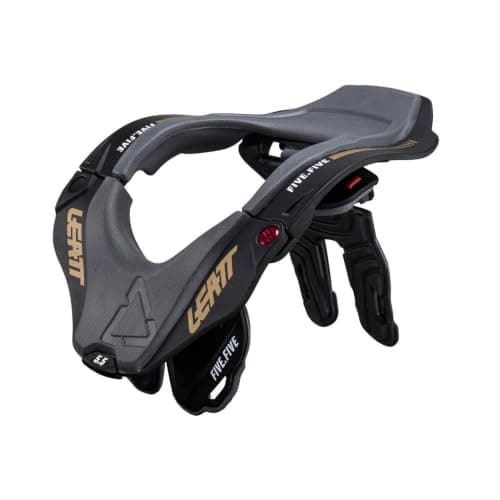
A youth neck brace is not a small adult neck brace with a different price on it, and the reason has nothing to do with safety standards. It is that the rider changes shape while they own it.A brace works by holding a specific gap between its platform and the rim of the helmet — close enough that the rim lands on the brace instead of loading the spine, far enough that the head can still move normally. That gap is set by the rider's torso. A kid who grows two inches over a summer has changed the gap, and nobody told the brace. So on this page adjustment range is the first ranking criterion, ahead of weight, ahead of brand, ahead of price — because a brace that cannot be re-fitted is a brace that stops doing its job partway through the season you bought it for.
The second thing to know is the one our adult neck brace ranking opens with, and it applies identically here: there is no harmonized EN standard for a motorcycle neck brace, youth or adult. A back protector has EN 1621-2 with a striker, an impact energy and published kN limits. A glove has EN 13594. A jacket has EN 17092. A neck brace has none of that — braces are CE-marked as personal protective equipment under Regulation (EU) 2016/425, but there is no neck-specific harmonized standard for a notified body to test them against. "CE certified" on a kid's brace therefore carries less information than the same two words on the pad in their jacket, and any youth brace advertising a "level" is inventing one.
So we rank on four things each maker either publishes or does not: growth adjustment (how many directions the fit can be reset in), published weight (dead weight on a developing neck, and a far bigger fraction of body mass than on an adult), the certificate itself (is there a downloadable document, and is the regulation named), and the load path— whether the product has front and rear helmet-rim platforms at all, or is a collar wearing the word "brace" in its search listing. We do not crash-test braces and we have not worn these. Every figure below is the maker's own published number, cited at the bottom of the page.
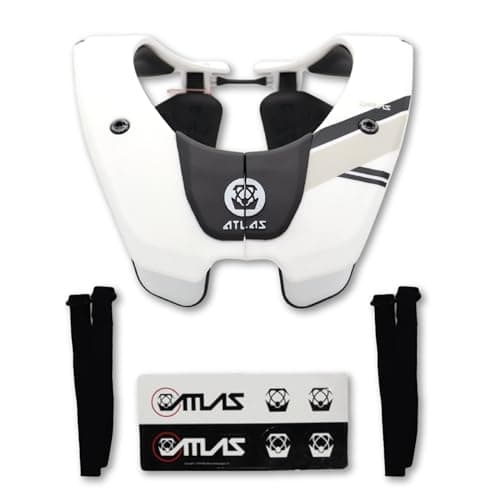
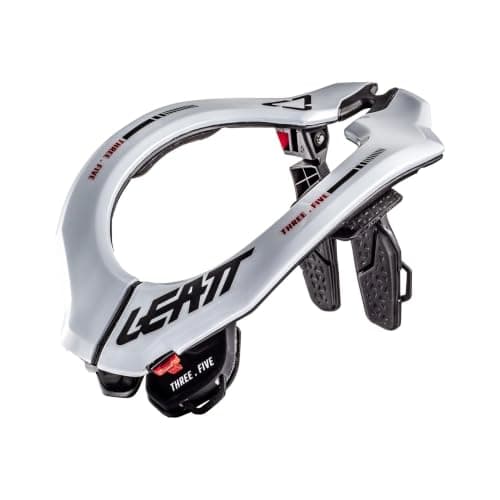
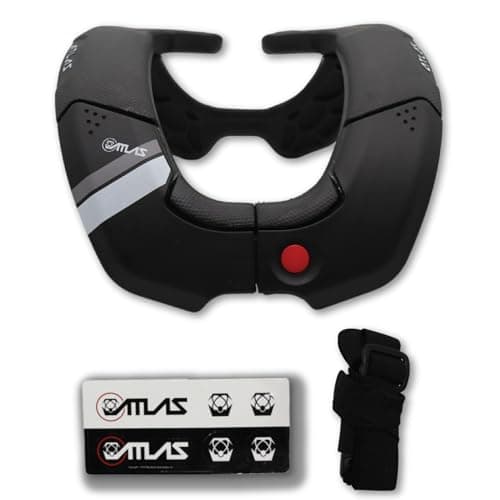
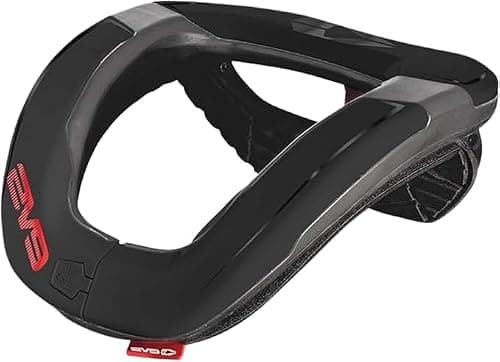
The Leatt Neck Brace 5.5 Junior wins on the criterion that matters most: three-way SureFit adjustment, which is the only mechanism here that can follow a growing rider in both height and fore-aft position, and Leatt publishes a junior-specific CE certificate as a download. The Atlas Brace Tykeis the pick for a smaller off-road kid — 140 g lighter, a full frame, and 30 mm of chest suspension Atlas says is there to let a rider tuck and roll. The Leatt 3.5 Junior is the honest first brace, with the same certification route and far less adjustment. The Atlas Brollis for a very small beginner, and we rank it below the braces because Atlas describes it as a hybrid brace and neck roll for "lower speeds". And the EVS R4 Race Collar is last on purpose: EVS calls it a collar, not a brace, and names no standard anywhere.
Brand disclosure, up front:four of these five picks are Leatt and Atlas. That is not a shortlist trimmed for convenience — it is what the publishing standard in youth off-road protection leaves. Leatt and Atlas are the only two makers putting junior-specific weights, adjustment mechanisms and certificate links on their own product pages. A third brand selling a kid's brace without publishing any of that gives a page built on published specs nothing to rank it on.
One more honest note before the picks, because it is the question most parents are actually asking: a brace is off-road equipment. If the young rider in question is on the road, the money goes further on a certified back protector— a product with a real standard, real published limits and a more common injury behind it.
Sizing: chest circumference, and never "room to grow"
Nothing about brace sizing is about the neck. Atlas sizes the whole range on chest circumference measured just under the arms, which is the honest variable, because the frame is carried on the chest and upper back. Leatt publishes the junior braces as a single size band, "Junior", with the measurement chart as a size-guide image — so the fitting work moves onto the adjusters.
The instinct every parent has here is the one to resist. You cannot buy a brace a size up to grow into. A brace that is too big sits lower on the chest, which opens the gap between the platform and the helmet rim; the head then travels further before anything engages, which is the specific thing the brace was bought to prevent. This is the same rule we give for a youth helmet, for a related but different reason — under FMVSS No. 218, a manufacturer's designated size is part of what was tested, so a helmet bought a size up is no longer the thing that was certified. With a brace there is no test to fall outside of; the fit is the product.
The three fit checks, done by the adult
Run these with the brace on over whatever the rider actually wears — jersey, chest protector, the lot — and with the rider seated on the bike in riding position, not standing in the living room. Do them yourself rather than asking, because a kid who wants to ride will tell you anything fits.
- Look down, look up.The helmet rim should meet the platform at roughly the limit of comfortable head movement — not before it. If the rim is resting on the brace with the head level, the platform is too high or too close, and the rider will hate it within ten minutes.
- Check the collarbones.The frame should bridge them, not sit on them. Leatt publishes a collarbone cut-out on both junior braces for exactly this reason: a brace resting on a child's collarbone has turned itself into the hazard.
- Shrug and twist.Shoulders up, then a look over each shoulder. The brace should move with the torso rather than being levered off it. If the rear strut is digging in when the rider leans forward into a tuck, the rear adjustment is wrong — on the Leatt 5.5 Junior and the Tyke you can fix that, and on the 3.5 Junior and the Broll you largely cannot.
Brace, hybrid or collar? They are three products
This is the expensive mistake in the youth category, because all three sell under the search term "kids neck brace". A full-platform brace— the Leatt 5.5 Junior, the Tyke and the Leatt 3.5 Junior — has front and rear shelves and a frame reaching the sternum and spine, so the helmet rim has something to strike other than the neck and the load goes into the torso. A hybrid brace/roll, which is what Atlas calls the Broll in its own copy, trades that frame for weight and compliance and is sold for "smaller children and lower speeds". A foam race collar is a padded ring: it stops the helmet rim chafing the neck, has no frame, no platform and no load path, and it is comfort equipment. None of that is dishonest of the makers. It becomes dishonest when a page lets you believe the three are interchangeable.
Why weight matters more on a child
A child's head is a disproportionately large share of their body mass, carried on a neck that has not finished developing, and the helmet sitting on top of it is a bigger fraction of total weight than it will ever be on an adult. Everything you add above the shoulders is working against that. This is why the ranking does not simply reward the heaviest, most-adjustable brace: 600 g of Leatt 5.5 Junior on a small rider is a real imposition, and the 460 g Tyke and 485 g Leatt 3.5 Junior exist for good reasons. It is also the argument for buying a lighter helmet in the first place — our youth helmet ranking treats published weight and shell-size count as protection specs for the same reason.
It has to coexist with the chest protector
A brace and a chest protectoroccupy the same real estate, and on a small torso there is less of it to go around. Check the chest protector's own documentation for brace compatibility before buying both, and fit the brace first— it is the piece whose position is dictated by the helmet. Youth roost deflectors are usually the better partner here than a full chest-and-back harness, simply because there is room for the brace frame underneath.
When to replace it
Not on a date. Re-run the three fit checks at the start of every season and after any obvious growth spurt, and replace when the adjusters have run out of travel rather than when the brace looks worn. Also replace after any crash where the brace took a hit: the composite platforms and breakaway struts on these are designed to deform and, on the Leatt braces, to break away — a strut that has done its job once is not a strut you want on the next ride. The same logic runs through when to replace motorcycle gear for every other protective item in the kit.
How the five compare on what they publish
| Pick | Published weight | Growth adjustment | Standard named? | Load path |
|---|
| Leatt 5.5 Junior | From 600 g | Three-way SureFit | Reg (EU) 2016/425 named; junior CE certificate published | Full front and rear platform |
| Atlas Brace Tyke | 460 g | 2 rear-support settings | Certificate linked, standard not named | Full frame, 30 mm chest suspension |
| Leatt 3.5 Junior | From 485 g | One-way, rear only | Reg (EU) 2016/425 named; no certificate download listed | Full platform, breakaway rear strut |
| Atlas Brace Broll | 290 g | Size setting + chest strap | Certificate linked, standard not named | Hybrid brace/roll, per Atlas — no published shelves |
| EVS R4 Race Collar | 635 g (adult; youth not published) | Cross straps only | None named anywhere | Collar — no frame, no platform |
Read that as a shape, not a scoreboard. The lightest product does the least. The most adjustable is the heaviest and the dearest. There is nothing here that is light, fully adjustable and cheap, and the only pick that publishes a weight heavier than the winner is the one that is not a brace.