Every sport jacket on the market is advertised the same way: race fit, CE certified, premium leather, armor included. None of that is a specification. Underneath the copy there are exactly two numbers that describe how much protection you are buying, they measure completely different things, and only one of them can be fixed after you have bought the jacket. Get those two straight and this category stops being a branding exercise.
The first number is the EN 17092 class of the garment: AAA, AA or A, in descending order of abrasion, tear and seam-burst performance. That is the shell — the leather or textile between you and the road, and the stitching holding it together. You cannot change it. The second is the EN 1621-1 level of the armor, Level 1 or Level 2, which describes how much force the shoulder and elbow protectors transmit in an impact. That you can change for a small fraction of the cost of a jacket, because armor is a slot-in part. A jacket sold on "CE Level 2 armor" with no published garment class is telling you about the cheap half.
The part worth internalizing is the part number. EN 17092 is published in parts, and the part identifies the class: EN 17092-2 is AAA, EN 17092-3 is AA, EN 17092-4 is A. When a listing says "certified to EN17092-3:2020" it has told you the class without using the letter, which is how a lot of makers publish it. When a listing says only "CE certified" with no part and no letter, it has told you nothing — our EN 17092 explainer sets out what each class actually has to survive.
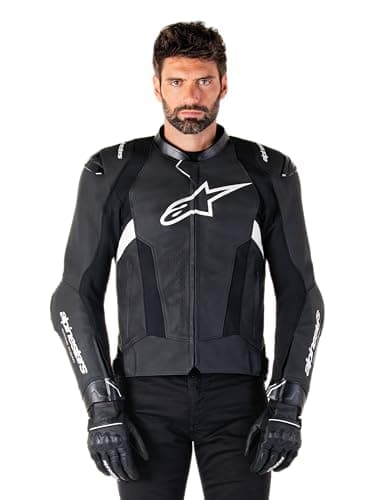
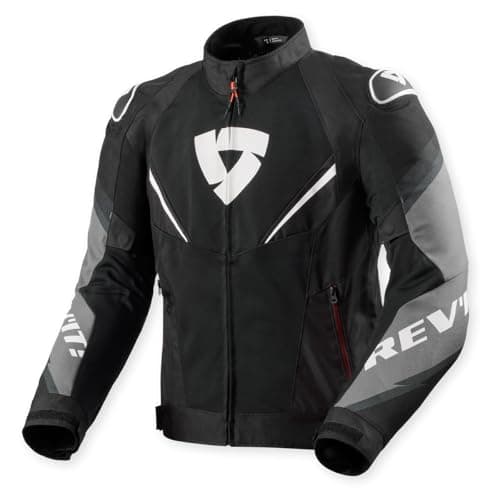
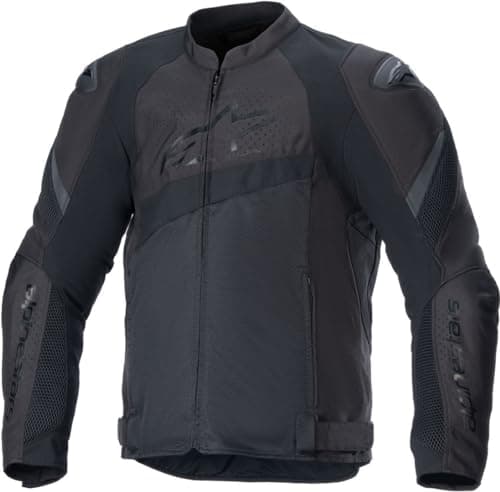
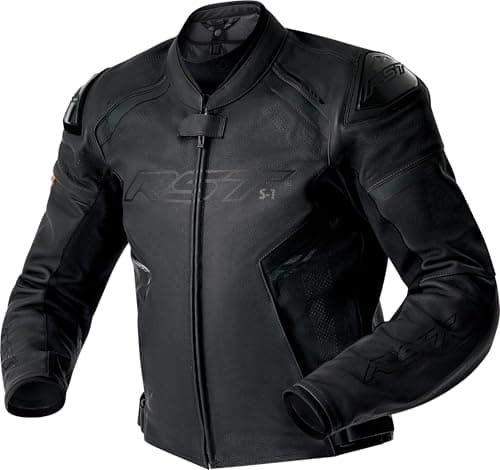
So the ranking goes: published class first, armor level second, sport-cut geometry third, features last. On that order the RST S1 D3O Leatherwins, and it is not the most expensive jacket here — it is published at Class AAA under EN 17092, the only AAA garment on the page, with D3O Level 1 armor you can upgrade. The Alpinestars Missile V3 Leather is the track pick and the exact inverse trade: Class AA, with the best armor package on the page as standard and Tech-Air airbag compatibility built in. The REV'IT! Quantum 3 Air holds Class AA on a mesh jacket, which almost nothing does, and is the answer if you ride a sport bike somewhere hot. The Alpinestars T-GP Plus V4 Airflow is the budget sport fit, and sits last for the reason this whole page is about: Alpinestars publishes no EN 17092 class for it.
Disclosures, up front.Two of the four picks are Alpinestars, because Alpinestars dominates the sport-cut shelf in the US; the T-GP Plus V4 Airflow is a jacket already ranked elsewhere on this site and is reused here rather than re-researched. We do not test jackets and we have not crashed in any of these. Every class and level below is the figure the maker or its retailers publish, cited at the bottom of the page — and where two listings disagree, the card says so instead of picking the flattering one.
One honest routing note before the picks. If you ride a sport bike but spend your miles commuting in a straight line, a sport cut is working against you: it is shaped for a rider leaning forward, and standing up in it is uncomfortable in a way you will notice on day three. Our armored jacket ranking sorts the upright-friendly options on the same two numbers.
Class and level: what each one actually promises
EN 17092tests the finished garment. The class is awarded on abrasion resistance, tear strength, seam strength and impact-abrasion, measured at the zones most likely to hit the road, and the standard defines which zones have to meet which requirement. AAA is the class written for the highest-risk use — the leather suit end of the market. AA is the broad sport and touring class. A is the entry rung, and it is what a lot of jackets marketed as "CE approved" actually hold. B and C exist too: B is abrasion only with no impact protection required, and C is a garment that exists only to hold armor, like an armored base layer.
EN 1621-1 tests a protector on a rig, not a garment. A Level 1 shoulder or elbow protector has to keep transmitted force under a stated limit; Level 2 has to keep it under a lower one. That is the entire difference, and it is a difference in a part you can buy separately. Our CE armor levels explainer gives the actual numbers.
Which is why the ranking order on this page is what it is. A Class AAA jacket with Level 1 armor becomes a Class AAA jacket with Level 2 armor for the price of a pair of inserts. A Class A jacket with Level 2 armor is a Class A jacket forever.
Race fit is a geometry spec, not a marketing word
A sport jacket is cut for a rider in a forward lean, and three things follow from that. Pre-curved sleeves, so the elbow armor sits over the elbow when your arms are reaching for clip-ons rather than hanging at your sides. A longer back hem and a shorter front, so the jacket covers your lower back in a tuck instead of riding up and exposing it. And stretch or accordion panels at the shoulder blades and inner arms, which are what stop the jacket pulling the shoulder protectors off the joints as you lean forward.
That last one is the fit check that matters and almost nobody runs it. Put the jacket on, get into a riding crouch — hands out in front, shoulders rolled forward — and have someone check that the shoulder armor is still centered on the point of your shoulder and the elbow armor still on the elbow. Armor that has migrated off the joint in your actual riding position is not protecting the joint, whatever level it is certified to. Our jacket fit guide runs the full set of checks.
The back protector is almost always missing
Three of the four jackets here either ship no back protector or ship an uncertified pad in the pocket where one should go. This is not specific to sport jackets and it is not an oversight — it is how the category prices itself. Pull the pad out of any jacket you already own and look for a CE mark with EN 1621-2 and a Level 1 or Level 2 designation on it. Blank foam means the pocket is effectively empty. The fix is cheap relative to the jacket: see best back protectors for the inserts and harnesses, and wearing a back protector under a jacket for which of the two your jacket's pocket actually wants.
Leather or textile, on a sport bike
Leather still holds the abrasion ceiling — the only AAA jacket on this page is leather, and that is not a coincidence. But the honest version of the comparison is narrower than the forum version: a modern Class AA textile outperforms a cheap Class A leather, and a perforated leather jacket in 95F traffic is a jacket you leave at home. What leather genuinely buys on a sport bike is slide performance at speed and a shell that keeps working after it has been scuffed. What textile buys is airflow, weight and the ability to put the tough fabric only where it is needed, which is exactly how the REV'IT! holds Class AA as a mesh jacket. Our leather vs textile comparison works the whole trade through.
Airbag compatibility is a real buying criterion now
The Missile V3 is listed as Tech-Air Ready, and that is worth more attention than its armor package. An airbag vest or an in-jacket airbag system is the single biggest protection step available to a street rider, and whether it works depends on the jacket having room to inflate. Buying a jacket that is explicitly compatible is cheaper than replacing a jacket later to accommodate one. If you are weighing it, read tethered vs electronic airbag vests first — the two mechanisms are a genuine decision, not a detail.
Sizing a sport jacket
Snug, and snugger than you expect, because a loose sport jacket lets the armor float. Buy for the chest measurement and let the waist adjusters deal with the rest; a jacket you can get a fist inside at the chest is a jacket whose shoulder protectors will be somewhere else in a crash. The exception is the thermal liner, which only the touring and winter cuts have — none of these four need room for one, which is the simplification a summer or track jacket gives you. There is no universal size across brands and there is not even one across lines within a brand, so measure once and compare to each maker's chart: our size chart guide covers taking the measurement the way makers ask for it.
How the four compare on what they publish
| Pick | EN 17092 class | Armor as supplied | Back protector | Shell |
|---|
| RST S1 D3O Leather | AAA (EN 17092-2:2020) | D3O Level 1, shoulder + elbow | Not published as included | Full grain leather, perforated panels |
| Alpinestars Missile V3 Leather | AA (EN17092-3:2020) | Nucleon Plasma Pro Level 2 | Not included; Tech-Air 7x ready | Bovine race leather, perforated |
| REV'IT! Quantum 3 Air | AA (EN 17092-3:2020) | SEEFLEX Level 1, shoulder + elbow | Optional, sold separately | PWR|shell mesh + 600HD / 600D polyester |
| Alpinestars T-GP Plus V4 Airflow | None published | CE Level 1, shoulder + elbow | Pocket only | Mesh + textile |
Read the first two columns together and the page explains itself. The cheapest leather jacket here has the highest garment class and the weaker armor. The dearest has the best armor and a lower class. The mesh jacket matches the dearest on class. And the budget pick publishes no class at all, which is the single most useful thing to notice about it.