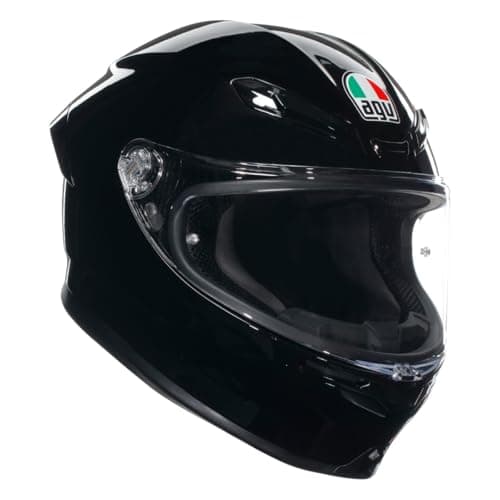
If you want the closest thing to an RF-1400 that is not an RF-1400, buy the AGV K6 S — a carbon-aramid-fiberglass shell certified to ECE 22.06, among the lightest full-faces made, for the rider who wanted the Shoei for its composite shell and low mass rather than its badge. The budget pick is the HJC i10, and it is the one to read twice: it carries the same DOT and Snell M2020 certification pair as the RF-1400, for roughly a fifth of the price. It is heavier, in a polycarbonate shell, and not as quiet — but the certification on the strap is the same one. We have not tested any of these helmets, so every figure here is a published manufacturer spec or a retail listing, and the prices in the table below are live Amazon numbers stamped with the date they were pulled.
What the RF-1400 is actually known for
Three published things, and it is worth being precise because they are what an alternative has to replace. First, certification: Shoei lists the RF-1400 as DOT FMVSS 218 and Snell M2020 — two separate test programs, where most helmets carry one. Second, shell construction: a hand-laid AIM+ multi-fiber composite rather than injection-molded polycarbonate, which buys stiffness at lower mass, built in multiple shell and multi-density EPS sizes. Third, fit-and-finish and the shield seal — the part nobody can put a number on and everybody notices in the rain. It is, on its published specs, a reference full-face. Nothing on this page is here because the Shoei is bad.
People look for an alternative for two reasons instead. The price is one. The shapeis the other, and it is the more important one: the RF-1400's interior is cut intermediate oval. If your head is genuinely round, the RF-1400 presses at the temples; if it is long oval, it presses front to back. No amount of break-in fixes a shape mismatch, and a helmet in the wrong shape is a worse helmet for you than a cheaper one in the right shape. Work out which you are with our head shapes guide before you spend anything.
There is now a third reason, and it is the one to deal with first because it is not on this list: Shoei replaced the RF-1400 in November 2026 with the RF-1500. If you are shopping for an alternative because you want something newer rather than something cheaper or a different shape, the answer is Shoei's own successor, not anything below. It carries the newer Snell M2025D with DOT, adds a sixth shell size, and Shoei claims a large airflow gain over the RF-1400; it also costs several hundred dollars more and its published weight is higher. Neither of the two reasons above is solved by it — it is dearer than the RF-1400, not cheaper, and it is still cut for an intermediate-oval head. Everything below is still here for a rider who wants to spend less or needs a different shape.
How each alternative was matched
Every pick below had to beat the RF-1400 on a stated axis or undercut it substantially on price — no like-for-like swaps at the same money. In short: the AGV K6 S matches the composite shell and goes lighter, with ECE 22.06 instead of Snell. The Arai Regent-X matches the Snell M2020 and the hand-laid shell, and offers a rounder interior plus dealer-adjustable peel-away fit pads — the answer for a head the Shoei pinches. The HJC RPHA 71 brings a four-shell-size composite and channeled ventilation for materially less money. The HJC i10 matches the certification pair at a fraction of the cost. The Scorpion EXO-R430 adds the one feature the RF-1400 does not have at all — a drop-down internal sun visor — for well under half the price.
The short answer
| # | Product | Best for | Score | Price |
|---|
| 01 | AGV K6 SAstonishingly light for the money. A carbon-aramid-fiberglass shell and ECE 22.06 certification put it among the lightest full-faces you can buy, which your neck notices on a long day. | Lightest premium shell | | $499.99·Amazon |
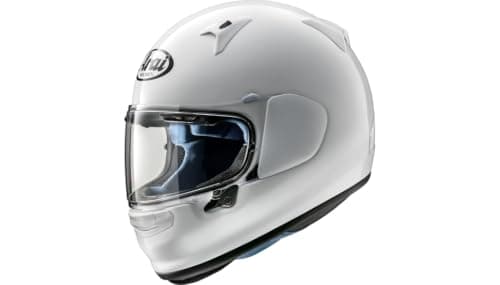
| 02 | Arai Regent-XArai's most accessible full-face, built the Arai way: a hand-laid PB-cLc fiberglass shell with the round-smooth profile Arai argues sheds impact energy better, Snell M2020 and DOT certified. | Most adjustable premium fit | | $659.80·Amazon |
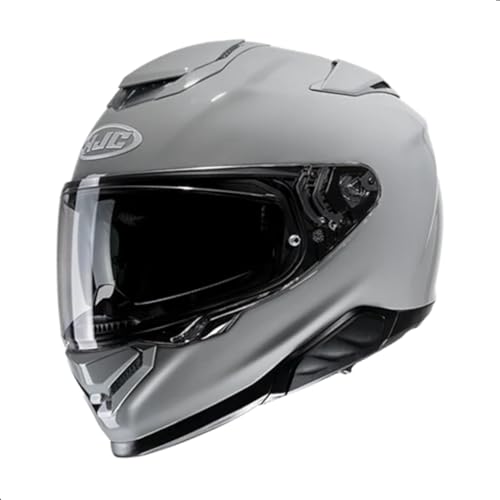
| 03 | HJC RPHA 71HJC's touring-sport lid built around a named channeling system: the Advanced Channeling Ventilation System runs air channels through the inner shell rather than just cutting holes in the outer one, on a four-shell-size composite with the Pinlock lens included. | Best channeled ventilation | | $403.56·Amazon |
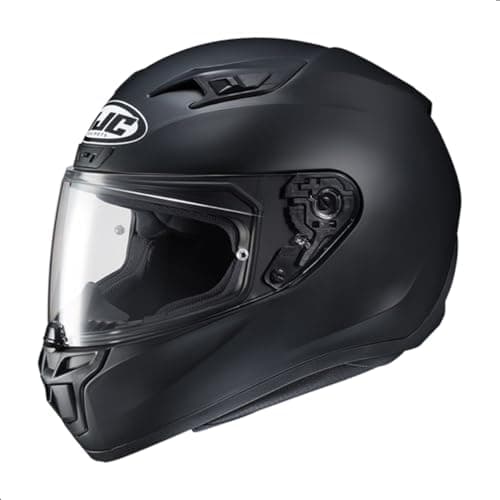
| 04 | HJC i10The value benchmark, and now the outgoing generation: HJC has replaced it with the i11, built on the same platform and certified to the newer Snell M2025D. The i10 itself is unchanged — DOT and Snell M2020 certified, a Pinlock-ready shield in the box, and a genuinely quiet, comfortable lid for roughly a fifth of a flagship's price. | Best value overall | | Check price → |
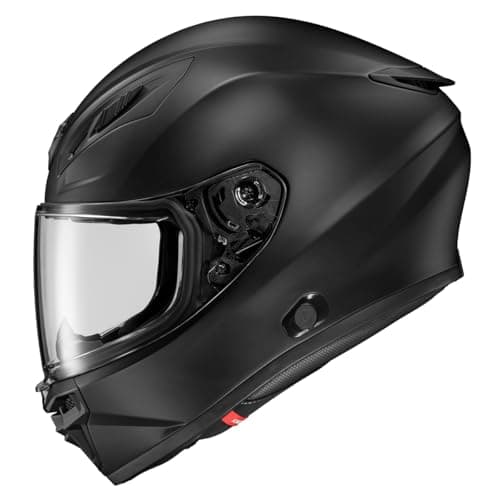
| 05 | Scorpion EXO-R430A lot of sport helmet for mid-money. DOT and ECE certified with an aero-tuned shell, a drop-down sun visor and Pinlock-ready shield — it punches above its price for commuters and canyon riders. | Best mid-price sport lid | | $184.95·Amazon |
#ad · Live prices from the Amazon Product API, as of November 19, 2026. Where we have no verified live price we show none — we would rather leave a gap than print a number that has rotted.
In detail
Lightest premium shell
ECE 22.06Carbon-aramid shell~1,300 g class4 shell sizes
Astonishingly light for the money. A carbon-aramid-fiberglass shell and ECE 22.06 certification put it among the lightest full-faces you can buy, which your neck notices on a long day.
- Certification
- 9.2
- Shell/weight
- 9.6
- Noise/aero
- 8.8
- Fit range
- 8.4
- Value
- 8.8
Pros
- +ECE 22.06 — the most demanding volume standard, including rotational testing
- +Carbon/aramid/fiberglass shell makes it one of the lightest full-faces at any price
- +Wide eye-port and strong ventilation for a sport-touring lid
Cons
- −No Snell certification
- −Sportier fit and padding than a pure touring helmet
- −No longer AGV's newest sport-touring lid — AGV has since added the K7 to the K-series at similar money, and sells both
Don't buy this if…
…you specifically want a Snell sticker for track days — the K6 leans on ECE 22.06 instead — or you want AGV's newest K-series full-face, which is the K7.
Most adjustable premium fit
DOT · Snell M2020PB-cLc laminate shellR75 round shell profile5mm base flare
Arai's most accessible full-face, built the Arai way: a hand-laid PB-cLc fiberglass shell with the round-smooth profile Arai argues sheds impact energy better, Snell M2020 and DOT certified.
- Certification
- 9.4
- Shell/weight
- 8.6
- Noise/aero
- 8.6
- Fit range
- 9
- Value
- 7.6
Pros
- +DOT and Snell M2020 certified with a hand-built PB-cLc laminate shell
- +R75 keeps the outside of the shell round and smooth — Arai's argument for shedding impact energy rather than catching it
- +Peel-away fit pads and the FCS cheek pads let a dealer dial the fit precisely
- +The shell flares 5mm at the base, which is what makes a snug Arai easier to get on and off
Cons
- −Expensive
- −Heavier than the lightest ECE composites
- −Shield changes are fiddlier
Don't buy this if…
…you want the lightest possible shell or a simple tool-free shield swap — that's more Shoei's game.
Best channeled ventilation
Advanced Channeling Ventilation SystemPremium Integrated Matrix shell4 shell sizesHJ-40 Pinlock shield included
HJC's touring-sport lid built around a named channeling system: the Advanced Channeling Ventilation System runs air channels through the inner shell rather than just cutting holes in the outer one, on a four-shell-size composite with the Pinlock lens included.
- Published ventilation
- 8.8
- Certification
- 8.6
- Shell/weight
- 8.4
- Fit range
- 9
- Value
- 8.2
Pros
- +Ventilation is channeled, not just vented: HJC's ACS routes intake air through channels integrated into the inner shell and out through rear exhausts, rather than relying on holes in the outer shell alone
- +Premium Integrated Matrix shell - HJC's fiber blend of glass, aramid, carbon and organic fibers - across four shell sizes, the second-widest shell count here
- +Central chin ventilation that HJC notes is operable with gloves on, plus a large closable top intake and two rear air outlets
- +Ships with the HJ-40 Pinlock-ready shield, and the model carries an integrated drop-down sun visor
- +DOT approved per the US listing, with ECE 22.06 homologation on the European version of the same helmet
Cons
- −We could not verify a single consistent published weight for the US-market RPHA 71, so this page does not quote one - the AGV, LS2 and Bell all publish theirs
- −HJC's US listing does print a count - full front-to-back ventilation with 2 intakes and 2 exhausts - but that is fewer openings than the AGV publishes, and HJC still gives no airflow rate
- −No Snell certification published for this model
- −Amazon stock runs thin and is colorway-specific; check the size you need is listed
Don't buy this if…
…you want a published weight before you buy: HJC is the one maker here that does not give you a number you can compare.
Best value overall
DOT · Snell M2020Polycarbonate shellPinlock-readySizes XS–3XL
The value benchmark, and now the outgoing generation: HJC has replaced it with the i11, built on the same platform and certified to the newer Snell M2025D. The i10 itself is unchanged — DOT and Snell M2020 certified, a Pinlock-ready shield in the box, and a genuinely quiet, comfortable lid for roughly a fifth of a flagship's price.
- Certification
- 8.6
- Shell/weight
- 7.8
- Noise/aero
- 8
- Fit range
- 8.6
- Value
- 9.6
Pros
- +DOT and Snell M2020 certified at an entry price
- +Comes Pinlock-ready with the pin included, so no fogging for a small add-on
- +Comfortable rounder-to-intermediate fit that suits a lot of heads
Cons
- −Polycarbonate shell is heavier than composites
- −Not the quietest at highway speed
- −Replaced in HJC's lineup by the i11, which carries the newer Snell M2025D
Don't buy this if…
…you ride a lot of highway miles and want the lightest, quietest lid available — or you want HJC's current-generation sport helmet, which is now the i11.
Best mid-price sport lid
DOT · ECETCT composite shellDrop-down sun visorPinlock-ready
A lot of sport helmet for mid-money. DOT and ECE certified with an aero-tuned shell, a drop-down sun visor and Pinlock-ready shield — it punches above its price for commuters and canyon riders.
- Certification
- 8.6
- Shell/weight
- 8
- Noise/aero
- 8.2
- Fit range
- 8.2
- Value
- 8.8
Pros
- +DOT and ECE certified in the middle of the price range
- +Built-in drop-down sun visor — a feature usually reserved for pricier lids
- +Aero shell with solid ventilation and a Pinlock-ready face shield
Cons
- −Not the lightest
- −Sportier padding runs firm out of the box
Don't buy this if…
…you want a plush touring feel — this leans sporty and firm.
Pick by the reason you are shopping
"I want the same certification for less money" — the HJC i10. DOT and Snell M2020, Pinlock-ready with the pin in the box, and a rounder-to-intermediate fit that suits a lot of heads. What you give up is real and worth naming: a polycarbonate shell instead of a composite, so more weight on your neck, and more noise at highway speed. Note also that HJC has since replaced the i10 with the i11, which carries the newer Snell M2025D — the i10 itself is unchanged and still certified. Our budget helmet ranking puts it against the rest of the cheap field.
"I want it lighter" — the AGV K6 S. A carbon-aramid-fiberglass shell in the ~1,300 g class and ECE 22.06, the standard that added an oblique rotational-impact test. It has no Snell certification, so if a Snell sticker is a requirement for your track day organizer this is the wrong helmet. AGV has also since added the K7 to the K-series at similar money and sells both.
"The Shoei hurts my temples" — the Arai Regent-X. Same DOT and Snell M2020 pair, a hand-laid PB-cLc laminate shell, and the round-smooth R75 profile Arai builds its whole case on. The practical reason it is here is the fit system: peel-away interior pads and FCS cheek pads let a dealer dial the shape to your head, and the 5 mm base flare makes a snug shell easier to get on. It costs more than the Shoei, not less — it is on this page for shape, not price. See also Shoei vs Arai.
"I want a composite shell and better airflow for less" — the HJC RPHA 71.A Premium Integrated Matrix shell (HJC's glass, aramid, carbon and organic fiber blend) across four shell sizes, with ventilation channeled through the inner shell rather than just holes cut in the outer one, and the HJ-40 Pinlock lens included. It is the value-per-published-spec pick of this list. Our Shoei vs HJC comparison is the long version of this trade.
"I just want a sun visor" — the Scorpion EXO-R430. DOT and ECE on a TCT composite shell, Pinlock-ready, with a drop-down internal sun visor — the single most useful commuter feature, and one the RF-1400 does not offer at any price. It is firm and it is not light. The wider Scorpion range is in our Scorpion ranking.
What not to compromise on
Whichever way you go, two things are not negotiable. The helmet has to carry a real certification — DOT FMVSS 218 at minimum, ideally with ECE 22.06 or Snell alongside it; our DOT vs ECE vs Snell explainer covers what each one tests and how to read the sticker shows you how to check the one you are holding. And it has to fit: snug all round with no pressure points, no movement when you shake your head, cheek pads touching. A cheaper helmet that fits properly outperforms a flagship that does not, every time — how a helmet should fit describes what correct feels like, and pressure points covers what to do when something presses.
How we picked
Everyone in this category says they tested twenty helmets. We haven't tested any — and we say so. What we do instead: compile the published DOT, ECE 22.06 and Snell certifications, the manufacturer's fit, weight and shell specs, the CE armor levels, and reputable published reviews, then score each pick against a published rubric. The scores are judgments from documented research — not measurements we took, because we do not run a lab and we are not going to pretend we do. Every certification and spec claim traces to a source we name and link.
Questions
What is the cheapest helmet with the same certification as the Shoei RF-1400?+
Of the helmets we can verify and link, the HJC i10 — it publishes DOT FMVSS 218 and Snell M2020, the same pair Shoei lists for the RF-1400, at roughly a fifth of the price. The differences are shell material (polycarbonate rather than a hand-laid composite), weight and noise, not the certification label. HJC has since replaced it with the i11, certified to the newer Snell M2025D.
Is the AGV K6 S better than the Shoei RF-1400?+
It is lighter and it carries ECE 22.06, which includes a rotational-impact test; the RF-1400 carries Snell M2020 and DOT, which the K6 S does not. Neither is "better" across the board and we have not tested either. Choose on what you need: the AGV for mass and the 22.06 label, the Shoei for Snell and its fit-and-finish — and before either, on which interior shape matches your head.
What should I buy if the RF-1400 is too tight at the temples?+
Temple pressure in an intermediate-oval helmet usually means a rounder head, so look at a rounder interior: the Arai Regent-X with its peel-away fit pads, or on a budget the Bell Qualifier, which is the cheap full-face most often recommended for round heads. Do not try to break the pressure out of a shape mismatch —
break-insoftens padding by about half a size, it does not change the shell's shape.
Does a cheaper helmet mean less protection?+
Not automatically. Certification is a pass/fail floor, so a DOT-and-Snell budget helmet has cleared the same bar as a DOT-and-Snell flagship. What more money reliably buys is lower weight, quieter aerodynamics, finer shell-size granularity, better ventilation and better finish — comfort and fit factors that matter a great deal over a long day. Our
are expensive helmets safer page works through the evidence.
Receipts
We do not run a testing lab, and we do not pretend to. Our picks are built from published certifications, manufacturer spec sheets, the standards documents themselves, and reputable published reviews — named and linked above. Where we could not verify something, we say so on the page rather than quietly leaving it out. Read our full method.