Skip to content
LID & LEATHER

Spine + chest · Armor

Armored Motorcycle Shirts and Hoodies

An armored shirt is a carrier for armor, not an abrasion garment. What that buys you, what it does not, and how to check.

By Stephen V.Updated How we research
#ad

We earn a commission when you buy through our Amazon links, at no extra cost to you. It never affects our rankings, and we say so when the cheaper gear is the better buy. How this works.

The verdict up front: an armored shirt, hoodie or base layer is a carrier that holds impact protectors in the right places. It is almost never an abrasion garment, and the thing worth checking is the armor inside it, not the shirt around it.Treat it as a way to get certified impact protection onto your shoulders, elbows, back and chest under ordinary clothing — and do not treat it as a replacement for a jacket with a published garment class.

The category is growing fast and the marketing is a mess. "Armored hoodie" covers everything from a sweatshirt with foam pockets to a Kevlar-reinforced garment with CE Level 2 protectors, and the two things have almost nothing in common. Here is the distinction that cuts through it: a motorcycle garment has two separate kinds of protection, they are certified by two different standards, and a product can have one and none of the other.

Two standards, two jobs

  • Impact protection — EN 1621. The armor itself: shoulder, elbow, knee and hip protectors under EN 1621-1, back protectors under EN 1621-2, chest protectors under EN 1621-3, airbags under EN 1621-4. This is what an armored shirt is actually delivering.
  • Abrasion and tear protection — EN 17092. The garment: a Class AAA, AA, A, B or C rating describing how the fabric and seams behave in a slide, covered in our EN 17092 explainer. Most armored shirts and hoodies publish nothing here, and a cotton hoodie disintegrates on tarmac whatever is in its pockets.

So an armored shirt gets you the impact half and usually skips the abrasion half. That is a real, useful thing to own — impact protectors on your joints and spine on a ride you would otherwise have done in a t-shirt is a meaningful gain — and it is not the same purchase as a jacket. Our armored jackets ranking is for when you want both halves.

How to judge one

  1. Read the armor, not the garment description.Pull the protectors out and look for EN 1621-1 or 1621-2, a level, a size and a CE mark. If the pads are unmarked foam, you have bought a shirt with pockets — which is fine, if you then fill the pockets with certified inserts.
  2. Check whether the armor stays where it belongs. This is the thing armored base layers do better than any jacket: a close-fitting compression garment holds a shoulder protector on the point of your shoulder instead of letting it migrate down your arm. A loose hoodie with big pockets does not, and armor that has slid is armor that is not over the joint when it matters.
  3. Decide whether you need the back protector in it or on you. A harness back protector worn under any top is often the better solution, because the harness holds position by design and moves between garments with you.
  4. Ask what the outer fabric claims.If the maker publishes an EN 17092 class, believe it and note the class. If it says "abrasion-resistant" with no standard named, that is a marketing phrase, not a test result. Aramid panels at the elbows and shoulders are genuinely better than plain cotton; they are still not a classified garment.
  5. Think about where it sits in your layering. An armored base layer under a textile jacket means doubled protectors in some zones and a hotter ride; our layering guide covers making that work.

Who an armored shirt is genuinely right for

Riders who otherwise would not wear anything.Short urban trips, a scooter commute, a hot day where the jacket stays at home — getting certified protectors onto a rider in that situation is a win against the realistic alternative, which is a t-shirt.

Dirt, ADV and enduro riders. Here the armored shirt is the mainstream answer rather than a compromise: off-road riding is about impact, roost and heat, not tarmac slides, so a ventilated armor carrier over a base layer is the correct tool. Our body armor ranking and chest protectors ranking cover that category properly.

Riders whose jacket has empty pockets. Most do. If your jacket shipped with foam in the back and nothing in the chest, filling those pockets with certified inserts is cheaper than any new garment and is the single best value upgrade on this site.

Who should buy a jacket instead

Anyone riding at road speed on pavement, in a word. The injury an armored hoodie does not address is the one a slide produces: abrasion through to the skin over a long contact distance, which is precisely what EN 17092 classes measure and what a classified textile or leather jacket is built for. If your riding is commuting or touring at highway speed, buy the jacket and put the armored shirt underneath it or save it for the days the jacket is unbearable. Our how to choose a jacket guide and ATGATT explainer set out the full argument.

The short answer

Quick picks

#ProductBest forScorePrice
01
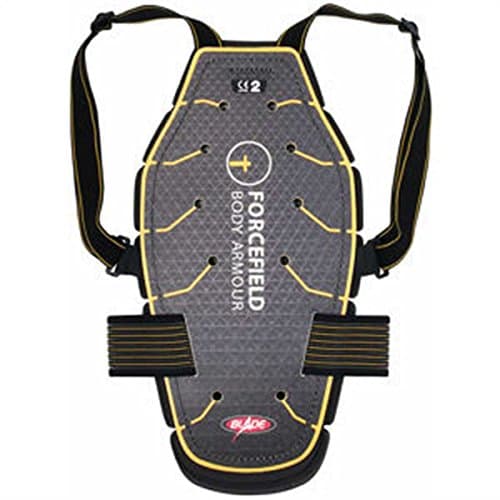
Forcefield Forcefield Blade Level 2
Forcefield Blade Level 2

A proper standalone back protector: CE Level 2 certified, worn on its own harness so it fits any jacket, and flexible enough to forget you have it on. The one to buy if your jacket only has a foam pad.

Best standalone back protector
8.9
$129.99Amazon
02
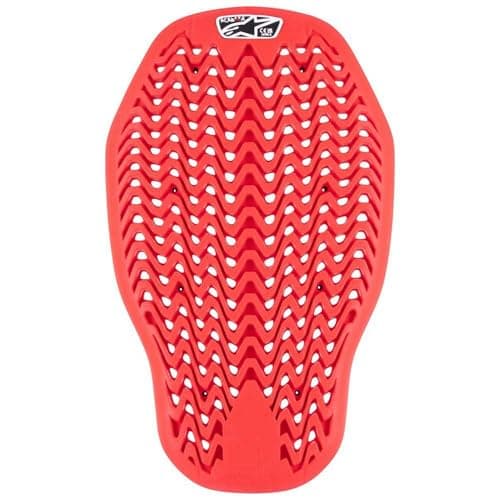
Alpinestars Alpinestars Nucleon Plasma Insert
Alpinestars Nucleon Plasma Insert

The easy upgrade: a CE back-protector insert that drops straight into the empty pocket most jackets ship with, turning the foam placeholder into real, certified protection for pocket money.

Best jacket-pocket insert
8.5
$79.95Amazon
03
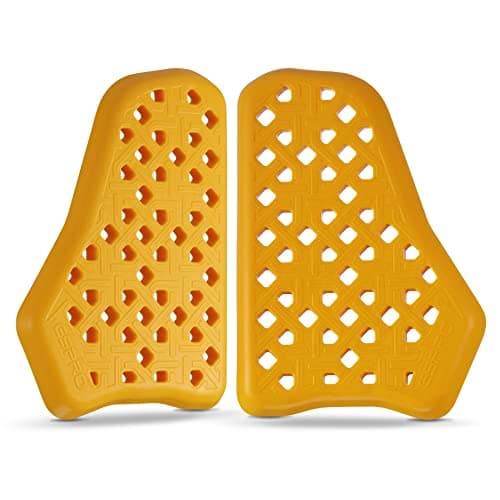
Surlim Surlim CE Level 1 Chest Inserts
Surlim CE Level 1 Chest Inserts

The cheapest route to certified chest protection: a pair of CE Level 1 inserts that drop into the empty chest pockets almost every armored jacket already has.

Cheapest way in
8.2
$29.90Amazon
04
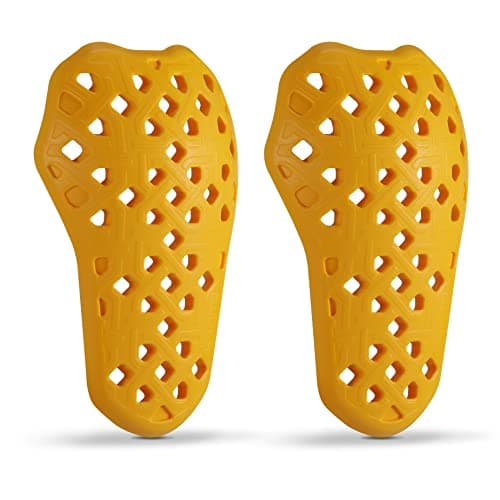
Surlim Surlim CE Level 2 Knee Inserts
Surlim CE Level 2 Knee Inserts

CE Level 2 pads that slide into the knee pockets your riding pants already have. The cheapest certified knee protection you can buy, and the one you will never leave at home.

Best knee armor inserts
8.3
$29.90Amazon

#ad · Live prices from the Amazon Product API, as of October 19, 2026. Where we have no verified live price we show none — we would rather leave a gap than print a number that has rotted.

In detail

The picks, in full

01
Forcefield Forcefield Blade Level 2

Best standalone back protector

Forcefield Blade Level 2

EN 1621-2 Level 2Worn on a harnessFlexibleFull-back coverage
8.9/10

A proper standalone back protector: CE Level 2 certified, worn on its own harness so it fits any jacket, and flexible enough to forget you have it on. The one to buy if your jacket only has a foam pad.

Protection
9.4
Fit/coverage
9
Comfort
8.6
Ventilation
8.2
Value
8.4

Pros

  • CE Level 2 — absorbs more impact energy than the Level 1 baseline
  • Its own harness means it works with any jacket, or on its own
  • Flexible, ventilated construction you actually keep wearing

Cons

  • Costs more than an insert
  • A harness is one more thing to put on

Don't buy this if…

…your jacket already has a good back-protector pocket — a slot-in insert may be simpler and cheaper.

$129.99View on Amazon

Price as of October 19, 2026. Prices change — Amazon's is the one that counts.

#ad · we may earn a commission from this link to Forcefield Blade Level 2

02
Alpinestars Alpinestars Nucleon Plasma Insert

Best jacket-pocket insert

Alpinestars Nucleon Plasma Insert

CE certifiedSlot-in insertFlexible foamVentilated
8.5/10

The easy upgrade: a CE back-protector insert that drops straight into the empty pocket most jackets ship with, turning the foam placeholder into real, certified protection for pocket money.

Protection
8.4
Fit/coverage
8
Comfort
8.8
Ventilation
8.4
Value
9.4

Pros

  • Drops into a standard jacket back-protector pocket in seconds
  • CE-certified protection replacing the usual foam placeholder
  • Flexible and vented, so it disappears once it's in

Cons

  • Only works if your jacket has the pocket
  • Less coverage than a full harness protector

Don't buy this if…

…your jacket has no back-protector pocket — get a harness protector instead.

$79.95View on Amazon

Price as of October 19, 2026. Prices change — Amazon's is the one that counts.

#ad · we may earn a commission from this link to Alpinestars Nucleon Plasma Insert

03
Surlim Surlim CE Level 1 Chest Inserts

Cheapest way in

Surlim CE Level 1 Chest Inserts

CE Level 1Insert pairFits jacket pocketsLow profile
8.2/10

The cheapest route to certified chest protection: a pair of CE Level 1 inserts that drop into the empty chest pockets almost every armored jacket already has.

Protection
7.6
Fit/coverage
6.8
Comfort
9.4
Ventilation
7.8
Value
9.6

Pros

  • Fills the chest pockets your jacket probably shipped empty
  • CE Level 1 rated, for roughly the price of a tank of fuel
  • Invisible under the jacket — nothing to strap on or take off

Cons

  • Only fits jackets with dedicated chest pockets
  • Covers far less area than a full chest protector harness

Don't buy this if…

…your jacket has no chest pockets, or you ride off-road where roost and full-coverage impact both matter.

$29.90View on Amazon

Price as of October 19, 2026. Prices change — Amazon's is the one that counts.

#ad · we may earn a commission from this link to Surlim CE Level 1 Chest Inserts

04
Surlim Surlim CE Level 2 Knee Inserts

Best knee armor inserts

Surlim CE Level 2 Knee Inserts

CE Level 2Fits pant armor pocketsSold as a pairKnee or elbow
8.3/10

CE Level 2 pads that slide into the knee pockets your riding pants already have. The cheapest certified knee protection you can buy, and the one you will never leave at home.

Value
9.8
Protection
8.6
Comfort
9.2
Coverage
6.4
Fit stability
7.6

Pros

  • CE Level 2 certification at a fraction of the price of a worn-over guard
  • Invisible under riding pants or armored jeans, so it gets worn every ride
  • Fits the empty knee pockets most armored pants ship with

Cons

  • Only works if your pants have armor pockets
  • Far less coverage than a guard, and none at all on the shin
  • No abrasion shell — the pants have to do that job

Don't buy this if…

…you ride off-road — an insert in a pant pocket is not an answer to rocks and foot pegs.

$29.90View on Amazon

Price as of October 19, 2026. Prices change — Amazon's is the one that counts.

#ad · we may earn a commission from this link to Surlim CE Level 2 Knee Inserts

The honest state of this category in our catalog

We do not currently rank an armored shirt or hoodie, and we are not going to invent one to fill the slot. The reason is specific: the armored shirts and hoodies we can verify on Amazon either publish no EN 1621 marking for the pads they ship with, or publish nothing at all about the garment, and a page ranking them on their product titles would be guesswork dressed as research.

What we can do honestly is point at the part that does the work. The four picks below are the certified protectors and inserts that go intoa carrier, a jacket or a riding pant — the components whose certification we can read. Buy a carrier you like, then make sure these are what is in it.

ZoneWhat to look forOur pick
Spine, with no jacket pocketEN 1621-2 with its own harness, so it holds positionForcefield Blade (CE Level 2)
Spine, jacket pocket already thereCE-certified insert in the correct size for the pocketAlpinestars Nucleon Plasma Insert
ChestEN 1621-3 chest protection; most jackets ship these pockets emptySurlim CE Level 1 Chest Inserts
Knees, under jeans or pantsEN 1621-1 Level 2 insert sized to the pocketSurlim CE Level 2 Knee Inserts

If you want the armor built into the garment with a published abrasion class as well, the honest recommendation is an armored jacket or a pair of armored jeans, both of which we do rank, rather than a hoodie with an unmarked pad in it.

How we picked

We don't test helmets. Here's what we do instead.

Everyone in this category says they tested twenty helmets. We haven't tested any — and we say so. What we do instead: compile the published DOT, ECE 22.06 and Snell certifications, the manufacturer's fit, weight and shell specs, the CE armor levels, and reputable published reviews, then score each pick against a published rubric. The scores are judgments from documented research — not measurements we took, because we do not run a lab and we are not going to pretend we do. Every certification and spec claim traces to a source we name and link.
Questions

Frequently asked

Are armored motorcycle hoodies safe?
They are safer than a plain sweatshirt and not equivalent to a jacket. The impact protectors can be genuinely certified; the garment around them usually publishes no EN 17092 abrasion class, and cotton has very little slide resistance. Think of it as impact protection you will actually wear, not as crash clothing.
Is an armored shirt enough on its own?
For off-road riding it is the normal setup. For road riding at speed it is not: it addresses impact and leaves abrasion to whatever you put over it. If the realistic alternative is a t-shirt, it is a clear improvement; if the alternative is a jacket, wear the jacket.
What is an armored base layer for?
Holding protectors precisely in place under other gear, and under non-riding clothes. The close fit is the point — it keeps a shoulder or elbow protector over the joint instead of letting it migrate, which is the common failure of loose armor pockets.
Can I put CE armor into a normal hoodie?
Only if it has proper armor pockets positioned over the joints. Armor that is loose, floating or taped into place does not stay over the shoulder or elbow in a crash, and a protector that is not over the joint at the moment of impact is doing nothing.
Do armored shirts have a CE rating?
The armor can, under EN 1621-1 for limbs or EN 1621-2 for the back. The garment is rated separately under EN 17092, and most armored shirts publish no class there. Check the two independently — a shirt advertised as "CE armored" is telling you about the pads only.
What is the cheapest way to add real armor to what I already own?
Fill the pockets your gear came with. Most jackets have an empty chest-protector pocket and a foam placeholder in the back, and most riding pants have empty knee and hip pockets. Certified inserts cost a fraction of a new garment, which is why all four picks on this page are components rather than clothes.

Keep reading

Receipts

Sources

We do not run a testing lab, and we do not pretend to. Our picks are built from published certifications, manufacturer spec sheets, the standards documents themselves, and reputable published reviews — named and linked above. Where we could not verify something, we say so on the page rather than quietly leaving it out. Read our full method.