Skip to content
LID & LEATHER

Ankle + shift · Boots

EN 13634 Explained

A boot's CE mark is not one score. It is four separate results, and most makers publish none of them. Here is how to read the ones that do.

By Stephen V.Updated How we research
#ad

We earn a commission when you buy through our Amazon links, at no extra cost to you. It never affects our rankings, and we say so when the cheaper gear is the better buy. How this works.

EN 13634is the European standard for motorcycle riders' protective footwear, and the single most useful thing to know about it is that it does not produce one score. It rates four separate properties— upper height, abrasion resistance, impact cut resistance and transverse rigidity — and awards each one a Level 1 or Level 2independently. A boot that is Level 2 for abrasion and Level 1 for everything else and a boot that is Level 2 across all four both get to print "CE certified." They are not the same boot.

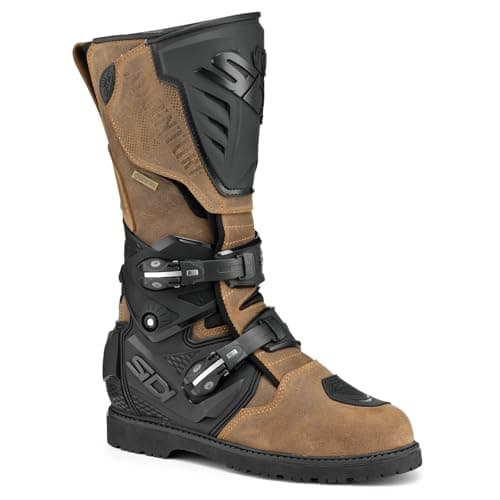
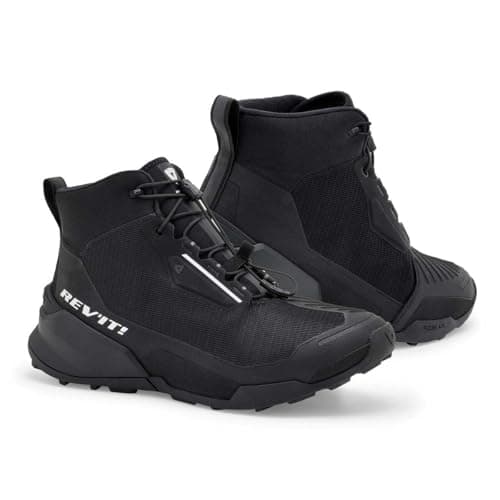
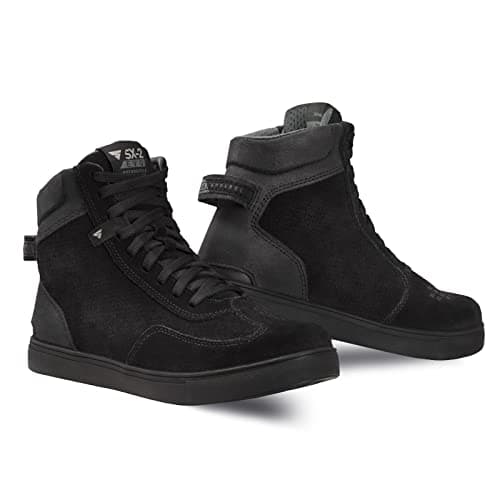
That is the whole problem with shopping on a CE badge. The badge is real, it is a legal requirement for motorcycle footwear sold as PPE in Europe, and it is still almost content-free on its own. What tells you something is the level string, and only a minority of makers publish it. On this page the Sidi Adventure 2 Gore-Tex publishes Level 2 for rigidity, impact, abrasion and cut, the RST Axiom CE prints a four-digit rating of 2122, the REV'IT! Subductionpublishes "Level 1 | 1 | 2 | 2" and SHIMApublishes "1111" on the SX-2 EVO. Four makers, four different levels of honesty about the same standard.

What to look for on a boot's certification claim

Before any pick, these are the three things worth reading off a product page, in the order they tell you the most:

  1. Is there a level string at all? Four digits, or four levels separated by pipes, or a sentence naming the levels per property. If the page says only "CE certified" or "CE Cat. II," you know the boot passed and nothing more.
  2. Which revision of the standard? "EN 13634:2017" is the current revision; "EN 13634:2010" is the older one. Both are real certifications and a 2010 boot is not a bad boot, but a maker who names the year is telling you more than one who does not.
  3. Does the claim come from the maker or the retailer? Where the two disagree, the maker's own product page is the one we rank on. We say so on every card where we had to take a spec from a retailer sheet instead.

We have not tested a boot, cut one or crushed one. Everything below comes from the published standard, the test house's own description of its requirements, and the makers' published certification wording, all linked at the bottom.

The short answer

Quick picks

#ProductBest forScorePrice
01
Sidi Sidi Adventure 2 Gore-Tex
Sidi Adventure 2 Gore-Tex

The only boot here that publishes a CE Level 2 rating across rigidity, impact, abrasion and cut under EN 13634:2017, with an anti-torsion system and a full-length Gore-Tex gaiter.

Best certified protection
8.7
$449.99Amazon
02
REV'IT! REV'IT! Subduction
REV'IT! Subduction

The most specific certification claim on this page. REV'IT publishes an actual EN 13634:2017 level string instead of a bare CE badge, and the FLEXBLADE structure under the sole targets the one thing a sneaker normally gives up first: resistance to being crushed sideways.

Highest published certification
8.4
$260.86Amazon
03
SHIMA SHIMA SX-2 EVO
SHIMA SX-2 EVO

The cheapest genuinely certified shoe here, and the most transparent about what that certification is worth: SHIMA publishes the full level string and every digit is a 1. That is the floor of the standard — and the floor of a real standard is still a great deal more than a fashion sneaker with a moto badge on it.

Best certified budget pick
8.0
$139.99Amazon

#ad · Live prices from the Amazon Product API, as of October 5, 2026. Where we have no verified live price we show none — we would rather leave a gap than print a number that has rotted.

In detail

The picks, in full

01
Sidi Sidi Adventure 2 Gore-Tex

Best certified protection

Sidi Adventure 2 Gore-Tex

CE EN 13634:2017 Level 2Gore-Tex + full gaiterAnti-torsion systemCam-lock buckles
8.7/10

The only boot here that publishes a CE Level 2 rating across rigidity, impact, abrasion and cut under EN 13634:2017, with an anti-torsion system and a full-length Gore-Tex gaiter.

Protection
9.7
Waterproofing
9.5
Durability
9.5
Walkability
7.2
Value
7.8

Pros

  • Level 2 across rigidity, impact, abrasion and cut — the highest published spec on this page
  • Anti-torsion mechanism aimed specifically at the twisting injuries off-road riders get
  • Micro-adjustable replaceable cam-lock buckles and tongue-in-groove Achilles panels

Cons

  • As expensive as the Toucan
  • Sidi sizing runs its own way — check the chart, twice

Don't buy this if…

…you want a boot you can walk a trail in comfortably — the Forma Low is the one built around that.

$449.99View on Amazon

Price as of October 5, 2026. Prices change — Amazon's is the one that counts.

#ad · we may earn a commission from this link to Sidi Adventure 2 Gore-Tex

02
REV'IT! REV'IT! Subduction

Highest published certification

REV'IT! Subduction

EN 13634:2017, level 1|1|2|2FLEXBLADE sole structureSEESOFT ankle discsNo membrane
8.4/10

The most specific certification claim on this page. REV'IT publishes an actual EN 13634:2017 level string instead of a bare CE badge, and the FLEXBLADE structure under the sole targets the one thing a sneaker normally gives up first: resistance to being crushed sideways.

Certification
9.4
Protection
9
Weather
6.6
Walkability
9
Value
7.8

Pros

  • REV'IT publishes "Level 1 | 1 | 2 | 2 certified according to standard EN 13634:2017" — the only per-test level string among the premium picks here
  • FLEXBLADE sole technology is built around transversal rigidity, which is the protection a low-cut shoe usually trades away first
  • SEESOFT ankle discs and an external TPU heel bumper, on a strobel-constructed shoe that still walks like a sneaker

Cons

  • No waterproof membrane — the Subduction H2O is a separate, dearer shoe, and this one wets through
  • REV'IT does not say which digit belongs to which test. Read in the standard's usual marking order, the two Level 2 ratings land on impact cut and transverse rigidity — but that is our reading, not a REV'IT statement
  • A polyester upper is a technical textile, not leather, and it looks it: this is a sneaker with a certificate rather than a shoe that passes for dress-casual

Don't buy this if…

…you commute in weather. The TCX Dartwood WP and the Alpinestars Chrome Drystar both keep water out, and this one does not.

$260.86View on Amazon

Price as of October 5, 2026. Prices change — Amazon's is the one that counts.

#ad · we may earn a commission from this link to REV'IT! Subduction

03
SHIMA SHIMA SX-2 EVO

Best certified budget pick

SHIMA SX-2 EVO

EN 13634:2017, level 1111ArmorPlus ankle absorbersPerforated suede upperReinforced heel and toe
8.0/10

The cheapest genuinely certified shoe here, and the most transparent about what that certification is worth: SHIMA publishes the full level string and every digit is a 1. That is the floor of the standard — and the floor of a real standard is still a great deal more than a fashion sneaker with a moto badge on it.

Certification
8.6
Protection
7.6
Weather
5.8
Walkability
8.8
Value
9.4

Pros

  • SHIMA publishes "certified according to EN 13634:2017, protection level 1111" — the complete string, which almost nothing at this price does
  • ArmorPlus impact absorbers at the ankle with TPU reinforcement, reinforced heel and toe areas, and a transversely reinforced sole
  • Perforated suede with reflective detailing and a spare set of fluo laces, at roughly half the price of the premium picks here

Cons

  • Level 1 across all four rated areas is the minimum a shoe can score and still be certified — it passes every test at the lower level
  • Perforated suede is a summer upper: no membrane, and it soaks through in sustained rain
  • EU sizing and thin per-size stock on Amazon, so the size you want may not come in the color you want

Don't buy this if…

…you ride through winter or in regular rain — this is a ventilated warm-weather shoe and it will not keep your feet dry.

$139.99View on Amazon

Price as of October 5, 2026. Prices change — Amazon's is the one that counts.

#ad · we may earn a commission from this link to SHIMA SX-2 EVO

The four rated properties, one at a time

Every certified motorcycle boot is assessed on the same four things. Here is what each one is actually measuring and why it matters on the road.

Rated propertyWhat it measuresWhy it matters
Upper heightHow far the upper extends above the heel, measured with a rulerDecides how much of your ankle and shin is inside the boot at all
Abrasion resistanceHow long the upper survives being dragged across an abrasive surfaceThe sliding part of a crash, before anything hits anything
Impact cut resistanceResistance to a blade driven into the upper under loadFootpegs, levers, bodywork edges and road furniture
Transverse rigidityHow much force it takes to crush the boot sidewaysThe bike landing on your foot — the classic low-speed injury

How to read the level string

When a maker prints something like 2122 or Level 1 | 1 | 2 | 2, those are the four results in order. Each digit is a 1 or a 2, and 2 is the higher performance level in every case. There is no 3, and there is no 0: if a boot failed any of the four, it would not be certified at all.

So a 1111boot, like the SHIMA SX-2 EVO, is a boot that passed every test at the lower level. That is the floor of the standard. It is also genuinely useful information, and it is a great deal more than a fashion sneaker with a motorcycle logo on it can claim — an uncertified shoe has not passed anything, at any level. A 2122 boot, like the RST Axiom, took the higher level on height, cut and rigidity and the lower one on abrasion. And Level 2 across all four, which Sidi publishes for the Adventure 2, is as high as the standard goes.

One warning about comparing strings across makers: not every maker prints the four results in the same order, and some write them as a sentence rather than a code. Read the words next to the digits rather than assuming position. If a page prints digits with no labels at all, treat the string as evidence that the boot was properly assessed and go to the maker's size and spec documentation for the breakdown.

What EN 13634 does not test

This is the part most buying guides skip, and it is where riders get caught out. The standard is about the protective performance of the footwear in a crash. It says nothing whatsoever about:

  • Waterproofing. A separate optional marking exists for water resistance, and most makers simply name their membrane instead — Gore-Tex, Drystar, SinAqua. None of the four picks here publishes a waterproof rating in millimetres for the boot. Our waterproof boots ranking is built on membrane construction for exactly that reason.
  • Comfort, fit or walkability. Nothing in the standard asks whether you can walk a mile in the boot. A Level 2 everything race boot is often the worst boot on the page to walk in.
  • Sole grip. Not rated. A boot can be fully certified and still be slick on a wet forecourt.
  • Durability over time. The tests are performed on a new boot. Stitching, buckles and sole bonding age, and nothing in the certification speaks to that.
  • Ankle brace mechanisms. Branded torsion-control systems are a design feature, not a certified rating. They may help the boot score on rigidity, but "anti-torsion system" is marketing language until the level string backs it up.

Is an uncertified boot useless?

No, and it is worth being precise instead of absolutist. A tall leather work boot with a hard sole and good ankle coverage is meaningfully better than a canvas sneaker, and plenty of riders wear exactly that. What it is not is evidence. Nobody has dragged it across an abrasive drum, driven a blade into it or crushed it sideways, so nobody can tell you how it behaves when any of those things happens for real. On a site whose entire method is published specifications, that distinction is the whole game: we rank what makers are willing to document, and we say so when they document nothing. Our do you need motorcycle boots guide takes the broader question apart.

EN 13634 and the rest of your gear

Boots are the only piece of gear with their own dedicated standard; the rest of the CE landscape is split differently. Jackets and trousers are rated as whole garments under EN 17092, in classes AAA, AA, A, B and C, and the armor inside them is rated separately under EN 1621. Gloves have their own standard, EN 13594. Helmets are outside the CE system entirely in the US, where DOT FMVSS 218 applies. Our CE armor levels guide covers the garment and armor side, our glove certification guide covers gloves, and DOT vs ECE vs Snellcovers helmets. Four standards, four different scales, no shared vocabulary — which is exactly why each one needs reading on its own terms.

The boots on this page, and why these three

These are not the three best boots on the site. They are three whose makers publish the most about their certification, which is the only thing this page is about. The Sidi Adventure 2 Gore-Texpublishes Level 2 for rigidity, impact, abrasion and cut under EN 13634:2017 — the top of the standard. The REV'IT! Subductionpublishes "Level 1 | 1 | 2 | 2 certified according to standard EN 13634:2017" on a riding shoe, which is rare in that category. And the SHIMA SX-2 EVOpublishes "1111" — the floor, stated plainly, which we rate as honesty rather than weakness. A fourth worth naming but not ranked here is the RST Axiom CE, which prints a four-digit 2122 on a women's boot and sits on our women's boots ranking instead. For rankings by what the boot is for rather than by what it publishes, start with our motorcycle boots ranking, riding shoes ranking or adventure boots ranking.
How we picked

We don't test helmets. Here's what we do instead.

Everyone in this category says they tested twenty helmets. We haven't tested any — and we say so. What we do instead: compile the published DOT, ECE 22.06 and Snell certifications, the manufacturer's fit, weight and shell specs, the CE armor levels, and reputable published reviews, then score each pick against a published rubric. The scores are judgments from documented research — not measurements we took, because we do not run a lab and we are not going to pretend we do. Every certification and spec claim traces to a source we name and link.

Questions

Frequently asked

What does EN 13634 actually certify?
That a boot was assessed against the European standard for motorcycle riders' protective footwear and passed on four properties: upper height, abrasion resistance, impact cut resistance and transverse rigidity. Each is awarded Level 1 or Level 2 separately, so two certified boots can be very different boots.
What do the numbers in a CE rating like 2122 mean?
They are the four results in order, each a 1 or a 2, with 2 being the higher performance level. There is no zero, because a boot that failed any of the four would not be certified. Read the labels the maker prints next to the digits rather than assuming every brand uses the same order.
Is Level 1 bad?
No. Level 1 is a pass at the lower performance level of a real standard, which is a different thing entirely from not being tested. A boot publishing 1111 has been dragged, cut and crushed in a laboratory and survived all three; a fashion sneaker has not. Level 2 is better evidence, and it usually comes with more weight and less walkability.
Does EN 13634 cover waterproofing?
Not as part of the four protection levels. Water resistance sits outside that core rating, and in practice makers advertise a named membrane instead — Gore-Tex, Drystar, SinAqua. None of the boots on this page publishes a millimetre rating for waterproofing, so we rank membrane construction separately on our waterproof boots page.
What is the difference between EN 13634:2010 and EN 13634:2017?
2017 is the current revision and 2010 is the previous one. Both are genuine certifications and several excellent boots still carry the 2010 mark. The useful signal is not which year so much as whether the maker names a year at all — a page that says only "CE certified" with no standard and no revision is telling you the least it legally can.
Are uncertified motorcycle boots legal to ride in?
In the US there is no federal requirement for certified footwear, so yes. The question is not legality, it is evidence: an uncertified boot may well be protective, but nobody has measured it, so nobody can tell you how it behaves in a slide or under the weight of the bike. That is why every boot ranking on this site leads with what the maker publishes.

Keep reading

Receipts

Sources

We do not run a testing lab, and we do not pretend to. Our picks are built from published certifications, manufacturer spec sheets, the standards documents themselves, and reputable published reviews — named and linked above. Where we could not verify something, we say so on the page rather than quietly leaving it out. Read our full method.