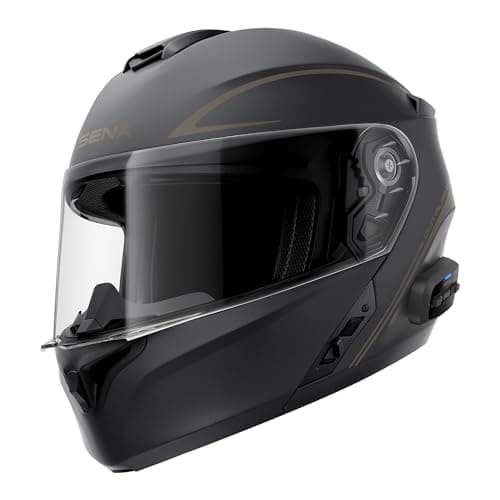
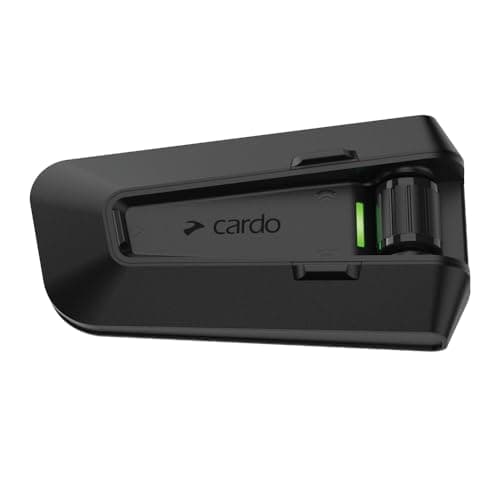
Buy a separate intercom. For almost every rider the right answer is a good helmet plus an add-on unit, and the Cardo Packtalk Pro is the one we rank first: DMC mesh for groups, JBL 45 mm speakers, natural-voice control and a waterproof body, on whatever helmet you actually want to wear. The exception is real and worth naming: if your budget is a single number that has to cover both the lid and the comms, a built-in helmet like the Sena Outrush R gets you certified head protection and working intercom for less than the two bought separately, and that is a better outcome than a good helmet and no comms at all. What you are trading away is range, mesh, repairability and every future upgrade.
The two things have wildly different lifespans, and that is the heart of the decision. A helmet is a five-year item that you replace after any real impact. An intercom is an electronics product on a two-to-three-year feature cycle, with a battery that degrades and firmware that eventually stops being updated. Bolting them together means whichever one dies first takes the other with it, or leaves you riding something you would otherwise have replaced.
We compared the two approaches on five questions:
- Does it do mesh, or only Bluetooth? Mesh is self-healing group audio that reforms when a rider drops out. Bluetooth intercom is a fragile chain. Our Bluetooth vs mesh explainer is the long version, and it is the single biggest capability gap between these two camps.
- What range does the maker publish, and for how many riders? Built-in systems are consistently the short end of the market.
- Can you move it to your next helmet? An add-on clamps on and comes off. A built-in system is part of the shell.
- Can the battery or speakers be replaced? On an add-on the unit is the serviceable part. On a built-in helmet, a dead battery is usually a dead feature.
- What does the whole package cost? Not the unit — the helmet plus the unit. This is the only question built-in reliably wins.
We have not bench-tested radios or measured range. Every figure below is quoted from the maker's published specification, and where a maker does not publish one we say so.
Built-in vs add-on, side by side
| | Built-in Bluetooth helmet | Add-on intercom |
|---|
| Group audio | Bluetooth chain only | Mesh available (DMC or Sena Mesh) |
| Moves to your next helmet | No | Yes — it clamps on |
| Battery replaceable | Rarely, and not by you | Unit is the serviceable part |
| Firmware and feature updates | Tied to the helmet model | Ongoing on current platforms |
| Aerodynamics and bulk | Flush with the shell | A module on the side, or a slim one |
| Cost of the whole package | Lowest | Helmet price plus unit price |
| Choice of helmet | Only models sold with comms | Any helmet, including Snell-rated shells |
The thing you cannot add later: mesh
Every built-in helmet we are aware of, including both on this page, is a Bluetooth system. Bluetooth group intercom works by chaining riders together in a fixed order. If the second rider in a chain of four stops for fuel, the riders behind lose the riders in front until the chain is manually rebuilt. Mesh is a different radio protocol: every helmet is a node, the network heals itself when someone drops out or rides out of range and reforms when they come back, and nobody has to touch a button. If you ride in a group of three or more, that difference is the entire reason to buy an add-on, and no built-in helmet we have found offers it. Our mesh intercom ranking covers that end of the market.
If you ride alone or with one regular pillion or partner, this argument evaporates entirely. Two-rider Bluetooth is a solved problem, and a built-in helmet does it fine.
The replacement cycle problem, stated plainly
A helmet should be replaced about five years from its date of manufacture, and immediately after any impact — including dropping it from height onto a hard floor. An intercom gets superseded faster than that and its lithium battery loses capacity whether you ride or not. Combine them and you get two bad outcomes. Crash the bike and you throw away a working radio with the helmet. Wear out the battery at year three and you are choosing between a dead feature and binning a helmet with two good years left in it.
An add-on decouples them. The unit clamps to the next helmet, which also means a built-in helmet quietly restricts your helmet choice: no Snell-rated shell we rank is sold with comms built in, so the built-in route rules out a whole class of lid before you start shopping. Our built-in Bluetooth helmets ranking covers what is available on that side, and it is a short list by comparison with the helmet market as a whole.
The case for built-in is bulk, tidiness and one price
Three real advantages, and none of them is imaginary. First, bulk: a built-in system is flush with the shell, with nothing to catch on a jacket collar, nothing to knock off against a doorframe and no module sitting in the airflow. Second, installation: it is already done, with the speakers correctly located in purpose-cut recesses and the microphone in the right place — which is more than many self-installed units manage, as our installation guide explains at length. Third, one price: a certified helmet and working comms for less than the two bought separately is genuinely good value if the alternative was riding with no comms.
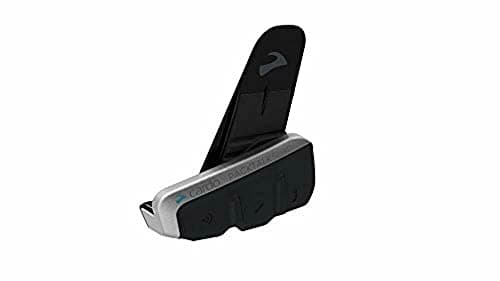
The bulk argument is also the one that has weakened most. A low-profile add-on like the Cardo Packtalk Slim exists specifically to answer it, and it keeps mesh. If "I do not want a lump on my helmet" is your main objection to an add-on, the Slim is the unit to compare against a built-in helmet — not the full-size flagship.
Audio quality is where the price shows
Speaker quality is the most common disappointment with cheap comms of either kind. Built-in systems use small drivers chosen to fit a recess and a price, and makers rarely publish a driver size at all. Add-on units at the top of the market publish theirs and partner with audio brands: the Packtalk Pro carries JBL 45 mm speakers, the Slim carries JBL drivers in a thinner body, and Sena's 50-series uses Harman Kardon. If you listen to music as much as you talk, our intercoms for music ranking is built around exactly this, and it is an argument firmly on the add-on side.
One thing neither camp solves: volume creep. Wind noise rises with speed, you turn the music up to beat it, and the combination is louder than either alone. Earplugs let you run the speakers lower and hear them better, which sounds backwards and is not.
Which way should you spend the money?
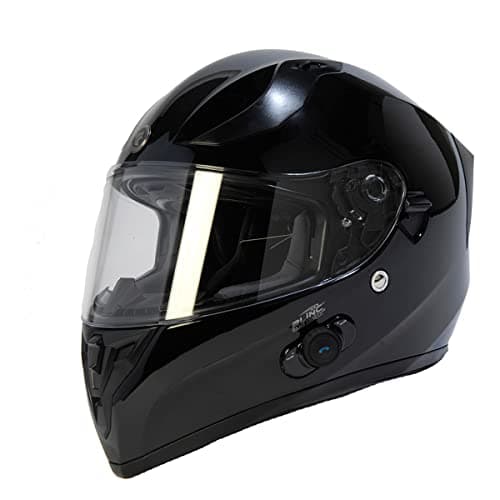
Buy the Cardo Packtalk Pro if you ride in groups or intend to: DMC mesh, JBL 45 mm speakers, natural-voice control and a waterproof body, on any helmet you like. Buy the Cardo Packtalk Slimif the only thing keeping you from an add-on is the module sticking out — same DMC mesh, slim body. Buy the Sena Outrush R if one budget has to cover the helmet and the comms together and you mostly ride solo or two-up: a DOT modular with a Sena intercom already in it. And buy the TORC T-15Bif that budget is tighter still — a DOT full-face with Blinc Bluetooth and a drop-down sun visor, accepting that it is the least capable radio here. Whichever side you land on, our do you need an intercom guide is the honest first question, and Cardo vs Sena is the next one.