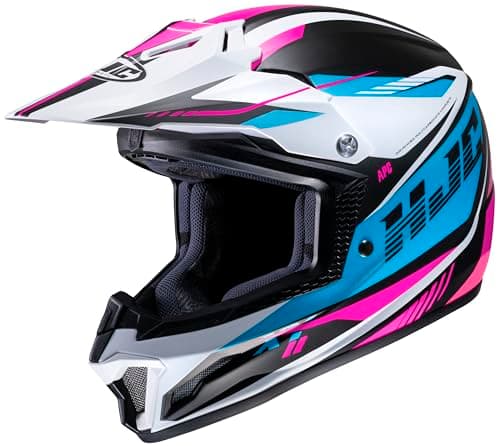
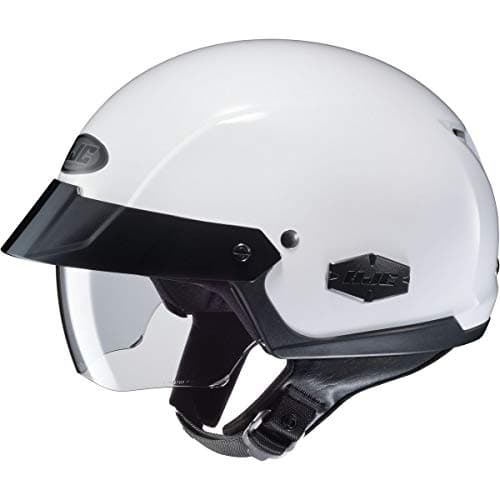
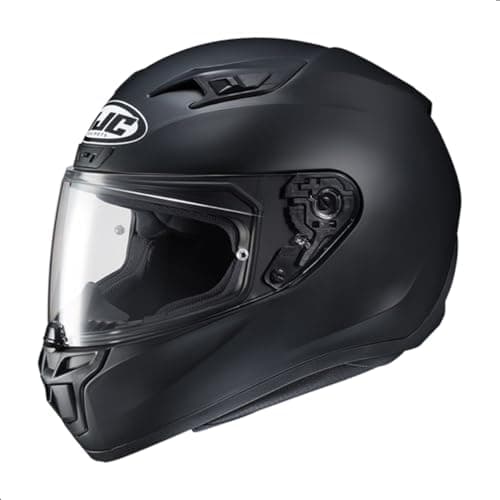
The best HJC for most riders is the i10 — it is the only helmet in this ranking certified to both DOT and Snell M2020, and it costs a fraction of what a Snell badge normally does. The budget pick is the HJC C10, a DOT and ECE certified full-face at the very bottom of the range that we would still put on a new rider. We did not test any of these — we do not have a lab and we do not crash-test anything — so every claim below is HJC's own published spec or the retail listing, and the price in the table is a live Amazon figure stamped with the date it was pulled.
HJC earns its own page for a reason that is easy to miss when you shop by price. Across the HJC range, the certification stack changes from model to model rather than from price tier to price tier. The cheap i10 carries Snell. The far more expensive composite RPHA 71 does not. The V31 is a fiberglass composite shell with a DOT label and no ECE rating published for the US model, while the much plainer C10 publishes DOT and ECE together. With most brands you can read the certification off the price. With HJC you cannot, and that is the single most useful thing to know before you buy one.
The second thing to know is that HJC publishes less of its own spec data than its rivals do. Shoei, Bell, AGV and LS2 all print a shell count and a weight for their street lids. On several HJC models we could not find a published weight at all, and on the IS-Cruiser and CL-XY II we could not find a shell count — which means you cannot tell whether a small head is sitting in a small shell or in a large shell with thicker foam making up the difference. Every pick below says so where it applies, because a spec a maker declines to publish is information too.
How this ranking was built
Published certification first, including the revision. DOT (FMVSS No. 218) is a US self-certification, ECE 22.06 added an oblique rotational-impact test that 22.05 never ran, and Snell M2020 is a separate voluntary standard with a higher impact threshold than either — so a model carrying two of the three is a meaningfully different proposition from one carrying a single DOT label. Then shell material and published shell count, then how much hard spec HJC actually publishes, then features, then value. The rubric behind the scores is on our methodology page, and none of it comes from a test we ran. If you want the standards themselves explained before you read the picks, start with DOT vs ECE vs Snell.
How to read an HJC model name
HJC's naming looks arbitrary and is not. On HJC's own US site the catalog is grouped into eight sections — RPHA Series, Full Face, Modular, Open Face, Off Road, Smart HJC, Snow and Licensed — and the prefix tells you which family a helmet belongs to:
- RPHA — the flagship race-and-sport series (RPHA 1N, RPHA 12 Carbon, RPHA 72, RPHA 91). Composite shells, the most shell sizes, the highest prices.
- F — the newest premium street line (F71, F71 Carbon, F100, F100 Carbon), sitting just under RPHA.
- i— the mainstream street line with an integrated drop-down sun visor (i11, i71, i91, i100, i31). This is HJC's volume business.
- C — the value and commuter line (C10, C71, C91). Simpler, lighter on features, cheapest.
- V — the vintage-styled line (V10, V31, V60).
- IS — a single cruiser model, the IS-Cruiser, where IS refers to the internal sunshield.
- CL and CS— the value off-road helmets (CL-XY II, CS-MX II), including HJC's youth lids.
The numbers are tiers, not generations — an i71 is not newer than an i11, it is positioned above it. Generation is signaled by the number stepping up by one, which brings us to the fact that matters most on this page.
The thing nobody tells you: Amazon sells HJC's outgoing generation
Check HJC's current US catalog and three of the seven helmets below are not in it. The Full Face menu lists the i11, not the i10. The Modular menu lists the i91 and i100, not the i90. The RPHA Series lists the RPHA 72 and RPHA 72 Carbon, not the RPHA 71. The V31, C10, IS-Cruiser and CL-XY II are all still current.
This is not a scandal and it is not a reason to avoid them — it is the reason they are cheap, and it is why a Snell-rated full-face can cost less than a mid-range jacket. But it does change two things about how you shop. First, the newer sibling usually exists because a standard moved: HJC lists the i11 with Snell M2025D where the i10 carries M2020, so if you specifically want the current Snell revision you want the i11 and not the bargain. Second, spares and liner availability follow the current catalog, so a cheek-pad set or a replacement shield for an outgoing model is easier to find now than it will be in three years. Neither of those makes the outgoing helmet unsafe. A helmet certified to Snell M2020 was certified to Snell M2020 and still is.
What the certification actually looks like across the range
Laid out plainly, from the picks below: the i10 is DOT plus Snell M2020 — the only Snell in this ranking. The C10 and the i90 publish DOT and ECE. The RPHA 71 is listed DOT-approved in the US with ECE 22.06 homologation on the European version of the same helmet, and no Snell. The V31 publishes DOT FMVSS 218 only. The IS-Cruiseris published as "DOT approved" rather than DOT certified — a wording difference we flag rather than smooth over. And the CL-XY II is the messiest case on the page: retailer listings disagree, with some showing DOT-218 and some showing the superseded ECE 22.05, which is why its card tells you to read the label inside the shell when the helmet arrives. How to read a helmet certification sticker walks through exactly where to look.
The short answer
| # | Product | Best for | Score | Price |
|---|
| 01 | HJC i10The value benchmark, and now the outgoing generation: HJC has replaced it with the i11, built on the same platform and certified to the newer Snell M2025D. The i10 itself is unchanged — DOT and Snell M2020 certified, a Pinlock-ready shield in the box, and a genuinely quiet, comfortable lid for roughly a fifth of a flagship's price. | Best value overall | | Check price → |
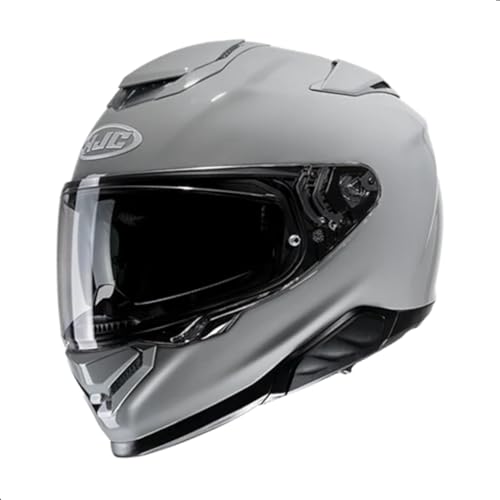
| 02 | HJC RPHA 71HJC's touring-sport lid built around a named channeling system: the Advanced Channeling Ventilation System runs air channels through the inner shell rather than just cutting holes in the outer one, on a four-shell-size composite with the Pinlock lens included. | Best channeled ventilation | | $403.56·Amazon |
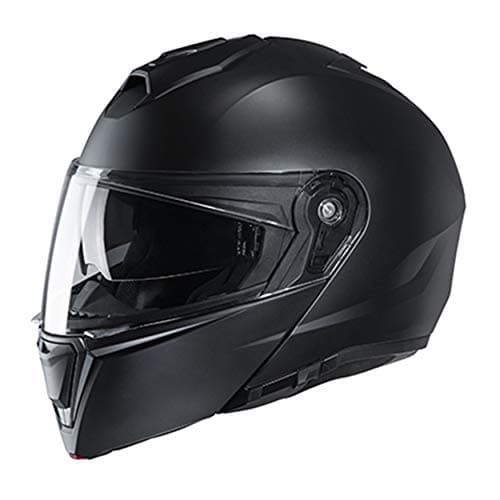
| 03 | HJC i90The value modular. DOT and ECE certified, a drop-down sun visor and a comfortable touring fit, for a price that leaves room in the budget for a proper headset. | Best value modular | | $136.52·Amazon |
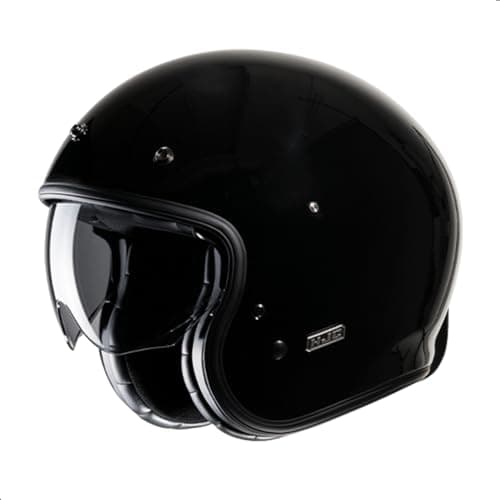
| 04 | HJC V31The best-equipped 3/4 here: a DOT-certified fiberglass composite shell with the IS-10 three-step internal sunshield, a double-D ring and a peak-visor mount, so you can build the look you want. | Best equipped 3/4 | | $208.99·Amazon |
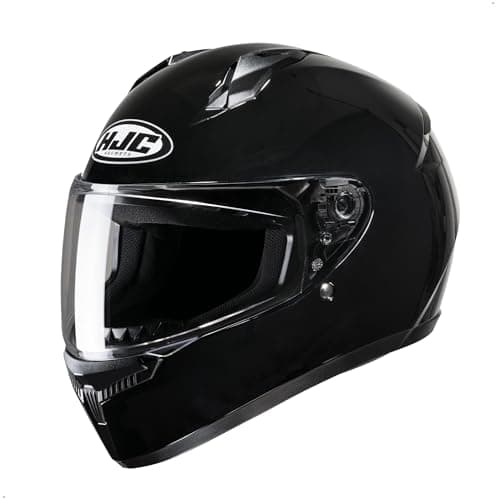
| 05 | HJC C10The safest way to spend the least. DOT and ECE certified, light for a budget lid, and simple in the best way — the helmet to buy a new rider who should not skimp on the one piece that matters most. | Cheapest we'd recommend | | $113.99·Amazon |
| 06 | HJC CL-XY IIFour discrete youth sizes with published head circumferences from 49-50 cm to 55-56 cm — the most fit granularity on this page, and fit is the thing that decides whether a youth helmet works at all. DOT approved per the listing, with a removable washable Nylex liner and a double-D ring. | Best fit range | | $99.99·Amazon |
| 07 | HJC IS-CruiserThe comfort pick. A polycarbonate composite shell with a retractable sun visor and a removable, washable antibacterial liner — the interior spec you actually live with on a hot day, from the maker with the deepest helmet catalog here. | Best liner and sun visor | | $109.99·Amazon |
#ad · Live prices from the Amazon Product API, as of November 19, 2026. Where we have no verified live price we show none — we would rather leave a gap than print a number that has rotted.
In detail
Best value overall
DOT · Snell M2020Polycarbonate shellPinlock-readySizes XS–3XL
The value benchmark, and now the outgoing generation: HJC has replaced it with the i11, built on the same platform and certified to the newer Snell M2025D. The i10 itself is unchanged — DOT and Snell M2020 certified, a Pinlock-ready shield in the box, and a genuinely quiet, comfortable lid for roughly a fifth of a flagship's price.
- Certification
- 8.6
- Shell/weight
- 7.8
- Noise/aero
- 8
- Fit range
- 8.6
- Value
- 9.6
Pros
- +DOT and Snell M2020 certified at an entry price
- +Comes Pinlock-ready with the pin included, so no fogging for a small add-on
- +Comfortable rounder-to-intermediate fit that suits a lot of heads
Cons
- −Polycarbonate shell is heavier than composites
- −Not the quietest at highway speed
- −Replaced in HJC's lineup by the i11, which carries the newer Snell M2025D
Don't buy this if…
…you ride a lot of highway miles and want the lightest, quietest lid available — or you want HJC's current-generation sport helmet, which is now the i11.
Best channeled ventilation
Advanced Channeling Ventilation SystemPremium Integrated Matrix shell4 shell sizesHJ-40 Pinlock shield included
HJC's touring-sport lid built around a named channeling system: the Advanced Channeling Ventilation System runs air channels through the inner shell rather than just cutting holes in the outer one, on a four-shell-size composite with the Pinlock lens included.
- Published ventilation
- 8.8
- Certification
- 8.6
- Shell/weight
- 8.4
- Fit range
- 9
- Value
- 8.2
Pros
- +Ventilation is channeled, not just vented: HJC's ACS routes intake air through channels integrated into the inner shell and out through rear exhausts, rather than relying on holes in the outer shell alone
- +Premium Integrated Matrix shell - HJC's fiber blend of glass, aramid, carbon and organic fibers - across four shell sizes, the second-widest shell count here
- +Central chin ventilation that HJC notes is operable with gloves on, plus a large closable top intake and two rear air outlets
- +Ships with the HJ-40 Pinlock-ready shield, and the model carries an integrated drop-down sun visor
- +DOT approved per the US listing, with ECE 22.06 homologation on the European version of the same helmet
Cons
- −We could not verify a single consistent published weight for the US-market RPHA 71, so this page does not quote one - the AGV, LS2 and Bell all publish theirs
- −HJC's US listing does print a count - full front-to-back ventilation with 2 intakes and 2 exhausts - but that is fewer openings than the AGV publishes, and HJC still gives no airflow rate
- −No Snell certification published for this model
- −Amazon stock runs thin and is colorway-specific; check the size you need is listed
Don't buy this if…
…you want a published weight before you buy: HJC is the one maker here that does not give you a number you can compare.
Best value modular
DOT · ECEPolycarbonate shellInternal sun visorPinlock-ready
The value modular. DOT and ECE certified, a drop-down sun visor and a comfortable touring fit, for a price that leaves room in the budget for a proper headset.
- Certification
- 8.6
- Shell/weight
- 7.6
- Noise/aero
- 7.8
- Fit range
- 8.4
- Value
- 9.2
Pros
- +DOT and ECE certified modular at an entry price
- +Drop-down sun visor and a genuinely comfortable long-day fit
- +Pinlock-ready shield included
Cons
- −Heavier polycarbonate shell
- −Not as quiet as premium tourers
Don't buy this if…
…you want the lightest, quietest modular and have the budget for it.
Best equipped 3/4
DOT FMVSS 218Fiberglass compositeIS-10 sunshieldDouble-D ring
The best-equipped 3/4 here: a DOT-certified fiberglass composite shell with the IS-10 three-step internal sunshield, a double-D ring and a peak-visor mount, so you can build the look you want.
- Certification
- 8
- Fit
- 8.6
- Weight
- 7.8
- Features
- 9
- Value
- 8.4
Pros
- +Fiberglass composite shell rather than the polycarbonate most 3/4 lids use
- +IS-10 internal sunshield is 3-step adjustable, anti-scratch and blocks 99% of UV
- +Double-D ring retention and interchangeable cheek pads for fit tuning
Cons
- −Peak visor is a separate purchase
- −DOT only — no ECE or Snell rating published for this model
Don't buy this if…
…you want the lightest classic shell — the sunshield mechanism adds weight a bare 3/4 does not carry.
Cheapest we'd recommend
DOT · ECEPolycarbonate shellPinlock-readyLightweight budget
The safest way to spend the least. DOT and ECE certified, light for a budget lid, and simple in the best way — the helmet to buy a new rider who should not skimp on the one piece that matters most.
- Certification
- 8.6
- Shell/weight
- 7.8
- Noise/aero
- 7.4
- Fit range
- 8.2
- Value
- 9.4
Pros
- +DOT and ECE certified at the very bottom of the price range
- +Lighter than most budget lids and Pinlock-ready
- +Easy, forgiving fit that works for first-time buyers
Cons
- −Basic ventilation
- −No sun visor
- −Fewer size/shell options
Don't buy this if…
…you want premium quiet, a sun visor or the lightest shell — this is a price pick.
Best fit range
DOT approved (listing)4 youth sizes, 49-56 cmPolycarbonate composite shellDouble-D ring
Four discrete youth sizes with published head circumferences from 49-50 cm to 55-56 cm — the most fit granularity on this page, and fit is the thing that decides whether a youth helmet works at all. DOT approved per the listing, with a removable washable Nylex liner and a double-D ring.
- Fit granularity
- 9.4
- Certification
- 8
- Published specs
- 7.4
- Shell/construction
- 8
- Value
- 9
Pros
- +Four discrete sizes with published head circumferences — 49-50, 51-52, 53-54 and 55-56 cm — so you size to a tape measurement rather than to a size band
- +Double-D ring retention rather than a quick-release buckle
- +ACS front-to-back channeling ventilation and a removable, washable Nylex interior
- +The cheapest route into a brand with a real US dealer and spares network
Cons
- −HJC publishes no weight for this helmet that we could find
- −Retailer listings disagree on the certification — some show DOT-218 and some show the superseded ECE 22.05; for a US rider the DOT label inside the shell is what counts, so check it when the helmet arrives
- −No published shell count, so you cannot tell whether those four sizes come from four shells or from four padding thicknesses
Don't buy this if…
…you want dual homologation on paper — the FLY publishes DOT and the current ECE 22.06 together and this does not.
Best liner and sun visor
DOT approvedPolycarbonate composite shellRetractable sun visorRemovable washable liner
The comfort pick. A polycarbonate composite shell with a retractable sun visor and a removable, washable antibacterial liner — the interior spec you actually live with on a hot day, from the maker with the deepest helmet catalog here.
- Certification
- 8
- Shell/fit range
- 7.2
- Coverage
- 7.2
- Features
- 9
- Value
- 8
Pros
- +Removable, washable antibacterial Nylex interior — the only pick publishing that combination, and it matters on a helmet worn in summer heat
- +Integrated retractable sun visor rather than a bolt-on accessory
- +HJC builds more helmet models than anyone else on this page, and the fit and finish reflect it
Cons
- −HJC does not publish a shell count for it, so you cannot tell whether a small head sits in a padded large shell
- −Reviewers consistently report it sits wide on the head — the shape is not the slimmest here
- −Published as DOT approved rather than DOT certified
Don't buy this if…
…the low-profile look is the reason you want a half helmet — this is the bulkiest shape in this ranking.
Which HJC is for which rider
Most street riders, and anyone who wants Snell cheaply: the i10. DOT and Snell M2020, a Pinlock-ready shield with the pins in the box, and a rounder-to-intermediate interior that suits a wide range of heads. The trade is a polycarbonate shell, which is heavier than a composite and not the quietest thing at highway speed. If the current Snell revision matters to you, buy the i11 instead and pay the difference.
Long sport-touring days: the RPHA 71.This is the best-built helmet here — a Premium Integrated Matrix shell (HJC's blend of glass, aramid, carbon and organic fibers) in four shell sizes, the widest shell count of any pick on this page, plus the Advanced Channeling Ventilation System that routes intake air through channels in the inner shell rather than just cutting holes in the outer one. It ships with the HJ-40 Pinlock-ready shield and carries a drop-down sun visor. Its honest weakness is the one HJC repeats across the range: we could not verify a single consistent published weight for the US-market RPHA 71, so this page does not quote one. Compare it against the wider field in our touring helmet ranking.
Riders who stop a lot: the i90. A DOT and ECE certified flip-up with a drop-down sun visor and a genuinely comfortable long-day interior, at a price that leaves room in the budget for a headset. It is heavier than a premium modular and not as quiet. Our modular helmet ranking puts it next to the alternatives, and are modular helmets safe answers the question riders actually mean when they ask it.
Cruisers and classic bikes: the V31, with a caveat. It is the best-equipped three-quarter helmet we have ranked — a fiberglass composite shell rather than the polycarbonate most 3/4 lids use, the IS-10 three-step internal sunshield, a double-D ring and a peak-visor mount so you can build the look you want. The caveat is structural, not brand-specific: no open-face helmet protects your jaw. If that matters more to you than the look, buy the C10 and spend the difference on gloves. See the rest of the field in our open-face ranking, and if you are building the rest of the kit around it, our cruiser jacket ranking sorts that shelf on whether the CE armor actually comes in the box.
A first helmet on the tightest budget: the C10. DOT and ECE together, lighter than most helmets at its price, Pinlock-ready, and an easy forgiving fit. You give up ventilation, a sun visor and shell options. It is the cheapest helmet on this site we would recommend without qualification, and it sits in our budget helmet ranking for the same reason.
A kid on a dirt bike: the CL-XY II. Four discrete youth sizes with published head circumferences from 49–50 cm to 55–56 cm, which is more fit granularity than most youth helmets offer, and fit is the thing that decides whether a youth helmet works at all. Read the certification label when it arrives, for the reason above. Our youth helmet ranking covers the alternatives, and our dirt bike glove ranking covers the one off-road category where the certification paperwork mostly is not there at all.
A half helmet, if you have already decided: the IS-Cruiser. A polycarbonate composite shell with a retractable sun visor and a removable, washable antibacterial Nylex liner — the interior spec you actually live with on a hot day. It sits wide on the head and HJC publishes no shell count for it. And it covers less of your head than anything else here; types of motorcycle helmets lays out what each shape does and does not cover.
HJC and head shape
HJC's street interiors run rounder than the European brands— closer to round-oval and intermediate-oval than to the long-oval shells Shoei and Arai are known for. That is most of why riders who find a premium European lid pinches at the temples often end up in an HJC, and it is a better reason to buy one than the price is. The RPHA 71's four shell sizes give you the finest fit granularity in the range; the IS-Cruiser, at the other end, publishes no shell count at all. Measure first with our helmet measuring guide, then work out your shape with head shapes explained. A helmet in the right size and the wrong shape is still the wrong helmet, whatever the label says.
Two things to budget for on top
A Pinlock lens.Several HJC shields are sold "Pinlock-ready" — the pins are fitted, the insert is not always in the box. On the i10 and C10 that is a small add-on that removes fogging as a problem entirely; the RPHA 71 ships with its HJ-40 Pinlock-ready shield. Our guide to stopping a visor fogging covers what works and what does not.
A headset, if you want one. None of these helmets has comms built in. The i90 and RPHA 71 both have the interior space a clamp-mount unit wants; the half helmet and the 3/4 are a harder install. Start with our intercom ranking and how to install a helmet intercom.
How we picked
Everyone in this category says they tested twenty helmets. We haven't tested any — and we say so. What we do instead: compile the published DOT, ECE 22.06 and Snell certifications, the manufacturer's fit, weight and shell specs, the CE armor levels, and reputable published reviews, then score each pick against a published rubric. The scores are judgments from documented research — not measurements we took, because we do not run a lab and we are not going to pretend we do. Every certification and spec claim traces to a source we name and link.
Questions
Are HJC helmets good?+
On published certification, yes — with the caveat that HJC's range is wide enough that "an HJC" is not one answer. The i10 carries DOT and Snell M2020, which is a stronger pair than most helmets at three times the price. The RPHA 71 is a composite shell in four shell sizes. At the other end, the V31 publishes DOT alone and the IS-Cruiser is listed as "DOT approved" rather than certified. HJC's consistent weak spot is spec disclosure: it publishes weight and shell count less reliably than Shoei, Bell or AGV do.
Which HJC helmets are Snell certified?+
Of the helmets ranked here, only the
i10 — DOT plus Snell M2020. HJC has since replaced it in the US catalog with the i11, which it lists with the newer
Snell M2025D. Nothing else on this page publishes a Snell rating, including the more expensive RPHA 71. If Snell is your binding requirement, see
Snell certified motorcycle helmets for the full field.
Is the HJC i10 or the C10 better for a first helmet?+
The i10, if you can stretch to it: it adds Snell M2020 on top of DOT, and Snell's impact threshold is higher than either DOT's or ECE's. The C10 is the pick if the i10 is genuinely out of reach — it still publishes DOT and ECE, which is a real certification pair, and it is lighter than most helmets at its price. Neither is a compromise you should feel bad about; a helmet you can afford and wear every ride beats a better one sitting in a shop.
Why is the HJC i10 cheaper than the RPHA 71 if it has more certification?+
Because certification and construction are priced separately. Snell M2020 is a test a shell either passes or does not, and a polycarbonate shell can pass it by being thicker and heavier. The RPHA 71's money goes into a Premium Integrated Matrix composite shell, four shell sizes, channeled ventilation and the Pinlock lens in the box — weight, fit granularity and refinement rather than a higher impact threshold. Our
are expensive helmets safer page covers exactly where the money goes.
Is the HJC i10 discontinued?+
It is no longer in HJC's current US Full Face menu, which now lists the i11 in its place — and the same is true of the i90 (replaced by the i91 and i100) and the RPHA 71 (replaced by the RPHA 72). They are still sold, still certified to what their labels say, and cheaper than they were because of it. The trade-offs are the newer Snell revision on the i11 and easier long-term spares availability on current models.
Receipts
We do not run a testing lab, and we do not pretend to. Our picks are built from published certifications, manufacturer spec sheets, the standards documents themselves, and reputable published reviews — named and linked above. Where we could not verify something, we say so on the page rather than quietly leaving it out. Read our full method.