Skip to content
LID & LEATHER

First to hit · Gloves

EN 13594 Explained

Most motorcycle gloves say 'CE certified' and stop. The standard behind that phrase has two levels, an optional knuckle mark and requirements for the cuff - and almost nobody prints the detail.

By Stephen V.Updated How we research
#ad

We earn a commission when you buy through our Amazon links, at no extra cost to you. It never affects our rankings, and we say so when the cheaper gear is the better buy. How this works.

EN 13594is the European standard for motorcycle riders' protective gloves, and the version makers quote is EN 13594:2015. It sorts a glove into Level 1 or Level 2, and it adds a separate optional mark, KP, for knuckle impact protection. If you only remember one thing, remember this: a glove can be fully certified at Level 1 without passing any knuckle impact test at all. The KP mark is what tells you the hard knuckle on the back of the glove is more than decoration, and at Level 1 it is optional.

The second thing worth knowing is how rare published detail is. Of the twelve riding gloves we rank across this site, only five have a maker who publishes an EN 13594 certification claim at all, and only four print a level. The rest are gloves whose cards say, in their own cons, "no published EN 13594 certification." That is not us being unfair to them — it is what the product pages say. The honest default when shopping gloves is that you are buying leather and stitching on trust unless the maker says otherwise.

What to look for on a glove's certification claim

  1. Level 1 or Level 2? Level 2 is the higher performance tier and demands more of the glove across the board. Level 1 is the everyday road tier. Both are real; neither is a race licence.
  2. Is there a KP after the level? KP means knuckle protection was tested and passed. Per the test house's description of EN 13594:2015, KP is optional at Level 1 and mandatory at Level 2. A glove advertised as "Level 1" with no KP has a knuckle guard nobody measured.
  3. Does the maker name the standard and the year? "Level 1 KP certified according to EN 13594:2015" is a claim you can check. "CE certified" on its own is not, and plenty of gloves wearing a CE logo on the cuff are certified as general-purpose gloves rather than as motorcycle PPE.

We have not abraded, cut or impact-tested a glove and we do not run a lab. Everything below comes from the published standard and the test house's own description of its requirements, plus the makers' published certification wording, all linked at the bottom of the page.

The short answer

Quick picks

#ProductBest forScorePrice
01
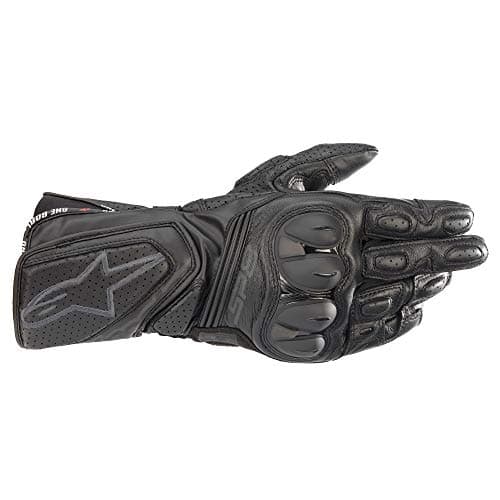
Alpinestars Alpinestars SP-8 V3
Alpinestars SP-8 V3

The sport-glove sweet spot: a CE-certified full-gauntlet leather glove with hard knuckle protection and a palm slider, at a price that undercuts the race gauntlets it borrows from.

Best overall glove
8.6
$124.95Amazon
02
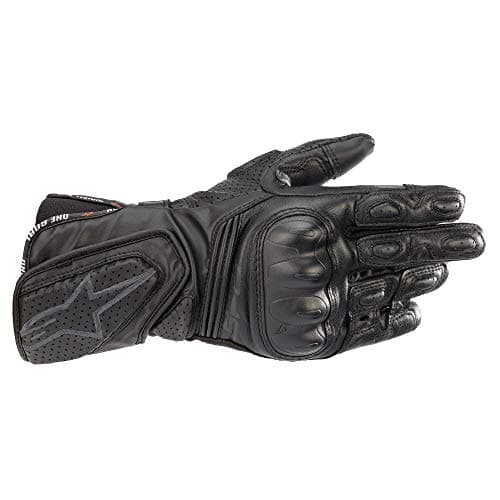
Alpinestars Alpinestars Stella SP-8 V3
Alpinestars Stella SP-8 V3

The women's version of the glove that tops our main gloves ranking, and a certification line with nothing missing: Alpinestars publishes EN 13594 2015, Level 1 KP, on a full-grain leather glove with a molded hard knuckle and a finger bridge.

Best women's gloves overall
8.3
$124.00Amazon
03
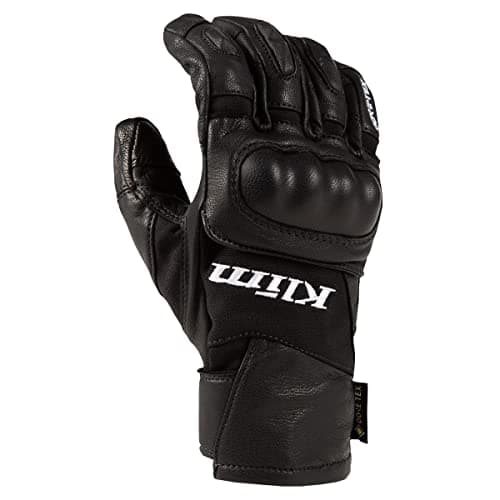
KLIM KLIM Women's Adventure GTX Short
KLIM Women's Adventure GTX Short

The waterproof glove built for feel: GORE-TEX with fully bonded layers, a carbon fiber knuckle guard over 5mm of XRD foam, a second XRD pad in the palm, and a CE Level 1 KP rating to EN 13594.

Best waterproof women's gloves
8.2
$179.99Amazon

#ad · Live prices from the Amazon Product API, as of October 5, 2026. Where we have no verified live price we show none — we would rather leave a gap than print a number that has rotted.

In detail

The picks, in full

01
Alpinestars Alpinestars SP-8 V3

Best overall glove

Alpinestars SP-8 V3

EN 13594 CEFull gauntletHard knuckleLeather + slider
8.6/10

The sport-glove sweet spot: a CE-certified full-gauntlet leather glove with hard knuckle protection and a palm slider, at a price that undercuts the race gauntlets it borrows from.

Protection
9
Fit/feel
8.4
Weather
7.8
Durability
8.8
Value
8.6

Pros

  • CE-certified with a hard TPU knuckle and a palm-sliding reinforcement
  • Full gauntlet cuff seals over the jacket sleeve
  • Leather main construction with a secure double wrist closure

Cons

  • Gauntlet cuff runs warm in peak summer
  • Firm break-in period

Don't buy this if…

…you want a short, airy summer glove or the lightest touch on the controls.

$124.95View on Amazon

Price as of October 5, 2026. Prices change — Amazon's is the one that counts.

#ad · we may earn a commission from this link to Alpinestars SP-8 V3

02
Alpinestars Alpinestars Stella SP-8 V3

Best women's gloves overall

Alpinestars Stella SP-8 V3

EN 13594:2015 Level 1 KPFull-grain leatherHard knuckle + finger bridgeWomen's XS-XL
8.3/10

The women's version of the glove that tops our main gloves ranking, and a certification line with nothing missing: Alpinestars publishes EN 13594 2015, Level 1 KP, on a full-grain leather glove with a molded hard knuckle and a finger bridge.

Certification
8.2
Women's fit & sizing
9
Protection hardware
8.8
Weather
7
Value
8.6

Pros

  • Alpinestars names the standard, its 2015 revision, the level and the KP knuckle rating on its own product page
  • Full-grain leather with a molded hard knuckle and Alpinestars' third-and-fourth finger bridge, which the maker says prevents seam failure
  • Perforated cuff and finger sidewalls plus touchscreen index finger and thumb, so it covers the widest band of everyday riding here
  • Stella sizing starts at XS for a 6.5 to 7 inch hand, a size no men's Alpinestars glove comes in

Cons

  • No waterproof membrane: the perforations that make it a three-season glove also let the rain straight in
  • Alpinestars publishes palm reinforcement (Arshield and synthetic suede) but does not describe a hard palm slider
  • Level 1, not Level 2: the right rating for road riding, not the one to buy for track days

Don't buy this if…

…you commute through rainy seasons: a perforated leather glove soaks through, and the KLIM or the REV'IT is the right tool.

$124.00View on Amazon

Price as of October 5, 2026. Prices change — Amazon's is the one that counts.

#ad · we may earn a commission from this link to Alpinestars Stella SP-8 V3

03
KLIM KLIM Women's Adventure GTX Short

Best waterproof women's gloves

KLIM Women's Adventure GTX Short

EN 13594 Level 1 KPGORE-TEX, fully bondedCarbon knuckle + 5mm XRDWomen's XS-2XL
8.2/10

The waterproof glove built for feel: GORE-TEX with fully bonded layers, a carbon fiber knuckle guard over 5mm of XRD foam, a second XRD pad in the palm, and a CE Level 1 KP rating to EN 13594.

Certification
8
Women's fit & sizing
9.2
Protection hardware
8.6
Weather
9
Value
6.4

Pros

  • Fully bonded glove layers, the construction GORE-TEX says eliminates friction and movement between layers
  • Carbon fiber knuckle guard with 5mm XRD impact foam under it, plus a 5mm XRD palm pad
  • The widest women's size run on this page on Amazon, XS through 2XL, with a visor wiper and touchscreen fingertips

Cons

  • The most expensive glove in this ranking
  • KLIM's certification line does not state the EN 13594 revision year, which the Alpinestars and REV'IT pages both do
  • KLIM lists no insulation and no venting, so it is a rain glove for mild days rather than a winter or hot-weather glove
  • A short cuff designed to sit under the jacket sleeve, not a gauntlet that seals over it

Don't buy this if…

…your wet rides are also cold rides: nothing on KLIM's spec list is insulation, and the REV'IT adds Thinsulate over its membrane.

$179.99View on Amazon

Price as of October 5, 2026. Prices change — Amazon's is the one that counts.

#ad · we may earn a commission from this link to KLIM Women's Adventure GTX Short

What the standard actually assesses

EN 13594 is broader than most riders assume. It is not only a measure of how tough the palm leather is; it covers the whole glove as a piece of equipment that has to stay on your hand.

Area assessedWhat it is aboutWhy it matters in a crash
Abrasion resistanceHow long the glove materials survive being draggedThe sliding seconds before anything hits anything
Cut resistanceResistance to being sliced by an edgeRoad debris, bodywork, broken glass
Tear and seam strengthWhether the glove holds together under loadA glove that bursts at the seam has stopped protecting
Cuff length and restraintThat the glove covers the wrist and is held onThe most common real-world failure: the glove comes off
Knuckle impact (KP)Optional at Level 1, mandatory at Level 2The hard shell over the knuckles doing its job
Ergonomics and dexterityThat you can still operate the controlsA glove you cannot brake in is a hazard

The restraint strap is not a styling detail

The single most under-appreciated line in the standard is the one about the cuff and the restraint. A glove is only protective while it is on your hand, and in a slide the friction that tears a glove also tries to pull it off — fingers first, then the whole thing, usually within the first second. That is why certified gloves have a wrist strap separate from the main cuff closure, and why race gauntlets have two.

It is also the reason a short glove is a different proposition from a gauntlet, and not just a cooler one. A gauntlet covers the gap where the jacket sleeve ends, seals against the wind and has more surface to hold on with; a short glove is easier to live with and gives up some of that. Our short vs gauntlet comparison goes through the trade properly. Whichever you buy, fasten the wrist strap — a certified glove with the strap hanging loose has had the test condition removed.

Why so few gloves publish a level

Certification costs money per model and per colourway, and the US market does not require it. A glove sold into the US only can carry a hard knuckle, a leather palm and a slider and never see a test house, and most budget gloves are exactly that. The brands that do publish tend to be the ones already selling into Europe, where motorcycle gloves placed on the market as PPE are regulated.

There is a curiosity in our own catalog worth stating, because it is what the data says rather than what we expected: the gloves that print a complete level string are disproportionately the women'smodels. All four women's gloves we rank publish "Level 1 KP" with the standard and its year; among the unisex and men's gloves, only the Alpinestars SP-8 V3 publishes an EN 13594 claim at all, and it does so without a printed level. We are not going to invent a reason for that. We note it because it means the women's pages on this site are, by accident of what makers document, the best-evidenced glove pages we have — see our women's gloves ranking.

What a CE logo on the cuff does not tell you

A CE mark by itself is a declaration of conformity with whichever European regulation applies — it is not a motorcycle rating. A pair of gloves can carry CE as general PPE for, say, general-purpose hand protection and have nothing to do with EN 13594. The phrase to look for is the standard number, not the logo. If a product page says "CE certified" and nothing else, treat it the way we do on the cards: as unverified for motorcycle use, and rank it below anything that names the standard.

The same logic runs through every piece of gear on this site, with a different number each time. Boots are rated under EN 13634, which scores four properties separately. Jackets and trousers are rated as whole garments under EN 17092 and their armor separately under EN 1621, which our CE armor levels guide takes apart. Helmets sit outside the CE system in the US, where DOT FMVSS 218 is the requirement.

Level 1 or Level 2 — which should you buy?

For road riding, a Level 1 KP glove that fits properly and that you will actually wear every ride beats a Level 2 race gauntlet sitting in a drawer because it is stiff. Level 2 demands more of every material, which in practice means thicker leather, more armor and less feel at the lever; that is the right trade on a track day and an annoying one in traffic. The level to avoid is "unstated," because it is not a level.

Fit matters more than either, and it is the one variable the standard cannot help you with. A glove that is too long in the fingers bunches at the lever; one that is too tight across the palm goes numb in twenty minutes. Our glove sizing guide covers measuring your hand properly, and our how to choose gloves guide covers the rest of the decision.

The gloves on this page, and why these three

These are the gloves in our catalog whose makers publish an EN 13594 claim you can check. The Alpinestars SP-8 V3 is our top-ranked glove overall and publishes an EN 13594 CE claim on a full-gauntlet leather glove with a hard knuckle and a palm slider, though without a printed level. The Alpinestars Stella SP-8 V3is the women's version of the same glove and publishes the complete string — EN 13594 2015, Level 1 KP — on full-grain leather with a moulded hard knuckle and a third- and fourth-finger bridge. The KLIM Women's Adventure GTX Short publishes CE Level 1 KP to EN 13594 on a fully bonded GORE-TEX glove with a carbon fibre knuckle guard over 5 mm of XRD foam. For the complete rankings rather than the certification lens, start with our motorcycle gloves ranking.
How we picked

We don't test helmets. Here's what we do instead.

Everyone in this category says they tested twenty helmets. We haven't tested any — and we say so. What we do instead: compile the published DOT, ECE 22.06 and Snell certifications, the manufacturer's fit, weight and shell specs, the CE armor levels, and reputable published reviews, then score each pick against a published rubric. The scores are judgments from documented research — not measurements we took, because we do not run a lab and we are not going to pretend we do. Every certification and spec claim traces to a source we name and link.

Questions

Frequently asked

What does EN 13594 certify on a motorcycle glove?
That the glove was assessed as motorcycle PPE and passed on abrasion, cut, tear and seam strength, cuff length and restraint, and ergonomics, at either Level 1 or Level 2. Knuckle impact protection is assessed separately and marked KP — optional at Level 1, mandatory at Level 2.
What does KP mean on a motorcycle glove?
Knuckle protection: the glove's knuckle guard was impact-tested and passed. It is the difference between a hard shell that has been measured and one that is just a plastic shape on the back of your hand. At Level 1 it is optional, so look for the two letters after the level, not just the level.
Is Level 2 better than Level 1?
Higher performance, yes; better for you, not necessarily. Level 2 demands more of every material, which means thicker construction, more armor and less feel at the controls. For road riding a well-fitting Level 1 KP glove you wear on every ride is the better outcome. Level 2 earns its stiffness on track.
My gloves have a CE logo but no standard number. Are they certified?
Not necessarily as motorcycle gloves. CE is a declaration of conformity with whichever regulation applies, and a glove can carry it as general-purpose PPE with no EN 13594 assessment behind it. Look for the standard number and the level, which is exactly what we record in the key specs on every glove card.
Do I need certified gloves to ride legally in the US?
No. There is no US requirement for certified gloves, which is a large part of why so few gloves sold here publish a level. The argument for certified gloves is evidence, not law: your hands are the first thing down in almost every fall, and a published level is the only way to compare two gloves on something other than the photograph.
Does the wrist strap really matter?
It is one of the things the standard assesses, and it addresses the most common real-world failure: the glove coming off during the slide. A certified glove with the restraint left undone is not being used in the condition it was tested in. Fasten it every time, on short gloves as well as gauntlets.

Keep reading

Receipts

Sources

We do not run a testing lab, and we do not pretend to. Our picks are built from published certifications, manufacturer spec sheets, the standards documents themselves, and reputable published reviews — named and linked above. Where we could not verify something, we say so on the page rather than quietly leaving it out. Read our full method.