Let us start with the thing carbon does not do: it does not make a helmet pass a higher standard. A polycarbonate helmet and a carbon helmet both have to clear the same DOT or ECE 22.06 test battery, and a certified polycarbonate lid is a genuinely safe helmet. Anyone selling carbon as a safety upgrade is skipping a step.
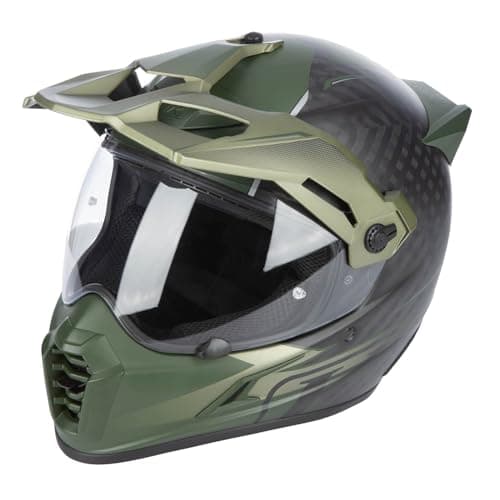
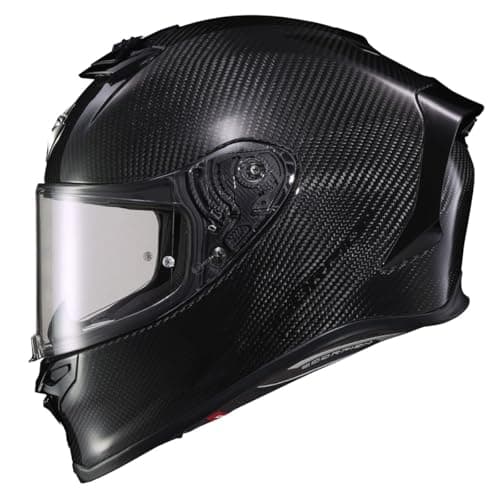
What carbon does is hit that same bar at lower weight. Carbon fiber has an exceptional stiffness-to-weight ratio, so a shell can be thinner and lighter and still spread impact energy the way the standard demands. The ScorpionEXO R1 Air Carbon publishes roughly 1,383 g in a medium; the KLIM Krios Pro around 1,450 g in a large with a Koroyd core inside. Those are numbers a polycarbonate shell of the same certification does not reach.
And weight is not a vanity spec. It is the difference between a helmet that is invisible at hour six and one that has your neck aching by lunch, which loops straight back into whether you keep the helmet on. We ranked these on published weight, published certification and shell construction — the three things you can verify before you buy. Our are expensive helmets safer guide covers what the rest of the premium actually buys.
What carbon actually buys you
Three things, in order of how much they matter. Weight, obviously: a lighter helmet puts less mass on your neck under braking, in a headcheck and over a long day, and fatigue is a safety issue as much as a comfort one. Stiffness, which lets a maker use a thinner shell and gain internal volume for ventilation and EPS without going up a shell size. And durability: carbon resists the scuffs and small knocks that mark up a painted polycarbonate lid, which is part of why the Daytona uses it at a price where weight is not the headline benefit.
What it does not buy is a higher certification, a longer service life, or immunity from the five-year replacement conversation — see how long motorcycle helmets last. And it does not buy fit. A badly fitting carbon helmet is worse than a well-fitting polycarbonate one, every time.
Not all carbon is the same weave — and it matters less than you think
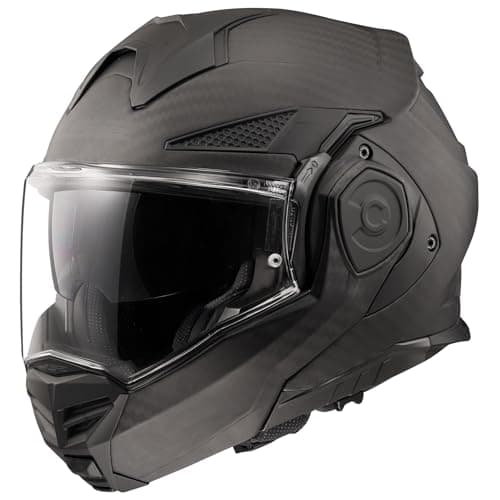
You will see numbers like 3K and 9Kon spec sheets: that is the number of filaments per tow in the weave, in thousands. Scorpion's R1 Air Carbon uses a resin-infused TCT-U 3K weave; the LS2 Advant X uses 9K carbon including the chin bar. A lower number generally means a finer, lighter weave and a more expensive lay-up. It also makes for a prettier bare-carbon finish, which is a real part of why people buy these.
What actually decides the outcome is the whole construction — the resin, the lay-up, the EPS design and the shell count — not the weave number alone. Use published weight as your comparison metric, not the K number. Every helmet here publishes one.
Shell count is where carbon helmets differ most
This is the spec that separates these four. The Scorpion uses three shell sizes; the LS2 and the Daytona use two across the whole XS-3XL range. On a two-shell helmet, an extra-small head gets the same exterior as a medium with more foam behind it — which quietly gives back some of the weight advantage you paid carbon money for.
So if you are at the small or large end of the size range, shell count deserves as much attention as the shell material. The same logic drives our big-head helmet ranking and it applies just as hard here.
Full face, modular or adventure — pick the shape first
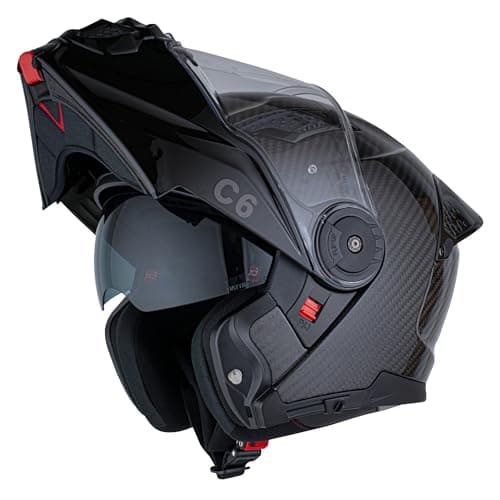
Carbon shows up in every helmet type now, and the shape decision should come before the material decision. The Scorpion R1 Air Carbon is a sport full-face, with aerodynamics tuned around a tucked riding position. The KLIM Krios Pro is an adventure helmet that converts between peak-and-shield, shield-only and goggle configurations. The LS2 Advant X and the Daytona C6are modulars — and the LS2 is dual-homologated ECE P and J, meaning it was certified with the chin bar up as well as down. If you want the argument for and against a flip-up front, our modular vs full face comparison runs it properly.
Is carbon worth the money?
Honest answer: it depends entirely on how long you sit in the helmet. If you ride an hour a week, a certified polycarbonate helmet that fits well is the better buy and you should spend the difference on a better jacket or a back protector. If you do all-day touring, track days, or adventure riding where you are standing and moving your head constantly, a couple of hundred grams off your neck is one of the most noticeable upgrades you can buy.
Which one should you buy?
Buy the ScorpionEXO R1 Air Carbon if you want the lightest published weight here in a DOT and ECE 22.06 sport full-face, with inflatable cheek pads that let you fine-tune the fit after purchase. Buy the KLIM Krios Pro if you ride adventure and want one carbon helmet that converts across pavement, gravel and goggles. Buy the LS2 Advant X Carbon if you want a modular whose flip-up front is itself certified, in a 9K carbon shell with a carbon chin bar. And buy the Daytona C6if you want carbon construction and both homologations at the lowest price on this page — just go in knowing that at around 3.64 lb, this one is buying you durability and finish rather than a weight saving.