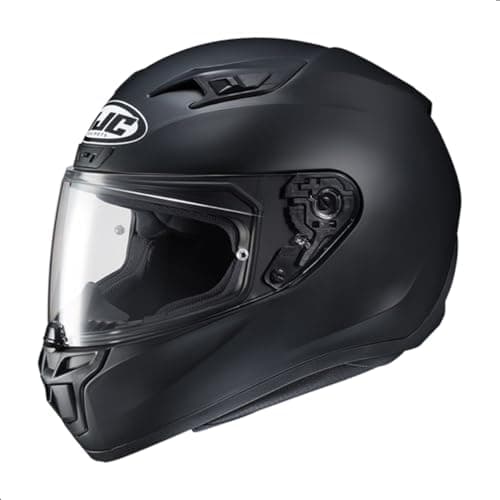
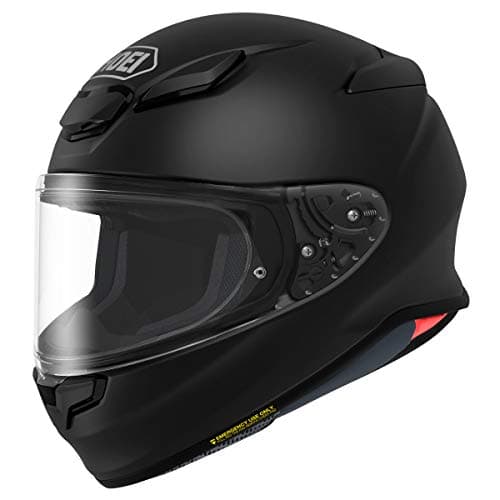
If you want a Snell sticker, the Shoei RF-1400 is the one to buy: DOT and Snell M2020 on a hand-laid AIM+ fiberglass shell in five sizes, which is the combination most US track-day organisers are looking for and most street riders would be happy with anyway. It is for the rider doing track days, or anyone who simply wants the most certifications a street helmet can carry. If the price is the problem, the HJC i10publishes the same DOT and Snell M2020 pair for roughly a fifth of a flagship's money — the cheapest route to a Snell sticker we can find.
Here is the thing worth understanding before you shop on it. Snell is voluntary.DOT FMVSS 218 is a legal requirement for a street helmet sold in the US and ECE 22.06 is the European equivalent; Snell is a private standard from the Snell Memorial Foundation that a maker chooses to submit to and pays for. So the absence of a Snell sticker tells you almost nothing about a helmet — many excellent lids skip it because their maker sells primarily into ECE markets, where there is no commercial reason to pay for a second certification. What a Snell sticker doestell you is that the helmet passed a tougher impact and penetration programme than DOT alone, on the Foundation's terms, with the Foundation buying samples off the shelf to check.
That is why this page exists as a list rather than an argument. It names the five helmets on this site whose makers publish a Snell certification, says which revision each one names, and then says plainly where a non-Snell helmet is the better purchase. Our DOT vs ECE vs Snell explainer takes the three standards apart test by test, and our safest helmet guideputs certification in its real place in the ranking of things that decide your outcome — which is second, behind fit.
What to look for on a Snell claim
- The revision, not just the word. Snell publishes dated standards: M2015, M2020 and now M2025. M2020 is split into M2020D, written around the DOT test regime, and M2020R, written around the ECE one. A sheet naming a revision is telling you more than one that just says "Snell approved."
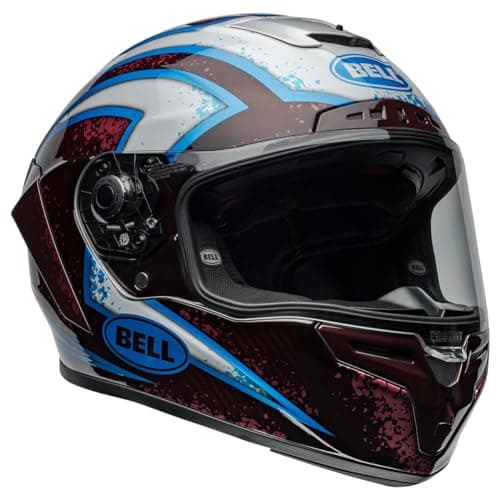
- Whether the revision is current. The Bell Race Star Flex DLX's US spec sheet names Snell M2015 — a real certification and a superseded revision, with M2020 and M2025 published since. We rank it last on this page for exactly that reason and say so on its card.
- Whether the model you are buying is the certified one. Certifications attach to a model and a shell, not a brand. HJC is replacing the i10 with the i11 on the same platform, certified to the newer Snell M2025D; the i10 itself remains DOT and Snell M2020. Check which one is in the box.
- What your track organiser actually requires. Tech inspection rules are set by each organisation and they change. If Snell is the reason you are buying, read your organiser's current rules rather than assuming, and note that most also exclude modular helmets regardless of certification.
- Fit, before any of the above. A Snell helmet in the wrong shell shape protects you less than a DOT-only helmet that fits. Start at our head shapes guide and measuring guide, every time.
We have not tested, dropped or penetration-tested any helmet. Everything below is the published certification wording from the maker or its primary retailer spec sheet, plus published shell, weight and fit specifications, scored against our published rubric. Where two sheets disagree we say so rather than picking the flattering one.
The Snell helmets on this site, and what each one publishes
| Helmet | Published certification | Shell | Published weight | Best for |
|---|
| Shoei RF-1400 | DOT · Snell M2020 | AIM+ multi-ply fiberglass, 5 sizes | ~3.7 lb / 1,680 g | The all-round Snell default |
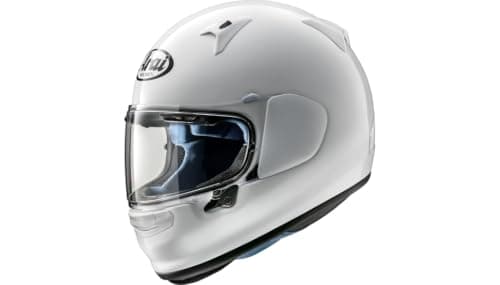
| Arai Regent-X | DOT · Snell M2020 | PB-cLc laminate, R75 profile | Not published here | Round and round-oval heads |
| HJC i10 | DOT · Snell M2020 | Polycarbonate | Not published here | The cheapest Snell sticker |
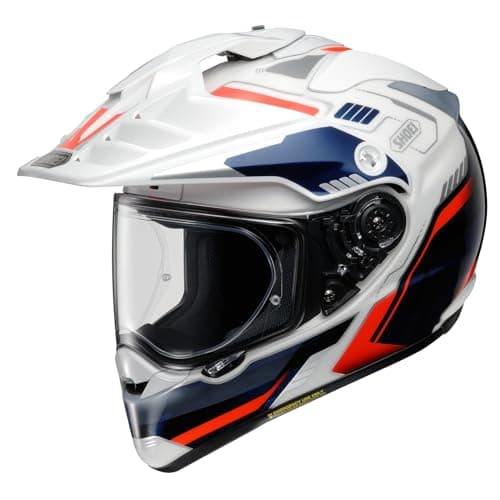
| Shoei Hornet X2 | DOT · Snell M2020 | AIM+ composite, dual-layer EPS | Not published here | Snell with an adventure peak |
| Bell Race Star Flex DLX | DOT · Snell M2015 (superseded) | 3K carbon, 5 shell + 5 EPS sizes | 3.57 lb published | Lightest shell here |
What Snell adds over DOT
The short version: more impact energy, more impact sites, a penetration test, a positional stability test, and independent sample buying. DOT FMVSS 218 operates largely on manufacturer self-certification with NHTSA spot checks; Snell certifies a specific model, publishes the standard it was certified to, and buys helmets at retail to re-test. For a rider, the practical read is that a helmet carrying DOT and Snell has been through two independent regimes rather than one.
The longer version is where the honesty matters, because Snell is not simply "the best" standard. ECE 22.06 added an oblique rotational impact test and multi-point testing that no other volume standard requires, and it is mandatory rather than optional in its market. There is a real, published engineering argument that a very stiff shell tuned for high-energy single impacts is not optimal for the lower-energy impacts most street crashes produce. We are not going to adjudicate that from a desk. What we will say is that both a Snell M2020 helmet and an ECE 22.06 helmet have cleared a serious bar, that the sticker is not the variable most riders should be optimising, and that our are expensive helmets safer page goes through what the money actually buys.
When you do need Snell
- Track days and racing, usually. Most US track organisations and race bodies specify Snell at tech inspection, and many exclude modular helmets outright. This is the single most common legitimate reason to shop on the sticker. Confirm your organiser's current rule before you buy.
- When you want two independent certifications. A perfectly reasonable preference, and the four M2020 helmets above satisfy it without costing you anything else.
- When your head shape happens to land on one. The RF-1400 is intermediate-oval and the Regent-X suits rounder heads — between them they cover most of the market, which is lucky rather than designed.
When you do not
For street riding, commuting and touring, a DOT and ECE 22.06 helmet that fits your head shape is a completely sound purchase and the lack of a Snell sticker should not stop you. Several of the best helmets we rank carry no Snell certification at all — the ScorpionEXO R1 Air Carbonpublishes DOT and ECE 22.06 on a 3K carbon shell at around 1,383 g, and the AGV K6 S is ECE 22.06 only. Neither is a compromise. If your riding is road riding, rank fit first, then certification of any kind, then weight and noise — our main helmet ranking, quietest helmets and full-face ranking are built that way round.
The budget end of Snell is real
The single most useful fact on this page: a Snell certification is not a luxury feature. The HJC i10is a polycarbonate helmet with a Pinlock-ready shield in the box and a size run from XS to 3XL, and it publishes the same DOT and Snell M2020 pair as helmets costing four or five times more. What the money above it buys is shell material, shell count, weight, quiet and finish — not a different standard. That is the same point our budget helmet ranking is built on, and it is worth repeating here because the Snell sticker gets marketed as a premium feature when it is nothing of the kind.
Checking a sticker on a helmet you already own
Snell certification is a sticker inside the helmet, usually under the comfort liner at the back, naming the standard and the year — and the Foundation maintains a public list of certified models. The DOT label is on the outside at the rear; ECE approval is on the chinstrap. Our guide to reading a helmet certification sticker walks through all three and what a missing or counterfeit label looks like, and our helmet lifespan guide covers why a current sticker on a ten-year-old shell is not the reassurance it looks like.
How we picked
Everyone in this category says they tested twenty helmets. We haven't tested any — and we say so. What we do instead: compile the published DOT, ECE 22.06 and Snell certifications, the manufacturer's fit, weight and shell specs, the CE armor levels, and reputable published reviews, then score each pick against a published rubric. The scores are judgments from documented research — not measurements we took, because we do not run a lab and we are not going to pretend we do. Every certification and spec claim traces to a source we name and link.