Ask riders why they bought an intercom and most say "to talk to my mates". Ask them what the unit actually does on a given week and it is music, podcasts and turn-by-turn directions, nine rides out of ten. This ranking is built for that reality: the picks are ordered by the speaker hardware the manufacturer publishes, not by mesh rider counts.
We have not measured the audio output of any of these units, we do not run an acoustic lab, and we are not going to print a frequency response we did not take. What we can do is compare what the makers actually publish — who tuned the drivers, how big those drivers are, and what sound processing is included — and be straight about the one factor that matters more than any of it.
That factor is your helmet. At 70 mph, wind noise inside a typical full-face is loud enough that most riders raise the volume until the music simply overpowers it, which is both bad for the music and bad for your hearing. The single largest audio upgrade available to you is not a speaker set — it is a quieter lid from our quietest helmets ranking and a set of plugs from our earplug ranking. Plugs sound counter-intuitive and they are not: cutting broadband wind noise lets you drop the volume and hear detail that was previously buried.
Volume is not the way to beat wind noise, and lowering the noise floor genuinely improves what you hear — our wind noise guide covers why a filtered earplug makes an intercom easier to understand rather than harder.
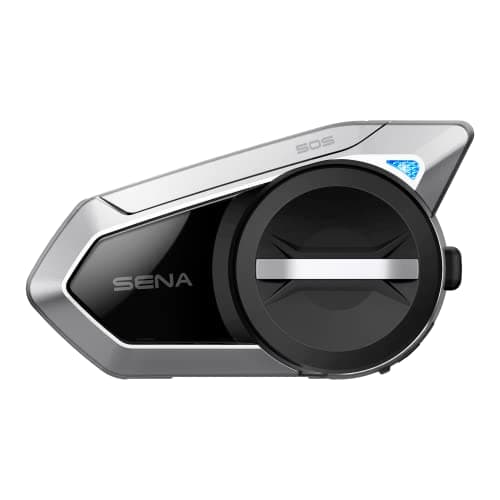
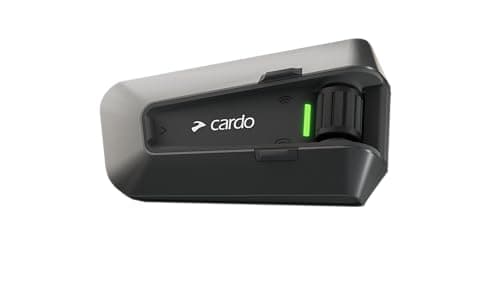
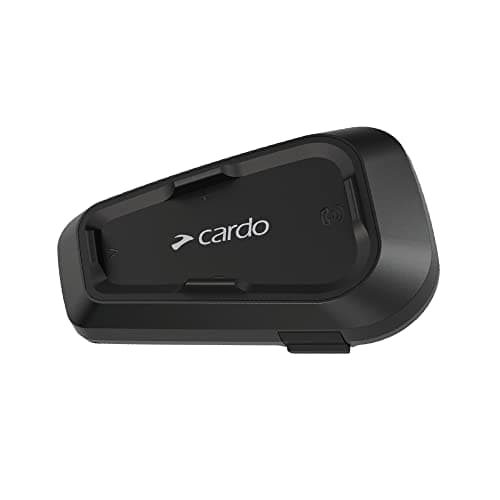
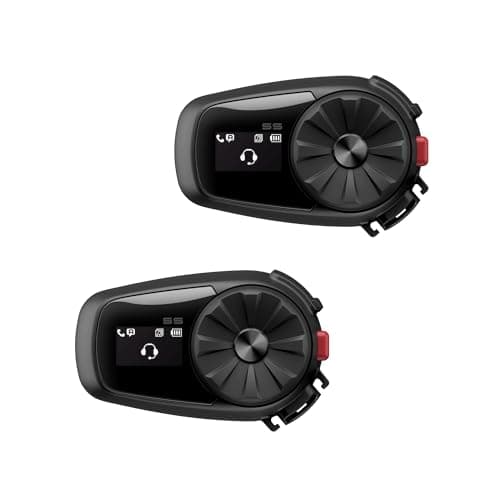
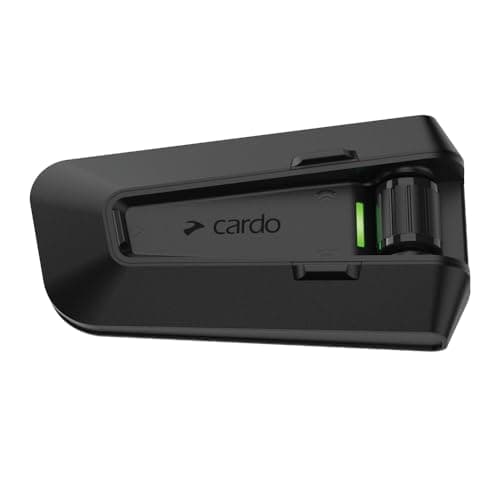
The Cardo Packtalk Pro takes the top spot on published hardware — the 45mm JBL set is the largest driver in this list. The Sena 50S is the closest rival with Harman Kardon-developed 40mm speakers and a matched microphone. The Packtalk Edge brings the 40mm JBL set and the convenience of the magnetic mount. The Spirit HD is the cheapest unit here with three switchable sound profiles and an FM radio. And the Sena 5S is the long-battery choice for riders who stream all day.
Driver size is the one honest spec
Helmet speakers live in a shallow ear pocket, which limits how much air a driver can move. Within that constraint, a larger driver generally produces more low end and needs less excursion to hit a given volume, which is why the 45mm JBL set in the Packtalk Pro sits at the top of this list and the 40mm sets sit below it. Sena publishes its 50 Series drivers as 40mm with a thickness of 7.2mm — the thickness figure matters, because it decides whether the speaker fits the pocket without pressing on your ear.
Do not over-read the badge. "Sound by JBL" and "Sound by Harman Kardon" are both real engineering collaborations and both brands are owned by the same parent company. Neither badge is a measurement. What they tell you is that someone tuned the drivers for this application rather than shipping a generic part, which is a reasonable thing to pay for and not a reason to pay any amount.
Speaker placement beats speaker price
This is the part almost nobody does properly, and it is free. A helmet speaker that sits even a centimeter off-axis from your ear canal loses a startling amount of clarity and bass, and most helmets have ear pockets deeper than they look. Get the speaker centered on your ear canal, and if there is depth left in the pocket, use the foam booster pads that come in the box to bring the driver closer.
Riders who do this routinely report a bigger improvement than the difference between two price tiers of unit. Our installation guide walks through it, and it is worth twenty minutes before you conclude your intercom sounds thin.
Codecs, streaming and what actually reaches your ears
Every unit here streams over Bluetooth from your phone, which means the audio is compressed before it reaches the helmet. On a quiet sofa that compression is audible. At 70 mph under a helmet it is not the limiting factor by a wide margin — wind noise is. Chasing codec specifications on a motorcycle intercom is the audiophile equivalent of polishing a chain in a sandstorm.
What does help: an FM radio built into the unit (the Spirit HD and both 50 Series units publish one) so you have audio when your phone battery dies, and enough battery to stream for the whole ride. Streaming drains a unit far faster than intercom use, so if music is the primary job, weight the published talk-time figures accordingly — the Sena 5S at 18 hours is the standout.
The safety point we are not going to skip
Music at a volume that masks traffic is a genuine hazard, and it is worth saying plainly on a page that exists to help you buy a music system for your head. Your ears are one of the two sensors telling you a vehicle is beside you. Ride with plugs in and the volume low enough that you can still hear a horn and an engine note, and check your local law — some states restrict headphone use while driving, and the rules are not uniform.
None of that is an argument against an intercom. Turn-by-turn directions in your ear is measurably safer than a phone on the bars you keep glancing at, and being able to talk to a passenger removes a lot of shouting and guessing. Just set the volume for a road, not a living room.
Which one should you buy?
Buy the Cardo Packtalk Pro if audio is the priority and the budget is there — the 45mm JBL set is the biggest driver hardware published in this group. Buy the Sena 50S if you want Harman Kardon-developed sound and a jog dial you can work in gloves, and you value the 16-hour published Bluetooth talk time.
Buy the Packtalk Edgeif you want Cardo's 40mm JBL sound with the magnetic mount and the 3-year warranty. Buy the Cardo Spirit HD if you want three sound profiles and an FM radio for the least money. Buy the Sena 5S if you stream all day and the 18-hour published talk time is worth more to you than a driver upgrade — which, if you are honest about how much of your riding is a long commute, it may well be.