Work out what most riders own. A certified helmet, near-universally. An armored jacket with shoulder and elbow protection, usually. Gloves and boots, often. And then, from the waist down, a pair of jeans. The knee is a joint with almost no soft tissue over it, it is one of the first things to hit the road in a low-side, and it is protected on the majority of bikes you pass by nothing at all.
Knee armor is the cheapest large gap you can close in a gear collection, and there are two distinct ways to close it. A worn-over guardstraps onto your leg and adds a hard shell for abrasion plus an impact insert — it covers more, it can cover the shin, and it is what you want off-road. An insert slides into the armor pocket that most riding pants and armored jeans already have, covering less but disappearing entirely under your clothes. Both are real answers. They suit different riders.
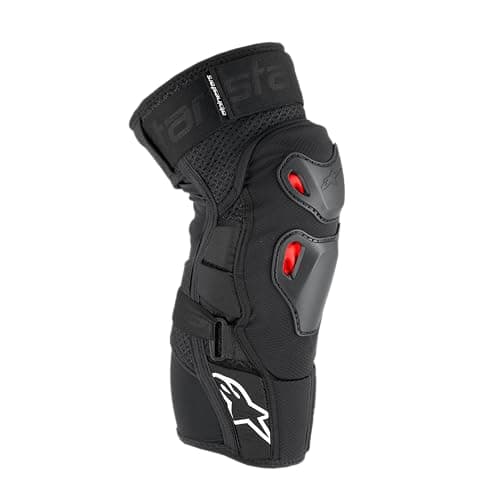
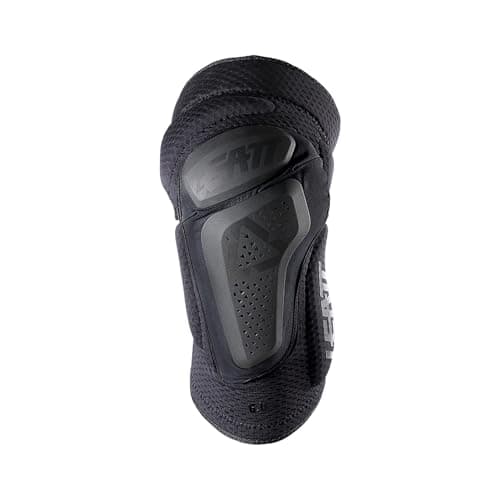
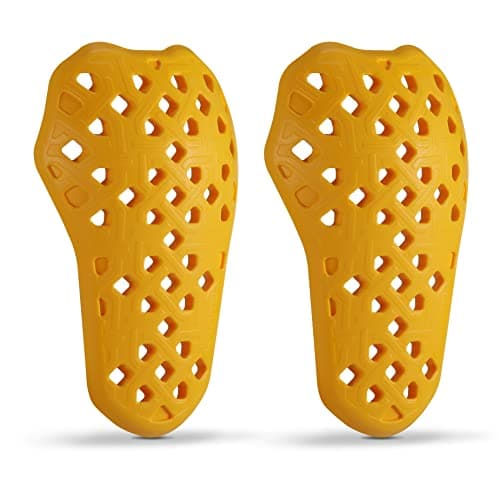
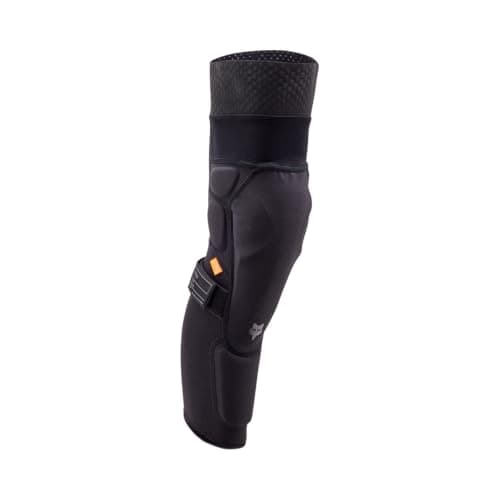
We ranked these on the CE level each product publishes under EN 1621-1, the standard for limb impact protectors, then on coverage and how well each one stays where you put it. The Fox Racing Launch takes the top spot for pairing CE-certified D3O with full shin coverage in a slip-on sleeve. The Alpinestars Bionic Pro Plasmapublishes the highest rating here — CE Level 2 to EN 1621-1:2012. The Leatt 3DF 6.0 is the one you forget you are wearing. And the Surlim inserts are the cheapest certified knee protection available anywhere.
If you are buying armor because the pants you own ship with an empty pocket, it is worth comparing against legwear that arrives ready to ride: our riding pants ranking records exactly which armor each pant includes at the knee and the hip, and our armored jeans ranking does the same for denim.
EN 1621-1, Level 1 and Level 2
EN 1621-1is the CE standard for motorcycle limb protectors — knees, elbows, shoulders and hips. A 5 kg striker is dropped onto the protector and the force transmitted through it is measured. Level 1 and Level 2 are thresholds against that measurement, with Level 2 transmitting less force. It is the same test family as EN 1621-2 for back protectors and EN 1621-3 for chest protectors, which our CE armor levels guide maps in full.
Two things are worth knowing. First, the standard rates the insert, not the garment or the sleeve holding it — which is why a guard can carry Level 2 armor and still have an uncertified fabric chassis. Second, makers vary wildly in how specific they are. Alpinestars publishes "Level 2 CE-certified Nucleon PLASMA insert (EN 1621-1:2012)"; Leatt publishes CE approval to EN 1621-1; Fox publishes CE-certified D3O inserts without a level for this trim. More specific is better, and it is a fair proxy for how seriously the maker takes the claim.
Guard or insert? Answer this first
A worn-over guard gives you a hard shell that slides on impact rather than catching, coverage that can extend down the shin, and a fit you adjust independently of your pants. It is the only sensible answer for dirt and adventure riding, where rocks, foot pegs and the bike itself are the hazards. The cost is bulk: none of the guards here disappear under normal riding pants.
An insertcosts a fraction as much, covers less, has no abrasion shell of its own — the pants do that job — and is invisible. Which means you wear it. The same logic we applied to chest protection in our chest protector ranking applies exactly here: Level 1 you actually wear beats Level 2 in the garage. If your riding pants have empty knee pockets, filling them with a certified pad is the single cheapest safety upgrade on this site.
Coverage: the shin is half the argument
Knee-only guards protect the patella and a little either side. Knee-and-shin guards like the Fox Launch run the full length of the tibia, which is bone with essentially nothing over it and is exactly what a foot peg, a rock or a rotating bike hits.
On the road, knee-only is defensible: your boot covers the lower shin, and the injuries are more often abrasion and impact at the joint itself. Off-road, shin coverage is not optional — ask anyone who has taken a peg to the leg. Match the coverage to the terrain, and remember that a tall boot with a shin plate, like the ones in our adventure boot ranking, already covers the bottom third of the problem.
Fit stability decides whether any of it works
Knee armor has the hardest fit job in the whole armor category, because your knee is a hinge that travels through a big range every time you get on and off the bike, and gravity pulls the guard down all day. A guard that has migrated to your shin by hour two is protecting your shin, and your knee is bare.
What actually works: silicone grippers on the inside of the sleeve (the Alpinestars and the Leatt both use them), a thigh strap above the knee rather than only below it, and a pre-curved shapethat matches a bent leg rather than a straight one. Slip-on sleeves like the Fox stay put well but are more work to get on over boots — put your armor on before your boots, not after.
Hard shell, D3O or PLASMA: what the material buys
Three approaches show up here. A hard thermoplastic shell— the Alpinestars' twin patella shells, Leatt's slider — is about abrasion and sliding: it lets the guard skate across pavement instead of grabbing and twisting your leg. D3O and Alpinestars' Nucleon PLASMA are viscoelastic materials: soft and flexible while you ride, momentarily rigid under impact. Our D3O explainer covers the mechanism properly.
The best guards use both, because they solve different halves of the crash. A soft-only guard absorbs impact well and can catch on the road surface. A hard-only guard slides well and transmits more force. If you are choosing between two products at the same price, the one with a hard slider over a certified soft insert is doing more.
Where knee armor sits in the buying order
Below a helmet, gloves, an armored jacket and boots — and, we would argue, below a proper back protector. But it is above almost everything else, and it costs less than any of them. If you are building a kit from scratch, our gear checklist puts the whole order in one place, and best body armor shows how the pieces fit together.
Which one should you buy?
Buy the Fox Racing Launchif you want knee and full shin coverage with CE-certified D3O in a slip-on sleeve — the most protection per dollar here for off-road use. Buy the Alpinestars Bionic Pro Plasma if you want the highest published rating, CE Level 2 to EN 1621-1:2012, with twin hard shells for the sliding half of the job. Buy the Leatt 3DF 6.0if comfort is what has stopped you wearing knee armor before — at around 530 g a pair it genuinely disappears. And buy the Surlim inserts if you own riding pants with empty knee pockets, which is most riders, because certified protection you actually wear beats a better guard you leave at home.