Skip to content
LID & LEATHER

The lid · Helmets

Modular vs Full-Face Helmets

The flip-up-versus-fixed-chin-bar decision, using the Shoei Neotec II and RF-1400 as stand-ins for each type.

By Stephen V.Updated How we research
#ad

We earn a commission when you buy through our Amazon links, at no extra cost to you. It never affects our rankings, and we say so when the cheaper gear is the better buy. How this works.

A modular helmet has a chin bar that flips up; a full-face has a fixed one. That single difference drives everything else — convenience, weight, noise and a certification nuance worth understanding. We didn't crash-test either — we compiled the certifications, shell and weight specs and reputable published reviews, then compared the two types using the Shoei Neotec II and the Shoei RF-1400 as the best stand-ins for each. Same brand, same engineering philosophy, two different answers to the chin-bar question.

The choice usually comes down to how you ride. If you value flipping the front open at gas stops, for glasses, or for a conversation without pulling the lid off, a modular like the Neotec II is the touring and commuting favorite. If you want the lightest, quietest, simplest helmet and never miss the flip, a full-face like the RF-1400 is the default. Both are DOT certified; the full-face gives up nothing but convenience, and the modular gives up a little weight and quiet for a lot of everyday flexibility.

Convenience

This is the modular's whole reason to exist. Flip the chin bar up and you can drink, talk, take a photo, or wear and remove glasses without wrestling the helmet over your ears — invaluable on a touring day full of stops, and the reason modulars dominate our best modular helmetslist. A full-face gives you none of that; it comes off and goes on as one piece. If you stop often or wear spectacles, the modular's convenience is hard to give up once you have lived with it.

Weight and noise

Physics favors the full-face. The RF-1400's fixed shell is lighter and its sealed front is quieter, because a modular adds a hinge, a latch and an extra seam for wind to find. The good news is that the best modulars close most of the gap: the Neotec II is one of the quietest lids of any type thanks to a wind-tunnel-tuned chin bar, and it is only modestly heavier than a comparable full-face. Budget modulars pay a bigger weight-and-noise penalty, which is why the field on our quietest helmets page mixes both types.

The certification nuance

Here is the detail many riders miss. A DOT- or ECE-certified modular meets the same standard as a full-face — but some modulars are only certified with the chin bar closed, and a few carry a dual P/J homologation that also rates them for riding open at low speed. Either way, you should ride with the chin bar down; treat the flip-up as a convenience for stops, not a riding position. At road speed an open chin bar adds drag and buffeting and offers no face protection. Our certification explainer covers what each standard tests.

Cost, choice and upkeep

Modulars tend to cost a little more than an equivalent full-face, because that hinge and latch are precision parts, and the very best sealed modulars sit at premium prices — the Neotec II among them. Full-faces give you more helmet for the money at every tier and a wider choice of models, from budget certified lids to flagships. Upkeep is similar for both, though a modular has a chin-bar mechanism and an extra seal to keep clean. If value is your first filter, the full-face field is deeper; if convenience is, the modular premium is easy to justify. Compare the full spread on our best full-face helmets page.

The short answer

Quick picks

#ProductBest forScorePrice
01
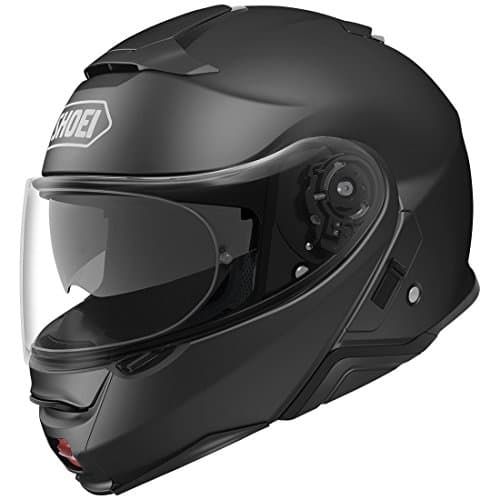
Shoei Shoei Neotec II
Shoei Neotec II

The touring modular the rest are measured against — though it is no longer Shoei's newest. Shoei now lists the Neotec 3 alongside it, so the II is the older generation: a multi-composite shell, an internal sun visor, a genuinely quiet cabin and a drop-in SRL2 Sena comms option that keeps the lines clean.

Best touring modular
8.6
$699.99Amazon
02
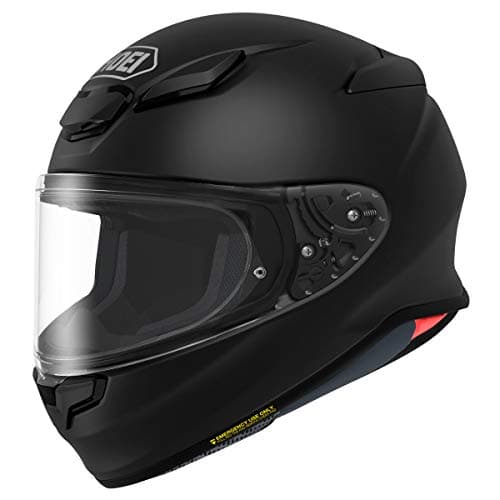
Shoei Shoei RF-1400
Shoei RF-1400

The reference full-face. DOT and Snell M2020 certified, a hand-laid fiberglass composite shell, and a fit-and-finish nobody at this price beats — if it suits your head shape, it is the safe default.

The all-round best
9.1
$541.00Amazon

#ad · Live prices from the Amazon Product API, as of Sep 4, 2026. Where we have no verified live price we show none — we would rather leave a gap than print a number that has rotted.

In detail

The picks, in full

01
Shoei Shoei Neotec II

Best touring modular

Shoei Neotec II

DOTMulti-composite shellInternal sun visorSRL2 comms-ready
8.6/10

The touring modular the rest are measured against — though it is no longer Shoei's newest. Shoei now lists the Neotec 3 alongside it, so the II is the older generation: a multi-composite shell, an internal sun visor, a genuinely quiet cabin and a drop-in SRL2 Sena comms option that keeps the lines clean.

Certification
8.4
Shell/weight
8.6
Noise/aero
9.4
Fit range
8.6
Value
7.8

Pros

  • DOT certified with a refined multi-ply composite shell
  • One of the quietest modulars made, with a sealed chin bar
  • Integrated sun visor and a clean factory Sena SRL2 comms path

Cons

  • Expensive
  • Heavier than a full-face (all modulars are)
  • No longer Shoei's newest touring modular — the Neotec 3 now sits above it in Shoei's lineup

Don't buy this if…

you specifically want Shoei's current-generation touring modular — that is the Neotec 3 now. The II is the previous generation, still listed by Shoei and still excellent.

$699.99View on Amazon

Price as of Sep 4, 2026. Prices change — Amazon's is the one that counts.

#ad · we may earn a commission from this link to Shoei Neotec II

02
Shoei Shoei RF-1400

The all-round best

Shoei RF-1400

DOT · Snell M2020AIM+ fiberglass shell~3.7 lb / 1,680 gPinlock included
9.1/10

The reference full-face. DOT and Snell M2020 certified, a hand-laid fiberglass composite shell, and a fit-and-finish nobody at this price beats — if it suits your head shape, it is the safe default.

Certification
9.6
Shell/weight
9.2
Noise/aero
9
Fit range
8.6
Value
8

Pros

  • Both DOT and Snell M2020 certified — a genuinely rigorous pair
  • Multi-ply matrix fiberglass shell in five sizes, so small heads get a small shell
  • Emergency quick-release cheek pads and excellent aero/noise control

Cons

  • Premium price
  • Intermediate-oval fit does not suit round heads

Don't buy this if…

you have a round head shape or a tight budget — a helmet that fits your head beats a prestige badge that does not.

$541.00View on Amazon

Price as of Sep 4, 2026. Prices change — Amazon's is the one that counts.

#ad · we may earn a commission from this link to Shoei RF-1400

Which type should you buy?

Choose a modular if you tour, commute with frequent stops, wear glasses, or simply like being able to open the front — and accept a little extra weight and noise for it. The Shoei Neotec II is our Best Touring Modular for exactly these riders: quiet, refined, sun-visor-equipped and comms-ready. Choose a full-face like the RF-1400 if you want the lightest, quietest, simplest lid and never miss the flip — it remains the purest protection-per-gram option.

Whichever you pick, fit decides your protection more than the type does, so measure with our sizing guide and match your head shape to the brand. If you are still choosing between all the shapes on the market — modular, full-face, open-face and adventure — our types of helmets guide lays out every trade-off in one place.

A quick way to decide: count your stops. If a typical ride has you pulling over for fuel, photos, food or to talk, the modular's flip-up front pays you back many times a day. If you mostly point-and-go with few interruptions, the full-face's lower weight and simplicity win. Bear in mind you can add comms to either type, and both take glasses — the modular just makes seating them easier. Whatever you choose, ride with the chin bar down and buy the certification and fit first.

How we picked

We don't test helmets. Here's what we do instead.

Everyone in this category says they tested twenty helmets. We haven't tested any — and we say so. What we do instead: compile the published DOT, ECE 22.06 and Snell certifications, the manufacturer's fit, weight and shell specs, the CE armor levels, and reputable published reviews, then score each pick against a published rubric. The scores are judgments from documented research — not measurements we took, because we do not run a lab and we are not going to pretend we do. Every certification and spec claim traces to a source we name and link.

Questions

Frequently asked

Are modular helmets as safe as full-face helmets?
A DOT- or ECE-certified modular meets the same standard as a full-face, but the flip mechanism adds a hinge and a little weight, and some modulars are only certified with the chin bar closed. Ride with the bar down and a modular is very safe; a full-face remains the lightest, simplest option. Fit matters more than type either way.
Can I ride with the chin bar up on a modular?
Only at very low speed, and only if the helmet carries a dual P/J homologation that rates it for open riding. At road speed the open chin bar adds drag and buffeting and offers no face protection, so keep it down when you are moving. The flip is for stops, glasses and conversation.
Is a modular or full-face better for touring?
For most touring riders the modular wins on convenience — you can open the front at every stop and pair it easily with comms and glasses. A top modular like the Shoei Neotec II is nearly as quiet as a full-face, so you give up very little. Pure minimalists who never stop may still prefer a full-face.

Keep reading

Receipts

Sources

We do not run a testing lab, and we do not pretend to. Our picks are built from published certifications, manufacturer spec sheets, the standards documents themselves, and reputable published reviews — named and linked above. Where we could not verify something, we say so on the page rather than quietly leaving it out. Read our full method.