Let's be honest about the trade before we rank anything. An open-face helmet leaves your jaw and face exposed, and the chin bar is the part of a helmet that takes the most impacts. If you buy a 3/4, you are choosing airflow, a wider field of view and a classic look over face protection — deliberately, with your eyes open. We are not going to pretend otherwise, and no helmet on this page changes that. What we can do is rank the open-face helmets that are genuinely well-built and properly certified, so if this is the category you want, you are wearing a good one.
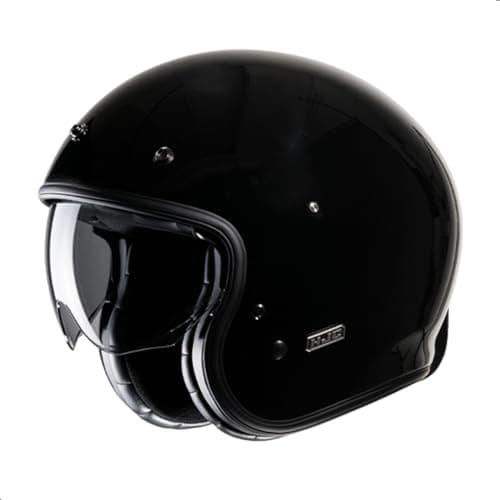
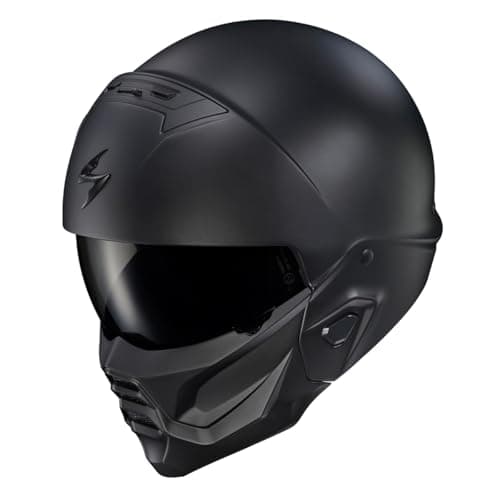
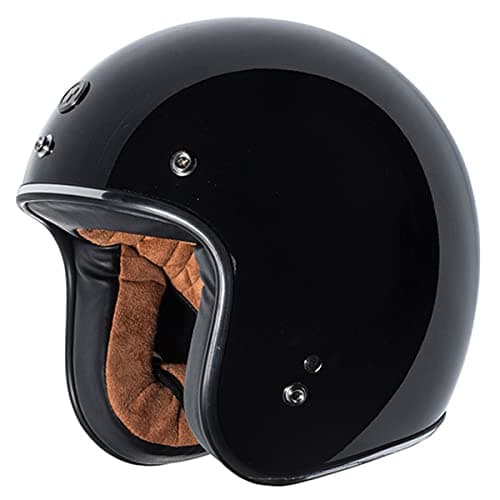
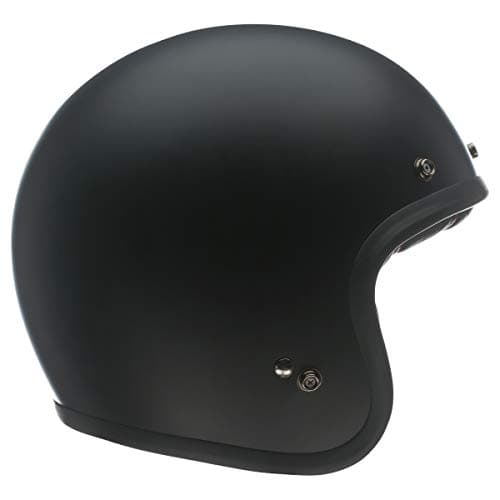
The Bell Custom 500 takes the top spot for one unglamorous reason: five shell and EPS sizes. Almost every helmet at this price uses one or two shells and pads them down, which means a smaller head ends up in an oversized shell perched too high. Five shells means the helmet is actually sized to your head, and it does it in a fiberglass composite at roughly 1,200 g. The HJC V31 is the best-equipped, adding the IS-10 three-step internal sunshield to a composite shell. The ScorpionEXO Covert 2 is the most versatile — its removable front mask gives you two distinct helmets from one certified shell. And the TORC T50 Route 66 is the budget entry that is still DOT FMVSS 218 certified, which matters far more than the price.
An open face is the classic scooter lid, and if that is the bike you are buying for, our scooter helmets page weighs the 3/4 against a full face and a modular for short urban trips.
Every helmet here carries DOT FMVSS 218. That is the US federal standard, and an open-face helmet has to pass the same impact, penetration and retention tests a full-face does over the area it covers — it simply covers less area. That is the whole story, and our certification explainerspells out what the sticker means and what it doesn't.
What you give up, stated plainly
The chin bar is not decorative. In a face-first impact — one of the most common serious helmet impact locations — a full-face has a structure between your jaw and the road and an open-face has nothing. Choosing a 3/4 means accepting that risk in exchange for airflow, a much wider field of view, easier communication and glasses that go on and off without removing the helmet. Plenty of experienced cruiser and scooter riders make that trade knowingly. What we would ask is that you make it knowingly, and then buy the best-built, properly certified 3/4 you can rather than the cheapest thing with a sticker. If the trade bothers you, our types of helmets guide covers the full-face and modular alternatives, and our best retro motorcycle helmets ranking keeps the same vintage look with a chin bar attached.
Shell sizes are the fit spec nobody advertises
This is the thing that separates the Bell Custom 500 from most of the category. A helmet maker can build one shell and vary the internal padding to cover XS through XXL — cheap to produce, and the result is a small head sitting inside a large shell with thick foam, which looks bulbous and puts more mass further from your head. Or the maker can tool several shell sizes so each one is built around a narrower range of head sizes. The Custom 500 uses five shell and EPS sizes; the Scorpion, HJC and TORC each use fewer. If you are at the small or large end of the size chart, this spec matters more to you than any feature on the list.
Shell material: composite vs ABS and polycarbonate
Fiberglass composite — the Bell Custom 500 and HJC V31 — is stiffer for its weight, which lets the maker use a thinner, lighter shell for the same certified performance. Polycarbonate (the Scorpion Covert 2) and ABS (the TORC T50) are injection-molded, cheaper to produce and heavier for the same job. All of them can and do pass DOT; the difference shows up on your neck at the end of a long day, not in the certification. Weight matters more on an open-face than you might think, because there is no chin bar balancing the mass at the front.
Eye protection is not optional just because the helmet is open
A 3/4 helmet leaves your eyes exposed to wind, grit, bugs and rain, and squinting at 60 mph is genuinely dangerous. You need one of three things: a snap-on flat shield or bubble visor (the Custom 500's five-snap pattern takes the entire aftermarket), an internal drop-down sunshield (the HJC V31's IS-10 and the Scorpion's EverClear SpeedView), or a decent pair of riding glasses or goggles. Budget for it as part of the helmet purchase rather than an afterthought — a bare 3/4 with no eye protection is not a complete helmet.
If goggles are the route you take, use a padded road frame rather than a motocross one — an MX frame is shaped around a peak and carries tear-off posts you will never use on pavement. Our motorcycle goggle ranking covers both kinds and flags which makers actually publish an eye-protection standard, because most of them do not.
Two helmets in one: the convertible option
The ScorpionEXO Covert 2deserves a note of its own. Its removable front mask gives you a masked "Full Mode" look and a plain 3/4 configuration from the same certified shell, and the two-piece redesign is quieter than the original. Be clear about what the mask is, though: it is a wind and style piece. It is not a certified chin bar and it does not protect your jaw in an impact. If you want a helmet that genuinely converts between chin protection and open air, that is a modular helmet, not this.
Which one should you buy?
Buy the Bell Custom 500 if fit and weight matter most and you are happy to add a shield or goggles — it is the best-fitting classic here by a clear margin. Buy the HJC V31 if you want a composite shell with the sunshield already built in. Buy the Scorpion Covert 2 if the two-configuration trick appeals and you want a comms port and a spare visor in the box. Buy the TORC T50 if budget decides it — it is a genuinely certified helmet in a slim shell, which is more than most cheap 3/4s can say. Then check your size against our helmet sizing guide before you order.