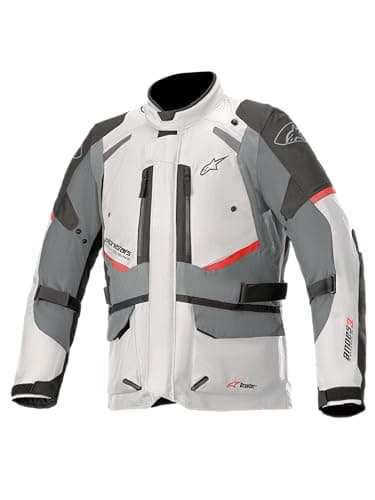
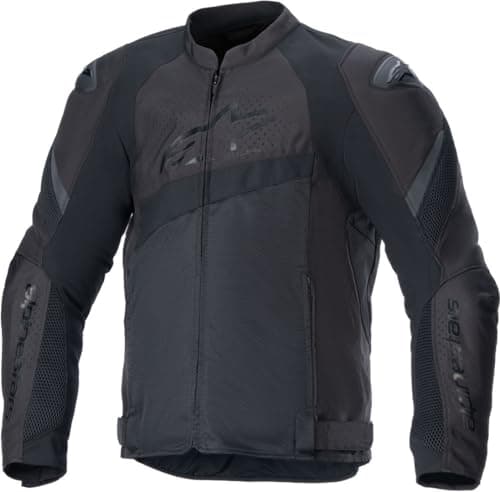
Mesh or textile isn't leather-versus-textile all over again — both are textile jackets, and both carry the same CE armor. The real question is airflow versus weather protection: a summer mesh jacket like the Alpinestars T-GP Plus V4 Airflow is built to move air, while a touring textile like the Alpinestars Andes V3 Drystaris built to keep weather out. We didn't crash-test either — we compiled the published CE ratings, specs and reputable reviews, so you can match the shell to how and where you actually ride.
Meshis mostly large open panels that flow air like an open window, which is exactly what you want when it's 95 degrees and stuck at a light. The trade is that all that open weave gives up some abrasion coverage versus a solid shell, and it offers almost nothing against cold or rain — a mesh jacket is a hot-and-dry specialist, and honest ones don't pretend otherwise.
Full textile— especially a membrane touring jacket like the Andes — is the mirror image. A waterproof layer, a removable thermal liner and a tougher solid shell make it a genuine three-season jacket that handles rain, cold and the odd hot afternoon with the vents cracked open. The cost is that even wide-open it runs warmer than mesh on the worst summer days, and it's heavier to wear and to pack.
The one thing that doesn't change between them is protection hardware: both ship with CE-certified shoulder and elbow armor and a pocket for a back protector, and both can take the same CE Level 2 upgrade. So mesh-versus-textile is a comfort-and-weather decision, not a safety one — you don't give up armor by choosing the cooler jacket.
In practice the gap is bigger than the spec sheets suggest. On a genuinely hot day, mesh moves so much air that the jacket almost disappears, while a vented touring shell — even fully opened — still feels like a jacket, because the solid panels and the membrane it's built around hold heat in. Ride the other way, into a cold, wet evening, and the roles flip completely: the touring jacket keeps you warm and dry, while a mesh jacket would leave you soaked and shivering within minutes. Neither one is "better" in the abstract — each is simply tuned for the opposite end of the weather, and the right buy is the one that matches the days you ride most.
When mesh wins, and when textile wins
A summer mesh jacket winswhen heat is your real enemy: long hot seasons, stop-and-go traffic, or any ride where you'd otherwise be tempted to leave the jacket at home — airflow you'll actually tolerate is what keeps the armor on your body. A textile touring jacket winsthe moment weather range matters — cold mornings, real rain, or a single trip that crosses several climates — because it seals and insulates where mesh simply can't. If your longest, hardest days are hot and dry, lean mesh; if they're wet, cold or unpredictable, lean textile. See our touring jacket and summer jacket rankings for picks at each extreme, or best textile jackets if you want the full-shell side ranked on published EN 17092 garment class.
One jacket, or two?
This is the question underneath the whole debate. If you can own only one jacket, a vented textileis the more sensible pick: open the vents and it's survivable in summer, add the liner and membrane and it handles the rest of the year. It won't flow as much air as true mesh on the hottest days, but it never leaves you cold and soaked — which is why our overall best jacket is a three-season textile.
If your riding really is split — brutal summers and proper winters, or plenty of both hot and wet — two jacketsis the honest answer, and often not much more expensive than one premium do-everything shell. A dedicated mesh jacket for the heat and a membrane touring jacket for everything else each do their one job better than a single compromise can. Whichever way you go, don't treat the airflow choice as a protection choice: both should carry CE armor, and both deserve a CE Level 2 back protector in the pocket. For the wider material picture, our leather vs textile comparison covers the third option, and CE armor levels explained decodes the labels both jackets share.
Be honest about your worst days, not your average ones.The jacket only has to be good enough on your average ride; it has to be safe and bearable on your hottest and your coldest. Pick for the extremes you actually ride in — if those extremes pull in opposite directions, that's your sign the real answer is two jackets rather than one that's a compromise at both ends. The reassuring part is that the armor comes with you whichever way the decision falls — you're only ever trading airflow against weather protection, never trading away protection itself.