A dirt bike helmet has no face shield. Neither does a motocross helmet, and neither does an open-face or a retro lid once you take the bubble shield off. In every one of those cases your goggles are not an accessory — they are the eye protection, and an eye injury at speed ends the ride whether or not the rest of you is intact. We say this on our dirt bike helmet ranking and we had no page to send anyone to. This is that page.
Here is what we found compiling it, and it is not what we expected. Helmets are a well-regulated category: DOT FMVSS No. 218, ECE 22.06 and Snell M2020 are named, testable standards, and the makers print them. Goggles are not. Most of the racing brands market on lens clarity, field of view, foam layers and tear-off compatibility — all real things — and simply never name an eye-protection standard at all. "Impact-rated" and "shatter-resistant" are marketing words. ANSI Z87.1 is a standard.
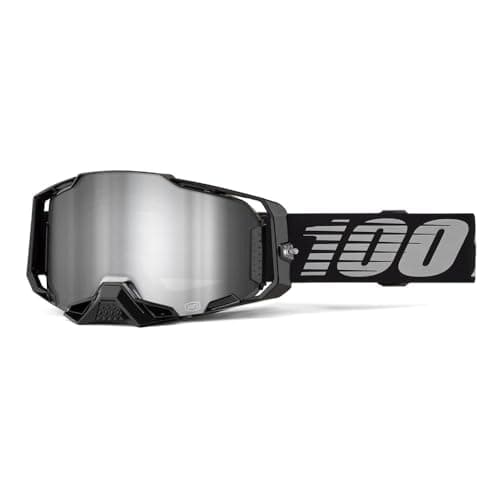
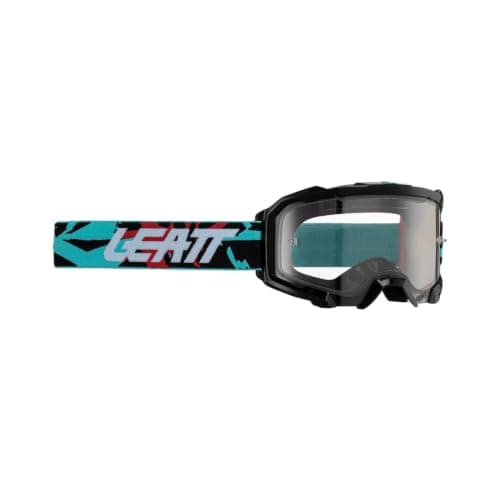
So we ranked this category the way we rank every other one on this site: by what is actually published. That produces an order most goggle roundups would not print. The Leatt Velocity 4.5 takes the top spot because Leatt publishes its lens as tested to ANSI Z87.1-2015 and to the military ballistic-impact specification MIL-DTL-43511D — and it is the cheapest off-road goggle on this page. The 100% Armega has the best optics and lens retention here and costs roughly three times as much while naming no standard whatsoever. That is the whole argument of this page in two sentences.
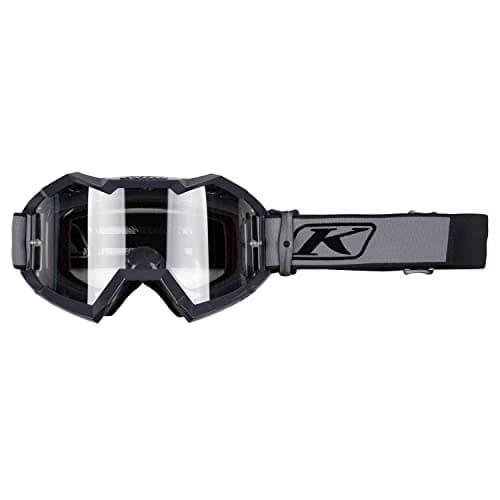
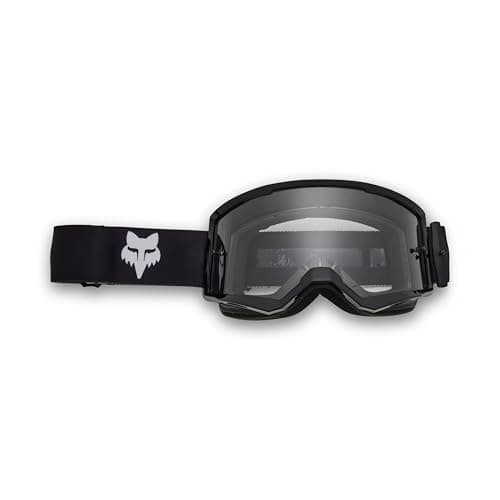
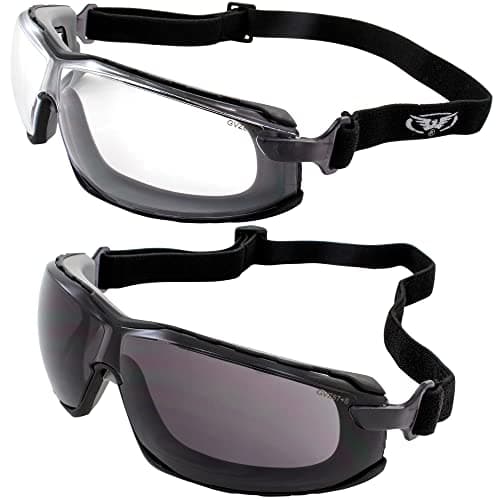
Below the Leatt: the Armega for optics and lens security, the KLIM Viper for adventure riding with a published UV400 rating, the Fox Racing Main as the value off-road pick, and the Global Vision Sunn Up — a cheap road goggle for open-face and retro helmets that, oddly enough, also prints ANSI Z87.1.
We have not impact-tested any of these, we do not run an optical lab, and we are not going to invent a number we did not take. What follows is a published-specification comparison built from manufacturer spec sheets reproduced by a retailer, named and linked at the bottom of the page. Where a maker publishes nothing, we say so on the card rather than filling the gap.
ANSI Z87.1: the standard that should be on the box
ANSI/ISEA Z87.1 is the US standard for occupational and educational eye protection. It is the reason safety glasses on a job site have a tiny "Z87" stamped on the temple, and it covers impact resistance among other properties. It is not a motorcycle standard — there is no US federal eye-protection standard for motorcyclists the way FMVSS 218 covers helmets — but it is a real, named, testable specification, and it is the closest thing this category has to a floor.
Two of the five picks on this page state it. The Leatt Velocity 4.5 states it with a revision year, Z87.1-2015, which is the more useful form because it tells you which edition of the standard the lens was tested against. The Global Vision listing states "ANSI Z87.1" with no year, which is weaker and we mark it down for that on its card. The other three name nothing.
Does that make the other three unsafe? No — and we are not going to imply it. A 2mm injection-molded polycarbonate lens is a substantial piece of eye protection whether or not anyone submitted it for certification, and polycarbonate is genuinely impact-resistant as a material. What the missing standard means is narrower and still important: you are trusting the company's word rather than a number, and you have no way to compare two "impact-rated" claims against each other. That is exactly the position this site exists to flag, in helmets and everywhere else — see DOT vs ECE vs Snell for the same argument applied to the shell on your head.
Single lens or double lens — the fogging decision
This is the specification that will decide your day-to-day happiness, and it splits the field cleanly.
A single lens with an anti-fog coating is what most goggles ship. The coating changes how moisture behaves on the surface so it spreads into a transparent film instead of beading. It works, and like every coating it degrades with handling, cleaning and time. The KLIM Viper (Fogtech HD coating) and the Fox Main are both single-lens.
A double lens is two panes with a sealed air gap between them, exactly like double glazing. The trapped air insulates, so the inner surface never gets cold enough for your breath and sweat to condense on it. Leatt publishes a "permanent anti-fog double lens" on the Velocity 4.5, and the word doing the work there is permanent — it is a construction, not a treatment, so there is nothing to wear off.
If you ride slowly, technically, in the cold, or with a lot of stop-start, buy the double lens. Slow riding is when goggles fog, because there is no airflow to clear them. If you ride fast in the dry and heat, a coated single lens is fine and lighter. It is the same physics we walk through for face shields in our visor fogging guide and our anti-fog insert ranking.
The eye port is the fit test, and it is not optional
A goggle and a helmet have to be bought as a pair, and riders routinely discover this after both are out of the box. The frame must seat flush against your face all the way around the eye port. If it does not, you get a gap at the brow — and that gap fills with dust, roost and rain at exactly the speed you are travelling.
What to check, in order. First, does the frame fit inside the eye port at all — some large-frame goggles simply will not go into a smaller shell's opening. Second, does the outrigger clear the shell, or is it pressing the strap into the helmet edge and lifting the frame off your face. Third, is there a gap at the top of your nose, which is where almost every bad goggle fit shows up first. Fourth, does the strap sit in the helmet's strap channel rather than riding up the back of the shell.
The frame geometry claims on the cards above matter here. KLIM's FOV+ frame is a peripheral-vision design; 100%'s six locking tabs are about the lens staying in the frame rather than fit; Leatt's self-draining open lower frame is designed to let dirt fall out rather than pool on the lens. None of that helps if the goggle does not seat on your face inside your helmet.
Tear-offs, roll-offs, and whether you need either
Tear-offs are thin clear films stacked on posts either side of the lens. When one gets covered, you pull it and the next one is clean. They are a racing solution to a racing problem — a pack of riders throwing mud at you for thirty minutes — and they are genuinely brilliant at it. The Leatt is tear-off ready with posts, the KLIM publishes a 3-post system, and the Armega has its own platform of laminated and standard tear-offs.
For trail riding alone, adventure riding or anything on pavement, you probably do not need them. Tear-offs are also a litter problem on public land, and several venues ban them outright. Buy the posts if you race; ignore them otherwise. What you should not do is treat tear-off compatibility as a proxy for goggle quality — it is a feature for one use case.
Lens tint, and the law you might not know about
Every goggle here ships with one lens, usually clear or lightly mirrored, and takes others. Leatt publishes optional lenses from 22% to 83% VLT (visible light transmission) sold separately, which is a genuinely useful number: the lower the percentage, the darker the lens. Around 80% and above is effectively a clear lens; the low twenties is a bright-day tint.
The rule that catches people out: a dark lens is not legal to ride behind at night in most US states, exactly as a dark face shield is not. If you own one goggle and ride at dusk, own a clear lens for it. The Global Vision Sunn Up handles this by shipping two pairs with clear and smoke lenses, which is a blunt but effective answer at that price. This is the same legality point our retro helmet ranking makes about tinted bubble shields.
Goggles are not a substitute for a chin bar
Worth stating plainly on a page that will be read by people in open-face helmets. A goggle protects your eyes. It does nothing for your jaw, your chin or your teeth, and the chin bar is the part of a helmet that covers a large share of serious impacts. If you are choosing an open-face helmet and adding goggles because you want airflow, that is a legitimate choice made with full information — our types of motorcycle helmets guide lays out exactly what each shape covers, and our open-face ranking ranks the certified options.
The off-road case is different and worth understanding rather than judging. A motocross helmet has a chin bar and no shield, because a shield fogs instantly at trail speed and cannot be cleared with a glove. That is why goggles exist in dirt riding: not as a compromise on coverage, but as the eye-protection half of a system that keeps the chin bar. Our adventure helmet ranking covers the peak-and-shield-and-goggles configurations in detail.
Caring for a lens so it lasts a season
Never wipe a dry goggle lens, and never wipe the inside of one at all if you can avoid it. Dust on a dry lens is abrasive and the anti-fog surface — coating or double-lens inner pane — is softer than the outside. Rinse with clean water, let it dry, and store the goggle in the bag it came in rather than face-down in a helmet.
Do not use household glass cleaner. Ammonia and solvents attack polycarbonate and strip anti-fog and anti-scratch coatings — the same rule that applies to face shields, covered in our helmet cleaning guide. And if the inside of the foam is soaked at the end of a ride, dry it out before it goes in a bag; damp foam is how goggles start to smell and how the inner lens surface gets ruined.
Which one should you buy?
Buy the Leatt Velocity 4.5 unless you have a specific reason not to. It is the only pick whose maker names a lens standard — ANSI Z87.1-2015, plus the MIL-DTL-43511D impact specification — it has a permanent anti-fog double lens rather than a coating, and it is the cheapest off-road goggle here. When the best-documented product is also the cheapest, the ranking writes itself.
Buy the 100% Armega if optics and lens security are worth the premium to you: a 2mm injection-molded lens on six locking tabs is the most serious lens hardware on this page, and 100%'s ULTRA HD lens has a real reputation for clarity. Just buy it knowing you are paying for engineering the company has not put a standard behind.
Buy the KLIM Viper for adventure riding, where the published UV400 rating and the FOV+ peripheral geometry earn their place on long, bright days. Buy the Fox Racing Main if this is a first goggle or a spare — a Lexan lens, a silicone strap and a triple-layer foam stack is a complete, honest package for the money. And buy the Global Vision Sunn Up if you ride an open-face or retro helmet on the road, where two pairs with clear and smoke lenses and a stated ANSI Z87.1 is a lot of eye protection for very little.