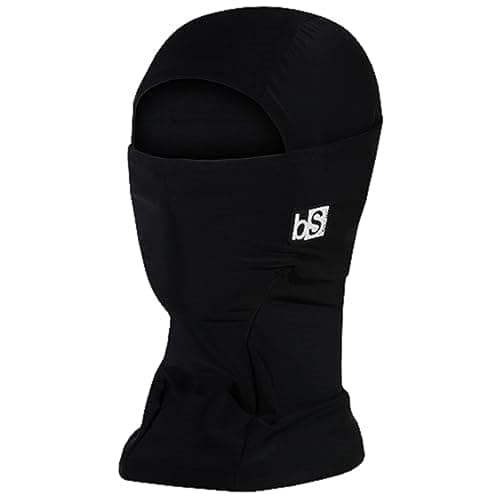
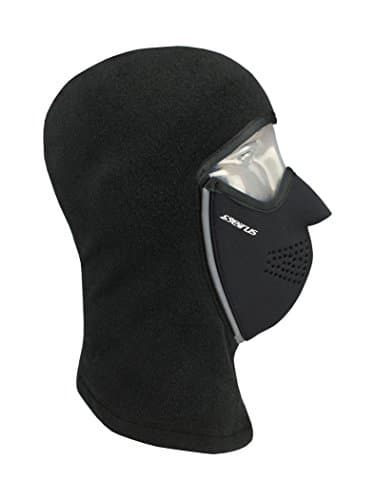
Buy the Seirus Magnemask Combo Clava if you want the best one: it is a hood, face mask and neck warmer in a single garment, and the face panel detaches and snaps back on magnetically, so you can uncover your face at a fuel stop without pulling the helmet off or taking a glove off. If your helmet is already a snug fit, buy the BLACKSTRAP The Hoodinstead — a single layer of fabric over the head and neck, so the lid sits exactly where it did. And if you only want the neck gap closed, the Seirus Neofleece Combo Scarf does that without putting anything over your scalp.
This is the cheapest meaningful cold-weather upgrade a rider can make. The gap between your collar and the bottom of your helmet is the coldest spot on most riders at road speed, and a few dollars of fleece closes it. A balaclava does a second job too: it keeps sweat and hair product out of the helmet lining, which measurably extends the life of the padding — see our helmet cleaning guide.
It is also the single most common cause of a fogged visor, and almost nobody is told why. We ranked these on four things, in this order:
- What does it do to your helmet fit? This comes first because a helmet is sized to your head. Add three millimeters of fleece over the crown and a correctly-fitted helmet becomes a tight one, which causes pressure points on a long ride and compresses the air gap the ventilation depends on.
- Where does your breath go? Any fabric over your mouth redirects warm, wet exhaled air upward, straight onto the coldest surface in the helmet. This is why riders who add a balaclava suddenly start fogging.
- Is it actually warm at road speed? A thin ice-silk mask that works for a summer sun barrier does nothing at 60 mph in January. Fleece, Neofleece and merino do.
- What does the maker publish? Fabric composition, head circumference bands, treatments. Two of these four publish all of it; one publishes almost nothing, and the ranking says so.
We have not thermally tested any of these and we do not run a lab. Every specification below is quoted from the maker's or retailer's published page, linked at the bottom, and where a maker publishes nothing we say so. One disclosure up front: two of the four picks are Seirus. That is not a sponsorship — Seirus is simply the only brand in this category that publishes fabric splits and head-circumference sizing, and the ranking rewards exactly that.
The four picks, side by side
| Pick | Covers | Construction | Sizing | Published fabric |
|---|
| Seirus Magnemask Combo | Head, face, neck | Fleece hood + magnetic Neofleece face | S/M and L/XL by head circumference | Yes, full split |
| BLACKSTRAP The Hood | Head, face, neck | Single layer, dual-layer Exo-Hinge at the mouth | One size, 21–23.75 in | Yes, 80/20 poly-spandex |
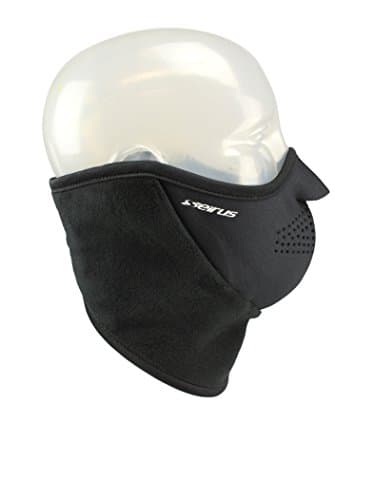
| Seirus Neofleece Combo Scarf | Face and neck only | Neofleece masque | One size, not published | Named, not split |
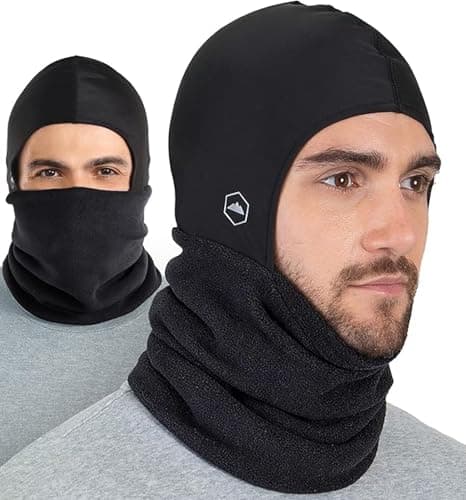
| Tough Headwear Fleece | Head, face, neck | Thermal fleece | One size, not published | Not published |
The fogging rule nobody tells you
Here is the mechanism, because once you understand it you will never get it wrong again. Your breath leaves your mouth at body temperature and close to fully saturated with water. The inside of your visor, in winter, is within a degree or two of the outside air. Warm wet air meeting a cold surface condenses. That is fog, and it happens in seconds.
A balaclava does not cause this, but it aimsit. Fabric pulled up over the bridge of your nose blocks the forward path your breath would otherwise take out of the chin vent, so it goes up instead — directly onto the visor, across your whole field of view. The fix costs nothing:
- Wear it below the mouth, not over it. The neck and chin stay covered and your breath keeps its downward and forward escape route. This single change fixes most balaclava fogging complaints.
- Use the helmet's breath guard. That soft insert in the chin bar is there to deflect exhaled air down and away. Most riders remove it and then wonder why they fog.
- Fit a Pinlock-style insert.It creates a sealed air gap so the inner lens never gets cold enough to condense — the only fix that works regardless of what you do with your breath. Our anti-fog inserts ranking covers them, and our guide to stopping visor fog covers the rest.
The Magnemask is the interesting case here. Its magnetic face panel means you can ride with the mask off and your breath unobstructed, then snap it on when you stop or when the temperature drops — which is a genuinely better answer than choosing once in the driveway.
Thickness is a helmet-fit decision
This is the point that matters most and gets the least attention. A motorcycle helmet is sized to your bare head, with the comfort liner compressed slightly against your scalp. That snugness is not a preference — it is what keeps the helmet in position when it needs to be, and it is the reason our helmet fit guide tells you to accept a firm fit out of the box.
Put three millimeters of fleece over your crown and you have changed that fit. On a helmet with a little room, nothing bad happens. On a correctly snug helmet, you get a forehead pressure point by mile thirty and noticeably less airflow, because the liner is now pressed flat against your head.
So the honest guidance is: if your helmet fits properly, buy the thinnest thing that is warm enough. That is the BLACKSTRAP, which uses a single layer over the head and neck precisely so it does not change the fit, and puts its dual layer only over the mouth. If you would rather not add anything over your scalp at all, the Seirus Neofleece Combo Scarf covers the neck and lower face and leaves the crown alone. Buy a thick fleece balaclava only if you know your helmet has the room.
Balaclava or neck warmer?
They solve overlapping but different problems, and plenty of riders end up owning both.
A balaclava is a helmet liner as much as a warmth layer. It covers the scalp, ears and neck, keeps the helmet padding clean, makes the helmet easier to pull on because the fabric slides, and closes the neck gap. It is the better single purchase.
A neck warmer or tube is warmer per millimeter at the one spot that is genuinely cold, adds nothing over your head so it cannot affect helmet fit, and works with an open-face or half helmet where a full balaclava is awkward. It is the better purchase if your helmet is tight, or if you already wear a balaclava and still have a cold throat.
In deep cold, the two together is not overkill — a thin balaclava under the helmet plus a fleece tube over the jacket collar seals the gap from both sides. Our cold weather gear guide and layering guide put that in context with the rest of the kit.
Materials, briefly
Fleece is the default and the right one for most riders: warm for its thickness, cheap, dries fast, and windproof enough at road speed when it sits under a helmet and inside a collar. Every pick here except the BLACKSTRAP is fleece or Neofleece.
Neoprene-backed fleece— what Seirus calls Neofleece — is the warmest and the most wind-blocking, and it is also the least breathable, which is why it appears on face panels rather than over the whole head.
Technical syntheticslike BLACKSTRAP's TREO are the thin end: less absolute warmth, far better moisture movement, and the only ones here publishing UPF and lens-safe claims. Lens-safe is worth more than it sounds — a coarse weave dragged across a visor every morning will haze it.
Merino wool is the fourth option and none of our picks are made of it. It resists odor far better than synthetics over multi-day trips, at a higher price and a slower drying time. It is a genuinely good choice we could not rank here, because the merino balaclavas currently listed do not name their maker on the listing, and we will not rank a product whose brand we cannot verify.
Which should you buy?
Buy the Seirus Magnemask Combo Clava if you stop often and want one garment that does everything, with the only genuinely clever feature in this category. Buy the BLACKSTRAP The Hoodif your helmet fits properly and you want to keep it that way — it is the thinnest, best-documented pick here. Buy the Seirus Neofleece Combo Scarf if the neck gap is your whole problem, or you ride an open-face. And buy the Tough Headwear fleece if you have never worn a balaclava and want to find out whether you like it before spending real money. For the rest of the cold-weather kit, our winter gloves ranking, base layers ranking and warm feet guide cover the other three cold spots.