Skip to content
LID & LEATHER

The lid · Helmets

The Best Youth Motorcycle Helmets

There is no children's helmet standard. A youth helmet is the adult standard applied to a smaller head - which makes the size on the label part of the certification, not a preference.

By Stephen V.Updated How we research
#ad

We earn a commission when you buy through our Amazon links, at no extra cost to you. It never affects our rankings, and we say so when the cheaper gear is the better buy. How this works.

Start with the thing almost nobody tells parents: there is no separate safety standard for a child's motorcycle helmet. The US standard, FMVSS No. 218, applies at S3 to all helmets "designed for use by motorcyclists and other motor vehicle users" — it has no youth category, no child category and no junior category. A "youth" helmet is the adult standard applied to a smaller shell.

That is better news than it sounds, and it has one sharp consequence. FMVSS 218 picks its test headform from the size the manufacturer put on the label: a designated size that does not exceed 6 3/4 (European 54) is tested on the small headform, and Table 1 puts the small drop assembly at 3.4–3.6 kgagainst 4.9–5.1 kg for medium and 6.0–6.2 kg for large. The pass criteria do not move with the headform. A youth helmet has to hold peak acceleration under 400g, keep anything over 200g inside 2.0 ms and anything over 150g inside 4.0 ms — the same numbers as an adult lid, at the same impact speeds. So a DOT label on a youth helmet is a real test result, not a courtesy. Helmets this small were not always covered: NHTSA only extended the standard to every motorcycle helmet size in a 1988 final rule, before which small helmets fell outside it entirely.

The sharp consequence is this. The size on the label is part of the test. The shell and liner that passed on the small headform were certified at that size. Buy two sizes up so a child can "grow into" it and you are no longer using the thing that was certified — you have a helmet that can rotate on the head, that loads the neck with more mass than the test assumed, and that can come off in the first impact. It is the single most common and most expensive mistake in this category, and it is the reason this page ranks fit granularity as a protection spec.

So we ranked on four published things: which certifications the maker states (DOT alone, or DOT plus the current ECE 22.06), how many shell and EPS sizes there are across the youth range, the published weight, and the published size chart. We have not worn these helmets and we do not crash-test anything; every figure below is a maker or retailer published spec, cited at the bottom of the page. Where a maker publishes nothing, the card says so rather than filling the gap.

The FLY Racing Youth Kinetic wins because it publishes the most: DOT and ECE 22.06 together, a weight, dual-density EPS, and four shell sizes matched to four EPS sizes. The HJC CL-XY II is the fit pick, with four discrete sizes and real head circumferences printed against each one. The Bell Moto-9 Youth Mips is the upgrade if the budget allows, and the only pick here that lists Mips. Then the Fox Youth V1 and the ILM MF521, both for reasons their cards state plainly.

Almost everything sold as a youth motorcycle helmet is an off-road helmet: a peak, a wide eye port and no face shield, so goggles are a separate and mandatory purchase. If you are kitting out a young off-road rider, our dirt bike helmet ranking explains why that shape exists, and dirt bike helmet vs motorcycle helmet covers what changes when a helmet has no shield.

The short answer

Quick picks

#ProductBest forScorePrice
01
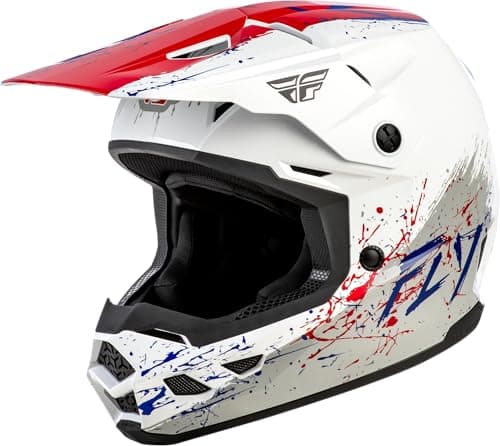
FLY Racing FLY Racing Youth Kinetic
FLY Racing Youth Kinetic

The best-documented helmet on the page: dual DOT and ECE 22.06 homologation, a published weight, dual-density EPS, and four shell sizes matched to four EPS sizes. When a maker publishes the shell count, a smaller head gets a smaller shell instead of thicker padding.

Best published spec sheet
8.9
$149.95Amazon
02
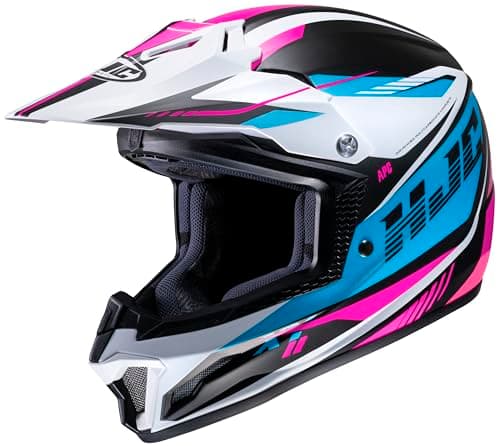
HJC HJC CL-XY II
HJC CL-XY II

Four discrete youth sizes with published head circumferences from 49-50 cm to 55-56 cm — the most fit granularity on this page, and fit is the thing that decides whether a youth helmet works at all. DOT approved per the listing, with a removable washable Nylex liner and a double-D ring.

Best fit range
8.4
$99.99Amazon
03
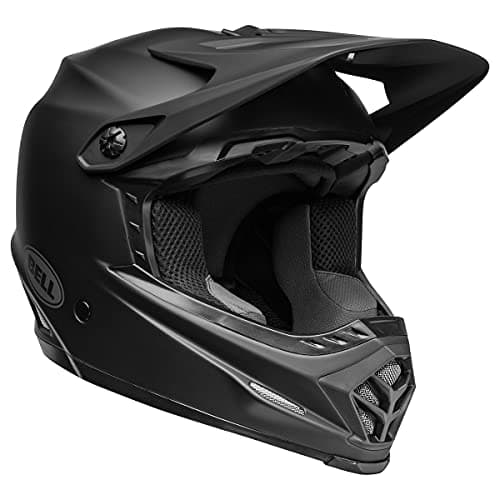
Bell Bell Moto-9 Youth Mips
Bell Moto-9 Youth Mips

The only helmet here that adds a published rotational-management system on top of the certification: Bell lists the Moto-9 Youth as DOT and ECE certified and Mips-equipped, on a Tri-Matrix composite shell rather than a molded polymer one. If the budget stretches, this is the one.

Best youth helmet overall
8.3
$179.95Amazon
04
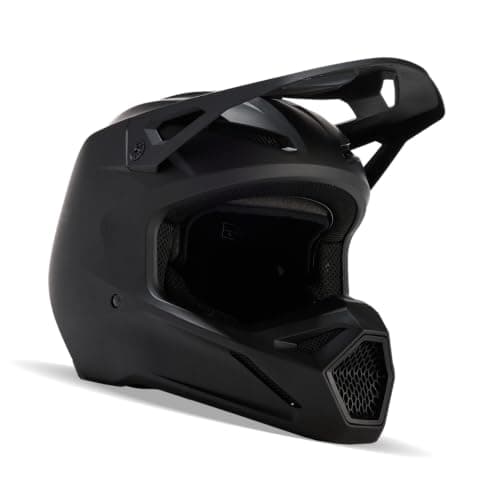
Fox Racing Fox Racing Youth V1
Fox Racing Youth V1

The motocross-paddock default, and Fox states the V1 generation was built to ECE 22.06 and DOT together. The catch is published on Fox's own youth listings: one shell size with two EPS liner sizes, so fit across the whole youth range comes from foam rather than from shells.

Best-known MX name
7.6
$229.95Amazon
05
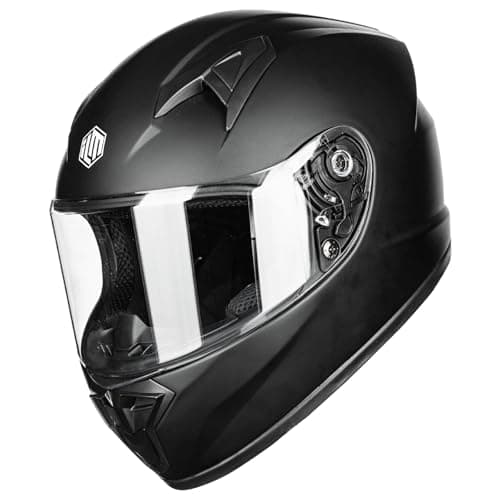
ILM ILM Kids MF521
ILM Kids MF521

The honest budget entry. The listing claims both ECE and DOT, which is more than most helmets at this price claim, and it costs a fraction of everything above it. It is ranked last because a claim in a listing title is the only documentation that exists for it.

Cheapest certified claim
6.6
$69.99Amazon

#ad · Live prices from the Amazon Product API, as of November 19, 2026. Where we have no verified live price we show none — we would rather leave a gap than print a number that has rotted.

In detail

The picks, in full

01
FLY Racing FLY Racing Youth Kinetic

Best published spec sheet

FLY Racing Youth Kinetic

DOT + ECE 22.061,450 g +/- 50 g (size L)4 shell / 4 EPS sizesDual-density EPS
8.9/10

The best-documented helmet on the page: dual DOT and ECE 22.06 homologation, a published weight, dual-density EPS, and four shell sizes matched to four EPS sizes. When a maker publishes the shell count, a smaller head gets a smaller shell instead of thicker padding.

Certification
9.2
Published specs
9.4
Shell/construction
8
Fit granularity
9
Value
8.8

Pros

  • ECE 22.06 as well as DOT — 22.06 adds oblique-impact and rotational testing that FMVSS 218 does not run at all
  • A published weight, which is the spec you actually want for a child and the one most makers omit
  • Four shell sizes paired with four EPS sizes, so a smaller rider gets a smaller shell rather than more foam
  • Dual-density EPS liner rather than a single foam density

Cons

  • Polymer shell, not a composite — heavier for its size than the Bell's Tri-Matrix
  • The published 1,450 g figure is for size L; FLY does not publish the smaller sizes, so a smaller helmet's weight is unknown rather than lighter by assumption
  • The Amazon listing calls the shell polycarbonate while FLY's retail spec sheets call it poly-alloy — the two descriptions do not agree

Don't buy this if…

…you want rotational-impact management as a named feature — this helmet publishes no Mips or equivalent, and the Bell does.

$149.95View on Amazon

Price as of November 19, 2026. Prices change — Amazon's is the one that counts.

#ad · we may earn a commission from this link to FLY Racing Youth Kinetic

02
HJC HJC CL-XY II

Best fit range

HJC CL-XY II

DOT approved (listing)4 youth sizes, 49-56 cmPolycarbonate composite shellDouble-D ring
8.4/10

Four discrete youth sizes with published head circumferences from 49-50 cm to 55-56 cm — the most fit granularity on this page, and fit is the thing that decides whether a youth helmet works at all. DOT approved per the listing, with a removable washable Nylex liner and a double-D ring.

Fit granularity
9.4
Certification
8
Published specs
7.4
Shell/construction
8
Value
9

Pros

  • Four discrete sizes with published head circumferences — 49-50, 51-52, 53-54 and 55-56 cm — so you size to a tape measurement rather than to a size band
  • Double-D ring retention rather than a quick-release buckle
  • ACS front-to-back channeling ventilation and a removable, washable Nylex interior
  • The cheapest route into a brand with a real US dealer and spares network

Cons

  • HJC publishes no weight for this helmet that we could find
  • Retailer listings disagree on the certification — some show DOT-218 and some show the superseded ECE 22.05; for a US rider the DOT label inside the shell is what counts, so check it when the helmet arrives
  • No published shell count, so you cannot tell whether those four sizes come from four shells or from four padding thicknesses

Don't buy this if…

…you want dual homologation on paper — the FLY publishes DOT and the current ECE 22.06 together and this does not.

$99.99View on Amazon

$149.9933% off

Price as of November 19, 2026. Prices change — Amazon's is the one that counts.

#ad · we may earn a commission from this link to HJC CL-XY II

03
Bell Bell Moto-9 Youth Mips

Best youth helmet overall

Bell Moto-9 Youth Mips

DOT + ECE (Bell)Mips-equippedTri-Matrix composite shellRemovable washable liner
8.3/10

The only helmet here that adds a published rotational-management system on top of the certification: Bell lists the Moto-9 Youth as DOT and ECE certified and Mips-equipped, on a Tri-Matrix composite shell rather than a molded polymer one. If the budget stretches, this is the one.

Certification
9.4
Shell/construction
9.2
Published specs
7.6
Fit granularity
7.8
Value
7.4

Pros

  • Bell publishes both DOT and ECE certification for the youth model, not just one of the two
  • Mips is a published feature of this helmet, which no other pick on this page lists
  • Tri-Matrix composite shell rather than the injection-molded polymer used further down the page
  • Velocity Flow Ventilation with 10 vents and 3 brow ports, and a removable, washable liner

Cons

  • The most expensive pick on the page by a wide margin
  • Bell publishes no weight figure for the youth model that we could find — the one spec that matters most for a child's neck is the one missing
  • Sold in combined size bands (S/M, L/XL) rather than discrete youth sizes, so you get less fit granularity than the HJC's four sizes

Don't buy this if…

…the rider is growing fast enough to outgrow a shell inside a season — spending this much on a helmet with a twelve-month service life is hard to justify when the HJC is certified to the same DOT standard.

$179.95View on Amazon

Price as of November 19, 2026. Prices change — Amazon's is the one that counts.

#ad · we may earn a commission from this link to Bell Moto-9 Youth Mips

04
Fox Racing Fox Racing Youth V1

Best-known MX name

Fox Racing Youth V1

DOT + ECE 22.06 (Fox)Injection-molded PC/ABS shell1 shell / 2 EPS sizesYouth-specific model
7.6/10

The motocross-paddock default, and Fox states the V1 generation was built to ECE 22.06 and DOT together. The catch is published on Fox's own youth listings: one shell size with two EPS liner sizes, so fit across the whole youth range comes from foam rather than from shells.

Certification
9
Shell/construction
7.8
Published specs
7
Fit granularity
6.8
Value
7.4

Pros

  • Fox publishes DOT and ECE 22.06 for the V1 line — the current European revision, not the superseded one
  • Injection-molded polycarbonate/ABS shell with the widest graphics choice here, which matters more than adults admit for getting a kid to actually wear it
  • The most widely stocked youth MX helmet in the US, so sizes and spares are easy to find

Cons

  • Youth listings publish one shell size with two EPS sizes — the least fit granularity on this page
  • No published weight for the youth model
  • Priced above the FLY and the HJC while publishing less about the shell than either of them

Don't buy this if…

…your rider is at the small end of the youth range — one shell with two foam liners means the smallest heads wear the same outer shell as the largest.

$229.95View on Amazon

Price as of November 19, 2026. Prices change — Amazon's is the one that counts.

#ad · we may earn a commission from this link to Fox Racing Youth V1

05
ILM ILM Kids MF521

Cheapest certified claim

ILM Kids MF521

ECE + DOT (listing claim)Full-face youth shellEyeglass channelsEntry price
6.6/10

The honest budget entry. The listing claims both ECE and DOT, which is more than most helmets at this price claim, and it costs a fraction of everything above it. It is ranked last because a claim in a listing title is the only documentation that exists for it.

Value
9.2
Certification
6.4
Published specs
5
Shell/construction
6
Fit granularity
6.6

Pros

  • The listing claims both ECE and DOT certification, and it is in stock across sizes
  • Costs a fraction of the branded picks above, which for some families is the difference between a certified helmet and no helmet
  • Published eyeglass channels — genuinely useful, because plenty of young riders wear glasses

Cons

  • No maker spec sheet, no published weight, no shell count, no EPS detail and no downloadable certificate — there is nothing to check the certification claim against
  • No published US dealer or spares network, so a torn cheek pad means a new helmet
  • Resale and hand-me-down value is effectively zero

Don't buy this if…

…you can stretch to the HJC — roughly double the money buys published size charts, a double-D ring, a washable liner and a brand with a US parts network behind it.

$69.99View on Amazon

Price as of November 19, 2026. Prices change — Amazon's is the one that counts.

#ad · we may earn a commission from this link to ILM Kids MF521

Measure the head. Then buy that size, and only that size.

Put a soft tape around the head about an inch above the eyebrows, round the widest point at the back, and take the largest reading you can get. That number is the only input that matters. The HJC publishes 49–50, 51–52, 53–54 and 55–56 cm against its four sizes, which is exactly the granularity you want: a measurement of 52 cm maps to one size, not to a guess between two.

Then resist the thing every parent is tempted by. A helmet bought to grow into is a helmet that does not fit now, and "now" is when the crash happens. The certification argument above is the technical reason; the practical one is simpler. A loose helmet rotates when the rider turns their head, the chin bar swings, the eye port stops lining up with the goggles, and children stop wearing helmets that annoy them. Buy the size the tape says, and budget for the next one. Our helmet measuring guide has the full method and the common errors.

The three fit checks, adapted for a child

The adult checks all work on a young rider, with one addition: the rider has to be able to answer honestly, and a child who wants to go riding will tell you anything fits. Do the checks yourself.

  • The roll-off test. With the strap done up properly, take the back of the helmet and try to roll it forward off the head. It must not come off. If it does, the helmet is too big, and no strap adjustment fixes that.
  • The cheek test. The cheek pads should push the cheeks up into a slightly comical squash, and the rider should sound a bit muffled when they talk. Pads pack down with use; a helmet that fits loosely in the shop fits worse in a month.
  • The brow test. Hold the chin bar and move the helmet side to side. The skin of the forehead should move with it. If the helmet slides over the skin, it is too big.

Then check pressure points, because a child will tolerate a hot spot in silence and then refuse to ride. Fifteen minutes with the helmet on indoors finds them. Our pressure points guide covers what is a break-in point and what is the wrong shell shape.

Why shell count is the spec to look for

Makers cover a size range in one of two ways. Either they mold several shell sizes and pair each with its own EPS liner, or they mold one shell and vary the padding inside it. The second is cheaper and it is why some youth helmets look enormous on a small child: the outer dimensions are set by the biggest head in the range, and the smaller ones get thicker foam. More shell on a child's head means more mass and more leverage on a neck that is already carrying a disproportionately heavy head for its body.

That is the whole reason the FLY leads this page and the Fox sits fourth. FLY's spec sheet publishes four shells and four EPS sizes; Fox's youth listings publish one shell and two EPS sizes. Neither is dishonest — one simply tells you more, and what it tells you is better.

DOT, ECE 22.06, and which one to care about

For a US rider, DOT is the one that is legally required, and as established above it is a real test. ECE 22.06, the current European regulation, adds things FMVSS 218 does not run at all — notably oblique (angled) impact testing, which is how most real crashes load a helmet, and testing of the retention and visor systems. A helmet carrying both has been through two different test regimes rather than one.

Be careful with the revision number. ECE 22.05 is the superseded standard; ECE 22.06 is the current one, and the gap between them is not cosmetic. Several retailer listings for youth helmets still quote 22.05, sometimes for the same helmet another retailer lists as DOT. Our DOT vs ECE vs Snell explainer sets out what each one actually measures, and how to read a certification sticker shows you how to confirm it on the helmet in your hands rather than on a web page.

Goggles are not optional, and neither is the rest of the kit

A youth off-road helmet has an open eye port. It is not eye protection on its own and it was never meant to be — the peak and the open port exist so that goggles can seal against the face and vent. Budget for goggles with the helmet, not after it, and check they sit in the port without being forced. Our goggle ranking covers what to look for.

The same logic applies to the rest of a young rider's kit. Gloves and boots take the first contact in almost every low-speed off-road fall, and a neck brace is standard equipment in the youth motocross paddock for a reason — it gives the helmet rim something to strike other than the spine. See best dirt bike boots for the adult version of the first, and best youth neck braces for the second, where the ranking turns on growth adjustment rather than on the specs that decide the adult brace ranking. The whole kit in buying order is in motorcycle gear for young riders.

When to replace it

Twice as often as an adult helmet, for two reasons that have nothing to do with the five-year material guidance. The first is growth: the helmet that fit in spring may fail the roll-off test by autumn, and a helmet that fails the roll-off test is finished regardless of its age. The second is that youth helmets get dropped, thrown in the back of a van and used as a seat, and a helmet that has taken a real impact is done — there is no inspection that tells you the EPS is intact. Our helmet lifespan guide and does dropping a helmet ruin it cover the detail. The short version for a parent: check the roll-off test at the start of every season.

What we would actually buy

Measure the head, then buy the helmet whose published size chart contains that measurement — that is the decision, and it outranks every other line on this page. If two helmets both fit, take the one with the better paperwork: the FLY for dual DOT and ECE 22.06 with a published weight, the HJC if the measurement lands neatly in one of its four sizes, the Bell if the budget is there and you want Mips in the spec. And buy goggles at the same time.
How we picked

We don't test helmets. Here's what we do instead.

Everyone in this category says they tested twenty helmets. We haven't tested any — and we say so. What we do instead: compile the published DOT, ECE 22.06 and Snell certifications, the manufacturer's fit, weight and shell specs, the CE armor levels, and reputable published reviews, then score each pick against a published rubric. The scores are judgments from documented research — not measurements we took, because we do not run a lab and we are not going to pretend we do. Every certification and spec claim traces to a source we name and link.

Questions

Frequently asked

Is there a special safety standard for kids' motorcycle helmets?
No. FMVSS No. 218, the US motorcycle helmet standard, applies to all helmets designed for motorcyclists with no child or youth category. What changes with a smaller helmet is the test headform and the drop assembly weight — 3.4–3.6 kg for the small headform against 6.0–6.2 kg for the large — while the pass criteria stay identical: under 400g peak, 200g limited to 2.0 ms, 150g limited to 4.0 ms. A DOT label on a youth helmet means a real test at a scaled mass, not a lighter standard.
Can I buy a youth helmet a size up to grow into?
No, and this is the one firm answer on the page. The helmet was certified at its labeled size, on the headform that matches that size. A helmet that is too big rotates on the head, fails the roll-off test, adds mass and leverage to a child's neck and can leave the head entirely in a crash. Buy the size the tape measure gives you and plan to replace it. Our measuring guide shows how to get the number right.
Are youth motorcycle helmets street legal?
A helmet carrying a DOT certification label meets the federal standard whatever size it is, so size is not what decides legality. Most helmets sold as youth models are off-road helmets with no face shield, which means separate eye protection is needed and may be legally required in your state. Whether a young passenger or rider is permitted at all is a state law question, not a helmet question — check your own state's rules.
What size youth helmet do I need?
Measure, do not estimate. A soft tape around the head an inch above the eyebrows and around the widest point at the back, largest reading taken. Then match that number to the maker's published chart: the HJC CL-XY II, for instance, publishes 49–50, 51–52, 53–54 and 55–56 cm. Where a maker sells combined bands (S/M, L/XL) instead of discrete sizes, you have less precision to work with, which is a reason to prefer the maker who publishes the chart.
Do youth helmets need goggles?
Any youth helmet with an open eye port and no face shield does, and that is most of them. The peak and the open port are designed around goggles sealing to the face. Buy them with the helmet and check the fit in the port before the first ride — see our goggle ranking.
How often should a youth helmet be replaced?
Check the roll-off test at the start of every season and replace the helmet when it fails, which for a growing rider is usually long before the general five-year material guidance matters. Replace it immediately after any real impact, dropped from height onto a hard surface included — the EPS can be crushed with no visible mark. See does dropping a helmet ruin it.

Keep reading

Receipts

Sources

We do not run a testing lab, and we do not pretend to. Our picks are built from published certifications, manufacturer spec sheets, the standards documents themselves, and reputable published reviews — named and linked above. Where we could not verify something, we say so on the page rather than quietly leaving it out. Read our full method.