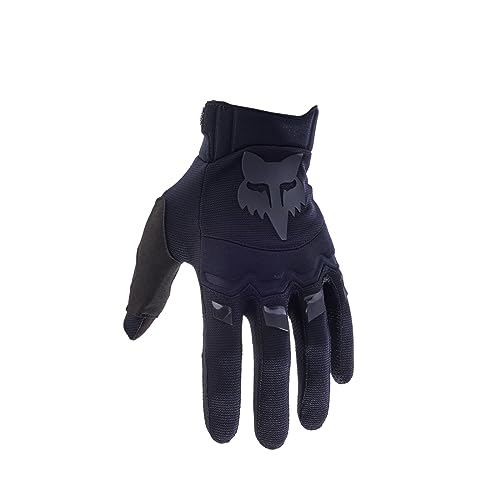
The best dirt bike glove for most riders is the Fox Racing Dirtpaw — it is the only pick here with direct-injected TPR knuckle coverage, which is the difference between a knuckle meeting a handguard and a knuckle meeting a handguard through a layer of molded rubber. The budget pick is the O'Neal Element Racewear, the only glove on this page with a double-layer palm. We did not test any of these — we do not have a lab — so every spec below is the maker's or the retailer's published figure, and where listings disagree with each other the card says so instead of picking the flattering one.
Start with the fact that decides how you should read the rest of this page. Almost no motocross glove publishes EN 13594, the CE standard for motorcycle protective gloves. Our street glove rankingis full of Level 1 and Level 2 certified gloves because street gloves are sold on abrasion and impact performance. Off-road gloves are sold on bar feel, and the two goals pull in opposite directions: EN 13594 wants layers, a long cuff and a secure closure, and a motocross rider wants the thinnest possible palm and nothing bulky under the lever. One UK retailer states it flatly on the O'Neal Element — "not CE certified for road use" — and that line is honest about the entire category, not just that glove.
So the plain conclusion first, before the ranking: if you ride on pavement, a dirt bike glove is the wrong glove. It has no published abrasion rating, usually no scaphoid or palm slider, and often a cuff that ends at your wrist bone. Buy a certified street glove for the road and keep these for the trail. If you need the certification side explained first, EN 13594 explained covers what Level 1 and Level 2 actually measure and why a glove that skips the test can still be a good glove for its own job.
How this ranking was built
With no certification to sort on, we rank on the four construction facts makers do print, weighted by how much each one changes a ride day:
- Palm layers and palm material. A single-layer palm gives the best bar feel and wears through first. A doubled palm lasts longer and reports less. Clarino — the synthetic leather most of this category uses — is the usual answer; Leatt uses its own thin MicronGrip and Alpinestars uses reinforced synthetic suede.
- Knuckle structure. There are three real answers: direct-injected TPR molded onto the backhand (hardest, the Fox), thermoformed neoprene (softer, the Alpinestars), and TPR strips or nothing at all. This is the only genuine impact feature in a motocross glove.
- Closure. A hook-and-loop strap over a neoprene cuff keeps the glove on your hand. A strapless glove does not, and one pick here is strapless on purpose.
- Seams and blister management. Unglamorous and the thing riders actually complain about: seams across the palm, a thumb overlay, whether the palm is one piece.
Then value. The scoring rubric is on our methodology page, and the "published standard" score sits near the bottom of its range for every pick on this page — that is not a scoring bug, it is the category.
What actually breaks a dirt bike glove
Three things, in this order. The palm, from the grip. Rotating a handlebar grip under load with a wet palm is an abrasion cycle you repeat a few thousand times an hour, and it wears a single-layer palm at the base of the thumb and the heel of the hand first. The fingertips, from the levers. Clutch and brake feel live in about two millimeters of material, which is why silicone fingertip printing shows up on four of the five picks here. And the backhand, from everything else — roost, branches, your own handguards in a tip-over. A glove with a bare mesh back is a glove that will not survive a trail ride through trees.
Note what is not on that list: asphalt. A street glove is engineered for a single high-energy slide and is tested for exactly that. A motocross glove is engineered for hundreds of low-energy dirt contacts and thousands of grip rotations, and is tested for nothing. Different jobs, different gloves, and the reason this page exists separately from the leather street glove ranking.
Sizing an off-road glove
Off-road gloves run closer to true-to-hand than street gloves do, because there is no armor or liner taking up room. The complication is that retailers publish the measurement differently— some by hand length from wrist crease to middle fingertip, some by palm circumference across the knuckles, and O'Neal's listings do both depending on the shop. Measure both numbers once, write them down, and check which one a listing is asking for before you order. Our glove sizing guide walks through taking both measurements, and the rule that a glove should be snug with no empty fingertip space applies here harder than on the street: a loose off-road glove bunches at the lever and raises a blister in one moto.
The short answer
| # | Product | Best for | Score | Price |
|---|
| 01 | Fox Racing DirtpawThe category benchmark, and the only pick here with a molded knuckle you can feel through the glove: direct-injected TPR knuckle coverage over a nylon backhand, on a padded single-layer Clarino palm that works on a phone screen. It publishes no CE standard, and neither does almost anything else in motocross. | The all-round best | | $39.95·Amazon |
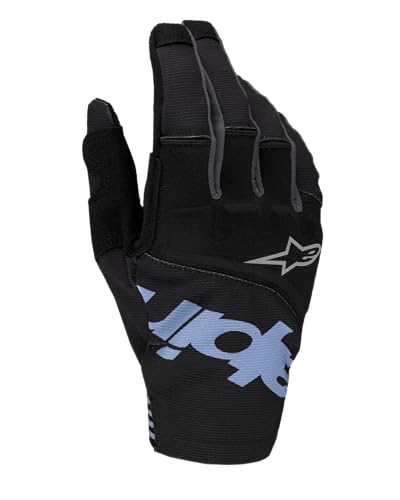
| 02 | Alpinestars Techstar GloveThe best-made glove here. A one-piece conductive palm with reinforced synthetic suede in the high-wear areas, a thermoformed neoprene knuckle and an ergonomic stretch insert across the palm — Alpinestars' race-line construction, at roughly twice what the budget picks cost. | Best construction | | $49.95·Amazon |
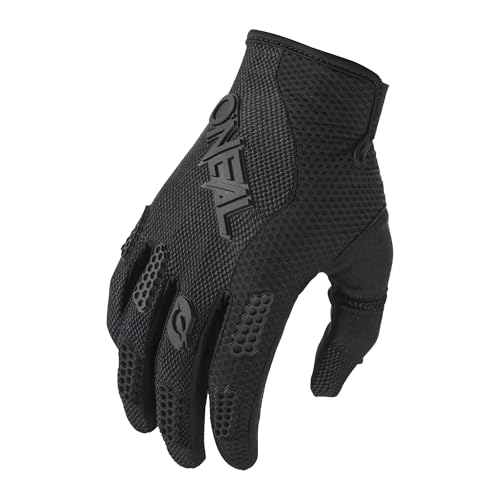
| 03 | O'Neal Element Racewear GloveThe budget pick, and the only glove on this page with a doubled palm. O'Neal publishes double-layer reinforcement on the palm and thumb, a vented mesh backhand with TPR strips and a pre-curved cut — and one UK retailer states outright that it is not CE certified for road use, which is the most honest line in this whole category. | Best value | | $24.99·Amazon |
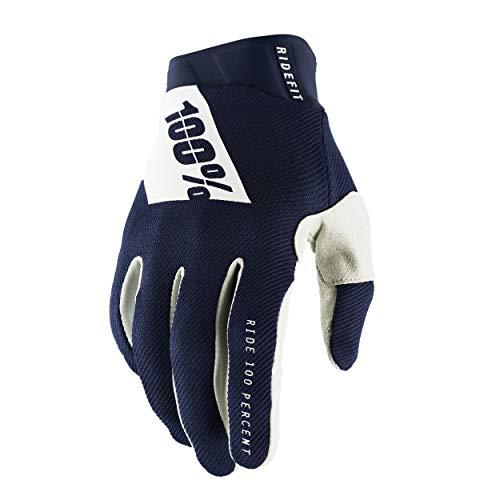
| 04 | 100% RidefitThe hot-weather pick. A perforated single-layer Clarino palm with silicone grip graphics, an embossed neoprene cuff and an adjustable TPR wrist closure — the most airflow through the palm of anything here, and the least protection over the knuckle. | Best for heat | | $21.99·Amazon |
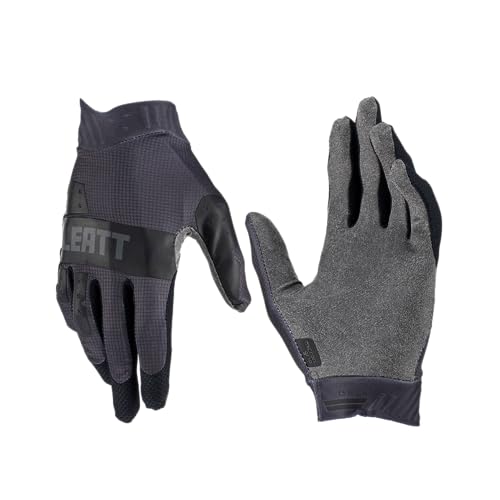
| 05 | Leatt Moto 1.5 GripRThe cheapest glove here and the most honest about what it is: a strapless, seamless-palm MicronGrip glove built for bar feel, with no knuckle protection and nothing holding it on your hand. Buy it as a grip-and-blister layer, not as protective equipment. | Cheapest here | | $16.99·Amazon |
#ad · Live prices from the Amazon Product API, as of November 19, 2026. Where we have no verified live price we show none — we would rather leave a gap than print a number that has rotted.
In detail
The all-round best
Direct-inject TPR knuckleSingle-layer Clarino palmCompression-molded neoprene cuffTouchscreen palm
The category benchmark, and the only pick here with a molded knuckle you can feel through the glove: direct-injected TPR knuckle coverage over a nylon backhand, on a padded single-layer Clarino palm that works on a phone screen. It publishes no CE standard, and neither does almost anything else in motocross.
- Published standard
- 5
- Palm construction
- 7.6
- Knuckle protection
- 9
- Retention/closure
- 8.4
- Value
- 8.6
Pros
- +Direct-injected TPR knuckle coverage — the most substantial impact feature on this page, and the thing that stops a knuckle meeting a handguard
- +Padded single-layer Clarino palm is conductive, so you can use a phone or a GPS without pulling the glove off
- +Compression-molded neoprene cuff with a hook-and-loop strap, plus stretch mesh finger gussets and silicone fingertip print for lever grip
Cons
- −The US listing names no CE or EN 13594 certification; the European market has a separately badged Dirtpaw CE variant, so confirm which one you are buying if certification matters
- −A single-layer palm wears through sooner than the doubled palms on the O'Neal
- −Retailer listings disagree on the exact fabric blend, so treat any percentage breakdown you see as that retailer's number
Don't buy this if…
…you ride on the road — this is an off-road glove with no published abrasion certification, and a certified street glove is the right tool for pavement.
Best construction
One-piece conductive palmReinforced synthetic suedeThermoformed neoprene knuckleMolded hook-and-loop strap
The best-made glove here. A one-piece conductive palm with reinforced synthetic suede in the high-wear areas, a thermoformed neoprene knuckle and an ergonomic stretch insert across the palm — Alpinestars' race-line construction, at roughly twice what the budget picks cost.
- Published standard
- 5
- Palm construction
- 8.6
- Knuckle protection
- 7.6
- Retention/closure
- 8.6
- Value
- 7.6
Pros
- +One-piece palm with reinforced synthetic suede at the thumb and high-wear areas — fewer seams across the palm is fewer places to raise a blister
- +Ergonomic stretch insert on the palm plus expansion seams on the first three fingers, so the glove moves with a closing hand rather than bunching
- +Molded hook-and-loop closure strap, padded landing zone and a silicone pull tab; wrapped fingertips and silicone grip on the first two fingers for lever feel
Cons
- −No EN 13594 certification published — the same gap as the rest of the category
- −A thermoformed neoprene knuckle is softer than the Fox's injected TPR: more comfortable, less impact structure
- −Listings disagree on the backhand material between model years (stretch micro ripstop on current listings, neoprene on older ones), so the glove you receive may not match the photo you read the spec from
Don't buy this if…
…the knuckle is the reason you are buying gloves — the Fox gives you a harder molded knuckle for less money.
Best value
Double-layer palm + thumbVented mesh backhandTPR top-hand stripsPre-curved cut
The budget pick, and the only glove on this page with a doubled palm. O'Neal publishes double-layer reinforcement on the palm and thumb, a vented mesh backhand with TPR strips and a pre-curved cut — and one UK retailer states outright that it is not CE certified for road use, which is the most honest line in this whole category.
- Published standard
- 4.6
- Palm construction
- 8.8
- Knuckle protection
- 7
- Retention/closure
- 8
- Value
- 9
Pros
- +Double-layer reinforcement on the palm and thumb — the only doubled palm here, and the single best predictor of how many ride days a glove survives
- +Vented mesh top with TPR strips for branch and roost protection, plus stretch Lycra panels and a touchscreen index fingertip
- +Pre-curved tailoring and silicone palm printing for lever operation, at the lowest price we would recommend without a caveat
Cons
- −A UK retailer lists it plainly as not CE certified for road use — accurate, and true of the rest of this page too
- −TPR strips across the back of the hand are not a molded knuckle; the Fox gives you more structure over the joint
- −Retailers publish sizing differently — some by hand length, some by palm width — so check which chart you are reading before you order
Don't buy this if…
…you want the most impact protection available in this category — that is the Fox, one small step up in price.
Best for heat
Perforated Clarino palmSilicone palm graphicsAdjustable TPR wrist closureStretch finger gussets
The hot-weather pick. A perforated single-layer Clarino palm with silicone grip graphics, an embossed neoprene cuff and an adjustable TPR wrist closure — the most airflow through the palm of anything here, and the least protection over the knuckle.
- Published standard
- 5
- Palm construction
- 7.8
- Knuckle protection
- 6
- Retention/closure
- 8.8
- Value
- 8.8
Pros
- +Perforated single-layer Clarino palm — breathability and bar feel are the design goal and the perforation is the mechanism, not a graphic
- +Adjustable TPR wrist closure over hook-and-loop backing gives a firmer cinch than a plain strap
- +Thumb overlay specifically aimed at blisters, plus stretch finger gussets for mobility and moisture wicking
Cons
- −No molded or injected knuckle protection named anywhere in the listings — the weakest impact spec on this page
- −No EN 13594 or CE certification published
- −Retailers describe the touchscreen feature two different ways (a conductive coating on some, an integrated tech-thread on others), and one retailer describes a lightly insulated soft-shell variant entirely — check the listing matches the glove you want
Don't buy this if…
…you ride with handguards or in trees — a bare-backed glove is the wrong choice where your knuckles will meet something.
Cheapest here
MicronGrip palmStrapless cuffFormFit finger stitchingSeamless palm
The cheapest glove here and the most honest about what it is: a strapless, seamless-palm MicronGrip glove built for bar feel, with no knuckle protection and nothing holding it on your hand. Buy it as a grip-and-blister layer, not as protective equipment.
- Published standard
- 5
- Palm construction
- 7
- Knuckle protection
- 4
- Retention/closure
- 5
- Value
- 9.4
Pros
- +MicronGrip palm has the slimmest profile on this page, which is the whole point — handlebar feel with dry and wet grip
- +Seamless palm and FormFit finger stitching, so there is almost nothing in the palm to raise a blister on a long moto
- +Stretch-stitch seam thread and a pre-curved snug fit, at a price below a tank of fuel
Cons
- −Strapless cuff: nothing cinches the glove to your wrist, so it can come off in a slide — the single biggest reason it ranks last here
- −No knuckle protection of any kind, molded, injected or padded
- −No EN 13594 or CE certification published, and Amazon stock is colorway- and size-specific, so check your size is listed
Don't buy this if…
…you want the glove to stay on your hand in a crash — spend the extra on the O'Neal or the Fox, both of which strap shut.
Which dirt bike glove is for which rider
Trail riding, trees and handguards: the Fox Dirtpaw. The injected TPR knuckle is the reason. If your hands are going to hit branches, roost or your own bar mounts, the structure over the joint matters more than three grams of bar feel. The trade is a single-layer palm that wears sooner than a doubled one, and the US listing names no certification.
Riding often enough that construction pays back: the Alpinestars Techstar. A one-piece palm with reinforced suede, expansion seams on the first three fingers and a stretch insert across the palm is the best-built glove here, and the fewest palm seams means the fewest blister sites. It costs roughly double the budget picks, and its knuckle is thermoformed neoprene rather than injected TPR — comfortable, less structural.
Buying on durability per dollar: the O'Neal Element Racewear. The doubled palm and thumb is the single spec most likely to decide whether a cheap glove lasts a season, and this is the only pick here that publishes it. The vented mesh back and TPR strips are honest middle ground — more than nothing, less than a molded knuckle.
Hot and dry desert riding: the 100% Ridefit. A perforated palm is the only mechanism on this page that moves air through the part of the glove that actually sweats. Just be clear about the trade: no named knuckle protection at all, so this is a glove for open going rather than tight trees.
A spare pair, or pure bar feel: the Leatt Moto 1.5 GripR. The slimmest palm here, a genuinely seamless palm and the lowest price on the page. It is strapless, which means nothing holds it on your hand in a slide, and it has no knuckle protection. We rank it last for exactly those reasons and still list it, because a cheap seamless glove in the toolbox is a real thing to own.
The honest hierarchy: gloves are not where off-road protection starts
If you are kitting out for the dirt and the glove is your first purchase, reorder your list. On published certification, the off-road items that carry a real named standard are the helmet (DOT and often ECE 22.06), the boots (some publish EN 13634), and knee armor and neck braces (EN 1621-1 on the guards, CE marking under the PPE Regulation on the braces). Gloves and roost deflectors are the two categories where the paperwork mostly is not there. That is not a reason to ride bare-handed — a cheap glove still stops the grip abrading your palm and a branch opening a knuckle — it is a reason to spend the certification budget where certification exists.
Three things none of these gloves do
They do not keep your hands warm. Every pick here is a warm-weather, vented, thin-palmed glove. Cold-weather off-road riding wants a different glove entirely; see winter motorcycle gloves and heated grips vs heated gloves, and note that no heated glove we have found publishes EN 13594 either.
They do not protect your wrist. Off-road cuffs are short by design, so nothing on this page carries the gauntlet length or wrist closure a street glove uses to stop the glove peeling off. Short vs gauntlet gloves explains what that cuff length is actually for.
They do not have a palm slider. The scaphoid sliders and palm pucks on race gloves exist to stop a hand digging into asphalt and twisting the wrist. On dirt the hand slides, so the feature is omitted — correctly for the surface, and another reason not to take these on the road.
How we picked
Everyone in this category says they tested twenty helmets. We haven't tested any — and we say so. What we do instead: compile the published DOT, ECE 22.06 and Snell certifications, the manufacturer's fit, weight and shell specs, the CE armor levels, and reputable published reviews, then score each pick against a published rubric. The scores are judgments from documented research — not measurements we took, because we do not run a lab and we are not going to pretend we do. Every certification and spec claim traces to a source we name and link.
Questions
Are dirt bike gloves CE certified?+
Almost never. None of the five gloves ranked here publishes EN 13594 — the CE standard for motorcycle protective gloves — and one retailer states plainly that the O'Neal Element is "not CE certified for road use". Fox sells a separately badged Dirtpaw CE variant in Europe, so if certification matters to you, confirm which version a listing is selling. For the road, buy a certified street glove instead:
EN 13594 explained covers what the Level 1 and Level 2 marks actually mean.
Can I use dirt bike gloves on the street?+
You can, and we would not. A motocross glove has no published abrasion rating, no palm slider, usually no doubled palm and a cuff that stops at the wrist — all of which are deliberate choices for dirt and all of which are the wrong choices for a slide down asphalt. Keep them for the trail and buy something from our
street glove ranking for the road. If you do one ride a year on pavement on your dirt bike, that is the ride to borrow a proper glove for.
Single-layer or double-layer palm?+
Single-layer gives better bar feel and wears through sooner; double-layer lasts longer and reports a little less. Of the picks here, the O'Neal Element is the only one that publishes double-layer reinforcement on the palm and thumb, and the Fox Dirtpaw, 100% Ridefit and Leatt GripR are all single-layer. If you ride once a week, take the doubled palm. If you race and replace gloves often, single-layer is the better glove.
Do dirt bike gloves need knuckle protection?+
If you ride anywhere with trees, roost or handguards, yes — it is the only real impact feature a motocross glove has. The hierarchy on this page is direct-injected TPR (Fox Dirtpaw) > thermoformed neoprene (Alpinestars Techstar) > TPR strips on a mesh back (O'Neal Element) > nothing named at all (100% Ridefit, Leatt GripR). On wide-open desert or a groomed track the case for a bare back is much stronger, and you get better cooling for it.
Why are motocross gloves so cheap compared with street gloves?+
Because most of what a street glove costs is the things a motocross glove deliberately leaves out: a certified abrasion shell, a doubled or tripled palm, a scaphoid slider, kangaroo or goat leather, a long gauntlet cuff, and the EN 13594 test itself. A cheap motocross glove is not a corner-cut version of a mid-price street glove — it is a different product for a different surface. The place to be suspicious of a low price is on the road, where
our under-$50 street glove ranking had to work to find certified picks.
Receipts
We do not run a testing lab, and we do not pretend to. Our picks are built from published certifications, manufacturer spec sheets, the standards documents themselves, and reputable published reviews — named and linked above. Where we could not verify something, we say so on the page rather than quietly leaving it out. Read our full method.