Skip to content
LID & LEATHER

Abrasion + armor · Jackets

The Best Winter Motorcycle Jackets

Wind chill at highway speed, not air temperature, is what you are dressing for. Ranked on membrane construction, published garment class, armor level and whether the thermal liner comes out.

By Stephen V.Updated How we research
#ad

We earn a commission when you buy through our Amazon links, at no extra cost to you. It never affects our rankings, and we say so when the cheaper gear is the better buy. How this works.

"Winter" is not a specification, and that is the whole problem with shopping this category. Four separate things have to be true before a jacket works in the cold, and most jackets sold as winter jackets publish one or two of them: a membrane that keeps water out of the insulation, a thermal liner that comes out, wind sealing at the collar, cuffs and hem, and a garment class and armor level that make it a riding jacket rather than a warm coat.

Start with the part riders get wrong. You are not dressing for the air temperature on the thermometer — you are dressing for moving air at 60 mph plus whatever rain is in it. A 45°F morning is a pleasant walk and a genuinely cold two-hour ride, and the mechanism is simple: wind strips the warm boundary layer off your clothing continuously, and water in the shell conducts heat away from you roughly twenty times faster than dry air does. That is why the membrane matters more than the loft. A thick, wet jacket is a cold jacket.

Which makes construction the first thing to rank on, and it splits the field cleanly. A laminate bonds the waterproof membrane to the outer fabric, so the shell cannot absorb water. A drop liner hangs a separate membrane inside the shell: it keeps you dry, but the outer fabric soaks through first, gets heavy and goes cold against the wind. In July that difference is academic. In sustained winter rain it is the whole ride. The Tourmaster Mariner wins this page because it is the only laminate here, and it carries CE Level 2 shoulder and elbow armor besides.

Then the paperwork. Alpinestars publishes an EN 17092 garment class for the Andes V4 Drystar; Tourmaster, Firstgear and Joe Rocket publish armor certifications but no garment class, and the budget entry publishes a class claim with nothing behind it. Every card below says which of those it is. We have not worn these jackets in a lab and we do not abrasion-test fabric; every figure here is a maker or retailer published spec, cited at the bottom of the page.

One honest thing before the picks, because it will save some readers two hundred dollars. No unheated jacket keeps you warm below roughly 40°F at highway speed. Below that, the answer is not a thicker shell, it is a heated liner inside a windproof jacket you already own. If you are riding through a real winter rather than a cold shoulder season, read that page first and come back here for the shell.

The short answer

Quick picks

#ProductBest forScorePrice
01
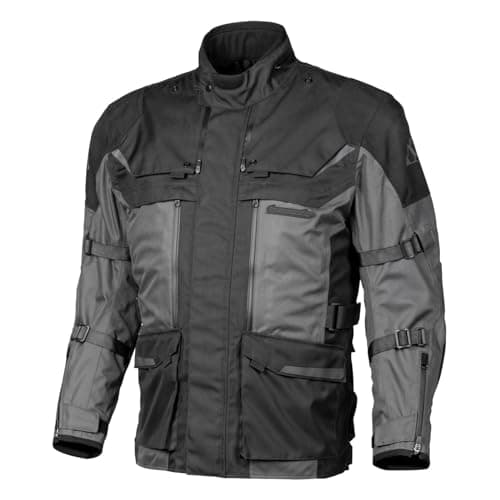
Tourmaster Tourmaster Mariner Waterproof
Tourmaster Mariner Waterproof

The only jacket here built on a laminate rather than a drop-in liner, which is the construction that matters when cold rain lasts for hours — the membrane is bonded to the outer fabric so the shell cannot soak up water and chill you through. CE Level 2 shoulders and elbows, and a zip-out full-sleeve thermal liner.

Best winter jacket overall
8.7
$239.99Amazon
02
Alpinestars Alpinestars Andes V4 Drystar
Alpinestars Andes V4 Drystar

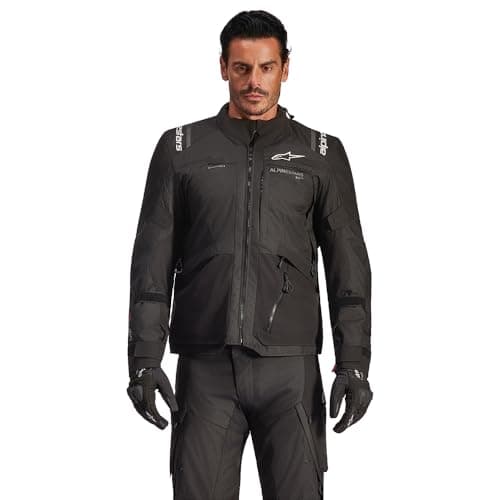
The do-everything adventure-touring jacket. A waterproof Drystar membrane, a removable thermal liner and CE Level 1 Nucleon Flex Plus armor make it a genuine three-season shell that handles a downpour without a second thought.

Best all-season / touring
8.9
$329.95Amazon
03
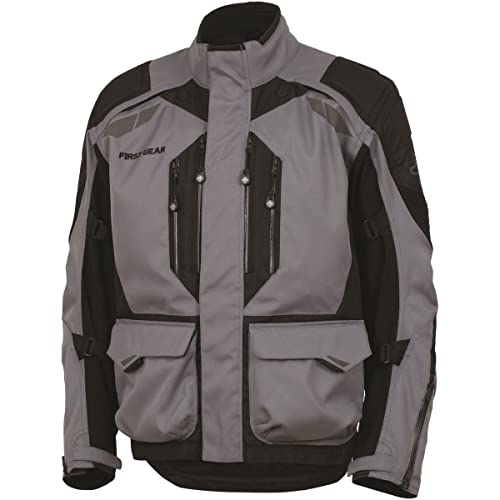
Firstgear Firstgear Kilimanjaro 2.0
Firstgear Kilimanjaro 2.0

The best armor-per-dollar here. Firstgear puts SAS-TEC CE Level 2 protection at the shoulders, elbows and back in the box at a mid-range price — then publishes nothing at all about what the shell itself is rated to.

Best CE Level 2 armor for the money
8.6
$293.59Amazon
04
Firstgear Firstgear Kathmandu 2.0
Firstgear Kathmandu 2.0

The best armor package on the page, and the only one here that publishes the back protector's own standard: SAS-TEC CE Level 2 at the shoulders, elbows and back, with the spine piece certified to EN 1621-2:2014, behind a Sympatex waterproof membrane.

Best armored waterproof
8.5
$214.97Amazon
05
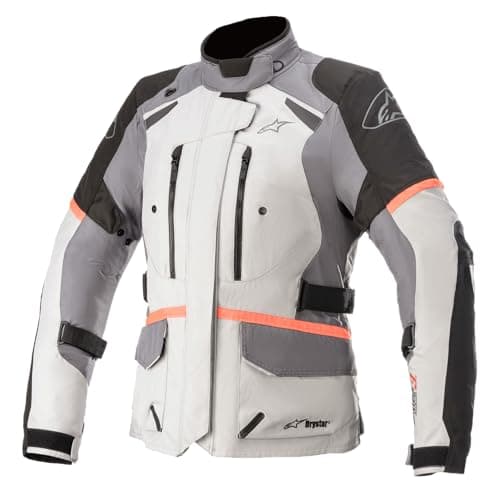
Alpinestars Alpinestars Stella Andes V3 Drystar
Alpinestars Stella Andes V3 Drystar

A women's-cut version of the jacket that wins most of our all-season rankings: a fixed Drystar membrane with taped seams, a removable long-sleeve thermal liner and Nucleon Flex Plus CE Level 1 armor. The cut is the point — armor that sits where your shoulders actually are protects better than armor in an approximately right place.

Best women's winter jacket (closeout)
8.6
$239.94Amazon
06
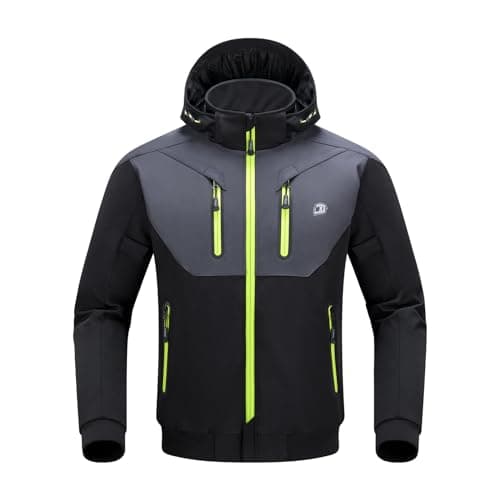
BORLENI BORLENI JK007 Winter
BORLENI JK007 Winter

The budget pick, and the only jacket on this page under a hundred dollars that states a garment class at all: the listing names EN 17092-4 Class A with CE2 armor and a detachable thermal liner. Ranked last because the claim in the listing title is the entire documentation.

Cheapest stated garment class
6.8
$99.99Amazon

#ad · Live prices from the Amazon Product API, as of November 19, 2026. Where we have no verified live price we show none — we would rather leave a gap than print a number that has rotted.

In detail

The picks, in full

01
Tourmaster Tourmaster Mariner Waterproof

Best winter jacket overall

Tourmaster Mariner Waterproof

450D Cordura laminate shellCE EN 1621-1 L2 shoulder/elbowZip-out full-sleeve thermal linerTaped, seam-sealed
8.7/10

The only jacket here built on a laminate rather than a drop-in liner, which is the construction that matters when cold rain lasts for hours — the membrane is bonded to the outer fabric so the shell cannot soak up water and chill you through. CE Level 2 shoulders and elbows, and a zip-out full-sleeve thermal liner.

Cold-weather range
9.4
Waterproofing
9.6
Armor
8.6
Certification
7.4
Value
8.4

Pros

  • A waterproof/breathable laminate, not a drop liner — the outer fabric does not wet out and go cold on a long wet ride
  • Shoulder and elbow armor published as CE certified to EN 1621-1 Level 2, the higher of the two limb levels
  • 1680 denier reinforcement at the elbows and lower arms over a 450 denier Cordura polyester base
  • Taped seam-sealed construction, large zip-open chest and back vents, and an 8 in jacket-to-pant zipper for a matched pant

Cons

  • Back protection is a removable EVA pad, not certified armor — budget for a real back protector
  • Tourmaster publishes no EN 17092 garment class, so the shell's abrasion rating is unstated
  • A laminate costs more than a drop-liner jacket of the same weight, and it ventilates less well in summer

Don't buy this if…

…you want one jacket for July as well as January — a laminate winter shell is the wrong tool in heat, and a mesh jacket with a liner is the cheaper two-jacket answer.

$239.99View on Amazon

Price as of November 19, 2026. Prices change — Amazon's is the one that counts.

#ad · we may earn a commission from this link to Tourmaster Mariner Waterproof

02
Alpinestars Alpinestars Andes V4 Drystar

Best all-season / touring

Alpinestars Andes V4 Drystar

EN 17092 Class A garmentWaterproof DrystarRemovable thermal linerNucleon Flex Plus CE L1
8.9/10

The do-everything adventure-touring jacket. A waterproof Drystar membrane, a removable thermal liner and CE Level 1 Nucleon Flex Plus armor make it a genuine three-season shell that handles a downpour without a second thought.

Protection
8.6
Weather range
9.4
Comfort/fit
8.6
Features
9
Value
8.6

Pros

  • Waterproof Drystar membrane keeps you dry in real rain
  • Removable thermal liner extends it into cold weather
  • Alpinestars publishes the garment class: CE-certified to EN 17092 as an A Class garment, with Nucleon Flex Plus CE Level 1 shoulder and elbow armor
  • Direct vent openings plus pockets for an optional Nucleon Plasma chest and back protector, and it is Tech-Air ready

Cons

  • Heavier and warmer than a mesh jacket in peak summer
  • Roomy adventure cut
  • The chest and back protector pockets ship empty - budget for the inserts separately

Don't buy this if…

…you only ride in hot, dry weather — a mesh jacket will be cooler and cheaper.

$329.95View on Amazon

Price as of November 19, 2026. Prices change — Amazon's is the one that counts.

#ad · we may earn a commission from this link to Alpinestars Andes V4 Drystar

03
Firstgear Firstgear Kilimanjaro 2.0

Best CE Level 2 armor for the money

Firstgear Kilimanjaro 2.0

SAS-TEC CE Level 2, all three pointsRemovable waterproof linerIntake + exhaust zip ventsHeated-gear wiring loops
8.6/10

The best armor-per-dollar here. Firstgear puts SAS-TEC CE Level 2 protection at the shoulders, elbows and back in the box at a mid-range price — then publishes nothing at all about what the shell itself is rated to.

Protection
8.6
Weather range
8.6
Comfort/fit
8.4
Features
8.6
Value
8.8

Pros

  • SAS-TEC CE Level 2 protection panels at the shoulders, elbows and back, all included
  • Removable waterproof liner plus intake and exhaust zip vents give it a genuinely wide weather band
  • Internal loops and wiring routing for Firstgear heated gear, which few jackets at this price bother with
  • Adjustable armor pockets let you move the protectors to where your body actually is

Cons

  • Firstgear publishes no EN 17092 garment class, so the shell's abrasion rating is simply unstated
  • Drop-liner waterproofing — the outer shell soaks through and gets heavy in sustained rain
  • No published denier for the outer fabric either; the armor is the documented part, not the textile

Don't buy this if…

…you want a published garment class on the label — Klim and Alpinestars state theirs and Firstgear does not.

$293.59View on Amazon

Price as of November 19, 2026. Prices change — Amazon's is the one that counts.

#ad · we may earn a commission from this link to Firstgear Kilimanjaro 2.0

04
Firstgear Firstgear Kathmandu 2.0

Best armored waterproof

Firstgear Kathmandu 2.0

SAS-TEC CE L2 shoulder/elbow/backBack protector to EN 1621-2:2014Sympatex membraneRemovable waterproof liner
8.5/10

The best armor package on the page, and the only one here that publishes the back protector's own standard: SAS-TEC CE Level 2 at the shoulders, elbows and back, with the spine piece certified to EN 1621-2:2014, behind a Sympatex waterproof membrane.

Armor
9.4
Waterproofing
8.4
Certification
7.6
Versatility
8.2
Value
8.8

Pros

  • A CE Level 2 back protector in the box, published against EN 1621-2:2014 rather than left as an upsell — the limb protectors are Level 2 to EN 1621-1:2012
  • Sympatex membrane for breathable waterproofing, with intake and exhaust zip vents at the shoulder and chest
  • Adjustable armor pockets, so the protectors can be moved onto your actual shoulder and elbow points
  • Front and rear cargo dry pockets and a long jacket-to-pant connection zipper

Cons

  • Drop-liner waterproofing — the liner is the removable part, so the outer shell is what wets out first
  • Firstgear publishes no EN 17092 garment class and no shell denier, so the fabric's abrasion performance is unstated
  • No thermal liner in the box; the cold-weather answer here is the heated gear it wires for

Don't buy this if…

…you want a published abrasion class — the Alpinestars pair are the ones with EN 17092 numbers on the label.

$214.97View on Amazon

Price as of November 19, 2026. Prices change — Amazon's is the one that counts.

#ad · we may earn a commission from this link to Firstgear Kathmandu 2.0

05
Alpinestars Alpinestars Stella Andes V3 Drystar

Best women's winter jacket (closeout)

Alpinestars Stella Andes V3 Drystar

Fixed Drystar membrane, taped seamsRemovable long-sleeve thermal linerNucleon Flex Plus CE L1 (EN 1621-1:2012)Women's cut
8.6/10

A women's-cut version of the jacket that wins most of our all-season rankings: a fixed Drystar membrane with taped seams, a removable long-sleeve thermal liner and Nucleon Flex Plus CE Level 1 armor. The cut is the point — armor that sits where your shoulders actually are protects better than armor in an approximately right place.

Cold-weather range
8.8
Waterproofing
9
Fit
9.2
Armor
7.8
Value
8.4

Pros

  • A genuine women's pattern rather than a small men's jacket, so the shoulder and elbow armor lands in the right place
  • Fixed Drystar membrane with taped seams — the waterproofing is part of the shell, not a liner you have to remember to zip in
  • Removable long-sleeve thermal liner, so the same jacket covers autumn and spring
  • Nucleon Flex Plus shoulder and elbow protectors published as CE Level 1 to EN 1621-1:2012

Cons

  • This is the V3 generation, which Alpinestars has moved on from — stock is closeout stock, so colors and sizes will thin out and a size you want may simply vanish
  • The back protector is a separate purchase — Alpinestars lists the Nucleon Plasma (Level 2) or KR-CELLi (Level 1) as optional upgrades, and the pocket ships empty
  • Retailer listings quote the garment class against 'prEN 17092', the draft designation, rather than the published standard — treat the A class as the makers' figure, not a verified label
  • A fixed membrane cannot be removed for hot weather the way the Halo's can

Don't buy this if…

…you need a certified back protector in the box — the Tourmaster and the Joe Rocket both ship more back protection than this does, though neither is cut for a woman.

$239.94View on Amazon

$299.9520% off

Price as of November 19, 2026. Prices change — Amazon's is the one that counts.

#ad · we may earn a commission from this link to Alpinestars Stella Andes V3 Drystar

06
BORLENI BORLENI JK007 Winter

Cheapest stated garment class

BORLENI JK007 Winter

EN 17092-4 Class A (listing claim)CE2 armor (listing claim)Detachable thermal linerModel JK007
6.8/10

The budget pick, and the only jacket on this page under a hundred dollars that states a garment class at all: the listing names EN 17092-4 Class A with CE2 armor and a detachable thermal liner. Ranked last because the claim in the listing title is the entire documentation.

Value
9
Cold-weather range
7.6
Certification
5.8
Armor
6.4
Published specs
5.2

Pros

  • States a specific garment class — EN 17092-4 Class A — which most jackets at this price do not state at all
  • Detachable thermal liner, so it is not a single-season purchase
  • Costs roughly a third of the branded picks above, which for a new rider is the difference between a riding jacket and a hoodie

Cons

  • No notified body number, no downloadable certificate and no maker spec sheet — there is nothing to check the Class A claim against
  • Class A is the LOWEST of the three EN 17092 abrasion classes; the claim, even taken at face value, is the entry rung
  • The hood is a liability at speed — it catches air, it is noisy, and a riding jacket does not need one

Don't buy this if…

…you can reach the Tourmaster Transition — similar money buys CE Level 2 shoulder and elbow armor from a brand with a US dealer network and a published spec sheet.

$99.99View on Amazon

Price as of November 19, 2026. Prices change — Amazon's is the one that counts.

#ad · we may earn a commission from this link to BORLENI JK007 Winter

Laminate or drop liner: the one construction question

In a laminate, the membrane is bonded to the back of the outer textile, so the two wet out as one surface — which is to say they do not. Water beads and runs off, the jacket stays the weight it started at, and the wind has nothing damp to blow through. In a drop liner, the membrane is a separate layer hung inside the shell. You stay dry, which is what the marketing claims, but the outer fabric is now a soaked sponge sitting outside your insulation, and it will pull heat out of you for as long as it stays wet.

Laminates cost more and breathe less in heat, which is exactly why they are a winter specification rather than a universal one. If you ride a cold, wet commute every day, the laminate is worth the money. If winter for you means a dry 50°F and the occasional shower, a drop-liner jacket with a good thermal liner does the job for less. Our waterproof jacket ranking goes further into how each membrane type behaves.

The thermal liner has to come out

A jacket with sewn-in insulation is a jacket you can wear for about six weeks a year. A removable liner buys you three seasons out of one shell, and it does something less obvious and more useful: it lets you tune for effort. Riding is a low-exertion activity, so you can genuinely be too warm at a standstill and cold at speed in the same jacket, and the fix is taking a layer out rather than opening a vent into the wind.

Check two things about the liner. First, does it have full sleeves? A vest-only thermal liner leaves your arms — the most wind-exposed part of you — with one layer of textile. The Tourmaster Mariner publishes a zip-out full-sleeve thermal liner; the two Firstgears here publish a removable waterproof liner and no thermal liner at all, which is the single biggest reason they rank below it. Second, does the liner wear on its own? A liner that works as an off-bike jacket is one less thing to pack.

Size for the layers, not for the jacket

This is where winter jacket sizing goes wrong. A winter shell has to close comfortably over a thermal liner and a base layer, and possibly over a heated liner too — but it must not be so big that the armor floats. Armor that has moved off your shoulder point is decoration.

Try it on wearing what you will actually ride in, then check the armor placement with your arms forward on imaginary bars rather than hanging at your sides. The shoulder protector should sit on the ball of the shoulder and the elbow protector over the point of the elbow in the riding position. Adjustable armor pockets, which Firstgear publishes on the Kilimanjaro, are worth more in winter than they are in summer for exactly this reason. Our jacket fit guide has the full checks, and how to layer under gear covers what goes underneath. If a back protector is going in that stack too — and it should be — wearing a back protector under your jacket covers whether to use an insert in the jacket's own pocket or a harness protector that holds position regardless of what the shell does.

Wind sealing: collar, cuffs, hem, and the gap at your waist

Insulation only works if the air inside it stays still. Four places leak, in order of how much they will ruin a ride:

  • The collar. Cold air down the neck is the fastest way to lose core warmth, and it is the gap a balaclava or neck tube closes better than any jacket feature. See our balaclava and neck warmer picks.
  • The cuffs. They have to seal over or under a winter glove gauntlet without a channel for air. Decide which way round you want it before you buy both.
  • The hem. On a naked bike, air comes up from below and inflates the jacket. A drawcord or waist adjuster is not a styling feature in November.
  • The waist gap.The band of skin that appears between jacket and trousers when you lean forward. A jacket-to-pant zipper — the Mariner publishes an 8 in one — closes it, which is why winter riders end up buying matched pants. See riding pants.

What the garment class tells you, and what it does not

EN 17092 rates the whole garment for abrasion, tear and seam strength in three classes: AAA, AA and A, strongest to weakest. It is separate from EN 1621-1, which rates the armor pads. A jacket can have excellent CE Level 2 armor in a shell with no published class at all — that describes three of the six picks here — and that is not automatically bad, it is simply unknown.

Be properly skeptical about class claims in listing titles. The budget pick on this page states "EN 17092-4 Class A" in its product title and publishes no certificate, notified body number or test report anywhere. Class A is also the lowest of the three classes, so the claim at face value is the entry rung, not a boast. When a maker publishes a class AND the documents, say so; when it publishes the words only, say that instead.

When to stop buying jacket and start buying heat

There is a point where adding insulation stops working, and it arrives sooner than most riders expect. Passive insulation can only retain the heat your body makes, and sitting still on a bike you are making very little. Below roughly 40°F at highway speed, the sensible money goes on a heated liner or heated gripsrather than a thicker shell — you are adding heat rather than slowing its loss, and a 12V liner under a windproof jacket beats any amount of loft.

Firstgear publishes internal wiring loops on the Kilimanjaro specifically for this. If you expect to go that way, buy the shell with the routing. Then read best heated jacket liners, heated gloves and when it is too cold to ride — which is the honest page about where the limit actually is.

What we would actually buy

For a cold wet commute: the Tourmaster Mariner, because a laminate is the right construction and the CE Level 2 limb armor is included. For an all-season jacket with real paperwork behind it: the Alpinestars Andes V4 Drystar, the only pick here with a published EN 17092 class. For maximum armor per dollar: Firstgear Kilimanjaro 2.0, with CE Level 2 at all three points and heated-gear wiring in the shell. For a woman's cut: Stella Andes V3. And if the budget is genuinely tight, buy the cheapest jacket here with real armor rather than the one with the longest claim — then put the saved money into a back protector, which is where it does more good.
How we picked

We don't test helmets. Here's what we do instead.

Everyone in this category says they tested twenty helmets. We haven't tested any — and we say so. What we do instead: compile the published DOT, ECE 22.06 and Snell certifications, the manufacturer's fit, weight and shell specs, the CE armor levels, and reputable published reviews, then score each pick against a published rubric. The scores are judgments from documented research — not measurements we took, because we do not run a lab and we are not going to pretend we do. Every certification and spec claim traces to a source we name and link.

Questions

Frequently asked

Do I need a dedicated winter motorcycle jacket?
Not necessarily — you need a windproof, waterproof shell with a removable thermal liner, and a good three-season jacket already is that. What a dedicated winter jacket adds is usually laminate construction and better wind sealing. If you already own a waterproof touring jacket, the cheaper upgrade path is a heated liner inside it rather than a second shell. See heated jacket liners.
What temperature can you ride in with a winter motorcycle jacket?
With a good shell, a full-sleeve thermal liner and a merino base layer, most riders are comfortable down to around 45–50°F at highway speed, and tolerable rather than comfortable into the low 40s. Below that, passive insulation runs out and heated gear is the answer, because a stationary rider generates very little heat to retain. Our too-cold-to-ride guide covers the other limits, including tire temperature and road salt.
Laminate or drop liner for winter?
Laminate, if the budget reaches and your winter includes sustained rain. The membrane is bonded to the outer fabric so the shell never soaks up water, which is what actually makes you cold — wet textile conducts heat away from you far faster than dry textile does. A drop liner keeps you dry but carries a wet, heavy outer shell outside your insulation. In a dry cold winter the difference barely matters.
Should I size up a winter jacket for layers?
Size up enough to close comfortably over a thermal liner and a base layer, and no further. Too much room and the shoulder and elbow armor drifts off the joints it is there to cover, which costs you protection to buy comfort. Try the jacket on in your actual layers, then check armor placement with your arms out in the riding position — see how a jacket should fit.
Is a heated jacket liner better than a thicker jacket?
Below about 40°F at speed, yes, and it is not close. Insulation can only retain heat you produce, and a rider produces very little. A 12V heated liner adds heat, works at any speed and takes up less bulk than the insulation it replaces — so you keep the armor where it belongs. The trade is a wiring job and a cable to unplug.
Does a winter jacket need a back protector?
Every jacket does, and most ship without one. Of the picks here, several publish a back-protector pocket and a removable foam pad rather than certified armor, which is not the same thing — EVA foam has no EN 1621-2 level. Check what is actually in the pocket and budget for a certified insert; our back protector ranking covers inserts and standalone harnesses.

Keep reading

Receipts

Sources

We do not run a testing lab, and we do not pretend to. Our picks are built from published certifications, manufacturer spec sheets, the standards documents themselves, and reputable published reviews — named and linked above. Where we could not verify something, we say so on the page rather than quietly leaving it out. Read our full method.