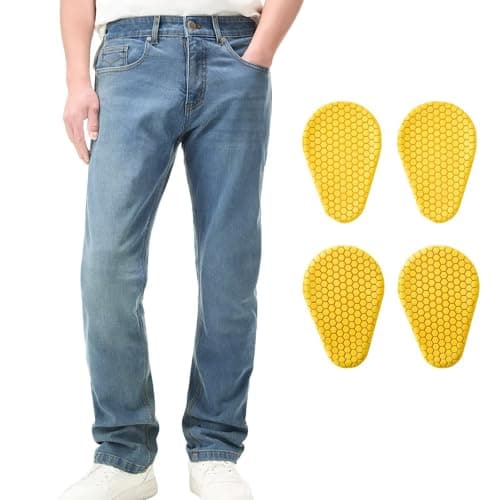
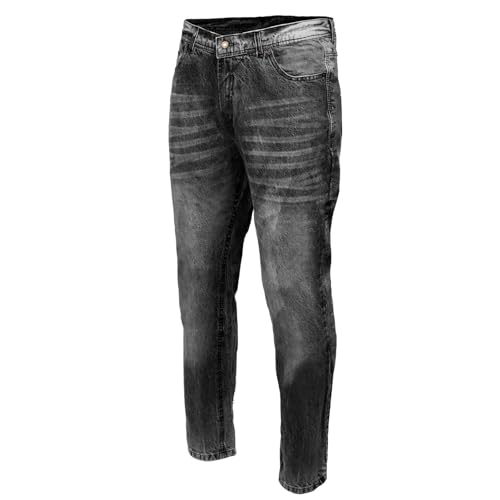
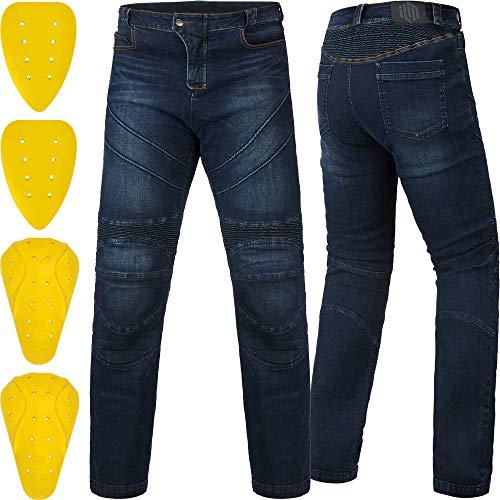
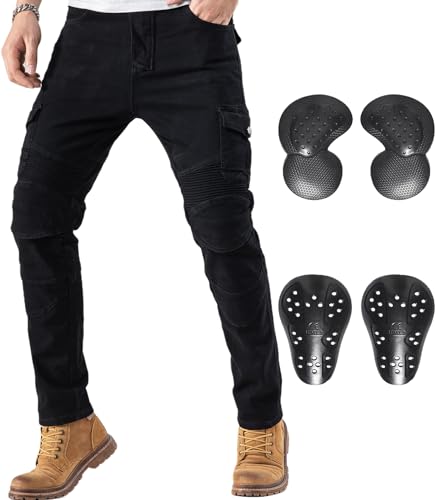
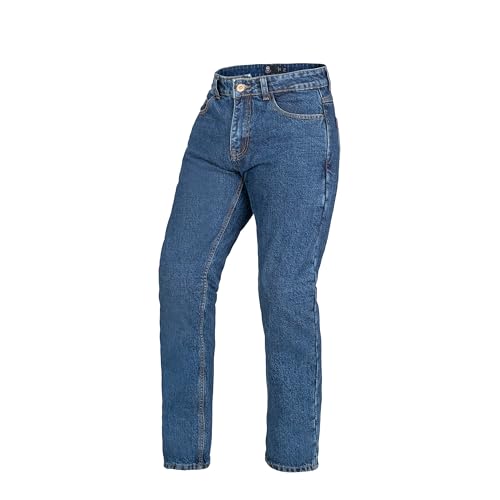
The best riding jean under $150 is the Wicked Stock— the only pick here whose listings consistently state a level for the armor rather than just the letters CE: four CE Level 2 protectors at both hips and both knees, in a published 13 oz cotton denim with aramid reinforcement described through the seat and down the sides to the knee. The budget pick is the CTBQiTom, the cheapest thing on this page by a wide margin and the only one that names the armor standard by number — EN 1621-1 — while naming no aramid at all, which is why it ranks last. We have not tested any of these and nobody who will sell you a pair has either. Every armor claim, aramid description and denim weight below is a published specification from the maker or the retailer, flagged where the sources disagree, and every price in the table is a live Amazon figure stamped with the date it was pulled.
The price ceiling, checked
As of November 19, 2026, all 5 of the jeans below with a verified live price were listed at or under $150. Amazon prices move daily; the comparison table below always shows the current figure, and shows nothing where we have no verified price.
The fact that defines this entire price band
Under $150, no riding jean publishes an EN 17092 garment class. Not one of the five here, and not one we rejected. That is the number that rates the denim— its abrasion resistance, seam strength, tear strength and impact-cut resistance, measured zone by zone on the finished trouser — and in this band it does not exist.
That is the clean dividing line between this page and our main riding jeans ranking, which ranks the whole market on published class and is won by the only jean we could find that publishes Class AAA. Every jean on that page that carries a class sits above this ceiling. Crossing $150 is not a style upgrade, it is the price of entry to a rated garment, and we would rather say that plainly than pretend the gap is about stitching.
So what is left to rank? Three things, all published, all checkable:
The armor level. A stated EN 1621-1 Level 2beats Level 1, which beats a bare "CE armor" claim with no level at all. Level 2 means the protector transmitted a lower peak force in the standard's impact test than Level 1 permits — a pass/fail threshold rather than a score. Watch for the second half of the question, which is where cheap jeans quietly differ: how many protectors, and whether the hips ship with pads or just with pockets. CE armor levels explained has the detail.
Where the aramid sits.Almost every jean in this band says "aramid lined" or "Kevlar reinforced" and almost none publishes a coverage map. The difference between a panel at the seat and a lining that runs the seat, the hips and down the outside of both legs to the knee is the difference between a jean that helps and a jean that has a label. Where the sources disagree on coverage — and on two of these five they do — the card says so instead of picking the flattering version.
The denim weight.Ounces per square yard: 10.5 oz is a light stretch denim, 13 oz is middleweight, 14.5 oz is approaching workwear. It is a weak proxy and we will say so — weight is not an abrasion rating — but a heavier denim has more material to give up before the road reaches skin, and a maker who prints the number has told you something a maker who prints nothing has not.
Why riding jeans at all
Because legs are the largest unprotected area on the average street rider, and the reason is not ignorance. Textile overpants are a nuisance to put on and take off at both ends of a commute, so they live in the garage. A jean you can wear to work is a jean you are actually wearing when it matters — and at this price the comparison is not "jean versus certified pant", it is jean versus ordinary cotton, which abrades through in roughly the time it takes to read this sentence.
That is the honest case for this page. It is not that the cheapest jean here is as good as a classed one. It is that four CE protectors and an aramid panel on your legs today beats a Class AA jean you are still saving for. Our riding pants ranking covers the textile overpant alternative properly, including the ones that do publish a class.
The two things that go wrong with cheap riding jeans
The knee armor ends up in the wrong place.This is the single most common failure and it is a sizing problem, not a product problem. A protector that sits above or below the kneecap when you are seated on the bike protects your thigh or your shin. Riding jeans are cut with the knee pocket deliberately high, because your knee moves forward and up when you sit on a motorcycle — which means the jeans will look wrong standing in front of a mirror and correct on the bike. Sit on the bike in them before you cut the tags off, and buy the inseam rather than guessing it: two of these five are sold in waist-and-inseam variants for exactly this reason. Our back protector sizing guide covers the same principle for the spine.
The armor gets cooked.Soft CE protectors are temperature-sensitive visco-elastic foams. A hot wash and a tumble dry will change their behavior, and nothing on the garment will tell you it happened. Take the pads out, wash the jeans cold and inside out, and line dry — which is exactly what the one maker here that publishes care instructions tells you to do.
Pick by the gap you are closing
The most protection stated: the Wicked Stock. Four CE Level 2 pads, a published 13 oz denim and aramid through the seat and sides to the knee. It is the most complete answer in the band and it still publishes no class, which the card says in its cons. Reviews disagree about whether the aramid lining is full-leg or zoned; the maker publishes no map, so we are not going to resolve it for them.
The widest armor coverage with inseam choice: the ILM PJN1.Removable CE armor at four points — ILM states Level 2 at the knees and Level 1 at the hips, which is a higher stated knee level than several certified jeans supply as standard — plus aramid reinforcement at the hips, thighs and knees and a choice of inseam lengths. It is the pick for a rider whose legs are not a standard 32 inches, because the inseam is what decides where the knee armor lands.
The most specific aramid placement: the Milwaukee MDM5001 Metro. Aramid named at the knees, the hips and the seat, removable CE knee armor, a 32-inch standard inseam and published care instructions. It ranks third rather than first for one honest reason: retailer listings disagree on whether hip armor is included or whether the hip pockets ship empty. Ask before you buy, and read the listing you are actually buying from.
Lightest denim for hot weather: the ILM BJN01.10.5 oz stretch denim with an aramid lining, detachable CE knee and hip armor and YKK zip hardware. The lighter fabric is genuinely more wearable in heat, and genuinely gives up abrasion material to get there — that is the trade, stated rather than hidden. The "CE 2" in its Amazon title is not backed by a published level anywhere we could find, and the card says so.
The cheapest pads-on-your-legs option: the CTBQiTom. Four detachable EN 1621-1 honeycomb protectors at the knees and hips, cold-flex so they do not go stiff in winter, at a price that makes buying them a non-decision. No aramid is named and no denim weight is published, which is why it is last: this is impact protection in an ordinary pair of jeans. That is still a real step up from ordinary jeans with nothing in them, and a real step down from everything above it.
What to spend the next money on, in order
First, the class.If you can get to an EN 17092-classed jean, do that before anything else on this list — it is the only upgrade that changes what the garment itself has proved. Our armored jeans ranking starts where this page stops, and EN 17092 explained is what the class actually measures.
Second, upgrade the armor you were given.Soft pads are a slot-in part. A Level 2 knee insert costs a fraction of the jeans, fits most of these pockets and is the cheapest real protection upgrade in motorcycling — our knee armor ranking covers the inserts and the strap-on guards, and motorcycle body armor covers the rest of the set.
Third, close the next gap.If the jeans are the only armored thing you own, the jacket matters more than better jeans do — our best jackets under $200 is built on the same published-evidence logic as this page, for the same reason: under that ceiling, no jacket publishes a class either. Gloves are the cheapest remaining gap, and the sportbike glove ranking is where the published EN 13594 levels actually live.
The one thing not to compromise on
Hip armor.Knee pads are the pads everyone buys and hips are the joint that takes the first hit in the most common low-side. Three of these five state hip protectors included; on the other two it is either unclear or sold separately. If the jeans you want ship with empty hip pockets, buy the pads in the same order — otherwise they never get bought. And read do you need a back protector before you decide the legs were the priority: the spine is the one item on the list that does not heal.