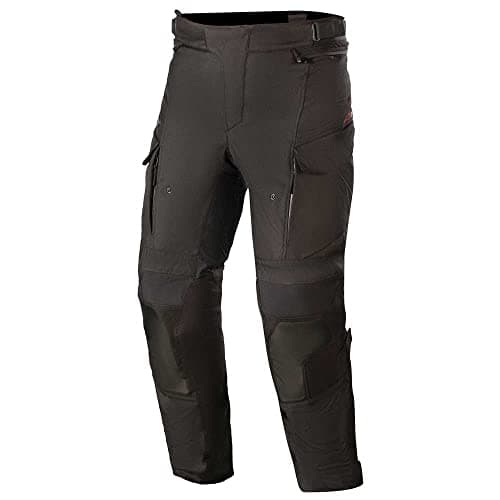
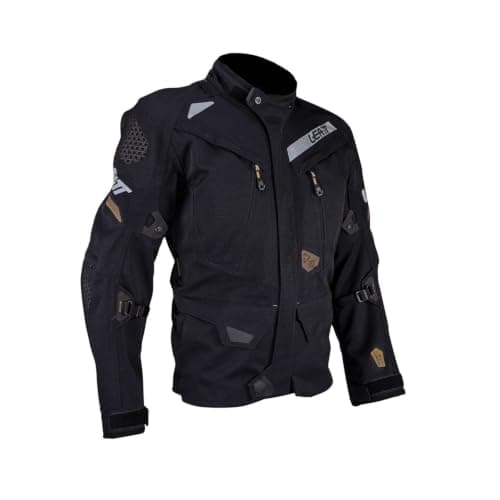
If you need riding gear above an XL, the piece to start with is the Leatt ADV DriTour 7.5 jacket, which Leatt runs from S to 5XLwhile publishing a Class AA garment rating and certified armor in every zone — the rare case where the big size and the good specification are the same garment. For legwear the Alpinestars Andes v3 Drystar Pants publish the widest range we can find anywhere on this site, 2XS through 6XL, with an adjustable waist and removable bib braces on top of that. This page is for the rider who has been told "that runs large" by a shop that does not stock a 3XL.
The problem is structural, not cosmetic. Motorcycle gear is cut for a narrow European sizing envelope, armor sits in fixed pockets that assume a particular shoulder-to-elbow distance, and the top of a size run is where makers quietly stop publishing anything. So the method on this page is simple and deliberately narrow: we rank only gear whose maker publishes the size run in writing, and we name the published range on every pick. Where a maker publishes nothing above XL, the piece is not here, however good it is. That rules out most of the catalog, which is the honest answer rather than a disappointing one.
Two things are worth saying before the picks. First, "big" and "tall" are different problems and a lot of gear solves one and not the other — a 4XL jacket with standard sleeves is useless to a 6'5" rider with a 36" sleeve, which is why published tall variants and long inseams matter as much as the letter on the label. Second, going up a size to get the chest or waist to close is the worst way to fit riding gear, because the armor moves with the garment: a jacket two sizes too big puts the elbow pad on your forearm. Our jacket fit guide has the displacement checks, and they matter more here than anywhere.
What to look for at the top of a size run
- A published size range, in writing, from the maker. Not "runs large" from a retailer, not a reviewer's guess. Alpinestars publishes 2XS–6XL for the Andes v3 pant; Tourmaster publishes S–5XL with tall options for the Ridgecrest. Those sentences are the whole reason those two are here.
- A tall or long variant, separately published. Tourmaster lists tall options on the jacket and FLY publishes Regular and Tall inseams on the Terra Trek pant. A tall variant lengthens the torso and the sleeve or leg without widening the whole garment, which is exactly what a tall-and-not-wide rider needs.
- Adjustment range, not just a bigger number. An adjustable waist with real stretch panels, bib braces, and a tab-and-buckle cuff cover a wider range of bodies than any single size can. The Andes v3 publishes an adjustable waist with buckle and stretch material plus removable bib braces — the most adjustment of any legwear on this site.
- Adjustable armor pockets. A longer limb needs the pad to move. The Andes v3 publishes adjustable knee protector pockets and the REV'IT! Sand 5 publishes a three-position knee mount; a fixed pocket is a compromise you cannot fix later. Our CE armor levels guide explains why a pad off the joint is a pad doing nothing.
- Gear that admits a liner. If you size to fit over a thermal liner in January, the same garment is loose in July. Every pick here carries a removable liner, so one size covers both.
We have not tried any of this gear on, and we are not going to tell you a 4XL fits like a 4XL. The published size runs, garment classes and armor levels below come from the makers' own documentation, which is linked at the bottom, and the scores are judgments against our published rubric— not measurements we took.
The short answer
| # | Product | Best for | Score | Price |
|---|
| 01 | Leatt ADV DriTour 7.5The most complete published spec sheet on this page at a mid-range price: Class AA to EN 17092-3, Level 2 armor at the back, shoulders, elbows and chest all in the box, and a direct-laminated shell Leatt actually rates, at 35,000 mm waterproof and 15,000 g breathable. | Best adventure jacket overall | | $461.30·Amazon |
| 02 | Alpinestars Andes v3 Drystar PantsThe all-season commuter answer and the widest size range on the page: CE approved to EN 17092 as a Class A garment, with Bio Flex CE Level 1 knee armor certified to EN 1621-1:2012. The hip pockets ship empty. | Best all-season commuter pant | | $215.94·Amazon |
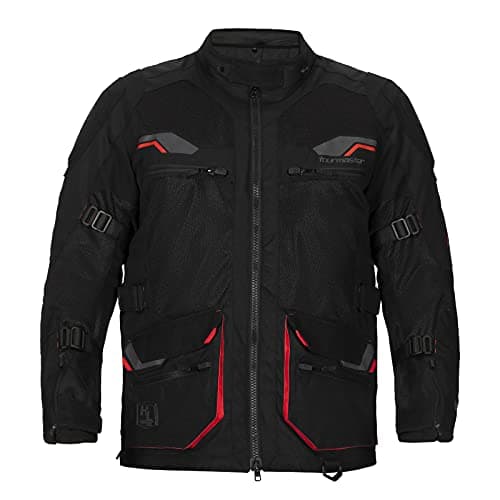
| 03 | Tourmaster Ridgecrest Mesh AdventureThe hot-weather adventure jacket at the lowest price here: a 600 denier and hi-flow mesh shell with 1000 denier honeycomb ripstop on the shoulders, elbows and forearms, EN 1621-1 Level 2 shoulder and elbow armor, and a waterproof zip-out liner plus a thermal vest. Tourmaster publishes no garment class. | Best budget / hot-weather adventure jacket | | $239.99·Amazon |
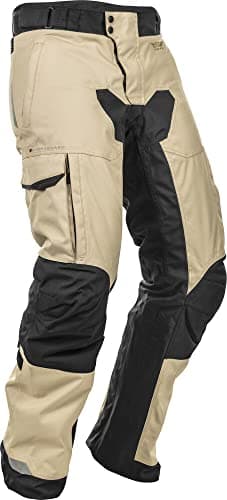
| 04 | FLY Racing Terra Trek PantsThe toughest published fabric on the page - 600D polyester with 1680D at the critical wear areas - on the pant most built for days that leave the pavement. It publishes no garment class, and the hip pockets are empty. | Best for off-road days | | $250.17·Amazon |
#ad · Live prices from the Amazon Product API, as of October 19, 2026. Where we have no verified live price we show none — we would rather leave a gap than print a number that has rotted.
In detail
Best adventure jacket overall
EN 17092-3 Class AALevel 2 back, shoulder, elbow + chest includedLaminate 35,000 mm / 15,000 g5-year warranty
The most complete published spec sheet on this page at a mid-range price: Class AA to EN 17092-3, Level 2 armor at the back, shoulders, elbows and chest all in the box, and a direct-laminated shell Leatt actually rates, at 35,000 mm waterproof and 15,000 g breathable.
- Protection
- 9.6
- Weather range
- 9
- Comfort/fit
- 8.2
- Features
- 8.6
- Value
- 8.8
Pros
- +Leatt publishes the garment class, the standard and its year: EN 17092-3-2020, Class AA tested and certified
- +The only jacket here that ships with certified armor in every zone, including a Level 2 chest protector to EN 1621-3, and a Level 2 back protector to EN 1621-2
- +The only maker here to put a number on the membrane: 35,000 mm waterproof and 15,000 g/m2 breathable, on a direct-laminated ripstop shell with Superfabric on the impact zones
- +Removable thermal liner that Leatt says works as a standalone insulated jacket, and a 5-year warranty, the longest on the page
Cons
- −Leatt lists ventilation zippers on the chest and a mesh back panel, a shorter vent list than KLIM's, so it is not the jacket for the hottest days
- −Leatt publishes no fabric denier for the main shell, only the laminate construction and the Superfabric overlays
- −A laminate cannot be unzipped out on a hot afternoon; heat is managed by vents and by removing the liner
- −No hydration compartment is listed, where KLIM and REV'IT! both name one
Don't buy this if…
…most of your adventure riding is in real heat: the Tourmaster is a mesh shell and the REV'IT! can shed its waterproof layer entirely.
Best all-season commuter pant
EN 17092 Class A garmentBio Flex CE L1 knee to EN 1621-1:2012Hip armor optional, sold separatelyDrystar membrane + removable thermal liner
The all-season commuter answer and the widest size range on the page: CE approved to EN 17092 as a Class A garment, with Bio Flex CE Level 1 knee armor certified to EN 1621-1:2012. The hip pockets ship empty.
- Published certification
- 8.8
- Armor included
- 7.4
- Weather range
- 8.8
- Fit/adjustment
- 9.2
- Value
- 8.6
Pros
- +Alpinestars publishes the class and the armor standard by number: CE approved to EN17092 as a Class A garment, with Bio Flex knee armor certified CE Level 1 to EN1621-1:2012
- +Waterproof Drystar breathable membrane with a removable full-length thermal liner, so one pant covers most of the year
- +Direct ventilation ports on the thighs plus zippered thigh vents - Alpinestars describes them as giving high levels of airflow
- +Adjustable, removable bib braces, an adjustable waist with buckle and stretch material, and adjustable knee protector pockets
- +The widest published size range here, 2XS through 6XL, and a women's Stella version on the same platform
Cons
- −Class A is the lower road class: the REV'IT! on this page publishes Class AA, which is a stronger abrasion result
- −Hip armor is not included - the pant has pockets for optional Bio Flex hip armor, sold separately, so budget for it
- −Knee armor is CE Level 1 where the REV'IT! and Tourmaster both publish Level 2 at the knee
- −Alpinestars does not publish a fabric denier for the shell, only the membrane and the garment class
Don't buy this if…
…you want the hip protector in the box: Alpinestars ships empty hip pockets here and the REV'IT! does not.
Best budget / hot-weather adventure jacket
No EN 17092 class publishedEN 1621-1 Level 2 shoulder/elbow600D + mesh, 1000D ripstop overlaysReissa WP liner + thermal vest
The hot-weather adventure jacket at the lowest price here: a 600 denier and hi-flow mesh shell with 1000 denier honeycomb ripstop on the shoulders, elbows and forearms, EN 1621-1 Level 2 shoulder and elbow armor, and a waterproof zip-out liner plus a thermal vest. Tourmaster publishes no garment class.
- Protection
- 7.2
- Weather range
- 7.6
- Comfort/fit
- 8.4
- Features
- 8
- Value
- 9
Pros
- +Tourmaster names the armor standard and level: shoulder and elbow armor impact tested and CE certified to EN 1621-1 Level 2
- +Publishes the fabric: abrasion-resistant 600 denier polyester and hi-flow mesh, with 1000 denier honeycomb nylon ripstop on the shoulders, elbows and forearms
- +A mesh shell that still carries a Reissa breathable waterproof zip-out liner and a zip-out thermal vest, so it is not a summer-only purchase
- +Four-year workmanship and materials warranty, sizes S to 5XL with tall options, at the lowest price on the page
Cons
- −No EN 17092 garment class published, so the mesh shell's abrasion rating is simply unstated
- −The back protection is a removable EVA foam pad, not a certified protector; budget for a real back protector
- −Mesh with a liner inside is a rain jacket under a sieve: the shell itself never keeps water out
- −Tourmaster's own store listed it out of stock when we checked, so the Amazon size run may thin out
Don't buy this if…
…your adventure riding is cold, wet or fast: this is a hot-weather shell with an uncertified back pad, and the three jackets above it publish a garment class.
Best for off-road days
600D shell, 1680D at wear areasCE Level 1 knee to EN 1621-1Hydraguard waterproof shellRegular and Tall inseams
The toughest published fabric on the page - 600D polyester with 1680D at the critical wear areas - on the pant most built for days that leave the pavement. It publishes no garment class, and the hip pockets are empty.
- Published certification
- 6.8
- Armor included
- 7.2
- Weather range
- 8.6
- Fit/adjustment
- 8.6
- Value
- 8
Pros
- +The only maker here that publishes a reinforced denier: a 600D polyester outer shell with fully taped seams and 1680D at critical wear areas
- +CE Level 1 removable knee armor that FLY states conforms to the EN 1621-1 standard
- +Hydraguard weatherproof construction described as windproof, waterproof and breathable, with a removable thermal liner
- +Intake and exhaust vents rather than intakes alone, plus hook-and-loop leg cuffs, waist adjusters and belt loops
- +Sold in Regular and Tall inseams from US 30 to 40, which is more length choice than most pants at this price
Cons
- −FLY publishes no EN 17092 garment class, so the shell's abrasion performance is undocumented - deniers are a yarn weight, not a test result
- −Hip armor is not included: the pant has hip armor pockets compatible with FLY Barricade CE armor, sold separately
- −Knee armor is CE Level 1, the lower of the two levels
- −Cut and weight are built around adventure riding, so it is more pant than a city commute needs
Don't buy this if…
…all your riding is on pavement: the Alpinestars Andes v3 publishes a garment class, costs less and is a better commuter.
The published size ranges, side by side
This table is the page. Every entry is the maker's own published range, and the gaps are real gaps — where a maker does not publish a tall variant, we do not assume one exists.
| Piece | Published size run | Tall / long option | Published class | Best for |
|---|
| Leatt ADV DriTour 7.5 (jacket) | S–5XL | Not published | EN 17092-3 Class AA | The best-specified jacket that reaches 5XL |
| Alpinestars Andes v3 Drystar (pants) | 2XS–6XL | Not published; adjustable waist + bib braces | EN 17092 Class A | Widest published range on the site |
| Tourmaster Ridgecrest Mesh (jacket) | S–5XL | Tall options published | None published | Hot weather, lowest price, tall sizes |
| FLY Racing Terra Trek (pants) | S–4XL | Regular and Tall inseams published | None published | Long legs and off-road days |
Why the big sizes cluster in adventure gear
Look at the four picks and the pattern is obvious: they are all adventure or touring pieces. That is not a coincidence and it is not something we engineered. Adventure gear is cut loose on purpose — it has to fit over a thermal liner, it is worn standing on the pegs, and its buyers skew older and heavier than the sportbike market. Sport and race gear is cut to a body shape and the size run stops accordingly. So if you are above an XL and you ride a cruiser or a naked bike, the practical answer is usually to buy the adventure-cut garment and ignore the styling, because the alternative is a size that does not exist. Our adventure jacket ranking and riding pants ranking have the full field, ranked on protection rather than on size.
The pieces where size is a solved problem — and where it is not
Helmetsare the good news. Head shape, not body size, decides a helmet, and several makers publish size runs well past the middle of the bell curve — HJC publishes XS–3XL on the i10, for instance. If your head is the problem rather than your chest, go straight to our helmets for big heads ranking and our helmet size chart, and measure before you shop.
Glovesare mixed. Most makers stop at 3XL and almost none publish a hand circumference for the top sizes, so the practical approach is to measure your palm and read the maker's own chart — our glove sizing guide has the measurement and what to do when you are between sizes.
Boots are the hardest. Not one motorcycle boot brand publishes a width fitting the way a dress-shoe maker does, and a wide foot or a large calf has no spec to shop on. What some boots do publish is an adjustment range: a wide-entry Velcro aperture or a hook-and-loop top closure covers far more calf sizes than a fixed shaft with buckles. Our boot fit guide covers how to measure and what cannot be fixed after purchase, and the Alpinestars Toucan on our adventure boot ranking exists partly for its calf adjustment range.
Armor is a separate purchase, and here it usually has to be
Two of the four picks ship with protection we would not call finished: the Tourmaster puts a removable EVA foam pad in the back pocket rather than a certified protector, and both the Andes v3 and the Terra Trek pants ship with empty hip pockets. That is normal across the market and it is worse at the top of a size run, because an insert sized for a medium garment does not cover proportionally as much of a larger back. Buy the certified back protector separately, in the largest size the maker publishes for your garment, and check the published coverage area rather than the level alone — our back protector ranking and back protector sizing guide cover both, and the sizing guide is the more useful of the two here.
Three fit checks that matter more above XL
- Shoulder pad position with your arms forward. Sit on the bike, reach for the bars, and have someone check the shoulder armor is still on the point of your shoulder. On an oversized jacket it slides inboard toward your collarbone, which is the single most common armor failure in gear bought a size up.
- Elbow pad position with your elbows bent. Same test, same failure mode. A longer arm and a standard sleeve puts the pad above the joint; a tall variant fixes it and a bigger size does not.
- Waist and jacket-to-pant connection. A jacket that rides up exposes your back whatever the garment class says. The Tourmaster Mariner pant publishes full-circumference and 8-inch connection zippers for exactly this reason; if your jacket and pants cannot be joined, overlap them generously.
For the rest of the kit in order of priority, our motorcycle gear checklist and beginner gear guide cover what to buy first; this page only answers the question of what exists in your size.
How we picked
Everyone in this category says they tested twenty helmets. We haven't tested any — and we say so. What we do instead: compile the published DOT, ECE 22.06 and Snell certifications, the manufacturer's fit, weight and shell specs, the CE armor levels, and reputable published reviews, then score each pick against a published rubric. The scores are judgments from documented research — not measurements we took, because we do not run a lab and we are not going to pretend we do. Every certification and spec claim traces to a source we name and link.
Questions
What is the largest size motorcycle jacket you can actually buy?+
Among the gear we rank, 5XL is the practical ceiling for a jacket — both the Leatt ADV DriTour 7.5 and the Tourmaster Ridgecrest Mesh publish S–5XL, and Tourmaster adds tall options. Legwear goes further: Alpinestars publishes 2XS–6XL on the Andes v3 Drystar pant. Above that the market thins out to unbranded gear that publishes no armor level or garment class, which we do not rank.
Should I just buy a size up if nothing fits?+
No — not as a protection decision. Armor sits in fixed pockets, so a garment two sizes too large puts the shoulder pad on your collarbone and the elbow pad on your forearm. Look for a tall variant, an adjustable waist, or adjustable armor pockets instead. A slightly loose garment with the pads in the right place beats a bigger one with the pads in the wrong place.
What is the difference between a 4XL and a tall size?+
A bigger letter adds girth — chest, waist, hip. A tall variant adds length in the torso, the sleeve or the inseam without widening the garment. A 6'4" rider of average build needs the tall, not the 4XL. FLY publishes Regular and Tall inseams on the Terra Trek pant and Tourmaster publishes tall jacket options; most makers publish neither, which is why we name it on every pick.
Do bigger riders need bigger armor?+
Bigger coverage, yes. EN 1621 protectors come in area codes (Type A and Type B) and the level says nothing about how much of you the pad covers, so a Level 2 insert sized for a medium jacket leaves proportionally more of a larger back exposed. Read the published coverage dimensions, not just the level — our
back protector sizing guide works through it.
Why is most big-size riding gear adventure gear?+
Because adventure gear is cut loose by design — it has to fit over liners and be worn standing on the pegs — and because its buyers skew older and larger than the sport market. Sport and race gear is cut to a body shape and the size run stops sooner. If you ride a cruiser above an XL, buying the adventure cut and ignoring the styling is usually the only way to get a published garment class in your size.
Are there big-size options for women riders?+
Fewer, and the published ranges are narrower. Alpinestars does publish a women's Stella version of the Andes v3 pant on the same platform, which is the best-documented option we have found. Our
gear for women guide and
women's jacket ranking cover what is available, and we say plainly where the size run runs out.
Receipts
We do not run a testing lab, and we do not pretend to. Our picks are built from published certifications, manufacturer spec sheets, the standards documents themselves, and reputable published reviews — named and linked above. Where we could not verify something, we say so on the page rather than quietly leaving it out. Read our full method.