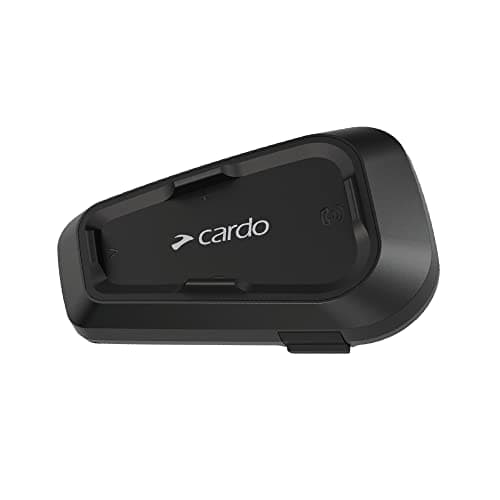
The best motorcycle intercom under $200 is the Cardo Spirit HD— Cardo's entry unit and the cheapest way into natural-voice control, with 40 mm HD speakers, a built-in FM radio with six presets and over-the-air firmware updates. It is the pick for a solo rider or a two-up pair who want the best sound and the least fiddling in this band. The budget pick is the Lexin G2P, the cheapest intercom we would actually recommend, which still manages a group-intercom mode and an FM radio. We have not tested any of these units. Every talk-time figure, range figure and speaker size here comes from the maker's published specification, and every price in the table is a live Amazon number stamped with the date it was pulled.
The price ceiling, checked
As of November 23, 2026, all 5 of the intercoms below with a verified live price were listed at or under $200. Amazon prices move daily; the comparison table below always shows the current figure, and shows nothing where we have no verified price.
The one fact that shapes this whole page
Mesh is the feature you cannot buy under $200.Every mesh unit we rank — the Cardo Packtalk line on DMC, the Sena 50 series on Mesh — sits well above this ceiling, and the gap is not a few dollars. So a page about intercoms under $200 is a page about Bluetooth intercoms, and the honest thing to do is say that in the first screen rather than let a reader discover it after buying.
Why it matters practically: Bluetooth intercom is a chain of paired connections. It works well for one rider plus a passenger, acceptably for two or three bikes riding close together, and badly for a group that keeps changing shape — drop out of range and you reconnect manually, and the rider in the middle is carrying the link. Mesh is a self-healing network that re-forms on its own, which is exactly why it costs what it costs. Bluetooth vs mesh is the full explanation, and it is worth five minutes before you spend anything here.
How this ranking was built
First, published talk time. This is the spec that decides whether the unit survives a real day, and it is published by every maker on this page, which makes it checkable. The spread here is enormous: the Sena 3S Plus publishes 20 hours of Bluetooth intercom talk time and the Sena SMH5 publishes 7. That is the difference between charging once a week and charging every evening.
Second, speaker diameter and what the maker says about tuning.A 40 mm driver moves more air than a 32 mm one, and under a helmet at highway speed that is most of what “good sound” means. The Spirit HD publishes 40 mm HD speakers; the budget units mostly publish no driver size at all, and where that is the case the card says so rather than guessing.
Third, rider count and published range. Both of these are hard ceilings rather than quality scores. Four of these five are capped at two riders, and their published ranges run from 400 m to 600 m — line-of-sight figures that fall apart around a bend or behind a truck, which is true of every Bluetooth intercom at any price.
Then glove-blind controls, then value.The control you can find at 60 mph with a winter glove on is worth more than a feature list. Sena's jog dial is the benchmark for this and two picks here have one; Cardo answers with natural-voice control, which works without touching the unit at all.
What $200 buys, and what it does not
It buys rider-to-rider talk, phone calls, GPS prompts, music and FM radio. All five units here do all of that. It buys a waterproof or water-resistant body and it buys natural-voice control, which used to be a flagship feature and is now on the cheapest Cardo. On the 3S Plus it buys a battery that genuinely does not run out on a weekend.
What it does not buy is mesh, as above. It does not buy big-group riding: four of the five are two-rider units, so if you ride in a pack of six, nothing on this page is your answer and the mesh ranking is. It does not buy JBL or Harman Kardon tuning, which starts above this cap. And it does not buy cross-brand group compatibility— a universal Bluetooth pair between two brands usually works for a two-way intercom and usually loses the features each brand built on top, which is covered in can you pair Cardo and Sena.
Which one, for whom
Best sound and least fiddling: the Cardo Spirit HD. For the solo rider or a two-up pair who want the unit to disappear. 40 mm HD speakers, natural-voice control, FM radio with six presets, over-the-air updates and a two-year warranty. The hard limits are published and real: two riders maximum and 600 m of range, so it is not a group tool.
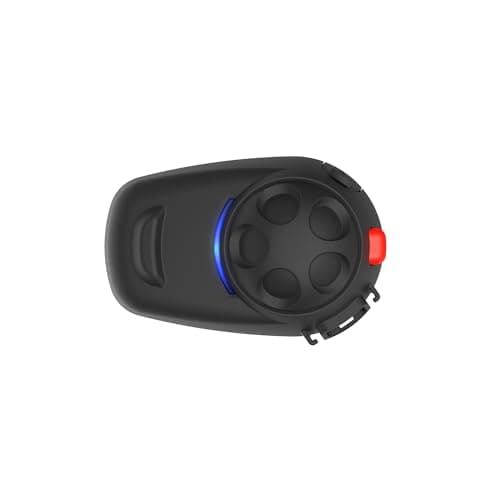
Longest battery in the band: the Sena 3S Plus Universal. For the commuter who charges things on Sunday and does not want to think about it again. Bluetooth 5.1, 20 hours of published talk time in a tiny body, two riders, 400 m. Range is the trade, and for a solo commuter who mostly wants music and navigation it simply does not matter.
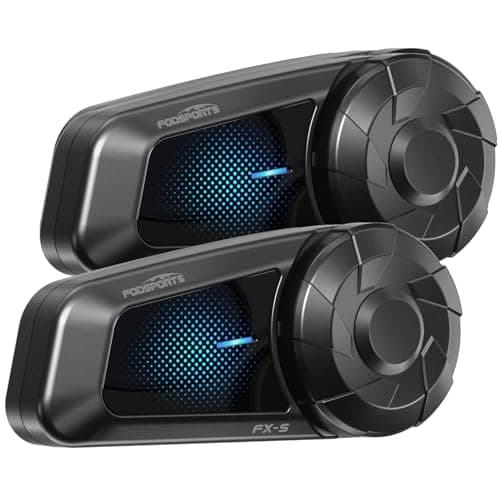
The all-rounder for two bikes: the Fodsports FX-S. For a pair of riders trying comms for the first time without committing real money. Bluetooth 5.x, two-way intercom, waterproof, long standby. It does the core jobs for a fraction of flagship money, and our budget intercom ranking puts it against the same field without a price cap.
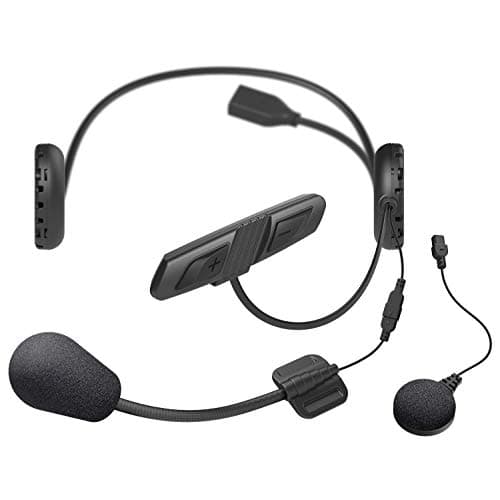
Half helmets and open faces: the Sena SMH5. For the cruiser rider whose helmet has no cheek pad to hide a speaker in. A compact jog-dial unit on Bluetooth 5.1 with a choice of slim boom or wired microphone, which is the detail that makes it work where other units do not. Seven hours of talk time is the shortest here, so plan a charge. Our half-helmet intercom ranking is the deeper version of this question.
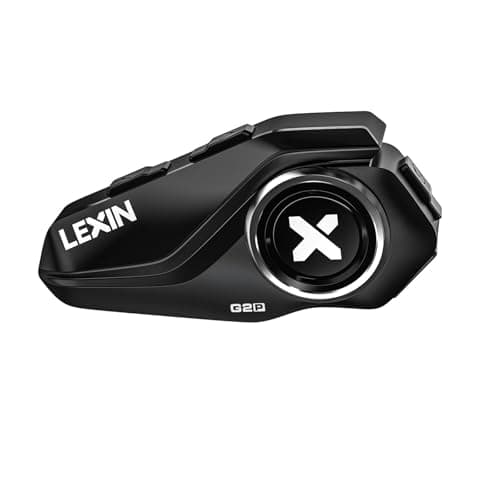
The cheapest intercom we would recommend: the Lexin G2P.For a first headset, or a spare to lend a riding buddy so they can join the conversation. Bluetooth, a group-intercom mode, FM radio and a waterproof body at the bottom of the price range. It punches above its price and it is still the least unit here — buy it to find out whether you want comms at all, then upgrade knowing what you actually use.
Spend the saved money on fitting it properly
Speaker position is worth more than speaker size. A 40 mm driver sitting an inch behind your ear canal sounds worse than a 32 mm driver centered on it. Our installation guidecovers finding the pocket, shimming the speakers forward and routing the microphone so wind does not sit on it — which is the single biggest improvement available to anything on this page, and it is free.
Then buy earplugs, not a louder unit.The usual reason an intercom sounds bad is that the helmet is loud, and riders respond by raising the volume until speech disappears into distortion. Filtered plugs lower the noise floor and leave speech audible — see our earplug ranking and how to reduce helmet wind noise. If the group is the real problem rather than the budget, read the main intercom ranking before you buy twice.