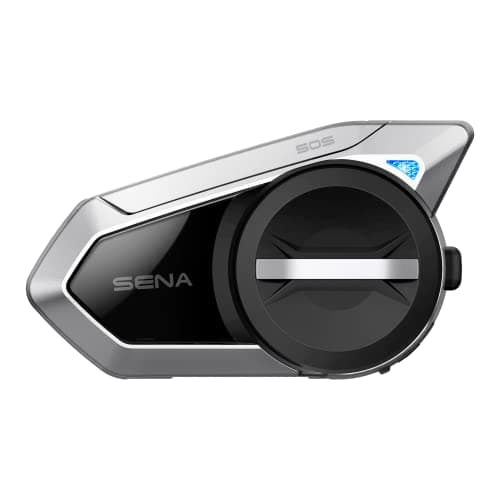
The best Sena intercom is the 50S— Mesh 2.0 plus standard Bluetooth, Harman Kardon speakers and Sena's jog dial, which is still the best glove-blind control in the category. It is the pick for a rider who rides in groups and wants the Sena network rather than Cardo's. The budget pick is the Sena SMH5, the cheapest unit in the lineup and the easiest thing here to make work on a half helmet, where there is no cheek pocket to hide a speaker in. We have not tested any of these units. Every talk-time figure, range figure and speaker claim here is Sena's own published specification, and the prices in the table are live Amazon figures with an as-of date.
The line that runs through the whole lineup
Sena sells two different kinds of intercom and they are not interchangeable. The 50 series runs Mesh: a self-healing network that re-forms on its own when riders drop out of range, which is what you want for a group. Everything below it runs standard Bluetooth: a chain of paired connections that works beautifully for two and awkwardly for six.
Two consequences, both worth knowing before you buy. First, Sena Mesh and Cardo DMC are separate, incompatible networks— if your riding group is already on Cardo, buy Cardo, and we would rather say that than sell you the wrong brand. Second, the generation matters: Sena has moved the flagship slot to the 60S and its Mesh 3.0, so the 50S here is the previous generation, which is exactly why its price is interesting. Our Bluetooth vs mesh page explains the mechanism, and Cardo vs Sena is the brand-level argument.
How the lineup was ranked
First, Mesh or Bluetooth, and which Mesh.A mesh unit outranks a Bluetooth unit here because it does something the Bluetooth unit cannot do at all, not because it sounds better. Where a model's mesh is a superseded generation, the card says which generation it is rather than leaving “Mesh” to do the work.
Second, published talk time.Sena publishes this across the range, which makes it the most checkable spec in the lineup — and the spread is startling. The 3S Plus publishes 20 hours; the 50R publishes 13 hours of Bluetooth talk; the SMH5 publishes 7. Battery is the spec riders notice on day two and never think about in the shop.
Third, speakers and tuning. The 50 series carries Harman Kardon speakers and microphones, which is a real step up and is the clearest difference between the top and the middle of this lineup. The cheaper units publish no tuning partner, and their cards say so.
Then the control interface, then value. Sena's jog dial is the reason long-time Sena riders stay with Sena: it is a wheel you can find and turn with a winter glove on, where a flush three-button panel needs you to look. Three picks here have the dial and two do not, and that is a bigger day-to-day difference than most spec gaps on this page.
The two models to know about that are not ranked here
We rank what has a verified Amazon listing we can price, so two names are worth stating plainly rather than quietly omitting. The 60Sis Sena's current flagship and runs Mesh 3.0— if you want the newest Sena network, that is the model, and the 50S on this page is its predecessor. The Outrush 2 is Sena's current built-in-comms helmet, which replaces the Outrush R and adds Mesh 3.0 and an ECE approval alongside DOT. Neither is ranked here. Both exist, and a lineup page that pretended otherwise would be useless.
Which Sena, for whom
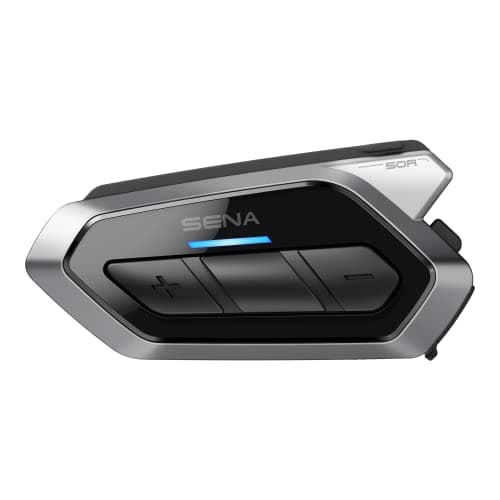
Group riding, best controls: the Sena 50S. For the rider who leads or rides in a group of more than two and wants the Sena network. Mesh 2.0 plus Bluetooth, Harman Kardon speakers, the jog dial, fast USB-C charging. Two honest notes on its card: Sena and Cardo mesh do not interconnect, and the 50S is the generation before the 60S.
Same network, lowest profile: the Sena 50R.For the rider who hates a pod standing off the shell — a sport rider tucked in, or anyone who has caught a unit on a jacket collar. Mesh Intercom 3.0 and Harman Kardon sound in a slim three-button body. You trade about three hours of published talk time and the jog dial for the slimmer housing. The 50S vs 50R comparison is the head-to-head.
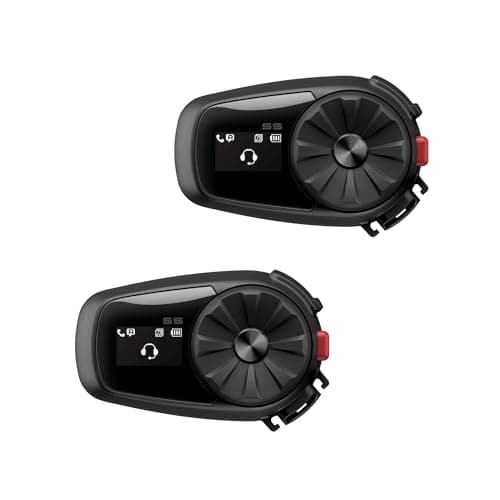
Two riders, sensible money: the Sena 5S Dual Pack.For a rider and passenger, or two friends who always ride together. Standard Bluetooth — no mesh — clean sound, the jog dial, and it ships as a pair so you are set out of the box rather than buying two units at retail.
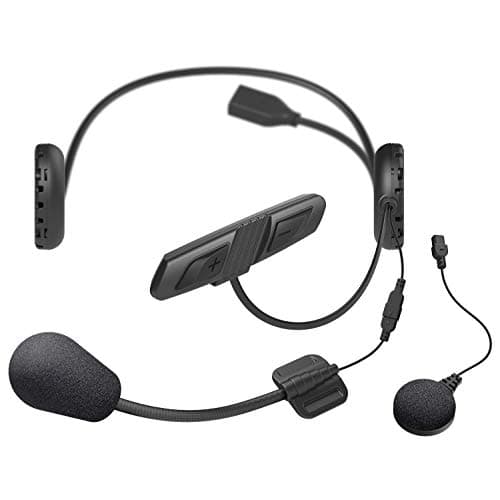
Longest battery in the lineup: the Sena 3S Plus Universal. For the solo commuter who wants music, navigation and calls and resents charging things. Bluetooth 5.1, 20 hours of published talk time, two riders, 400 m. Range is the trade and for commuting it is the right trade.
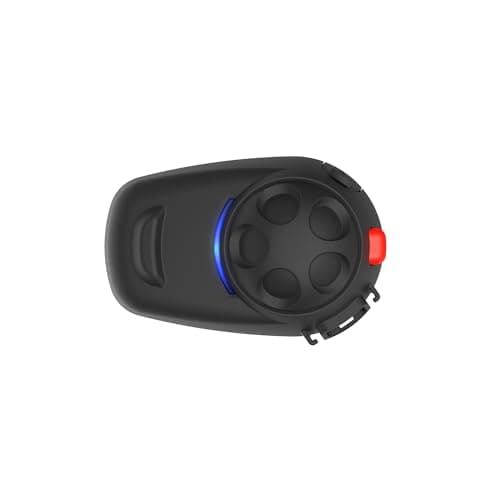
Half helmets and the cheapest way in: the Sena SMH5.For the cruiser rider on an open-face or half helmet. A compact jog-dial unit on Bluetooth 5.1 with a choice of slim boom or wired microphone — the boom is the detail that makes an open-face install work. Seven hours of talk time is the shortest here. Our half-helmet ranking covers that install problem properly.
Three things that decide this more than the model
What your group already rides.Mesh does not cross brands. If three of the four bikes you ride with run Cardo DMC, the correct Sena is no Sena — see Cardo Packtalk alternatives for the mirror image of this page, and can you pair Cardo and Sena for what survives a cross-brand pairing.
Your helmet. A full-face with deep speaker pockets will take anything here; a half helmet needs the boom-mic unit, and a modular needs the microphone routed so the chin bar does not drag on it. The installation guide covers all three cases, and getting the speakers centered on your ear canals is worth more than two steps up this lineup.
Whether you want music or conversation. If it is mostly music, the Harman Kardon units are a genuine upgrade and our music ranking says why. If it is mostly a passenger, spend less: the rider-and-passenger ranking is built on exactly that case, and the sub-$200 ranking covers the price-capped version.