Skip to content
LID & LEATHER

The lid · Helmets

Your First Helmet, by Head Shape and Budget

Two variables decide your first helmet and neither of them is brand: the shape of your head, and what you can spend. Work out both, then read only the row that applies to you.

By Stephen V.Updated How we research
#ad

We earn a commission when you buy through our Amazon links, at no extra cost to you. It never affects our rankings, and we say so when the cheaper gear is the better buy. How this works.

Most first-helmet advice gives you a ranked list and hopes your head matches the winner. That is backwards. A $700 helmet in the wrong internal shape is less comfortable, noisier and — because you will wear it less and adjust it more — practically less safe than a $150 helmet that fits your skull. So this page is built as a matrix: find your head shape, find your budget, read that one cell.

Everything here is certified. Every helmet on this page carries DOT FMVSS No. 218 at minimum, and several add ECE 22.06 or Snell M2020. We do not rank helmets on styling and we have not crash-tested any of them — we compile the published certifications, shell specs and fit data and score against a published rubric. What certification actually means is in DOT vs ECE vs Snell.

This page is a companion to two others rather than a replacement for either. Our best beginner helmets ranking ranks the field on merit; our helmet head shapes guide explains the shapes in depth. This one crosses the two so you get a single answer instead of two lists.

The short answer

Quick picks

#ProductBest forScorePrice
01
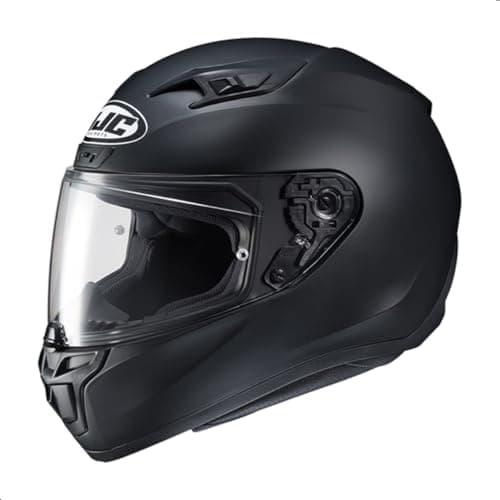
HJC HJC i10
HJC i10

The value benchmark. DOT and Snell M2020 certified, a Pinlock-ready shield in the box, and a genuinely quiet, comfortable lid for roughly a fifth of a flagship's price.

Best value overall
8.5
$129.99Amazon
02
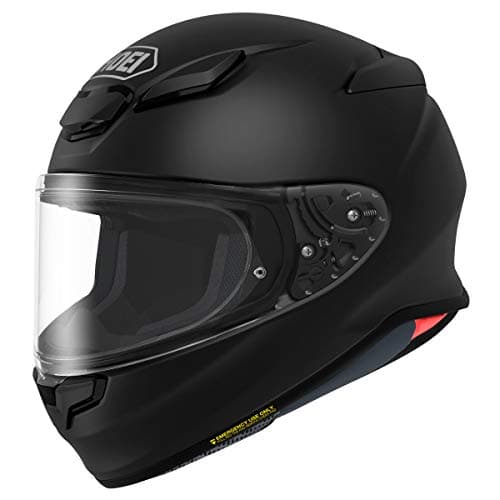
Shoei Shoei RF-1400
Shoei RF-1400

The reference full-face. DOT and Snell M2020 certified, a hand-laid fiberglass composite shell, and a fit-and-finish nobody at this price beats — if it suits your head shape, it is the safe default.

The all-round best
9.1
$541.00Amazon
03
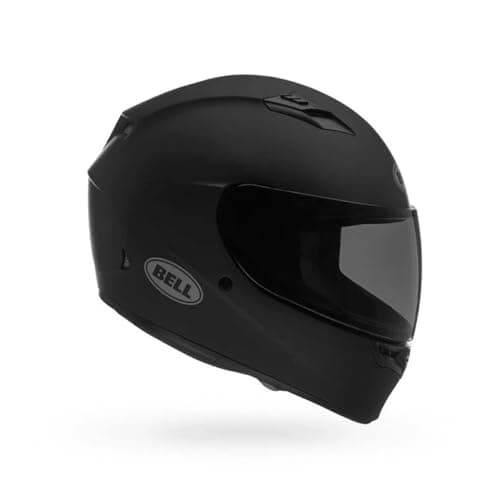
Bell Bell Qualifier
Bell Qualifier

The default budget full-face for good reason: DOT certified, a wide range of sizes and colors, and a click-release shield. It is heavy and a bit loud, but it protects and it fits round heads well.

Budget round-head fit
7.8
$149.95Amazon
04
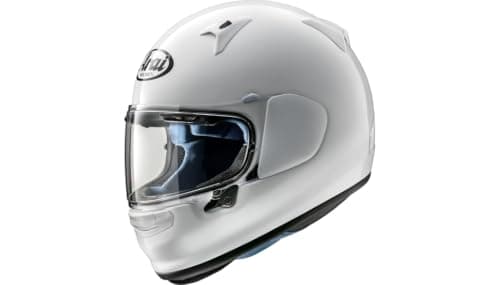
Arai Arai Regent-X
Arai Regent-X

Arai's most accessible full-face, built the Arai way: a hand-laid PB-cLc fiberglass shell with the round-smooth profile Arai argues sheds impact energy better, Snell M2020 and DOT certified.

Most adjustable premium fit
8.7
$626.95Amazon
05
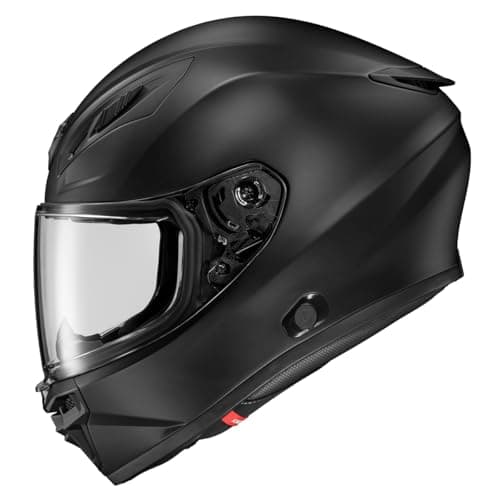
Scorpion Scorpion EXO-R430
Scorpion EXO-R430

A lot of sport helmet for mid-money. DOT and ECE certified with an aero-tuned shell, a drop-down sun visor and Pinlock-ready shield — it punches above its price for commuters and canyon riders.

Best mid-price sport lid
8.4
$184.95Amazon
06
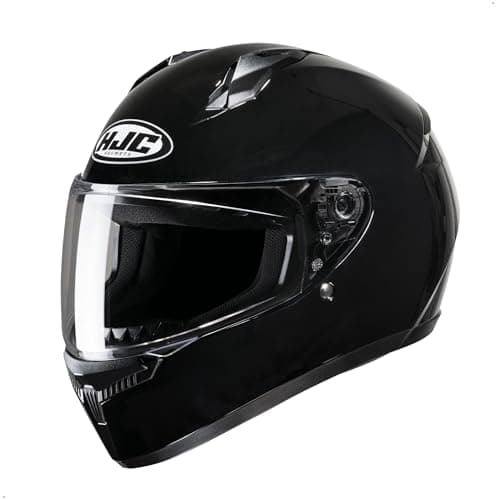
HJC HJC C10
HJC C10

The safest way to spend the least. DOT and ECE certified, light for a budget lid, and simple in the best way — the helmet to buy a new rider who should not skimp on the one piece that matters most.

Cheapest we'd recommend
8.2
$129.99Amazon

#ad · Live prices from the Amazon Product API, as of Sep 7, 2026. Where we have no verified live price we show none — we would rather leave a gap than print a number that has rotted.

In detail

The picks, in full

01
HJC HJC i10

Best value overall

HJC i10

DOT · Snell M2020Polycarbonate shellPinlock-readySizes XS–3XL
8.5/10

The value benchmark. DOT and Snell M2020 certified, a Pinlock-ready shield in the box, and a genuinely quiet, comfortable lid for roughly a fifth of a flagship's price.

Certification
8.6
Shell/weight
7.8
Noise/aero
8
Fit range
8.6
Value
9.6

Pros

  • DOT and Snell M2020 certified at an entry price
  • Comes Pinlock-ready with the pin included, so no fogging for a small add-on
  • Comfortable rounder-to-intermediate fit that suits a lot of heads

Cons

  • Polycarbonate shell is heavier than composites
  • Not the quietest at highway speed

Don't buy this if…

you ride a lot of highway miles and want the lightest, quietest lid available.

$129.99View on Amazon

$169.9924% off

Price as of Sep 7, 2026. Prices change — Amazon's is the one that counts.

#ad · we may earn a commission from this link to HJC i10

02
Shoei Shoei RF-1400

The all-round best

Shoei RF-1400

DOT · Snell M2020AIM+ fiberglass shell~3.7 lb / 1,680 gPinlock included
9.1/10

The reference full-face. DOT and Snell M2020 certified, a hand-laid fiberglass composite shell, and a fit-and-finish nobody at this price beats — if it suits your head shape, it is the safe default.

Certification
9.6
Shell/weight
9.2
Noise/aero
9
Fit range
8.6
Value
8

Pros

  • Both DOT and Snell M2020 certified — a genuinely rigorous pair
  • Multi-ply matrix fiberglass shell in five sizes, so small heads get a small shell
  • Emergency quick-release cheek pads and excellent aero/noise control

Cons

  • Premium price
  • Intermediate-oval fit does not suit round heads

Don't buy this if…

you have a round head shape or a tight budget — a helmet that fits your head beats a prestige badge that does not.

$541.00View on Amazon

Price as of Sep 7, 2026. Prices change — Amazon's is the one that counts.

#ad · we may earn a commission from this link to Shoei RF-1400

03
Bell Bell Qualifier

Budget round-head fit

Bell Qualifier

DOTPolycarbonate shellNutraFog II shieldRound-head friendly
7.8/10

The default budget full-face for good reason: DOT certified, a wide range of sizes and colors, and a click-release shield. It is heavy and a bit loud, but it protects and it fits round heads well.

Certification
7.4
Shell/weight
7
Noise/aero
7.2
Fit range
8.2
Value
9.2

Pros

  • DOT certified at a rock-bottom price
  • Suits rounder head shapes that premium brands often ignore
  • Click-release shield and padded wind collar to cut noise

Cons

  • DOT only, no ECE or Snell
  • Heavy polycarbonate shell
  • Louder than composite lids

Don't buy this if…

you want ECE 22.06 or Snell certification, or the lowest weight — this is a budget-first pick.

$149.95View on Amazon

Price as of Sep 7, 2026. Prices change — Amazon's is the one that counts.

#ad · we may earn a commission from this link to Bell Qualifier

04
Arai Arai Regent-X

Most adjustable premium fit

Arai Regent-X

DOT · Snell M2020PB-cLc laminate shellR75 round shell profile5mm base flare
8.7/10

Arai's most accessible full-face, built the Arai way: a hand-laid PB-cLc fiberglass shell with the round-smooth profile Arai argues sheds impact energy better, Snell M2020 and DOT certified.

Certification
9.4
Shell/weight
8.6
Noise/aero
8.6
Fit range
9
Value
7.6

Pros

  • DOT and Snell M2020 certified with a hand-built PB-cLc laminate shell
  • R75 keeps the outside of the shell round and smooth — Arai's argument for shedding impact energy rather than catching it
  • Peel-away fit pads and the FCS cheek pads let a dealer dial the fit precisely
  • The shell flares 5mm at the base, which is what makes a snug Arai easier to get on and off

Cons

  • Expensive
  • Heavier than the lightest ECE composites
  • Shield changes are fiddlier

Don't buy this if…

you want the lightest possible shell or a simple tool-free shield swap — that's more Shoei's game.

$626.95View on Amazon

Price as of Sep 7, 2026. Prices change — Amazon's is the one that counts.

#ad · we may earn a commission from this link to Arai Regent-X

05
Scorpion Scorpion EXO-R430

Best mid-price sport lid

Scorpion EXO-R430

DOT · ECETCT composite shellDrop-down sun visorPinlock-ready
8.4/10

A lot of sport helmet for mid-money. DOT and ECE certified with an aero-tuned shell, a drop-down sun visor and Pinlock-ready shield — it punches above its price for commuters and canyon riders.

Certification
8.6
Shell/weight
8
Noise/aero
8.2
Fit range
8.2
Value
8.8

Pros

  • DOT and ECE certified in the middle of the price range
  • Built-in drop-down sun visor — a feature usually reserved for pricier lids
  • Aero shell with solid ventilation and a Pinlock-ready face shield

Cons

  • Not the lightest
  • Sportier padding runs firm out of the box

Don't buy this if…

you want a plush touring feel — this leans sporty and firm.

$184.95View on Amazon

Price as of Sep 7, 2026. Prices change — Amazon's is the one that counts.

#ad · we may earn a commission from this link to Scorpion EXO-R430

06
HJC HJC C10

Cheapest we'd recommend

HJC C10

DOT · ECEPolycarbonate shellPinlock-readyLightweight budget
8.2/10

The safest way to spend the least. DOT and ECE certified, light for a budget lid, and simple in the best way — the helmet to buy a new rider who should not skimp on the one piece that matters most.

Certification
8.6
Shell/weight
7.8
Noise/aero
7.4
Fit range
8.2
Value
9.4

Pros

  • DOT and ECE certified at the very bottom of the price range
  • Lighter than most budget lids and Pinlock-ready
  • Easy, forgiving fit that works for first-time buyers

Cons

  • Basic ventilation
  • No sun visor
  • Fewer size/shell options

Don't buy this if…

you want premium quiet, a sun visor or the lightest shell — this is a price pick.

$129.99View on Amazon

Price as of Sep 7, 2026. Prices change — Amazon's is the one that counts.

#ad · we may earn a commission from this link to HJC C10

Step one: measure, then identify your shape

Take a soft tape measure around your head about an inch above your eyebrows, at the widest point, and read the number in centimeters. That gives you a size. It does not give you a shape, and shape is what decides comfort. Full instructions are in our helmet sizing guide and the numbers map to our size chart.

For shape, have someone photograph the top of your head from directly above, or look down at your reflection. There are three usable categories:

Round oval — front-to-back and side-to-side measurements are close. Symptoms of a wrong helmet: pressure on the sides of your head, a gap at your forehead and the back of your skull. Intermediate oval — slightly longer front-to-back than side-to-side. This is the most common shape in the US and most helmets are built for it. Long oval — noticeably longer front-to-back. Symptoms of a wrong helmet: pressure on your forehead and the back of your head, with gaps at the sides.

If you buy a helmet and get a hot spot in one specific place after twenty minutes, that is a shape mismatch, not a break-in issue. Our how a helmet should fit guide describes what correct pressure feels like — even, all over, snug enough that the skin of your forehead moves with the helmet.

If you have a round head

Under $200: the Bell Qualifier. It is on this page specifically because it suits rounder heads, which is a genuinely under-served shape at the budget end. DOT certified, wide size run, and the right answer for a rider whose skull does not get on with the intermediate-oval default.

$200–$400: the HJC i10. HJC's interiors run rounder-to-intermediate than the Japanese premium brands, and the i10 pairs that with both DOT and Snell M2020 certification — an unusually strong certification set at this money, and our overall value pick.

Over $400: the Arai Regent-X. Arai publishes an intermediate-oval interior and then lets a dealer adjust it with pad options — which makes it the most genuinely adjustable premium fit available, and the best premium option for a head that does not match a stock shape. Budget for a fitting session; it is the point of the helmet.

If you have an intermediate-oval head

You have the easiest job, because this is the shape most helmets are designed around.

Under $200: the HJC C10, which is the cheapest helmet we are willing to recommend on this site. It is a certified, sensibly built full-face at the bottom of the market and there is no shame in it being your first lid.

$200–$400: the Scorpion EXO-R430 for a sportier fit and feature set, or again the HJC i10 for the DOT plus Snell M2020 combination. Either is a helmet you can keep for years rather than a stepping stone.

Over $400: the Shoei RF-1400. Both DOT and Snell M2020, a hand-laid fibreglass composite shell in five sizes, and the quietest, best-finished helmet in this group. If your head is intermediate oval and the money is there, this is the default answer and has been for a while.

If you have a long-oval head

This is the shape most likely to be badly served by a shop that only stocks one brand. Long oval means forehead pressure in most helmets, and it means you should be more willing to buy from a retailer with a real returns policy.

Shoei and AGV run toward intermediate/long oval, so the Shoei RF-1400 is a strong starting point at the top of the budget and the AGV K6 S is the light, ECE 22.06 alternative if you want the lightest premium shell. At the lower tiers, be prepared to try several: budget helmets tend to be built around the most common shape, and long oval is not it.

Our intermediate-oval ranking covers the neighbouring shape in detail, and helmets for big heads covers the separate problem of size rather than shape.

What each budget tier actually buys you

Be clear about what you are and are not paying for, because the marketing is not.

Under $200 buys you certification and a helmet that will do its job. What you give up: shell count (one shell padded across many sizes, so it sits higher on a small head), weight, noise, ventilation refinement and finish. None of that is safety. All of it is comfort, and comfort determines whether you wear the helmet on the short ride to the shops.

$200–$400 is where multiple shell sizes, better ventilation, Pinlock-ready shields and sometimes Snell certification appear. For most riders this is the sweet spot and the tier we would push a new rider toward if the money exists.

Over $400 buys composite shells, lower weight, quieter aerodynamics, removable washable liners of better quality and — with Arai and Shoei — a fitting ecosystem that lets a dealer adapt the interior to your head. It does not buy you a higher certification by default; several helmets under $250 carry Snell M2020 while some expensive helmets do not. Our are expensive helmets safer guide takes that question apart properly.

The three mistakes that cost first-time buyers the most

Buying a size too big. A new helmet should feel snug to the point of firm — the cheek pads will compress with use and the fit will loosen. If it is comfortable in the shop, it will be loose in a month. See breaking in a helmet.

Buying on graphics. Graphics cost real money and change nothing about the helmet. A solid-color version of a better helmet beats a graphic version of a worse one, every time, and it is usually the same price.

Buying a used helmet. Do not. You cannot see whether EPS has been compressed by an impact, and a helmet that has been dropped hard or is simply old may look perfect and protect poorly. Our helmet lifespan guide explains what degrades and why the money you save is not worth it.

Once the helmet is sorted, the rest of the kit follows a clear priority order — that is what our beginner gear guide and our $500 full loadout are for.
How we picked

We don't test helmets. Here's what we do instead.

Everyone in this category says they tested twenty helmets. We haven't tested any — and we say so. What we do instead: compile the published DOT, ECE 22.06 and Snell certifications, the manufacturer's fit, weight and shell specs, the CE armor levels, and reputable published reviews, then score each pick against a published rubric. The scores are judgments from documented research — not measurements we took, because we do not run a lab and we are not going to pretend we do. Every certification and spec claim traces to a source we name and link.

Questions

Frequently asked

How do I know my head shape for a motorcycle helmet?
Photograph the top of your head from directly above, or look down at your reflection. Roughly circular is round oval; slightly longer front-to-back is intermediate oval, the most common shape; noticeably longer front-to-back is long oval. A helmet in the wrong shape creates a hot spot in one specific place within twenty minutes, which is the practical test. Full detail in our head shapes guide.
How much should I spend on my first motorcycle helmet?
Enough for a certified helmet that fits your head shape, and no more than that until you know how much you ride. The $200–$400 tier is the sweet spot — multiple shell sizes, better ventilation, sometimes Snell certification. Under $200 buys a genuinely safe helmet with less comfort. Fit beats budget in both directions.
Is an expensive helmet safer than a cheap one?
Not automatically. Certification is a pass/fail standard, and several helmets under $250 carry both DOT and Snell M2020 while some far more expensive helmets carry only DOT and ECE. What money buys is weight, quietness, shell count, ventilation and finish. Our full answer goes into it.
Should my first helmet be a full-face?
We would say yes. A full-face is the only shape with a chin bar, and the chin and jaw take a significant share of impacts. Modulars and open-face helmets are legitimate certified choices for specific riders — see types of helmets — but as a first helmet, the full-face gives you the most coverage for the money.
How tight should a new helmet feel?
Firm. The cheek pads should press your cheeks noticeably, and the skin of your forehead should move when you rotate the helmet with both hands. It will loosen as the padding compresses. If a new helmet feels comfortable rather than snug in the shop, it is too big — see how a helmet should fit.
Can I buy a used motorcycle helmet to save money?
No. EPS foam compresses permanently in an impact and there is no way to see that from the outside, so a used helmet may look perfect and protect poorly. This is the one piece of gear where buying second-hand is genuinely unsafe rather than merely a compromise.

Keep reading

Receipts

Sources

We do not run a testing lab, and we do not pretend to. Our picks are built from published certifications, manufacturer spec sheets, the standards documents themselves, and reputable published reviews — named and linked above. Where we could not verify something, we say so on the page rather than quietly leaving it out. Read our full method.