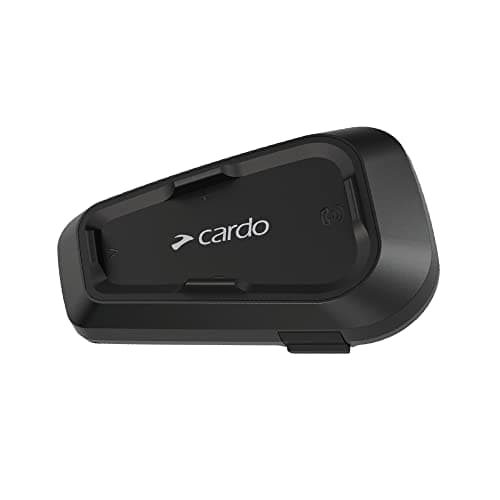
Fitting comms to a half helmet is a different job from fitting comms to a full-face, and most intercom rankings quietly ignore that. A full-face gives you two deep ear pockets, a removable cheek pad to route a wire behind, and a chin bar that shelters the microphone from the wind. A half helmet gives you none of those. What you need is a compact unit, a microphone you can position deliberately, and realistic expectations.
Before the picks, the safety note this site is obliged to make and would make anyway: a half helmet certified to DOT FMVSS No. 218 is a legal, certified helmet, and it protects a great deal less of your head than a full-face does, because it does not cover the face. That is not an opinion about your riding — it is what the coverage geometry is. Our types of motorcycle helmets guide lays out what each shape covers, and our open-face rankingranks the certified options if you want the open feel with more shell. And if a half helmet is what you want, buy a certified one — our best half helmets ranking covers the DOT picks and how to read the label, because this is the shape uncertified novelty shells imitate most.
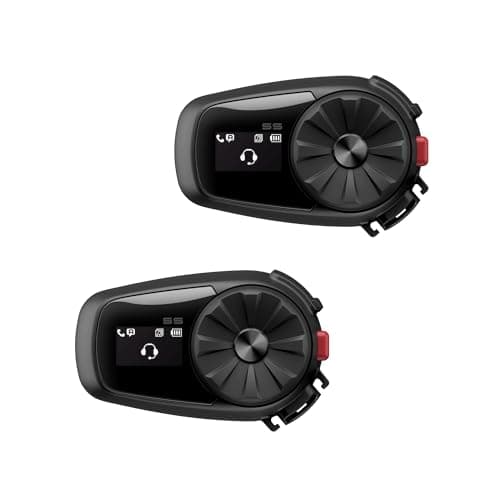
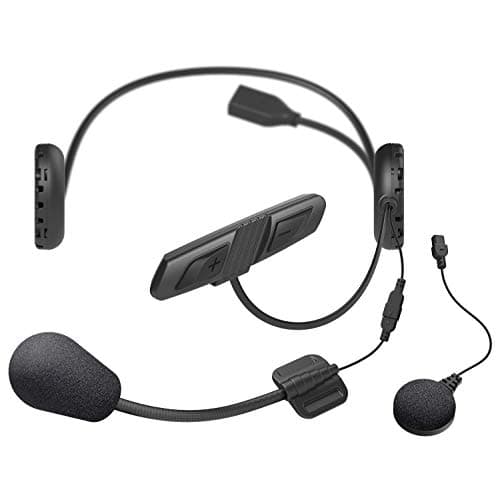
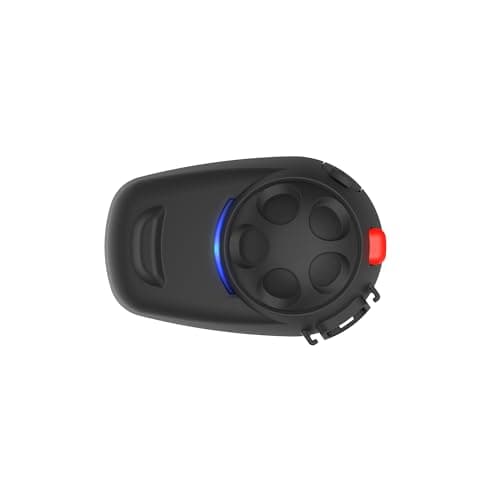
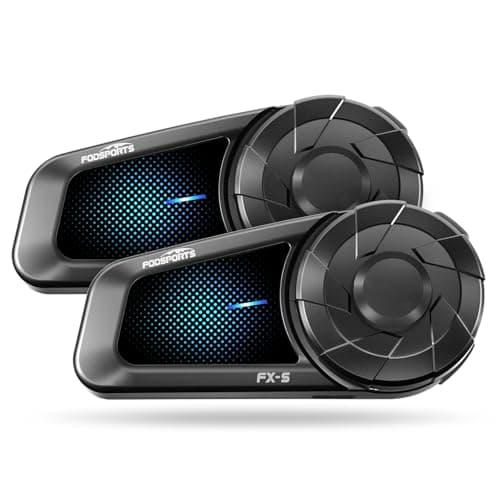
On to the fit problem. The Cardo Spirit HD tops this list because Cardo sells a dedicated half-helmet kit for the Spirit line and because Natural Voice Operation removes the need to find a button on a unit that has nowhere discreet to sit. The Sena 5S brings 18 hours of published talk time and a jog dial. The Sena 3S Plus Universal is the smallest serious option with 20 hours of published Bluetooth intercom talk time. The Sena SMH5 is the flexible old-reliable, with a choice of boom or wired mic. And the Fodsports FX-S is the budget way in.
The microphone is the whole problem
In a full-face, the mic sits behind a chin bar in relatively still air. In a half helmet it sits in the airstream, and the airstream is louder than you are. This is why boom microphones exist: a boom lets you put the capsule right at the corner of your mouth, close enough that your voice arrives far stronger than the wind. A wired mic taped inside a full-face chin bar is a neat solution there and a poor one here.
So the first thing to check on any unit you are considering for an open shell is whether the box includes a boom mic or whether one is available. The Sena SMH5 is on this list partly because Sena offers both boom and wired options for it, which is genuine flexibility when you do not yet know what will work on your helmet. Expect to spend a ride or two adjusting position before it sounds right, and expect people to still hear some wind.
Where the speakers go when there are no cheek pads
Most half helmets have a shallow liner or an EPS shell with no dedicated ear pocket at all. Two workable approaches: mount the speakers to the inside of the shell with the supplied adhesive velcro, positioned by feel so each driver sits over your ear canal, or use a winter balaclava or skull cap to hold the speakers in place against your head. The second sounds like a bodge and is actually the better result — the driver ends up closer to your ear than any shell mount achieves.
Do not run the speaker wire where the shell edge will pinch it against your neck, and do not mount a hard-backed speaker where it will press into your ear over a two-hour ride. Comfort problems in an open helmet show up much faster than in a padded full-face because there is nothing to spread the pressure.
Noise: set your expectations honestly
An open shell at highway speed is loud. We do not publish decibel figures because we do not measure them and neither do most helmet manufacturers, but the physics is not in dispute: without a chin bar and a sealed eye port, airflow reaches your ears far more directly. Practically, that means two things.
One: your intercom will need more volume than the same unit in a full-face, which eats battery faster than the published figures suggest. Two: earplugs are not optional if you ride an open helmet regularly and want to keep your hearing. Filtered plugs from our earplug ranking cut wind noise more than they cut speech, which means you can hear your intercom better with them in — the opposite of what most riders assume.
Two riders, and knowing when that is enough
Four of the five picks here are two-rider units — Cardo publishes a two-rider ceiling and 600 m / 0.4 mi for the Spirit HD, and Sena publishes two riders for the 5S, the 3S Plus and the SMH5. For a cruiser rider talking to a passenger, or a pair of friends on a Sunday route, that is exactly the right amount of intercom.
If you ride a half helmet in a larger group, the honest recommendation is a mesh unit from our mesh ranking, fitted with a boom mic, and an acceptance that the wind will be more intrusive for everyone on the channel than it would be from a full-face. Nothing on this page fixes that; only a chin bar does.
Which one should you buy?
Buy the Cardo Spirit HD if you want the easiest life on an open shell — voice control means you are not hunting for a button on a unit stuck to a bare helmet, and Cardo sells a half-helmet mounting kit for the Spirit line. Buy the Sena 5S if you want the jog dial and 18 hours of published talk time, especially as a dual pack for two-up riding.
Buy the Sena 3S Plus Universal if you want the smallest, longest-running unit and can live with a published 400 m / 0.25 mi range. Buy the Sena SMH5if mic flexibility matters most and you want the option of a boom — accepting Sena's published 7-hour talk time, the shortest here. Buy the Fodsports FX-Sif you want to find out whether you like riding with comms at all before spending real money. And if the second helmet is a passenger's rather than a friend's, our rider-and-passenger intercom ranking ranks the same end of the market on what a two-up pair actually needs.