There is no universal back protector size, and anyone who gives you one is guessing. The size you need depends on which of three things you are buying — a standalone protector on a harness, an insert for a pocket already sewn into your jacket, or a strap-on off-road unit — and on two body measurements that every maker asks for in slightly different words. Start with the type, take the measurements, then read that product's chart. A protector that is one size too short stops above your lumbar spine; one that is too long fouls the seat and rides up when you tuck.
What to work out before you pick a size
- Which type are you buying? A harness protector is worn against your body under any jacket and is sized on your torso. An insert drops into a pocket your jacket already has, so the jacket decides the size, not you. A strap-on off-road unit is sized on chest circumference and adjusted with straps.
- Full-back or central-back coverage? EN 1621-2 distinguishes between protectors covering the full back and those covering the central back only. A full-back protector extends over the shoulder blades and down to the lumbar region; a central-back one covers the spine column itself. Both can be Level 2. They are not the same amount of back.
- What do you measure? Makers' charts are built from back length — measured down the spine from the prominent bone at the base of your neck to your belt line — and a torso or chest circumference. Take both, write them down, and compare against the chart for the exact model you are buying. Charts differ between brands and sometimes between models from the same brand.
We do not publish a universal sizing table, because one would be wrong for most of the products on this page. What follows is the method, plus the three protectors in our catalog that cover the three situations above.
Sizing by type, side by side
| Type | What decides the size | How it is held in place | Who it suits |
|---|
| Standalone harness protector | Your back length and torso measurement | Shoulder straps and a waist belt, worn against the body | Riders who want one protector across several jackets |
| Jacket-pocket insert | The jacket's pocket, not your body | Slots into the sewn-in pocket | Riders upgrading the foam pad their jacket shipped with |
| Strap-on off-road unit | Chest circumference, adjusted by straps | Elastic straps around the chest and waist | Dirt and adventure riders, often over a jersey |
If you are buying an insert, measure the pocket
This is the mistake we see most often. A jacket with a back protector pocket was designed around a specific insert shape, usually the maker's own, and the pocket is the constraint. Your back length tells you nothing useful here. Turn the jacket inside out, open the pocket, and measure the pocket itself — height and width — then buy an insert that fits it. If your jacket shipped with a foam placeholder, measure that instead; it is the right shape by definition, and replacing it with a certified protector of the same footprint is the cleanest upgrade there is.
Most jackets ship with exactly that soft foam placeholder and an empty promise. Our do you need a back protector guide covers why that pad is not a protector, and our CE armor levels guide explains the EN 1621 numbers you will see on the replacement.
How to take the two measurements
Back length. Stand upright, not slouched, and have someone else measure. Find the prominent bone at the base of your neck where it meets your shoulders — it is easiest to locate if you tip your head forward. Run the tape straight down the line of your spine to the top of your belt. That number is what a harness protector's chart is built around, and it is the one most people get wrong by measuring on themselves and rounding.
Chest or torso circumference. Around the fullest part of the chest, under the arms, with the tape level and your arms down. This is what strap-on protectors and most armored vests are sized on, and it is also the number that decides whether the harness sits flat or gaps.
Measure in what you ride in. If you always wear a base layer, measure over it. If you wear an airbag vest, you are sizing a different system entirely — see our airbag vest vs back protector comparison before buying both.
Coverage: where the protector should start and stop
A correctly sized back protector covers the thoracic and lumbar spine — from roughly the level of your shoulder blades down to the top of your pelvis. Too short at the top and the upper thoracic vertebrae are exposed; too short at the bottom and the lumbar region is, which is where a rider who lands seated takes the load. Too long at the bottom is its own problem: a protector that reaches past your belt line digs into the seat when you sit back and levers itself upward over a long ride, which moves the whole thing out of position.
This is also where full-back and central-back coverage diverge. A full-back protector wraps the shoulder blades and gives you lateral coverage the spine column alone does not. A central-back protector is lighter, cooler and easier to live with under a jacket that is already tight. Neither is wrong; what is wrong is assuming a Level 2 badge means the same amount of back on two different products. Our back protectors ranking records the coverage each pick publishes alongside its level.
Four fit checks once it arrives
- Put it on and sit on the bike. Riding position is the only position that matters. A protector sized while standing in a bedroom can ride two inches too high once you tuck.
- Reach for the bars and turn your head both ways. If the top edge catches the base of your helmet, it is too long or sitting too high; that is a genuine hazard when you shoulder-check.
- Push it sideways with your hand. A protector that slides more than a little across your back will not be where it was when you land. Tighten the harness or size down.
- Wear it for twenty minutes. Hot spots, pinching at the waist belt and numbness all show up inside twenty minutes and never improve with time.
The three protectors on this page
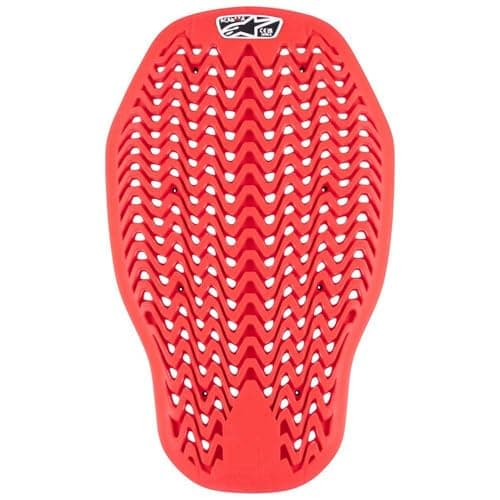
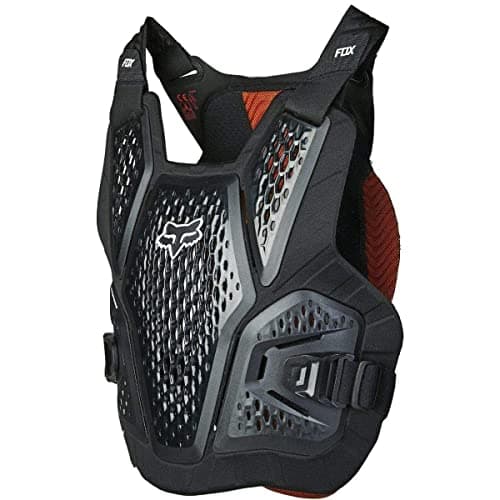
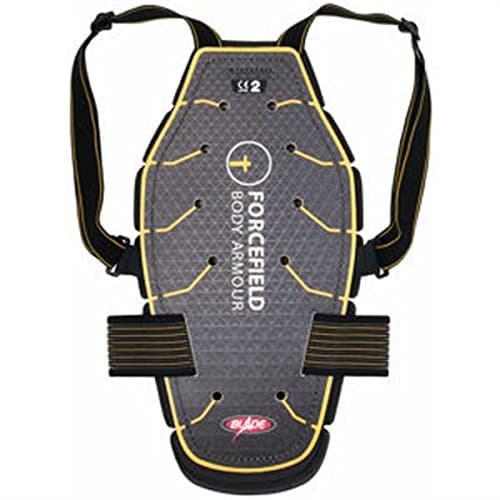
One for each sizing situation. The Forcefield Blade Level 2 is the standalone: an EN 1621-2 Level 2 protector worn on a harness with full-back coverage, so it is sized on your body and moves with you across every jacket you own. The Alpinestars Nucleon Plasma Insert is the pocket upgrade: a CE certified slot-in insert in flexible ventilated foam, sized by the jacket pocket it is replacing the foam pad in. And the Fox Racing Raceframe is the strap-on: D3O impact foam, CE certified, ventilated and adjusted on the straps, which is the right mechanism for dirt and adventure riding over a jersey. For the full field and the levels each one publishes, our back protectors ranking and body armor ranking are the pages to read next.