No — buy a new helmet. This is not a general suspicion of used gear; we would happily buy second-hand boots. It is specific to helmets, and it comes down to one fact: a helmet protects you by crushing, the crushable part is the EPS liner hidden under the comfort padding, and once it has been compressed it does not spring back. A helmet that has absorbed one significant impact looks, from the outside, exactly like a helmet that has not. The seller does not have to lie to you — a helmet dropped off a workbench by a previous owner they bought it from is a story nobody in the chain knows.
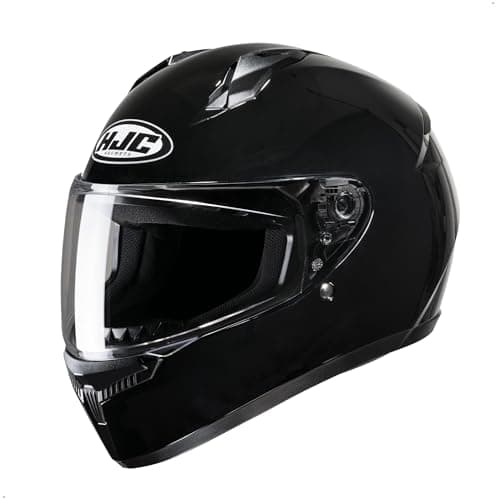
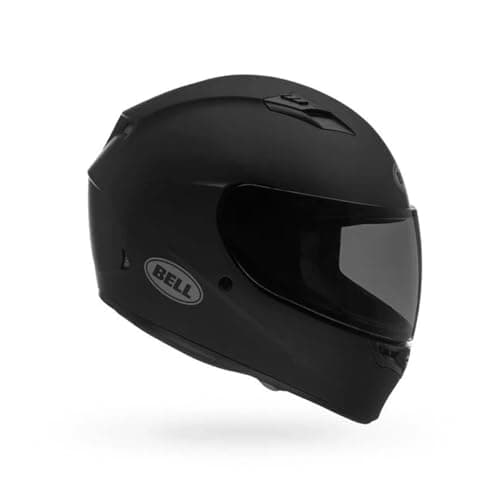
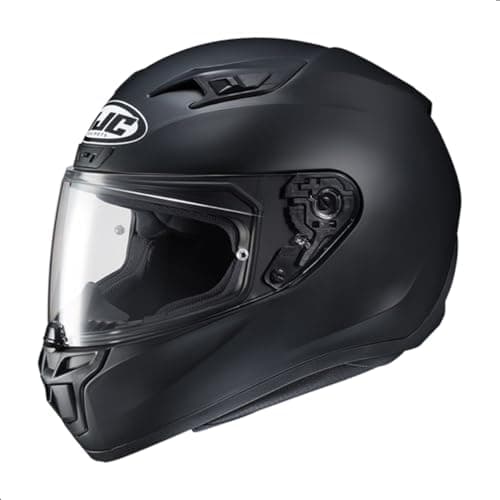
The good news is the alternative is cheaper than most riders assume. A genuinely certified new helmet does not cost flagship money: the HJC i10 publishes DOT and Snell M2020 on a polycarbonate shell with a Pinlock-ready shield in the box, the HJC C10 publishes DOT and ECE for less, and the Bell Qualifieris the long-standing budget full-face that suits rounder heads. All three are new, in your size, with a warranty and a known history — which is the entire thing a used helmet cannot give you. Our budget helmet ranking has the full field at this end of the market.
We should be clear about what we are not claiming. We have not crash-tested anything, we have no study quantifying the failure rate of used helmets, and we are not going to invent one. The argument on this page is not statistical — it is about what is verifiable. Every other decision on this site is built on published evidence, and a used helmet is the one purchase where the evidence you need does not exist at any price.
What to check if you are going to do it anyway
Some riders will buy used regardless, usually because money is genuinely tight. If that is you, run this list, and treat a single fail as a no:
- The certification label and its date. DOT on the outside at the rear, ECE on the chinstrap, Snell under the liner at the back. Then find the manufacture date, usually a printed or stamped date on a label under the comfort liner. Our certification sticker guide shows where all of them live.
- Age from that date, not from when the seller bought it. Makers and the Snell Foundation broadly converge on roughly five years of use from first wear, and our helmet lifespan guide goes through the reasoning. A used helmet is already partway through that clock before you put it on.
- The EPS liner, with the comfort padding out. Take the cheek pads and crown liner out if they are removable and look at the white foam. You are looking for cracks, creases, dents, or a compressed area that is slightly different in colour or texture. This is the only direct look at the structure you will get, and it still will not find everything.
- The shell, in raking light. Hold it under a light at an angle and look for hairline cracks, especially around the visor pivots, vents and the base rim. Paint hides a lot; a crack in the clear coat is worth walking away from.
- The retention system. Pull the strap hard. Check the D-rings or the ratchet for distortion, the stitching at the anchor points, and whether the strap has stretched or frayed. A helmet that stays on is the whole premise.
- Fit, on your head, for thirty minutes. A used helmet has been moulded to someone else's head — the pads are compressed to their skull, not yours, so it will feel looser than a new one in the same size and that looseness is not a feature. Our fit guide and pressure points guide cover what to feel for.
The short answer
| # | Product | Best for | Score | Price |
|---|
| 01 | HJC i10The value benchmark, and now the outgoing generation: HJC has replaced it with the i11, built on the same platform and certified to the newer Snell M2025D. The i10 itself is unchanged — DOT and Snell M2020 certified, a Pinlock-ready shield in the box, and a genuinely quiet, comfortable lid for roughly a fifth of a flagship's price. | Best value overall | | $135.99·Amazon |
| 02 | HJC C10The safest way to spend the least. DOT and ECE certified, light for a budget lid, and simple in the best way — the helmet to buy a new rider who should not skimp on the one piece that matters most. | Cheapest we'd recommend | | $113.99·Amazon |
| 03 | Bell QualifierThe default budget full-face for good reason: DOT certified, a wide range of sizes and colors, and a click-release shield. It is heavy and a bit loud, but it protects and it fits round heads well. | Budget round-head fit | | $149.95·Amazon |
#ad · Live prices from the Amazon Product API, as of October 19, 2026. Where we have no verified live price we show none — we would rather leave a gap than print a number that has rotted.
In detail
Best value overall
DOT · Snell M2020Polycarbonate shellPinlock-readySizes XS–3XL
The value benchmark, and now the outgoing generation: HJC has replaced it with the i11, built on the same platform and certified to the newer Snell M2025D. The i10 itself is unchanged — DOT and Snell M2020 certified, a Pinlock-ready shield in the box, and a genuinely quiet, comfortable lid for roughly a fifth of a flagship's price.
- Certification
- 8.6
- Shell/weight
- 7.8
- Noise/aero
- 8
- Fit range
- 8.6
- Value
- 9.6
Pros
- +DOT and Snell M2020 certified at an entry price
- +Comes Pinlock-ready with the pin included, so no fogging for a small add-on
- +Comfortable rounder-to-intermediate fit that suits a lot of heads
Cons
- −Polycarbonate shell is heavier than composites
- −Not the quietest at highway speed
- −Replaced in HJC's lineup by the i11, which carries the newer Snell M2025D
Don't buy this if…
…you ride a lot of highway miles and want the lightest, quietest lid available — or you want HJC's current-generation sport helmet, which is now the i11.
Cheapest we'd recommend
DOT · ECEPolycarbonate shellPinlock-readyLightweight budget
The safest way to spend the least. DOT and ECE certified, light for a budget lid, and simple in the best way — the helmet to buy a new rider who should not skimp on the one piece that matters most.
- Certification
- 8.6
- Shell/weight
- 7.8
- Noise/aero
- 7.4
- Fit range
- 8.2
- Value
- 9.4
Pros
- +DOT and ECE certified at the very bottom of the price range
- +Lighter than most budget lids and Pinlock-ready
- +Easy, forgiving fit that works for first-time buyers
Cons
- −Basic ventilation
- −No sun visor
- −Fewer size/shell options
Don't buy this if…
…you want premium quiet, a sun visor or the lightest shell — this is a price pick.
Budget round-head fit
DOTPolycarbonate shellNutraFog II shieldRound-head friendly
The default budget full-face for good reason: DOT certified, a wide range of sizes and colors, and a click-release shield. It is heavy and a bit loud, but it protects and it fits round heads well.
- Certification
- 7.4
- Shell/weight
- 7
- Noise/aero
- 7.2
- Fit range
- 8.2
- Value
- 9.2
Pros
- +DOT certified at a rock-bottom price
- +Suits rounder head shapes that premium brands often ignore
- +Click-release shield and padded wind collar to cut noise
Cons
- −DOT only, no ECE or Snell
- −Heavy polycarbonate shell
- −Louder than composite lids
Don't buy this if…
…you want ECE 22.06 or Snell certification, or the lowest weight — this is a budget-first pick.
What you can and cannot verify
| Question | Can you check it? | How |
|---|
| Is it certified at all? | Yes | DOT label, ECE chinstrap label, Snell sticker under the liner |
| How old is the shell? | Usually | Manufacture date label under the comfort liner |
| Is the shell cracked? | Mostly | Raking light around vents, visor pivots and the base rim |
| Is the strap sound? | Yes | Pull test, check stitching and the D-rings or ratchet |
| Has the EPS been compressed? | No, not reliably | Partial look with the pads out; a compressed zone can look normal |
| Has it been dropped or crashed? | No | You are relying on a stranger's memory of events they may not have seen |
| Has it been stored in heat, or had solvents on it? | No | Heat and petrochemicals degrade EPS and adhesives invisibly |
The three rows in bold are the whole argument. Everything a used helmet can prove to you is a precondition; the two things that would actually disqualify it are unknowable. No inspection you can run in a car park closes that gap, and that is why this is the one category where we say buy new without hedging.
Why a dropped helmet is not automatically scrap — and why that does not help
Worth being precise, because the internet overstates this in the other direction. A helmet that slides off a seat onto a carpeted floor with nothing in it has almost certainly not compressed its EPS; makers and the Snell Foundation both describe the concerning case as an impact with a head inside, or a hard blow to a specific spot. So a used helmet is not necessarily damaged, and we are not claiming it is. The problem is the direction of the uncertainty: you cannot tell the harmless drops from the one that mattered, and the cost of being wrong is the one injury you cannot walk off. Our how long do helmets last page covers the drop question for a helmet whose history you doknow — your own.
The cases where used genuinely is fine
- A helmet you have owned since new, with a known history. Not used at all, in the sense that matters. Replace it on age and on any real impact.
- A new-old-stock helmet from a dealer. Unworn, often discounted at the end of a model run, with a verifiable manufacture date. This is the best value in helmets and it is not second-hand — check the date and make sure the certification is a current revision.
- Everything that is not a helmet. Boots, jackets and armor are abrasion and impact gear whose condition you can largely see, and buying those used to free up money for a new helmet is a genuinely smart trade. Our gear under $500 guide and beginner gear guide put the budget in priority order.
What a new budget helmet actually gives up
Not protection, which is the point. Every pick on this page publishes a real certification — the i10 adds Snell M2020 to DOT, the C10 publishes DOT and ECE. What you give up further down the price list is shell material, shell count, weight, quiet, ventilation and finish, plus the convenience features a flagship throws in. Those are comfort and refinement variables, and the same point is made at length on our are expensive helmets saferpage. The one thing to avoid at the bottom of the market is a "novelty" or "not-for-road-use" shell, which skips testing entirely and is a worse buy than any used certified helmet would be.
When you are ready to choose, start with fit rather than price: our head shapes guide, measuring guide and first helmet by head shape and budget page exist to get that order right.
How we picked
Everyone in this category says they tested twenty helmets. We haven't tested any — and we say so. What we do instead: compile the published DOT, ECE 22.06 and Snell certifications, the manufacturer's fit, weight and shell specs, the CE armor levels, and reputable published reviews, then score each pick against a published rubric. The scores are judgments from documented research — not measurements we took, because we do not run a lab and we are not going to pretend we do. Every certification and spec claim traces to a source we name and link.
Questions
Is it ever safe to buy a used motorcycle helmet?+
Our answer is no, and the reason is narrow rather than moralistic: the crushable EPS liner is hidden, does not recover once compressed, and a compressed helmet looks identical from outside. You cannot verify impact history or storage conditions from a stranger, so the two disqualifying facts are exactly the two you cannot check.
How can you tell if a used helmet has been crashed?+
Often you cannot. You can take out the comfort padding and look at the white EPS for cracks, creases and compressed areas, and inspect the shell in raking light around the vents and visor pivots. That finds obvious damage and misses the rest — EPS can be compressed with no outward mark at all.
Does a motorcycle helmet expire?+
It ages rather than expires, and makers and the Snell Foundation broadly converge on roughly five years of use from first wear, with the manufacture date on a label under the liner as the starting point. A used helmet is already some way into that window. See our
helmet lifespan guide.
What about a used helmet from a friend who never crashed it?+
Better, because you can at least ask about the years you know. It still does not cover the years before they owned it, how it was stored, or the drops nobody mentions. If the helmet is in date, visibly sound and genuinely fits you, it is a defensible choice for a short period — but it is a compromise, and we would rather you knew that than were told it was fine.
Is a cheap new helmet better than a good used one?+
For our money, yes. A new HJC C10 publishes DOT and ECE certification, comes in your size, has an unknown-free history and carries a warranty. A used premium helmet gives you better materials and an unverifiable past. The certification floor is the same; only one of them lets you know what you own.
Can you replace the liner in a used helmet to make it safe?+
No. Replacing the comfort padding changes the fit, not the protection — the energy-absorbing EPS liner underneath is bonded into the shell and is not a serviceable part. A fresh set of cheek pads on a compressed helmet is a fresh set of cheek pads on a compressed helmet.
Receipts
We do not run a testing lab, and we do not pretend to. Our picks are built from published certifications, manufacturer spec sheets, the standards documents themselves, and reputable published reviews — named and linked above. Where we could not verify something, we say so on the page rather than quietly leaving it out. Read our full method.