Skip to content
LID & LEATHER

The lid · Helmets

The Best Half Helmets

Half helmets are the category where uncertified novelty shells hide, so this ranking starts at the label and works outward. Includes an honest, unhedged account of what a half helmet does not cover.

By Stephen V.Updated How we research
#ad

We earn a commission when you buy through our Amazon links, at no extra cost to you. It never affects our rankings, and we say so when the cheaper gear is the better buy. How this works.

Let us deal with the honest part first, because you have almost certainly already decided and we are not going to pretend otherwise. A half helmet covers the top of your skull and stops above the ears. It has no chin bar, no face coverage and no eye protection. Our types of motorcycle helmets guide shows what each shape covers, and the honest comparison is not close. If you are still choosing a form factor, read that page first. If you have chosen, this page is for you and it is written straight.

Because here is the thing that actually matters about this category: it is where the fake helmets live. Novelty shells — thin decorative caps sold with a not-for-highway-use line buried in the listing — cluster in exactly two places, half helmets and vintage-look lids, and we said so on our retro helmet ranking. A rider shopping for a half helmet is one careless click away from buying something that is not a helmet at all. So the first filter here is ruthless, and the buying guide below teaches you to check a label yourself in about ten seconds.

The single most useful thing we can tell you: there is no such thing as a "DOT-approved" helmet. The federal regulation, 49 CFR 571.218, says the label is "constituting the manufacturer's certification that the helmet conforms to the applicable Federal motor vehicle safety standards." Nobody in government inspects a helmet before it goes on sale. The maker certifies it themselves, and NHTSA tests after the fact. That is why a novelty shell can wear a DOT sticker and why knowing the real label format is worth more than any brand loyalty.

Our top pick is the Bell Rogue, which publishes three shell sizes — the most on this page — and adds a removable magnetic muzzle, the only face coverage available in this whole ranking. The GMAX HH-65 is the only one whose spec sheet says DOT certified rather than approved, and it includes a drop-down UV400 visor. The HJC IS-Cruiser has the best interior. The Highway 21 9mm is the value pick and the one most riders should buy. The Daytona Skull Cap is the slimmest profile and publishes the least.

We have not crash-tested any of these and we do not run a lab. What follows is built from the FMVSS 218 regulation itself and from manufacturer spec sheets reproduced by a retailer, named and linked at the bottom. Where a maker publishes nothing — and in this category several publish very little — we say so on the card instead of guessing.

The short answer

Quick picks

#ProductBest forScorePrice
01
Bell Bell Rogue
Bell Rogue

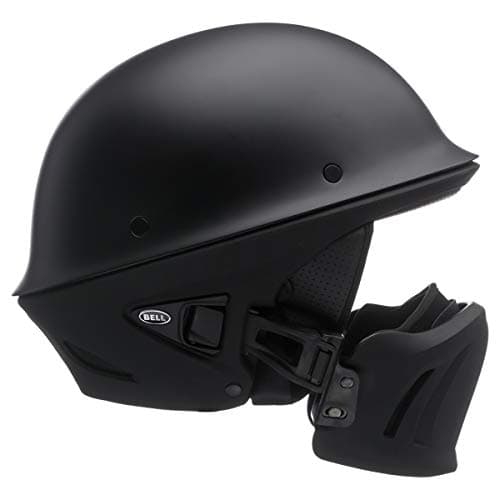
Three shell sizes — the most published on this page — plus the only thing here that covers any part of your face: a removable magnetic muzzle. If you are buying a half helmet, this is the one that gives up the least.

Best half helmet overall
8.1
$179.90Amazon
02
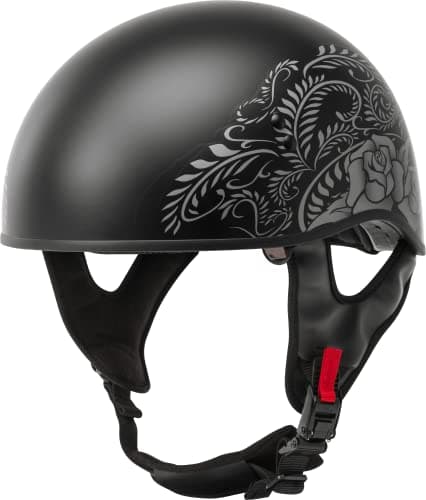
GMAX GMAX HH-65 Naked
GMAX HH-65 Naked

The only helmet on this page whose spec sheet says DOT certified rather than DOT approved — which, as the buying guide explains, is the technically correct word. Two shell sizes, a dual-density EPS liner and a clear UV400 drop-down visor included.

Most specific certification wording
8.3
$119.95Amazon
03
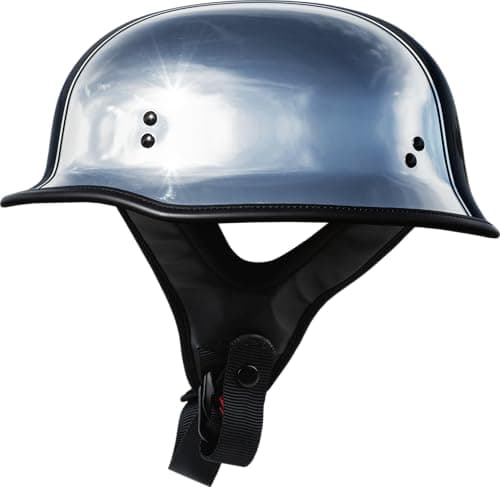
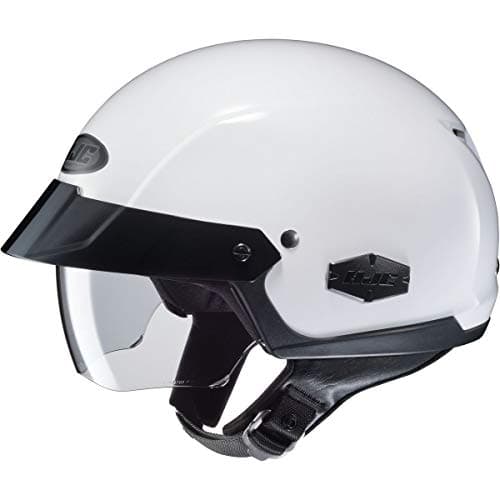
HJC HJC IS-Cruiser
HJC IS-Cruiser

The comfort pick. A polycarbonate composite shell with a retractable sun visor and a removable, washable antibacterial liner — the interior spec you actually live with on a hot day, from the maker with the deepest helmet catalog here.

Best liner and sun visor
7.9
$119.99Amazon
04
Highway 21 Highway 21 9mm
Highway 21 9mm

The value pick, and the one most riders should actually buy. A DOT-approved ABS shell with dual D-rings and a removable, washable Coolmax liner for roughly a third of what the Bell costs.

Best value
7.8
$64.95Amazon
05
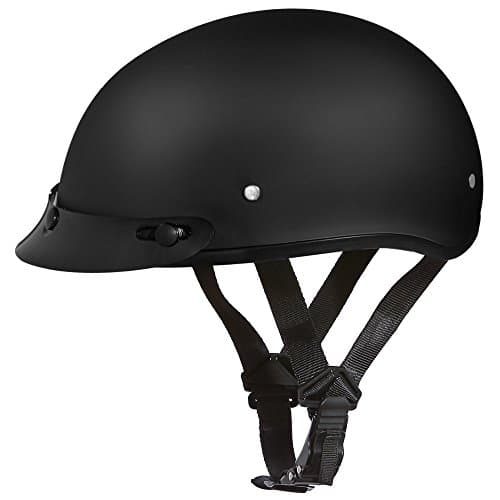
Daytona Helmets Daytona Skull Cap
Daytona Skull Cap

The smallest shape in this ranking and the one riders buy when the low profile is the entire point. It is DOT approved and it publishes almost nothing else — which is itself the reason it ranks last here rather than the price.

Slimmest profile
7.2
$72.95Amazon

#ad · Live prices from the Amazon Product API, as of Sep 10, 2026. Where we have no verified live price we show none — we would rather leave a gap than print a number that has rotted.

In detail

The picks, in full

01
Bell Bell Rogue

Best half helmet overall

Bell Rogue

DOT approved3 shell sizesComposite shellRemovable FidLock muzzle
8.1/10

Three shell sizes — the most published on this page — plus the only thing here that covers any part of your face: a removable magnetic muzzle. If you are buying a half helmet, this is the one that gives up the least.

Certification
8
Shell/fit range
9.4
Coverage
8.2
Features
8.4
Value
6.6

Pros

  • Three shell sizes, so a small head is not padded down inside a large shell — the most published shell count in this ranking
  • The removable muzzle attaches with a FidLock magnetic connection and is the only face coverage available anywhere on this page
  • Lightweight composite shell, stainless steel D-rings and speaker pockets for a comms unit

Cons

  • By a wide margin the most expensive helmet here, for a form factor whose whole appeal is usually price
  • The muzzle is a wind and debris shield, not a chin bar — it is not impact protection and Bell does not claim it is
  • No drop-down sun visor, so eye protection is a separate purchase

Don't buy this if…

you want a sun visor built in — the GMAX and the HJC both include one and cost less.

$179.90View on Amazon

$199.9510% off

Price as of Sep 10, 2026. Prices change — Amazon's is the one that counts.

#ad · we may earn a commission from this link to Bell Rogue

02
GMAX GMAX HH-65 Naked

Most specific certification wording

GMAX HH-65 Naked

DOT certified2 shell sizesDual-density EPSUV400 drop-down visor
8.3/10

The only helmet on this page whose spec sheet says DOT certified rather than DOT approved — which, as the buying guide explains, is the technically correct word. Two shell sizes, a dual-density EPS liner and a clear UV400 drop-down visor included.

Certification
9.2
Shell/fit range
8.4
Coverage
7
Features
8.8
Value
8.2

Pros

  • Published as DOT certified — the wording that matches what the regulation actually requires on the label
  • Two shell sizes (XS-MD and LG-2XL) and a Dual-Density Styro EPS liner that GMAX publishes as allowing a slimmer liner thickness
  • A clear UV400 drop-down visor is included in the box, so eye protection is not a second purchase

Cons

  • Two shell sizes rather than three, so the fit range is narrower than the Bell
  • GMAX recommends sizing down between sizes, which is a fit quirk you should know before ordering online
  • Amazon stock is colorway- and size-specific and thinner than the In Stock picks here

Don't buy this if…

you are between sizes and cannot try one on — a helmet the maker tells you to size down in is a risky blind buy.

$119.95View on Amazon

Price as of Sep 10, 2026. Prices change — Amazon's is the one that counts.

#ad · we may earn a commission from this link to GMAX HH-65 Naked

03
HJC HJC IS-Cruiser

Best liner and sun visor

HJC IS-Cruiser

DOT approvedPolycarbonate composite shellRetractable sun visorRemovable washable liner
7.9/10

The comfort pick. A polycarbonate composite shell with a retractable sun visor and a removable, washable antibacterial liner — the interior spec you actually live with on a hot day, from the maker with the deepest helmet catalog here.

Certification
8
Shell/fit range
7.2
Coverage
7.2
Features
9
Value
8

Pros

  • Removable, washable antibacterial Nylex interior — the only pick publishing that combination, and it matters on a helmet worn in summer heat
  • Integrated retractable sun visor rather than a bolt-on accessory
  • HJC builds more helmet models than anyone else on this page, and the fit and finish reflect it

Cons

  • HJC does not publish a shell count for it, so you cannot tell whether a small head sits in a padded large shell
  • Reviewers consistently report it sits wide on the head — the shape is not the slimmest here
  • Published as DOT approved rather than DOT certified

Don't buy this if…

the low-profile look is the reason you want a half helmet — this is the bulkiest shape in this ranking.

$119.99View on Amazon

Price as of Sep 10, 2026. Prices change — Amazon's is the one that counts.

#ad · we may earn a commission from this link to HJC IS-Cruiser

04
Highway 21 Highway 21 9mm

Best value

Highway 21 9mm

DOT approvedABS shellDual D-ring strapCoolmax removable liner
7.8/10

The value pick, and the one most riders should actually buy. A DOT-approved ABS shell with dual D-rings and a removable, washable Coolmax liner for roughly a third of what the Bell costs.

Certification
8
Shell/fit range
7
Coverage
6.8
Features
8
Value
9.4

Pros

  • Genuinely certified protection at the price point where novelty shells usually win the sale
  • Diamond-stitched Coolmax liner, fully removable and washable — an unusual spec at this money
  • Dual D-ring chin strap rather than a quick-release buckle, which is the retention system the racing world still uses

Cons

  • ABS rather than a composite shell — heavier for the same protection, which you feel over a long day
  • No published shell count, so fit across the size range is unknown
  • Low-profile styling means less coverage than the taller shells here, and that is a real trade rather than a look

Don't buy this if…

you ride long days — an ABS shell is the heaviest construction on this page and neck fatigue is cumulative.

$64.95View on Amazon

Price as of Sep 10, 2026. Prices change — Amazon's is the one that counts.

#ad · we may earn a commission from this link to Highway 21 9mm

05
Daytona Helmets Daytona Skull Cap

Slimmest profile

Daytona Skull Cap

DOT approvedSkull-cap profileVisor includedMinimal published spec
7.2/10

The smallest shape in this ranking and the one riders buy when the low profile is the entire point. It is DOT approved and it publishes almost nothing else — which is itself the reason it ranks last here rather than the price.

Certification
7.6
Shell/fit range
6.4
Coverage
6
Features
6.6
Value
8.4

Pros

  • The lowest-profile certified shell here, which is the whole reason this category exists for a lot of riders
  • Made in the USA and sold with a visor, at a price that competes directly with uncertified novelty shells
  • Wide colorway range, so the aesthetic reason for buying one is actually served

Cons

  • Daytona publishes the least specification of any pick on this page — no shell count, no shell material, no liner detail we could verify
  • A skull-cap profile is the least coverage available in a certified helmet, by design
  • No sun visor and no drop-down shield, so eye protection is entirely a separate purchase

Don't buy this if…

you want to compare specs before you buy — there is very little published here to compare, and the picks above tell you far more.

$72.95View on Amazon

Price as of Sep 10, 2026. Prices change — Amazon's is the one that counts.

#ad · we may earn a commission from this link to Daytona Skull Cap

"DOT approved" is not a thing. Here is what to look for instead.

Every listing in this category says "DOT approved." It is a phrase the whole industry uses and it describes a process that does not exist. Under 49 CFR 571.218 the helmet label is the manufacturer's certification — the regulation's own words are that the label constitutes "the manufacturer's certification that the helmet conforms to the applicable Federal motor vehicle safety standards." There is no pre-market government approval. NHTSA buys helmets and tests them afterward.

That sounds like bad news and it is actually useful, because the regulation is also very specific about what a compliant label must say. It requires a stack, in this order:

The precise model designation, centered above the symbol; then the symbol DOT; then the term FMVSS No. 218 centered beneath it; then the word CERTIFIED centered beneath that. The model designation must be in letters or numerals not less than 0.09 inch tall.

A novelty shell almost never carries that full four-line stack. It carries a stick-on "DOT" and nothing else, or the listing says "DOT style," which is marketing language meaning it is not certified. Ten seconds with the inside of a helmet settles it. Our guide to reading a certification sticker walks through the whole label, including the ECE and Snell equivalents.

Notice how the picks above are worded. The GMAX spec sheet says DOT certified; the other four say DOT approved. Both companies are almost certainly doing the same thing, but only one of them is using the word the regulation uses, and on a page about a category full of fakes, we score precision.

What a half helmet actually gives up

We are going to state this once, plainly, and then get on with the ranking.

A half helmet has no chin bar. The chin and jaw region takes a large share of serious impacts in motorcycle crashes, and a half helmet leaves all of it exposed, along with your face, your teeth and your eyes. It also stops above the ears, so it covers less of the skull than a 3/4 shell does. This is not an opinion about your riding — it is the coverage geometry, and no certification changes it. A DOT-certified half helmet is a legal, genuinely protective helmet that protects a smaller area than a DOT-certified full-face.

If that trade gives you pause, the middle ground is the 3/4 open-face: same open feeling, same lack of a chin bar, but meaningfully more shell around the sides and back of your head, and usually a shield or sun visor. Our open-face ranking covers the certified options, and several cost about what the helmets on this page cost. If you want the classic look with a chin bar, our retro helmet ranking is full-face only for exactly that reason.

And if this is your first helmet, we would steer you away from a half entirely — not out of judgment, but because a new rider has the least margin and the most to gain from coverage. Our first helmet by head shape and budget guide starts from a different premise for that reason.

Shell count is the fit spec nobody advertises

Every helmet maker faces the same choice: tool one shell and vary the internal foam to cover the whole size range, or tool several shells so each is built around a narrower band of head sizes. One shell is far cheaper to produce. It also means a small head ends up inside a large shell packed with thick foam — sitting high, looking bulbous, and putting more mass further from your skull.

On a half helmet that trade-off is worse than usual, because the entire visual appeal of the category is a shell that sits close to the head. Pad a big shell down two sizes and you have destroyed the exact thing you were paying for. So the published shell counts here carry real weight: the Bell Rogue publishes three shell sizes, the GMAX HH-65 publishes two (XS-MD and LG-2XL), and the HJC, Highway 21 and Daytona publish none at all. An unpublished shell count usually means one.

Measure your head before you shop — our sizing guide takes two minutes and a tape measure, and the numbers map to our size chart. Note that GMAX specifically recommends sizing down if you fall between sizes, which is the kind of detail that decides whether an online order fits.

Eye protection is a separate purchase, and it is not optional

None of these helmets has a face shield. Two of them — the GMAX HH-65 and the HJC IS-Cruiser — include a drop-down sun visor, which handles glare and does nothing for wind, grit, rain or bugs at 60 mph. The other three give you nothing.

So budget for eyewear the same day you budget for the helmet. Riding glasses work for short trips in good weather. Goggles are the more complete answer, and for a half helmet you want a padded road frame rather than a motocross one — our motorcycle goggle ranking covers both and flags which makers actually publish an eye-protection standard, because most of them do not. Squinting into airflow is genuinely dangerous, not just uncomfortable.

The strap is the whole retention system

On a full-face, the shell wraps your head and the strap is a backup. On a half helmet the strap is doing far more of the work, because there is much less shell geometry holding the helmet in place. That makes the retention hardware worth more attention here than in any other category.

Three of the picks publish D-ring retention — the Bell uses stainless steel D-rings, the HJC a nylon strap with D-rings, the Highway 21 a dual D-ring. D-rings are fiddly with gloves on and they are what racing organizations still require, because they cannot rattle loose and they tighten under load. A quick-release buckle is more convenient and is a step down in this specific application.

Whatever the hardware, wear it properly: snug under the jaw, not slack, with no more than about a finger of play. A half helmet that can be rolled forward off your head in a fall has protected nothing, and this is the shape where that failure is easiest. Our how to wear a helmet guide covers the check.

Noise, and what we are not going to claim

A half helmet is loud. There is no shell around your ears, no chin bar, no eye port seal and nothing between the airflow and your head. We are not going to publish a decibel figure because we have not measured one and none of these makers publishes one either — but the physics is not in dispute, and every rider who moves from a full-face to a half notices it immediately.

Which makes hearing protection non-negotiable in this category rather than optional. Wind noise at highway speed causes cumulative, permanent hearing damage, and filtered motorcycle plugs cut broadband wind noise more than they cut speech and sirens — so you end up more aware, not less. Our earplug ranking covers the options and how the NRR and SNR numbers actually work. If you want comms as well, fitting a headset to an open shell is its own problem, covered in our half-helmet intercom ranking.

Which one should you buy?

Buy the Highway 21 9mm if you want the sensible answer. It is DOT approved, it has a real ABS shell, dual D-rings and a removable washable liner, and it costs a fraction of the Bell. Most riders shopping this category are choosing between a certified helmet and an uncertified one at a similar price, and this is the certified one that wins that fight.

Buy the Bell Rogue if you want the best of the category and the price is not the point: three shell sizes is a genuine fit advantage, and the removable magnetic muzzle is the only thing on this page that covers any part of your face — as a wind and debris shield, not as impact protection, and Bell does not claim otherwise.

Buy the GMAX HH-65 if you want a sun visor included and you like that its spec sheet uses the word the regulation uses. Buy the HJC IS-Cruiser if summer comfort matters most — the removable, washable antibacterial liner is the best interior here. And buy the Daytona Skull Cap only if the slimmest possible profile is genuinely the reason you are shopping, understanding that it publishes less about itself than anything else on this page.

Whichever you choose, pair it with eye protection and earplugs on the same order. A half helmet with neither is not a complete setup, and both cost a small fraction of the helmet.
How we picked

We don't test helmets. Here's what we do instead.

Everyone in this category says they tested twenty helmets. We haven't tested any — and we say so. What we do instead: compile the published DOT, ECE 22.06 and Snell certifications, the manufacturer's fit, weight and shell specs, the CE armor levels, and reputable published reviews, then score each pick against a published rubric. The scores are judgments from documented research — not measurements we took, because we do not run a lab and we are not going to pretend we do. Every certification and spec claim traces to a source we name and link.

Questions

Frequently asked

Are half helmets DOT approved?
Strictly speaking, no helmet is "DOT approved" — there is no government pre-approval process. Under 49 CFR 571.218 the label on the helmet is the manufacturer's certification that it conforms to the standard, and NHTSA tests helmets after they reach the market. Certified half helmets absolutely exist, including every pick on this page. What you are checking for is the label, not an approval.
How can I tell a real DOT half helmet from a novelty one?
Look inside for the full label stack the regulation requires: the precise model designation above the symbol DOT, the term FMVSS No. 218 beneath it, and the word CERTIFIED beneath that. A novelty shell typically has a stick-on DOT and nothing else, and its listing often says "DOT style" rather than certified. Our certification sticker guide covers the whole label.
Are half helmets safe?
A certified half helmet is a real helmet and protects your skull. It also covers substantially less of your head than a 3/4 or a full-face, and it leaves your chin, jaw and face entirely unprotected — the chin and jaw take a large share of serious impacts. That is a fact about coverage rather than a judgment. If it gives you pause, the 3/4 open-face is the middle ground.
What is the difference between a half helmet and a 3/4 open-face?
A half helmet stops above the ears and covers the top of the skull only. A 3/4 open-face extends down past the ears and around the back of the head, and usually takes a shield or has a drop-down sun visor. Neither has a chin bar. The 3/4 is meaningfully more shell for usually similar money.
Do half helmets come with eye protection?
None of them has a face shield. The GMAX HH-65 and HJC IS-Cruiser include a drop-down sun visor, which handles glare only. Budget for riding glasses or goggles on the same order — for a half helmet, use a padded road goggle frame rather than a motocross one. See our goggle ranking.
Why does shell count matter on a half helmet?
Because the appeal of the category is a shell that sits close to your head. A maker using one shell across all sizes pads a small head down inside a large shell, which sits high, looks bulbous and puts more mass further from your skull. The Bell Rogue publishes three shell sizes and the GMAX HH-65 publishes two; the other picks publish none, which usually means one.
Do I need earplugs with a half helmet?
More than with any other shape. There is no shell around your ears and nothing between the airflow and your head, so wind noise is at its worst in this category and the damage is cumulative and permanent. Filtered motorcycle plugs cut broadband wind noise more than they cut speech and sirens, so you ride more aware rather than less — see our earplug ranking.

Keep reading

Receipts

Sources

We do not run a testing lab, and we do not pretend to. Our picks are built from published certifications, manufacturer spec sheets, the standards documents themselves, and reputable published reviews — named and linked above. Where we could not verify something, we say so on the page rather than quietly leaving it out. Read our full method.