Skip to content
LID & LEATHER

The trust anchor · Safety & Certification

Are Modular Helmets Safe?

Yes - a certified modular is a certified helmet. The useful question is narrower: what was its chin bar tested closed, and was it tested open too?

By Stephen V.Updated How we research
#ad

We earn a commission when you buy through our Amazon links, at no extra cost to you. It never affects our rankings, and we say so when the cheaper gear is the better buy. How this works.

Yes.A modular helmet that carries a real certification — DOT FMVSS 218 in the US, ECE 22.06 in Europe — has been tested as a protective helmet and passed, chin bar included. It is not a compromised full-face and the "flip-ups are unsafe" line you will read on forums is not what the standards say. The Shoei Neotec II is the one we would point most riders at, and the real nuance is a different question than safety-versus-unsafe: it is what the helmet was certified to do with the chin bar open.

That is the detail worth owning, because it is the only place modulars genuinely differ from each other in a way a standard measures. ECE 22.06 homologates a helmet into a type, and the letter is printed on the chinstrap label:

  • P— a protective-chin-bar helmet. Tested and approved with the chin bar closed. A modular marked P alone is approved as a full-face and not approved to be ridden open.
  • P/J— dual homologation. Tested and approved both as a protective-chin-bar helmet (closed) and as a jet, or open-face, helmet (open). This is the one that is legally and technically fine to ride with the front up.
  • J— a jet helmet, no protective chin bar. An open-face, or a modular whose chin bar is cosmetic rather than tested.

So the sentence that matters on a modular's spec sheet is not "CE approved" — it is the type letter. The ScorpionEXO EXO-AT960 on this page publishes DOT plus ECE 22.06 P/J, which is why it is here: it is the clearest published example of a modular certified both ways. The Shoei Neotec II, Bell SRT Modular and HJC i90 publish DOT, and the HJC adds ECE; where a maker does not publish a type letter, we do not infer one.

What to look for on a modular helmet

  1. The type letter, on the chinstrap label. P, P/J or J. If you plan to ride with the chin bar up at any point, you want P/J, and you want it printed rather than assumed.
  2. A latch that locks positively and audibly. A single centre latch or dual side latches, with a definite click. This is the component the whole debate is actually about, and it is the one a shop visit tells you more about than a spec sheet.
  3. Published shell material and shell count. A modular carries more hardware, so shell engineering matters more, not less. Shoei publishes a multi-composite shell on the Neotec II; Bell publishes fiberglass composite on the SRT.
  4. The weight, if the maker gives it. A hinge, a latch and a seal add mass, and mass is felt over hours rather than minutes. Most makers publish a figure for their flagships and not for the rest.
  5. Whether the chin bar can be opened in gloves, one-handed. Mundane and the reason people buy a modular in the first place. A latch you need two hands for defeats the purpose.

We have not impact-tested, penetration-tested or chin-bar-tested any helmet, and we do not have a lab. Everything below is the published standards, the makers' own published certification and construction wording, and the geometry of the thing — sourced at the bottom.

The short answer

Quick picks

#ProductBest forScorePrice
01
Shoei Shoei Neotec II
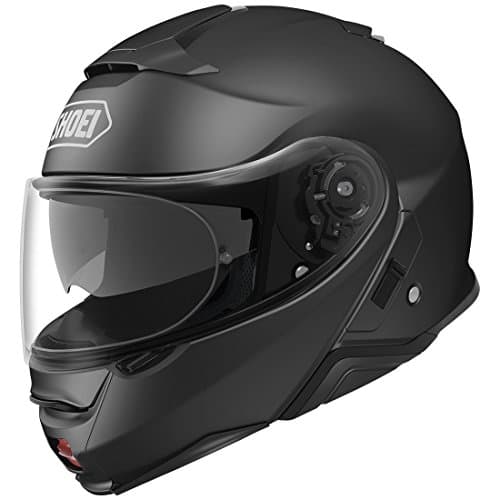
Shoei Neotec II

The touring modular the rest are measured against — though it is no longer Shoei's newest. Shoei now lists the Neotec 3 alongside it, so the II is the older generation: a multi-composite shell, an internal sun visor, a genuinely quiet cabin and a drop-in SRL2 Sena comms option that keeps the lines clean.

Best touring modular
8.6
$699.99Amazon
02
Scorpion ScorpionEXO EXO-AT960
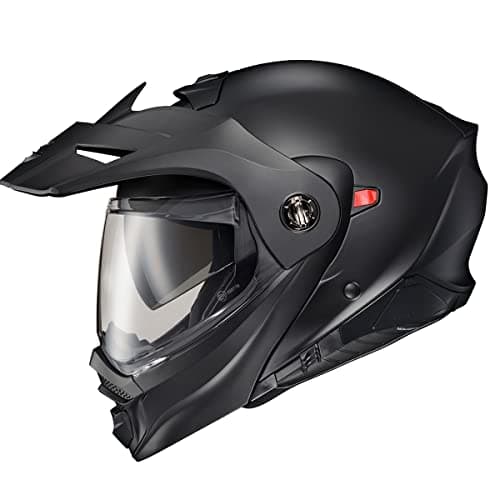
ScorpionEXO EXO-AT960

The adventure lid that flips: P/J dual-homologated to ECE 22.06 so it is certified with the chin bar up as well as down, with a drop-down sun visor and a peak — the most useful helmet here for mixed pavement-and-dirt days.

Best modular adventure helmet
8.3
$314.95Amazon
03
Bell Bell SRT Modular
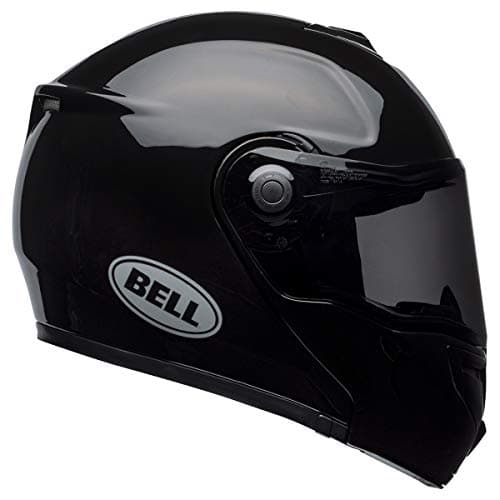
Bell SRT Modular

A fiberglass-composite modular with a class-leading Panovision eye-port and a drop-down sun shade, at a mid price that badly undercuts the premium tourers.

Best mid-price modular
8.3
$399.95Amazon
04
HJC HJC i90
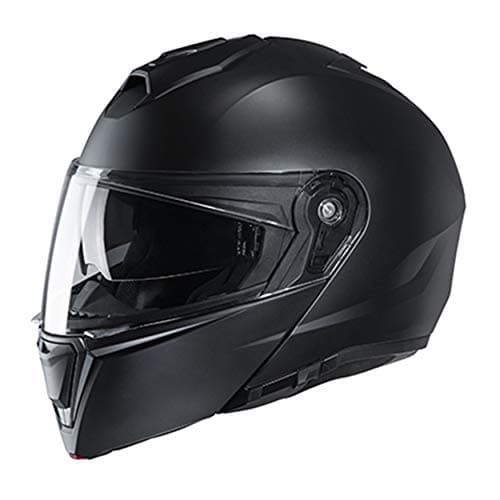
HJC i90

The value modular. DOT and ECE certified, a drop-down sun visor and a comfortable touring fit, for a price that leaves room in the budget for a proper headset.

Best value modular
8.3
$116.05Amazon

#ad · Live prices from the Amazon Product API, as of October 19, 2026. Where we have no verified live price we show none — we would rather leave a gap than print a number that has rotted.

In detail

The picks, in full

01
Shoei Shoei Neotec II

Best touring modular

Shoei Neotec II

DOTMulti-composite shellInternal sun visorSRL2 comms-ready
8.6/10

The touring modular the rest are measured against — though it is no longer Shoei's newest. Shoei now lists the Neotec 3 alongside it, so the II is the older generation: a multi-composite shell, an internal sun visor, a genuinely quiet cabin and a drop-in SRL2 Sena comms option that keeps the lines clean.

Certification
8.4
Shell/weight
8.6
Noise/aero
9.4
Fit range
8.6
Value
7.8

Pros

  • DOT certified with a refined multi-ply composite shell
  • One of the quietest modulars made, with a sealed chin bar
  • Integrated sun visor and a clean factory Sena SRL2 comms path

Cons

  • Expensive
  • Heavier than a full-face (all modulars are)
  • No longer Shoei's newest touring modular — the Neotec 3 now sits above it in Shoei's lineup

Don't buy this if…

…you specifically want Shoei's current-generation touring modular — that is the Neotec 3 now. The II is the previous generation, still listed by Shoei and still excellent.

$699.99View on Amazon

Price as of October 19, 2026. Prices change — Amazon's is the one that counts.

#ad · we may earn a commission from this link to Shoei Neotec II

02
Scorpion ScorpionEXO EXO-AT960

Best modular adventure helmet

ScorpionEXO EXO-AT960

DOT · ECE 22.06 (P/J)ModularDrop-down sun visor3 shell sizes
8.3/10

The adventure lid that flips: P/J dual-homologated to ECE 22.06 so it is certified with the chin bar up as well as down, with a drop-down sun visor and a peak — the most useful helmet here for mixed pavement-and-dirt days.

Certification
9.4
Weight
6.4
Versatility
9.4
Ventilation
8.4
Value
8

Pros

  • P/J dual homologation — certified open (Jet) as well as closed (Full)
  • Drop-down sun visor plus a removable peak and an oversized eye port
  • Designed around EXO-COM speaker pockets, so a comms unit fits without surgery

Cons

  • Heavy — Scorpion lists ±1,858 g in a medium
  • The peak and the flip-up hinge both add wind noise at highway speed

Don't buy this if…

…you want the lightest lid on the list — the modular hardware costs you several hundred grams.

$314.95View on Amazon

Price as of October 19, 2026. Prices change — Amazon's is the one that counts.

#ad · we may earn a commission from this link to ScorpionEXO EXO-AT960

03
Bell Bell SRT Modular

Best mid-price modular

Bell SRT Modular

DOTFiberglass compositePanovision eye-portDrop-down sun shade
8.3/10

A fiberglass-composite modular with a class-leading Panovision eye-port and a drop-down sun shade, at a mid price that badly undercuts the premium tourers.

Certification
8.2
Shell/weight
8.4
Noise/aero
8
Fit range
8.2
Value
8.8

Pros

  • DOT certified with a fiberglass composite shell (lighter than polycarbonate)
  • Huge Panovision field of view and a built-in sun shade
  • Class II Bluetooth-ready speaker pockets

Cons

  • Louder than the Shoei
  • Chin-bar latch feels less premium

Don't buy this if…

…you want the quietest possible touring cabin — the Neotec is a step up there.

$399.95View on Amazon

Price as of October 19, 2026. Prices change — Amazon's is the one that counts.

#ad · we may earn a commission from this link to Bell SRT Modular

04
HJC HJC i90

Best value modular

HJC i90

DOT · ECEPolycarbonate shellInternal sun visorPinlock-ready
8.3/10

The value modular. DOT and ECE certified, a drop-down sun visor and a comfortable touring fit, for a price that leaves room in the budget for a proper headset.

Certification
8.6
Shell/weight
7.6
Noise/aero
7.8
Fit range
8.4
Value
9.2

Pros

  • DOT and ECE certified modular at an entry price
  • Drop-down sun visor and a genuinely comfortable long-day fit
  • Pinlock-ready shield included

Cons

  • Heavier polycarbonate shell
  • Not as quiet as premium tourers

Don't buy this if…

…you want the lightest, quietest modular and have the budget for it.

$116.05View on Amazon

$124.917% off

Price as of October 19, 2026. Prices change — Amazon's is the one that counts.

#ad · we may earn a commission from this link to HJC i90

What the hinge actually costs you

Three things, all of them measurable in principle and none of them a safety verdict.

Trade-offWhy it happensHow much it matters
WeightA hinge, a latch, a seal and a heavier chin-bar structureNoticeable on a long day; the best modulars close most of the gap
NoiseAn extra seam around the front for wind to findReal, and the usual reason a touring rider adds earplugs
ComplexityMore moving parts than a fixed shellA latch and a seal are wear items; a fixed shell has neither
Track-day eligibilityOrganiser rules, not certificationMost US track days exclude modulars outright, whatever the sticker

That last row is where riders get caught out, and it is not a safety judgment from a standards body. Track organisations write their own tech-inspection rules and most of them exclude flip-up helmets and require Snell certification, which very few modulars carry. If track days are in your future, that is a genuine reason to buy a full-face, and it has nothing to do with whether a modular is safe on the road.

The claim to distrust

"Flip-up chin bars pop open in a crash" is the thing everyone repeats and nobody sources. Here is the honest position: a certified modular's chin bar and latch are tested as part of the helmet, and ECE 22.06 includes requirements on the chin-guard and on retention. We have not found published, reproducible evidence that certified modular chin bars release at a meaningful rate in real crashes, and we are not going to invent any. What we can say with confidence is the narrower, more useful version: an unlatched chin bar is not a chin bar. If you ride with the front up on a helmet that is not P/J-homologated, you are riding in an open-face helmet that is heavier than an open-face helmet, and that is a choice you can make deliberately rather than by accident.

The second claim worth pushing back on is the opposite one — that a modular is "as safe as" a full-face in all respects. Nobody publishes a comparison that supports that either. The sensible framing is the one our safest helmet guide uses: fit comes first by a wide margin, certification second, and construction details third. A modular that fits you and carries a real certification beats a full-face that does not fit, every time.

Who should buy a modular anyway

  • Glasses wearers. Being able to put spectacles on after the helmet is on is a genuine quality-of-life change. See our helmets for glasses ranking.
  • Touring and commuting riders who stop often. Fuel, tolls, conversations, coffee — a flip front pays for itself in a day of stops. Our touring helmet ranking and commuting ranking both lean modular for that reason.
  • Adventure riders who want one helmet for two jobs. A modular adventure lid with a peak and a P/J homologation — the EXO-AT960 is the published example here — covers slow technical riding open and highway miles closed. Our adventure helmet ranking has the field.
  • Riders with beards, or who simply hate pulling a lid over their ears. Not a safety argument. Still a real reason people keep wearing the helmet they own.

Who should not

Anyone doing track days, anyone chasing the lightest and quietest possible helmet, and anyone who wants the fewest moving parts between them and the road. For those three, a fixed chin bar is the better answer and our modular vs full-face comparison works through the decision with two Shoeis as stand-ins. If you have already decided on a flip-up, our best modular helmets ranking is the field, ranked.

One habit worth building

Latch the chin bar before you move the bike, every time, and check it with a hand rather than by sound. Riders who use the flip front a lot get used to riding away from a fuel pump with it up, and the single biggest practical risk with a modular is not the hardware — it is the habit. Our how to wear a helmet guide covers strap tension and position, which matter just as much on a modular as on anything else.

How we picked

We don't test helmets. Here's what we do instead.

Everyone in this category says they tested twenty helmets. We haven't tested any — and we say so. What we do instead: compile the published DOT, ECE 22.06 and Snell certifications, the manufacturer's fit, weight and shell specs, the CE armor levels, and reputable published reviews, then score each pick against a published rubric. The scores are judgments from documented research — not measurements we took, because we do not run a lab and we are not going to pretend we do. Every certification and spec claim traces to a source we name and link.
Questions

Frequently asked

Are modular helmets as safe as full-face helmets?
A certified modular has passed the same standard a certified full-face has, chin bar closed. Nobody publishes a credible head-to-head that says one is categorically safer in real crashes. What a modular does cost you is weight, a little noise and more moving parts — and track organisers exclude them for their own reasons. Fit matters more than the format.
What does P/J homologation mean on a modular helmet?
Under ECE 22.06, P means the helmet is approved as a protective-chin-bar helmet with the bar closed, and J means approved as an open-face. P/J means both — it is certified to be ridden open as well as closed. A modular marked P alone is not approved for riding with the chin bar up.
Can you ride with a modular helmet open?
Only if it is P/J homologated. If it is marked P alone, the open position is for stops, not for riding, and riding open puts you in a heavy open-face helmet with none of the chin-bar protection that was tested. Check the chinstrap label — our certification sticker guide shows where to look.
Do modular chin bars come open in a crash?
It is the most repeated claim about flip-ups and we have not found published, reproducible evidence for it on certified helmets — the chin guard and the retention system are tested as part of the helmet. We are not going to assert a number we cannot source. The reliable version of the warning is simpler: an unlatched chin bar protects nothing, so latch it before you move.
Why are modular helmets banned at track days?
Because track organisations write their own tech-inspection rules, and most exclude flip-ups and require Snell certification, which very few modulars carry. That is an organiser policy rather than a verdict from a standards body — but if track days matter to you, buy a full-face.
Are modular helmets noisier than full-face helmets?
Generally yes, because the hinge and seal add a seam for wind to find, though the best modulars close most of the gap. No standard measures helmet noise, so treat any quantified noise claim with suspicion — see our quietest helmets page for how we handle that honestly, and wear earplugs either way.

Keep reading

Receipts

Sources

We do not run a testing lab, and we do not pretend to. Our picks are built from published certifications, manufacturer spec sheets, the standards documents themselves, and reputable published reviews — named and linked above. Where we could not verify something, we say so on the page rather than quietly leaving it out. Read our full method.