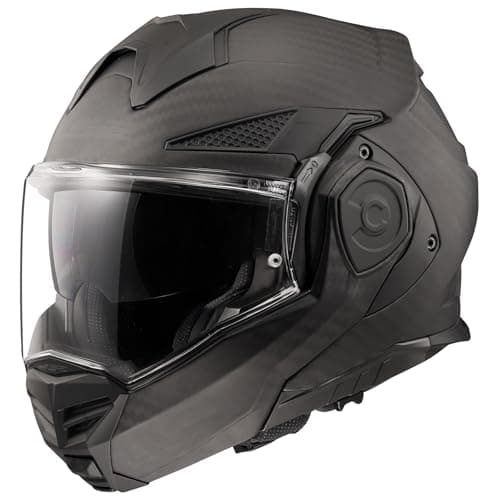
The best Shoei Neotec alternative is the LS2 Advant X Carbon— a 9K carbon modular that publishes DOT FMVSS 218, ECE 22.06 andECE P/J dual homologation, which means it is certified with the chin bar up as well as down. It is the pick for the touring rider who wants the Neotec's job done with a stronger certification line and a lighter shell. The budget pick is the HJC i90, a DOT and ECE flip-front with an internal sun visor for a small fraction of Neotec money — the pick if the Neotec's price, rather than the Neotec, is the problem. We have not tested any of these helmets. Everything below comes from published spec sheets, and the prices in the table are live Amazon figures stamped with the date they were pulled.
What the Neotec is known for, from Shoei's own specs
Give the original its due, because the alternatives have to beat something real. The Neotec II is a multi-composite shell with an internal sun visor, a genuinely quiet cabin by the standards of a flip-front, and a drop-in SRL2 Sena comms module that keeps the exterior lines clean instead of bolting a pod to the side. Shoei now lists the Neotec 3alongside it, so the II is the previous generation — which is also why its price moves around and why riders start shopping alternatives in the first place.
One fact shapes this page. Shoei does not publish ECE 22.06 on US-market helmets, and the Neotec II's US spec sheet carries DOT. That is not a criticism of the helmet — DOT is the US standard and the Neotec is a well-made lid — but it does mean the obvious upgrade path from a Neotec is a helmet that prints a named, current ECE revision and P/J homologation. Exactly one helmet here does both.
How these alternatives were ranked
First, P/J dual homologation. This is the certification that actually matters on a modular and almost nobody explains it. A P marking certifies the helmet as a full-face with the chin bar closed. A J marking certifies it as an open-face. A helmet with only P is certified closed— riding it with the chin bar up is a comfort mode, not a certified configuration. Our modular safety page has the detail. The Advant X Carbon publishes both letters. The other four here do not.
Second, what the rest of the certification line says. DOT alone is the US floor; DOT plus a named ECE revision is more. Where a maker publishes DOT and nothing further, the card says so rather than implying a European approval that is not printed.
Third, how the comms problem is solved.A modular is a touring helmet and a touring helmet has an intercom in it. There are three answers on this page: a drop-in module, a fully integrated unit, or a conventional external headset — and which one you want changes the ranking for you personally more than any other spec here.
Then shell material and weight, then value. Carbon and fiberglass composite shells save real grams over polycarbonate, and grams on a flip-front matter more than on a full-face because the mechanism and the second shield add mass high on your neck.
What none of these alternatives gives you
The Neotec's cabin.Shoei's noise control at highway speed is the single hardest thing on this list to replace, and we are not going to claim one of these five matches it — we have not measured any of them, and nobody publishes a number you can check. If quiet is the whole reason you want a Neotec, read our quietest-helmet ranking and how to reduce helmet wind noise before you switch, because earplugs beat a helmet swap on cost per decibel.
Snell. No modular on this page carries Snell M2020, and that is a category fact rather than a shortcoming of these five: a hinged chin bar and the Snell test program do not often go together.
The short answer
| # | Product | Best for | Score | Price |
|---|
| 01 | LS2 Advant X CarbonA 9K carbon shell with a carbon chin bar, dual-homologated ECE P and J so it is certified with the chin bar up as well as down — the rare carbon modular that does not make you choose. | Best carbon modular | | $599.98·Amazon |
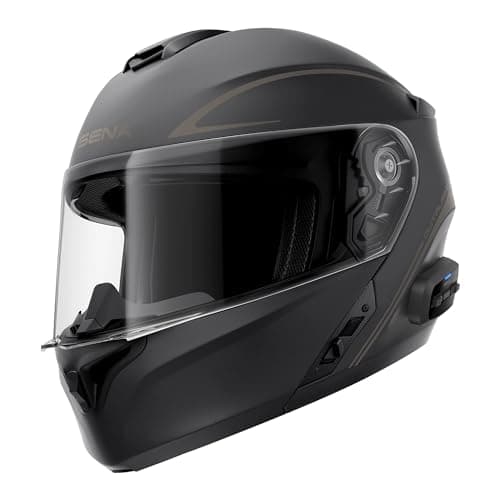
| 02 | Sena Outrush RThe cleanest do-it-all Bluetooth lid: a DOT-certified modular helmet with Sena's intercom built in, so there are no stick-on speakers, no dangling wires, and one thing to charge. Worth knowing it is now the earlier generation — Sena has followed it with the Outrush 2, which adds Mesh 3.0 and an ECE approval alongside DOT. | Best built-in Bluetooth | | $359.00·Amazon |
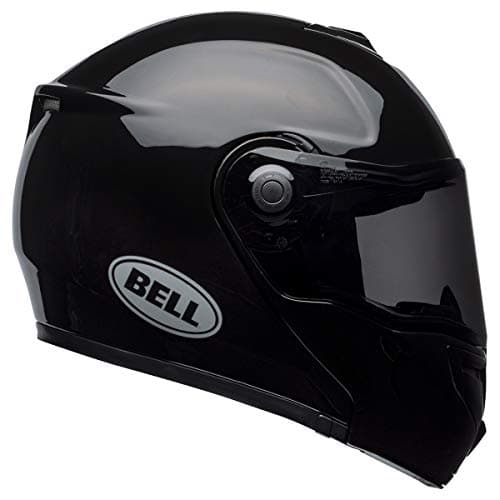
| 03 | Bell SRT ModularA fiberglass-composite modular with a class-leading Panovision eye-port and a drop-down sun shade, at a mid price that badly undercuts the premium tourers. | Best mid-price modular | | $399.95·Amazon |
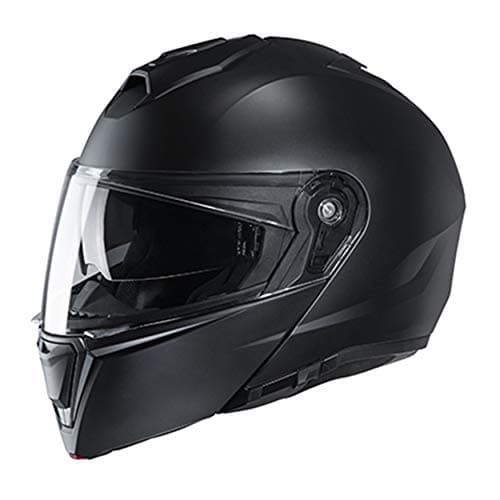
| 04 | HJC i90The value modular. DOT and ECE certified, a drop-down sun visor and a comfortable touring fit, for a price that leaves room in the budget for a proper headset. | Best value modular | | $136.52·Amazon |
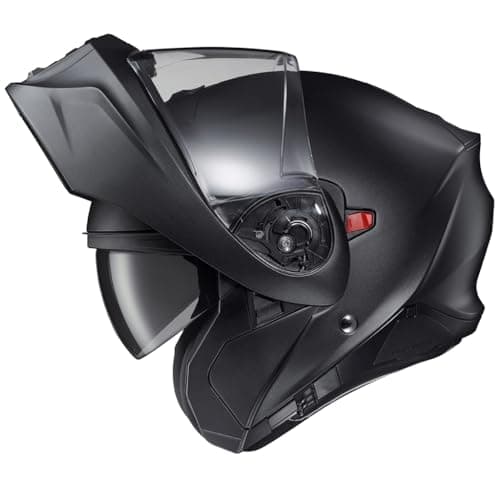
| 05 | Scorpion EXO-GT930A clever 3-in-1: full-face, modular or open-face from one DOT-certified shell, with a drop-down sun visor. The most flexible commuter lid on this list. | Most versatile (3-in-1) | | $279.95·Amazon |
#ad · Live prices from the Amazon Product API, as of November 23, 2026. Where we have no verified live price we show none — we would rather leave a gap than print a number that has rotted.
In detail
Best carbon modular
DOT FMVSS 218 · ECE 22.06ECE P/J dual-homologated9K carbon shell1,470 ±50 g
A 9K carbon shell with a carbon chin bar, dual-homologated ECE P and J so it is certified with the chin bar up as well as down — the rare carbon modular that does not make you choose.
- Certification
- 9.6
- Versatility
- 9.4
- Shell/weight
- 8.8
- Fit range
- 7.8
- Value
- 8.6
Pros
- +DOT and ECE 22.06, and separately certified as both a full face (P) and an open face (J)
- +9K carbon shell and a carbon chin bar, so the flip mechanism does not cost you weight
- +Pinlock Max-ready shield with the insert included, plus a drop-down sun visor
Cons
- −Only two shell sizes across XS-3XL
- −Heavier than a fixed-chin-bar carbon full-face
Don't buy this if…
…you never flip the chin bar — a fixed full-face saves you the hinge, the latch and some weight.
Best built-in Bluetooth
DOTModular flip-upIntegrated Sena intercomVoice + FM
The cleanest do-it-all Bluetooth lid: a DOT-certified modular helmet with Sena's intercom built in, so there are no stick-on speakers, no dangling wires, and one thing to charge. Worth knowing it is now the earlier generation — Sena has followed it with the Outrush 2, which adds Mesh 3.0 and an ECE approval alongside DOT.
- Certification
- 8
- Integration
- 9.4
- Sound
- 8.6
- Fit range
- 8
- Value
- 8.6
Pros
- +DOT-certified modular shell with the electronics fully integrated
- +Real Sena intercom, HD speakers, voice commands and FM — not a generic module
- +One charge port, one unit; nothing to retrofit or fall off
Cons
- −Integrated electronics can't be upgraded later
- −Heavier than a bare modular
- −Bluetooth only, and DOT only — the newer Outrush 2 adds Sena's Mesh 3.0 and an ECE approval
Don't buy this if…
…you already own a Cardo or Sena unit you like — a bare helmet plus your existing headset may serve you better — or you want mesh networking built in, which is the Outrush 2's job, not this one's.
Best mid-price modular
DOTFiberglass compositePanovision eye-portDrop-down sun shade
A fiberglass-composite modular with a class-leading Panovision eye-port and a drop-down sun shade, at a mid price that badly undercuts the premium tourers.
- Certification
- 8.2
- Shell/weight
- 8.4
- Noise/aero
- 8
- Fit range
- 8.2
- Value
- 8.8
Pros
- +DOT certified with a fiberglass composite shell (lighter than polycarbonate)
- +Huge Panovision field of view and a built-in sun shade
- +Class II Bluetooth-ready speaker pockets
Cons
- −Louder than the Shoei
- −Chin-bar latch feels less premium
Don't buy this if…
…you want the quietest possible touring cabin — the Neotec is a step up there.
Best value modular
DOT · ECEPolycarbonate shellInternal sun visorPinlock-ready
The value modular. DOT and ECE certified, a drop-down sun visor and a comfortable touring fit, for a price that leaves room in the budget for a proper headset.
- Certification
- 8.6
- Shell/weight
- 7.6
- Noise/aero
- 7.8
- Fit range
- 8.4
- Value
- 9.2
Pros
- +DOT and ECE certified modular at an entry price
- +Drop-down sun visor and a genuinely comfortable long-day fit
- +Pinlock-ready shield included
Cons
- −Heavier polycarbonate shell
- −Not as quiet as premium tourers
Don't buy this if…
…you want the lightest, quietest modular and have the budget for it.
Most versatile (3-in-1)
DOT3-in-1 convertibleDrop-down sun visorPolycarbonate
A clever 3-in-1: full-face, modular or open-face from one DOT-certified shell, with a drop-down sun visor. The most flexible commuter lid on this list.
- Certification
- 8
- Shell/weight
- 7.8
- Noise/aero
- 7.8
- Fit range
- 8.2
- Value
- 8.6
Pros
- +DOT certified and converts between full, modular and open-face
- +Drop-down internal sun visor and Pinlock-ready shield
- +Speaker pockets sized for a Bluetooth kit
Cons
- −Open-face mode reduces protection
- −Polycarbonate shell adds weight
Don't buy this if…
…you always ride closed and want the lightest, quietest dedicated modular.
Which alternative, for whom
The certification upgrade: the LS2 Advant X Carbon.For the touring rider who wants the best-documented modular on the market and will pay near-Neotec money for it. A 9K carbon shell with a carbon chin bar, DOT FMVSS 218 and ECE 22.06, P/J dual homologation and 1,470 ± 50 g published. It is the only helmet here certified to be ridden with the chin bar up.
The integrated-comms answer: the Sena Outrush R.For the rider who wanted the Neotec specifically for its clean SRL2 comms install. Sena's intercom is built into the helmet — no stick-on speakers, no wires, one thing to charge. Two honest caveats: it publishes DOT only, and Sena has followed it with the Outrush 2, which adds Mesh 3.0 and an ECE approval. Compare it against a better shell plus a standalone unit in Bluetooth helmet vs intercom.
The wide-view mid-price pick: the Bell SRT Modular.For the rider who finds most flip-fronts claustrophobic. A fiberglass-composite shell with a class-leading Panovision eye port and a drop-down sun shade, at a price that badly undercuts the premium tourers. Bell's street shells also suit round-oval heads, which the long-oval Shoei interior does not.
The cheapest real alternative: the HJC i90. For the rider whose objection to the Neotec is purely the price. DOT and ECE certified, internal sun visor, Pinlock-ready, comfortable touring fit, and it leaves enough in the budget for a proper headset. It is polycarbonate, so expect more grams and more noise than anything composite here.
The one that changes shape instead: the Scorpion EXO-GT930.For the commuter who wants three helmets in one. DOT certified, it runs as a full-face, a modular or an open-face from a single shell, with a drop-down sun visor in every configuration. Ranked last here because versatility costs weight and quiet, and because it publishes DOT only — but no other helmet on this page does what it does.
Before you switch away from a Neotec
Check your head shape first, because it may be the real reason. Shoei's interiors run long oval. If a Neotec in the right size pressed on your brow and left your cheeks loose, you did not have a Neotec problem, you had a shape problem— and the Bell and HJC shells here are the two patterns most likely to fix it.
Then decide whether you want a modular at all. A flip-front is heavier than the equivalent full-face, has more to go wrong and is usually certified closed anyway. Modular vs full face is the argument in full, and our touring ranking has the full-face options worth considering instead. If you want to stay with Shoei, our Shoei lineup ranking covers what else the brand sells in the US, and RF-1400 alternatives is the full-face version of this page.
How we picked
Everyone in this category says they tested twenty helmets. We haven't tested any — and we say so. What we do instead: compile the published DOT, ECE 22.06 and Snell certifications, the manufacturer's fit, weight and shell specs, the CE armor levels, and reputable published reviews, then score each pick against a published rubric. The scores are judgments from documented research — not measurements we took, because we do not run a lab and we are not going to pretend we do. Every certification and spec claim traces to a source we name and link.
Questions
What is the closest alternative to the Shoei Neotec II?+
On documentation, the LS2 Advant X Carbon: a carbon modular publishing DOT FMVSS 218, ECE 22.06 and ECE P/J dual homologation, which the Neotec's US spec sheet does not carry. On the thing most Neotec buyers actually want — clean integrated comms — the Sena Outrush R is closer, because the intercom is inside the helmet rather than drop-in.
Is there a cheaper modular as good as a Neotec?+
No, and we are not going to claim one. The HJC i90 at a fraction of the price does the same job— DOT and ECE certified, internal sun visor, touring fit — but it is a polycarbonate shell and the Neotec is multi-composite, which shows up as weight and noise over a long day. What a cheap modular can match is the certification floor; what it cannot match is the cabin.
What does P/J dual homologation mean, and why does it matter here?+
P certifies the helmet as a full-face with the chin bar closed;
Jcertifies it as an open-face. A modular marked P only is certified in the closed position, so riding it open is outside what was tested. Just one helmet on this page — the LS2 Advant X Carbon — publishes both. If you bought a flip-front specifically to ride with it open, that distinction is the whole purchase. See
are modular helmets safe.
Should I wait for the Shoei Neotec 3 instead?+
That depends on whether you need the thing the Neotec does uniquely well, which is the quiet cabin and the SRL2 comms integration. If you do, waiting is rational. If what you actually want is a certified-open modular, a lighter shell or integrated comms, the alternatives on this page already deliver those and a new Neotec will not change that arithmetic.
Do any of these take a drop-in comms module like the Neotec's SRL2?+
Not in the Shoei sense — a drop-in module designed for the shell is a Shoei strength. The
Sena Outrush R goes further by building the intercom into the helmet permanently; the other four take a conventional external headset, which means a pod on the side but also means you keep the unit when you change helmets. Our
intercom ranking covers the units that fit a modular cleanly.
Receipts
We do not run a testing lab, and we do not pretend to. Our picks are built from published certifications, manufacturer spec sheets, the standards documents themselves, and reputable published reviews — named and linked above. Where we could not verify something, we say so on the page rather than quietly leaving it out. Read our full method.