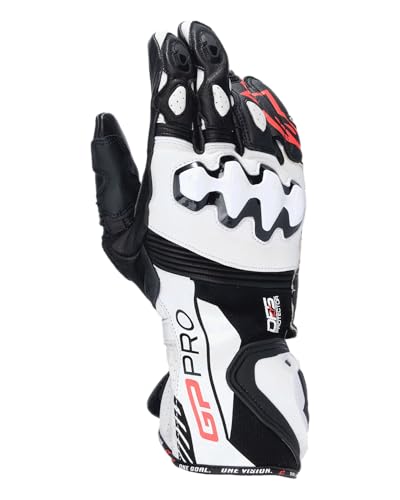
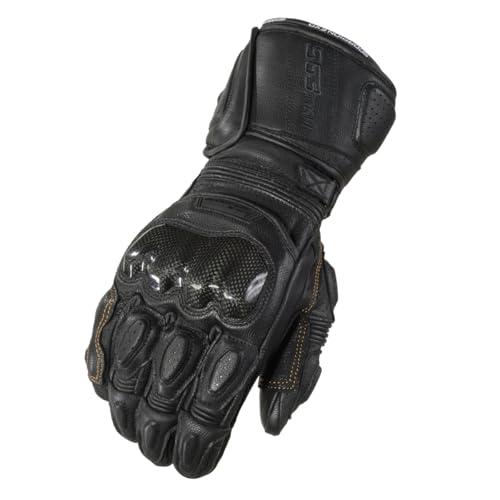
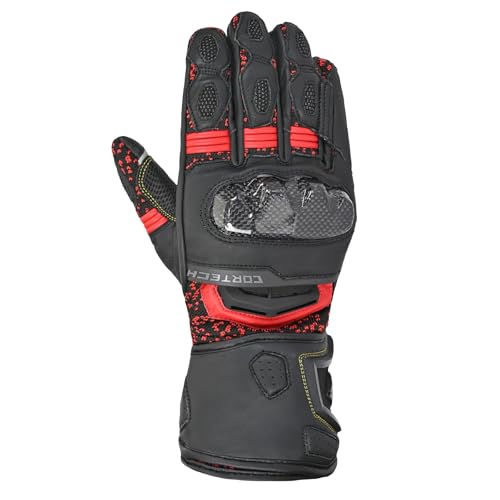
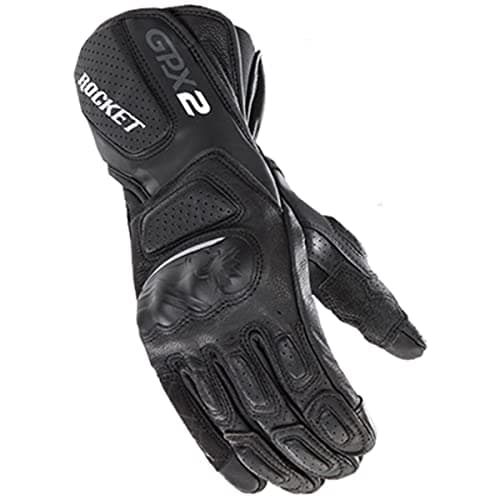
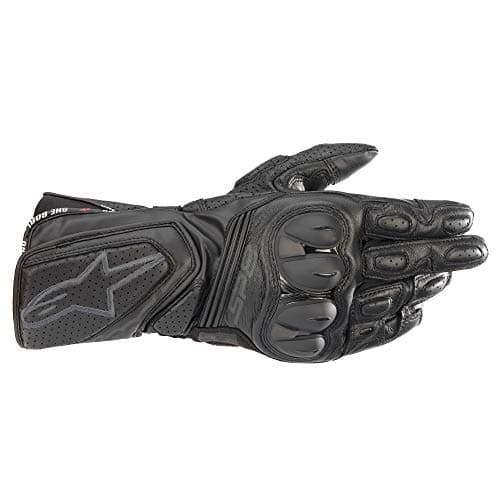
The best sportbike glove is the Alpinestars SP-8 V3, and the reason is a buyer-first one rather than a flattering one: it publishes the same standard, the same revision and the same level as the race glove ranked below it — EN 13594:2015, Level 1 with the KP knuckle marking— on a full gauntlet with a hard knuckle and a palm-sliding reinforcement, for a fraction of the money. The budget pick is the Joe Rocket GPX 2.0, the cheapest glove here by a long way: supple goatskin with a hard knuckle and real airflow, on a short cuff with no gauntlet, no palm slider and no published standard — all three of which are on its card below. We have not tested any of these gloves and we do not crash-test anything. Every certification, material and weight figure here is a published specification from the maker or the retailer, and every price in the table is a live Amazon figure stamped with the date it was pulled.
What makes a glove a sportbike glove
Not the graphics, and not the word "race" in the listing title. Two pieces of published evidence, and this page ranks on both.
One: a stated EN 13594 level. The standard sorts a glove into Level 1 or Level 2 and adds a separate optional KPmarking for a tested knuckle impact protector — optional at Level 1, mandatory at Level 2. It also sets requirements for the cuff length and for the restraint, which is the part riders skip over and the part that decides whether the glove is still on your hand at the end of the slide. Only two of the five gloves here publish any of it. Our EN 13594 explaineris the standard in plain English, including why "CE certified" on its own means almost nothing.
Two: a palm slider. This is the piece of hardware that genuinely separates a sportbike glove from a nice leather street glove, and it is widely misunderstood as an abrasion patch. It is not. A palm slider is a hard, low-friction plate on the heel of the hand whose job is to stop the palm gripping the asphalt. An un-sheathed palm catches, the hand stops, the arm does not, and the load goes into the wrist and the collarbone. A slider lets the hand skate instead of grab. Alpinestars adds a second, less-discussed benefit on the GP Pro R4 and publishes it: the plate limits heat transfer into your palm during a long slide.
Three of these five name a palm slider. One of them — the Cortech — publishes sliders on a dearer glove in the same family and pointedly does not name one here, which is why it ranks where it does.
How this ranking was built
Published standard first.A full line — standard, revision, level, KP marking — beats a partial one, which beats a bare "CE" badge, which beats nothing. Two gloves here publish the full line and two publish nothing at all, and the two that publish nothing are not the two cheapest, which is the interesting part.
Then slide hardware— palm slider, finger sliders, and whether the knuckle shell is hard or soft. Then palm construction: leather type, and whether the seams are turned to the inside. External seams on a palm are the first thing to abrade through, and inner-seam construction is a genuine, checkable build difference rather than marketing.
Then the closure count.A sportbike glove should fasten twice — once at the wrist and once at the cuff — because a single closure can be pulled off the hand. Four of these five fasten twice, and the one that does not is the short-cuff budget pick, which is honest about being a summer glove rather than a slide glove. Short vs gauntlet gloves covers that trade in full.
Then comfort and value. Nothing here is scored on a test we ran; the rubric is on our methodology page.
The three features to look for that nobody prints clearly
The finger bridge.A short strip of leather tying the ring and little fingers together so the little finger cannot separate and get caught on its own in a tumble — the injury that ends more racing seasons than it should. Alpinestars publishes a third-and-fourth finger bridge on its women's Stella SP-8 V3. Worth knowing: none of the five gloves on this page names a finger bridge in the listings we read, including the most expensive one. We are not going to claim a feature that is not published, so treat it as a question to ask rather than a box any of these ticks.
Where the knuckle shell is anchored.A "floating" knuckle protector is stitched so it moves with the hand as you close it on the bar; a rigidly mounted one fights you and tends to lever off the joint under load. Cortech publishes a floating carbon fiber knuckle; Scorpion publishes accordion stretch zones around its carbon-reinforced TPU shell. Both are describing the same problem.
Palm leather, specifically.The palm takes the slide, and the four leathers in this field are not equal: kangaroo (thin, strong, expensive — the GP Pro R4), goat (supple, good feel — three of the five), cowhide (thick, durable, less feel) and synthetic. A glove that publishes its palm leather separately from its backhand leather is a glove whose maker thought about the palm.
Pick by what you actually do with the bike
Fast road riding: the Alpinestars SP-8 V3.The complete published certification line, a full gauntlet, a hard knuckle and a palm-sliding reinforcement, at a price that sits well under the race gauntlets it borrows its pattern from. The gauntlet runs warm in peak summer and there is a firm break-in period — both real, both on its card. For most riders on most sportbikes this is where the argument ends.
Track days and race school: the Alpinestars GP Pro R4.Kangaroo palm with the seams turned inside, a palm hard slider, finger sliders, DFS Race knuckle and cuff armor, aramid reinforcement, dual closure, and a published weight of roughly 455 g per pair. It is the glove with nothing missing from its spec sheet. It is also stiff, hot and several times the price of the winner, and the winner publishes the same level — so buy it because you are doing sessions, not because it is the most expensive thing on the page. Check your organizer's tech sheet before you buy: cuff-length requirements vary and are not ours to state.
The most hardware per dollar: the ScorpionEXO SG3 MK III.A named palm slider, a carbon-fiber-reinforced TPU knuckle and hard TPU finger protectors on perforated goat leather, at a price much closer to the street gloves than to the race gloves. The whole case against it is one sentence long and it is on the card: no EN 13594 claim anywhere. If you want visible slide hardware and are willing to buy it unrated, this is the glove. If "unrated" is a dealbreaker, it is not.
Longest service life: the Cortech Revo RR V2.The most carefully described palm on the page — abrasion-resistant goat leather with SuperFabric reinforcement and Kevlar stitching — a floating carbon fiber knuckle, a TPU gauntlet cuff, double wrist closures and a four-year warranty. It ranks fourth because of two omissions rather than any flaw: no published CE level, and no palm slider named, when Cortech names sliders on its dearer Sector Pro RR.
Hot weather and a spare pair: the Joe Rocket GPX 2.0.Goatskin, a hard knuckle, palm padding and genuine ventilation, cheap enough to keep a second pair under the seat. It is a short cuff, so there is no gauntlet over the wrist, no palm slider and no published standard — which is why it is last and why it is framed as a summer glove rather than a sportbike glove. For more of the same bracket, our gloves under $50 ranking is the honest version of that shelf, and our summer glove ranking ranks airflow properly.
Sizing a race-cut glove, which is not like sizing a street glove
A sport glove is cut pre-curved, for a hand already closed around a bar. It will feel short in the fingers and tight across the back of the hand when you try it on flat, and that is correct — it is the resting shape that is wrong, not the size. Two things to get right instead:
The fingertips. You want little or no empty leather beyond the end of each finger. Slack fingertips bunch at the lever and blister on a long session, and in a slide an empty tip is leather that tears instead of leather that slides. The cuff over the jacket. A gauntlet goes over the jacket sleeve, never under it, and both closures get fastened. A gauntlet tucked inside a sleeve is a funnel for air and a glove that can be pulled off. Our glove sizing guide has the hand length and palm width method, and how to choose motorcycle gloves covers the whole decision from the start.
Where the rest of the kit has to match
A race gauntlet seals over a jacket cuff, which means the jacket has to have a cuff worth sealing. If the jacket end of the kit is the gap, our sport jacket ranking sorts the sport-cut shelf on published EN 17092 class first, and the best jackets under $200 covers what is available when the class is not. Below the waist, the same published-evidence logic drives our riding jeans under $150. And if what you actually want is the leather street glove rather than the race gauntlet, our leather glove ranking and the main motorcycle glove ranking are the two pages to read instead.