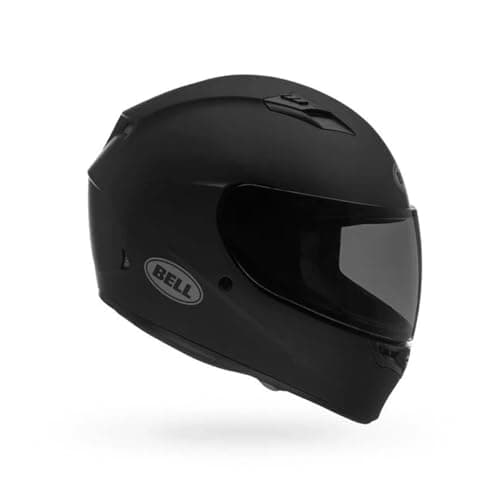
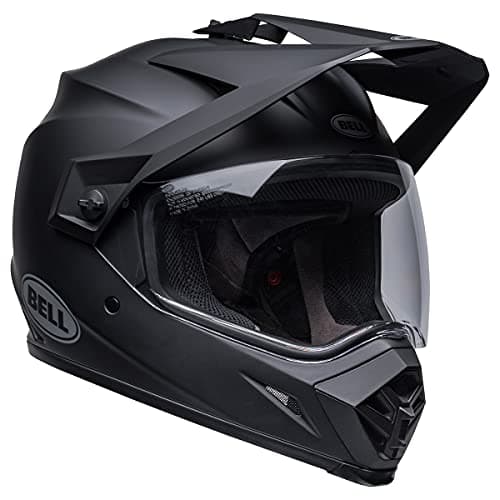
The best Bell for most riders is the MX-9 Adventure MIPS — DOT and ECE 22.06, a MIPS rotational-impact liner as standard equipment rather than an option, a removable peak and a real face shield, which makes it three helmets in one for anyone who rides pavement and the odd fire road. The budget pick is the Bell Qualifier, the cheapest helmet in this ranking: DOT only, heavy, a little loud, and still a certified full-face that fits round heads better than most premium lids do. We did not test any of these — we do not have a lab — so every number below is Bell's own published spec or the retail listing, and the price in the table below is a live Amazon figure stamped with the date it was pulled.
Bell earns its own page for a reason that has nothing to do with graphics. Shell count. Most helmet makers build two or three shell sizes and pad them up and down to cover XS–2XL, which means riders at the edges of a band end up in a shell that is the wrong size with thicker foam making up the difference. Bell publishes five shell and five EPS sizes on the Custom 500 and the Race Star Flex DLX — the finest fit granularity on this page by a wide margin, and the single biggest reason a Bell often fits when something more expensive does not. The second reason is MIPS, which Bell fits as standard to the MX-9 Adventure and the Moto-9 line rather than charging for it.
How this ranking was built
Published certification first, including the revision — ECE 22.06 added an oblique (rotational) impact test that 22.05 never ran, so the revision on the strap matters. Then shell material and published weight, then shell and EPS count, then features, then value. We flag two things on this page that most Bell write-ups skip. The Race Star Flex DLX's US spec sheet lists Snell M2015, a superseded revision — Snell has since published M2020 and M2025 — and the standard Bullitt publishes "DOT and ECE" with no revision number at all, with the separate Bullitt GT being the variant retailed as ECE 22.06. Both facts are in those picks' cons below. The rubric behind the scores is on our methodology page; none of it comes from a test we ran.
Bell's model naming is easier to read than most. MX is off-road, Moto is motocross, SRT is street touring, Race Star is the carbon flagship, and the Custom 500, Bullitt and Rogue are the heritage line. The numbers are tiers, not generations.
The short answer
| # | Product | Best for | Score | Price |
|---|
| 01 | Bell MX-9 Adventure MIPSThe adventure helmet most riders should buy: DOT and ECE certified, MIPS rotational-impact liner as standard, a removable peak and a real face shield, at a price that leaves money for the rest of the kit. | Best adventure helmet overall | | $249.95·Amazon |
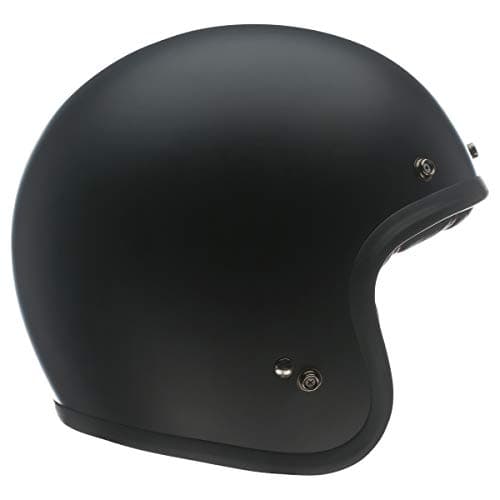
| 02 | Bell Custom 500The open-face standard: a DOT-certified fiberglass composite shell in five shell sizes, so the helmet actually fits your head instead of one shell being padded down to five sizes. | Best open-face overall | | $179.95·Amazon |
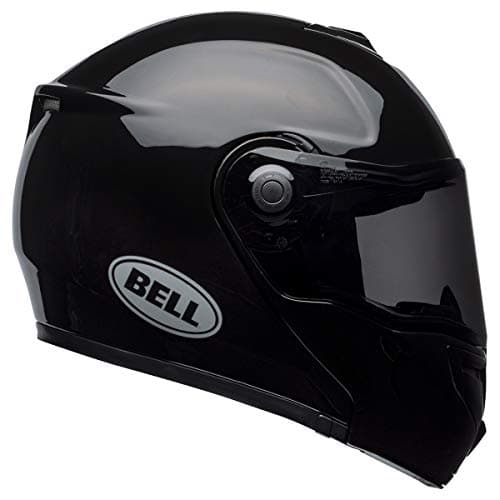
| 03 | Bell SRT ModularA fiberglass-composite modular with a class-leading Panovision eye-port and a drop-down sun shade, at a mid price that badly undercuts the premium tourers. | Best mid-price modular | | $399.95·Amazon |
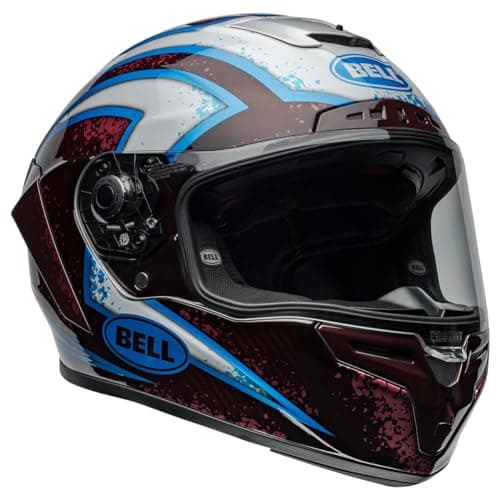
| 04 | Bell Race Star Flex DLXThe lightest and most expensively built helmet here - a 3K carbon shell in five shell sizes at a published 3.57 lbs, with a photochromatic shield in the box. It is ranked last because it is also the one that publishes the least about its airflow and the oldest certification revision. | Lightest shell, least published airflow | | $589.95·Amazon |
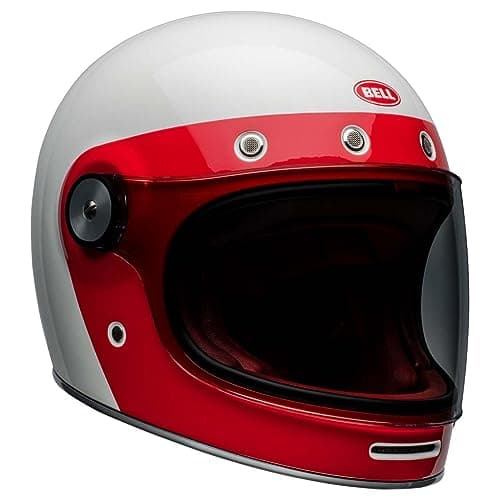
| 05 | Bell BullittThe helmet that restarted this whole category. A low-profile fiber composite shell in three sizes at 3.24 lb, with a leather-trimmed micro-suede interior nothing else here matches — but Bell does not print an ECE revision on the standard Bullitt. | Lightest composite shell | | $439.95·Amazon |
| 06 | Bell QualifierThe default budget full-face for good reason: DOT certified, a wide range of sizes and colors, and a click-release shield. It is heavy and a bit loud, but it protects and it fits round heads well. | Budget round-head fit | | $149.95·Amazon |
#ad · Live prices from the Amazon Product API, as of November 19, 2026. Where we have no verified live price we show none — we would rather leave a gap than print a number that has rotted.
In detail
Best adventure helmet overall
DOT · ECE 22.06MIPS3 shell sizesRemovable peak
The adventure helmet most riders should buy: DOT and ECE certified, MIPS rotational-impact liner as standard, a removable peak and a real face shield, at a price that leaves money for the rest of the kit.
- Certification
- 9
- Weight
- 7.4
- Versatility
- 9.2
- Ventilation
- 8.8
- Value
- 9
Pros
- +MIPS low-friction layer is standard, not an upcharge
- +Two-point removable peak plus an adjustable face shield — three configurations from one lid
- +Velocity-flow venting and NutraFog II anti-fog coating
- +Now listed to ECE 22.06, the current revision with its own oblique-impact test
Cons
- −Polycarbonate shell, so heavier than a composite ADV lid (Bell lists 3.74 lb)
- −No internal drop-down sun visor — you swap the shield or ride in sunglasses
Don't buy this if…
…you want the lightest possible helmet for all-day highway miles — a composite shell saves real weight on your neck.
Best open-face overall
DOTFiberglass composite5 shell sizes~1,200 g
The open-face standard: a DOT-certified fiberglass composite shell in five shell sizes, so the helmet actually fits your head instead of one shell being padded down to five sizes.
- Certification
- 8
- Fit
- 9.4
- Weight
- 9
- Features
- 6.6
- Value
- 8.4
Pros
- +Five shell and EPS sizes — rare at any price, and the single biggest fit advantage here
- +Fiberglass composite shell at roughly 1,200 g, light on the neck
- +Five-snap pattern takes the whole aftermarket of shields, peaks and bubble visors
Cons
- −No shield in the box — budget for one or wear goggles
- −Low-profile oval shape does not suit genuinely round heads
Don't buy this if…
…you want a drop-down sun visor and a sealed shield out of the box — this is a deliberately bare classic.
Best mid-price modular
DOTFiberglass compositePanovision eye-portDrop-down sun shade
A fiberglass-composite modular with a class-leading Panovision eye-port and a drop-down sun shade, at a mid price that badly undercuts the premium tourers.
- Certification
- 8.2
- Shell/weight
- 8.4
- Noise/aero
- 8
- Fit range
- 8.2
- Value
- 8.8
Pros
- +DOT certified with a fiberglass composite shell (lighter than polycarbonate)
- +Huge Panovision field of view and a built-in sun shade
- +Class II Bluetooth-ready speaker pockets
Cons
- −Louder than the Shoei
- −Chin-bar latch feels less premium
Don't buy this if…
…you want the quietest possible touring cabin — the Neotec is a step up there.
Lightest shell, least published airflow
3K carbon shell, 5 shell + 5 EPS sizes3.57 lbs publishedPanovision ProTint photochromatic shield includedSnell M2015 + DOT
The lightest and most expensively built helmet here - a 3K carbon shell in five shell sizes at a published 3.57 lbs, with a photochromatic shield in the box. It is ranked last because it is also the one that publishes the least about its airflow and the oldest certification revision.
- Published ventilation
- 6.8
- Certification
- 7.4
- Shell/weight
- 9.6
- Fit range
- 9.4
- Value
- 7
Pros
- +A 3K carbon shell in five shell and five EPS sizes - the finest size granularity on this page by a clear margin
- +The lightest published weight here at 3.57 lbs, which matters most on exactly the long hot days this page is about
- +The Panovision ProTint photochromatic shield is included in the box and darkens and clears with the light, which removes the sunglasses problem entirely
- +Flex three-layer impact liner, Virus Cool Jade power mesh liner and Magnefusion magnetic cheek pads
- +Snell certification at all, which no other helmet on this page carries
Cons
- −The US spec sheet states Snell M2015 - a superseded revision; Snell has published M2020 and M2025 since, and no ECE revision is listed on that sheet at all
- −Bell names a Velocity Flow Ventilation system on its European listings but publishes no vent count anywhere we could verify, which is a thin airflow claim on a helmet at this price
- −No Pinlock insert mentioned as included, despite the price
- −By far the most expensive helmet on this page
Don't buy this if…
…you are buying on the certification line: the AGV K3 and the LS2 Stream II both publish ECE 22.06, the current revision, for a lot less money.
Lightest composite shell
DOT · ECE (no revision published)Fiber composite shell3 shell sizes3.24 lb
The helmet that restarted this whole category. A low-profile fiber composite shell in three sizes at 3.24 lb, with a leather-trimmed micro-suede interior nothing else here matches — but Bell does not print an ECE revision on the standard Bullitt.
- Certification
- 8.2
- Shell/weight
- 8.8
- Fit range
- 8.4
- Features
- 8.4
- Value
- 6.8
Pros
- +Fiber composite shell at a published 3.24 lb — roughly 200 g lighter than the Biltwell
- +Three shell sizes (XS–SM, MD–LG, XL–2XL) under a genuinely low-profile vintage silhouette
- +Five metal mesh intake vents plus a rear exhaust, and 3D-cut cheek pads with speaker pockets
Cons
- −The published spec sheet lists it as DOT and ECE with no revision number — the separate Bullitt GT is the variant retailed as ECE 22.06
- −The most expensive helmet on this page by a wide margin
- −Amazon stock is colorway- and size-specific, so the exact lid you want may not be listed on a given day
Don't buy this if…
…you want the current ECE revision printed on the strap — the standard Bullitt does not publish one and the Biltwell does.
Budget round-head fit
DOTPolycarbonate shellNutraFog II shieldRound-head friendly
The default budget full-face for good reason: DOT certified, a wide range of sizes and colors, and a click-release shield. It is heavy and a bit loud, but it protects and it fits round heads well.
- Certification
- 7.4
- Shell/weight
- 7
- Noise/aero
- 7.2
- Fit range
- 8.2
- Value
- 9.2
Pros
- +DOT certified at a rock-bottom price
- +Suits rounder head shapes that premium brands often ignore
- +Click-release shield and padded wind collar to cut noise
Cons
- −DOT only, no ECE or Snell
- −Heavy polycarbonate shell
- −Louder than composite lids
Don't buy this if…
…you want ECE 22.06 or Snell certification, or the lowest weight — this is a budget-first pick.
Which Bell is for which rider
One helmet for mixed riding: the MX-9 Adventure MIPS. Peak on and shield off for dirt, peak off and shield on for the highway, MIPS underneath either way. The trade is weight — Bell lists 3.74 lb, because the shell is polycarbonate rather than composite — and there is no internal drop-down sun visor, so sunglasses or a tinted shield are a separate purchase. Compare it against the rest of the category in our adventure helmet ranking.
Classic bikes and short rides: the Custom 500. Five shell sizes and a fiberglass composite shell at roughly 1,200 g make this the best-fitting, lightest open-face here, and the five-snap pattern takes the entire aftermarket of shields, peaks and bubble visors. Two honest caveats: there is no shield in the box, and no open-face helmet protects your jaw. If that matters more to you than the look, buy the Qualifier instead.
Touring and commuting: the SRT Modular. A fiberglass composite flip-up with the Panovision eye-port and a built-in drop-down sun shade, at a price well under the premium touring modulars. It is louder than a Shoei Neotec and the chin-bar latch feels less expensive, which is most of why it costs what it does. Our modular helmet ranking puts it side by side with the alternatives, and are modular helmets safe covers the question riders actually mean when they ask it.
Track days and long sport miles: the Race Star Flex DLX. A 3K carbon shell in five shell and five EPS sizes at a published 3.57 lb, with the ProTint photochromatic shield in the box — the shield alone removes the sunglasses problem. It is the only pick here that carries Snell at all, though the listed revision is the older M2015.
Cafe racers: the Bullitt. A low-profile fiber composite shell in three sizes at a published 3.24 lb, with a leather-trimmed interior nothing else here matches. Buy it for the look and the weight, not for the certification label — the standard Bullitt does not publish an ECE revision. See it against the rest of the retro field in our retro helmet ranking.
Bell and head shape
Bell's street full-face shells run friendlier to round and round-oval heads than the European brands, which is why the Qualifier keeps turning up in recommendations for riders who find a Shoei pinches at the temples. The heritage shells (Custom 500, Bullitt) are deliberately low-profile and suit a flatter, more oval head. Measure before you choose with our measuring guide and work out your shape with head shapes explained — a helmet that is the right size in the wrong shape is still the wrong helmet.
How we picked
Everyone in this category says they tested twenty helmets. We haven't tested any — and we say so. What we do instead: compile the published DOT, ECE 22.06 and Snell certifications, the manufacturer's fit, weight and shell specs, the CE armor levels, and reputable published reviews, then score each pick against a published rubric. The scores are judgments from documented research — not measurements we took, because we do not run a lab and we are not going to pretend we do. Every certification and spec claim traces to a source we name and link.
Questions
Are Bell motorcycle helmets good?+
On published specs, yes — and for one specific reason worth more than most marketing: shell count. Bell builds the Custom 500 and the Race Star Flex DLX in five shell and five EPS sizes, which is finer fit granularity than nearly anything else at the price, and it fits MIPS as standard to the MX-9 Adventure and Moto-9 lines. The weak spot is certification revisions: the Race Star's US sheet lists the superseded Snell M2015, and the standard Bullitt publishes no ECE revision number.
Which Bell helmet is the quietest?+
Of the picks here, the SRT Modular and the Race Star Flex DLX — both composite shells with wind collars, where the Qualifier's polycarbonate shell is the loudest. Bell does not publish decibel figures for any of them and neither do we, because we have not measured them. If noise is your binding constraint, our
quietest helmet page explains what actually drives helmet noise and
how to reduce helmet wind noise covers the fixes that work on a helmet you already own.
Does every Bell helmet come with MIPS?+
No. MIPS is standard on the MX-9 Adventure and the Moto-9 line, and is not fitted to the Qualifier, Custom 500, SRT Modular, Bullitt or Race Star Flex DLX. MIPS is a rotational-management layer, not a certification — a helmet with it still has to pass DOT or ECE on its own. Our
what is MIPS explainer covers what it does and does not claim.
Bell Qualifier or Bell Custom 500?+
Different jobs. The Qualifier is a full-face: it covers your jaw, it is the cheapest pick here, and it suits round heads. The Custom 500 is an open-face: it fits better and weighs less, and it leaves your face exposed. If protection is the deciding factor, the Qualifier wins on coverage alone — see
types of motorcycle helmets for what each shape does and does not cover.
Receipts
We do not run a testing lab, and we do not pretend to. Our picks are built from published certifications, manufacturer spec sheets, the standards documents themselves, and reputable published reviews — named and linked above. Where we could not verify something, we say so on the page rather than quietly leaving it out. Read our full method.