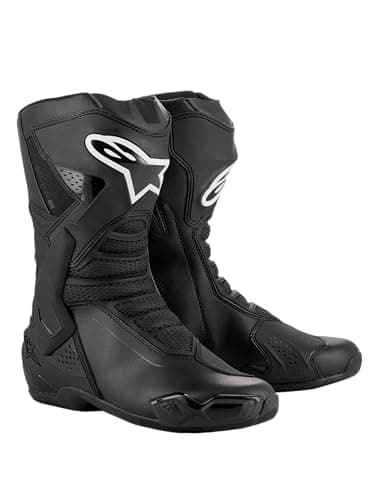
The best sport boot for most riders is the Alpinestars SMX-6 V3 — CE-certified to EN 13634, tall enough to guard the shin, stiff enough to resist a twist, and still walkable off the bike, which is why it is the boot most street sport riders should own. The budget pick is the SHIMA SX-2 EVO, the cheapest boot here and the most transparent about what its certification is worth: SHIMA publishes the complete EN 13634:2017 level string, and every digit is a 1 — the floor of the standard, which is still a very great deal more than a sneaker with a moto badge on it. We have not tested any of these. Every certification and construction claim below comes from the maker's published specs, and every price in the table below is a live Amazon figure stamped with the date it was pulled.
The site already ranks touring boots, adventure boots, cruiser boots and riding shoes. This page is the missing one: the sport cut, where the priorities invert. A touring boot optimizes for a waterproof membrane and all-day comfort. A sport boot optimizes for torsional rigidity and ankle bracing, because the injury a sportbike low-side produces is an ankle rolled sideways or a foot trapped and crushed — not a wet sock.
What makes a boot a sport boot
Four published things, in the order they matter. One: the EN 13634:2017 level string.The standard scores four separate properties — height, impact abrasion, crush resistance and transverse rigidity — and each gets a 1 or a 2. A boot that publishes "level 1|1|2|2" is telling you it reached the higher grade on crush and rigidity, which are precisely the sport failure modes. A bare "CE certified" badge with no string tells you only that it passed something. Two: an ankle brace or disc — a named TPU structure or SEESOFT-type disc that limits lateral roll, not just foam padding. Three: a torsion-controlled or shanked sole, which stops the boot flexing into a shape your ankle cannot follow. Four: shaft height, because the shin is the second thing to hit.
Our EN 13634 explainer walks through the level string digit by digit, and short vs tall bootscovers the coverage trade-off. Everything on this page is a judgment from those published documents and the makers' own spec sheets — scored against the rubric on our methodology page, never against a test we ran.
The short answer
| # | Product | Best for | Score | Price |
|---|
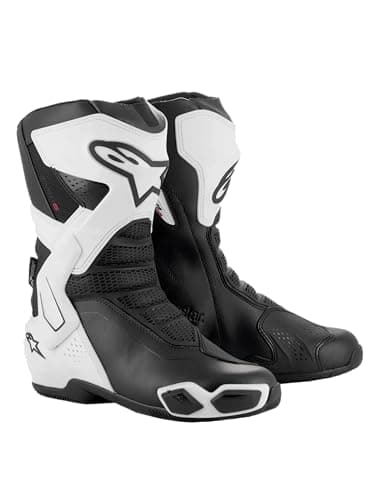
| 01 | Alpinestars SMX-6 V3The do-most sport-touring boot: CE-certified, tall enough to guard the shin, stiff enough to resist a twist, and comfortable enough to walk in — the boot most street riders should buy. | Best overall boot | | $349.95·Amazon |
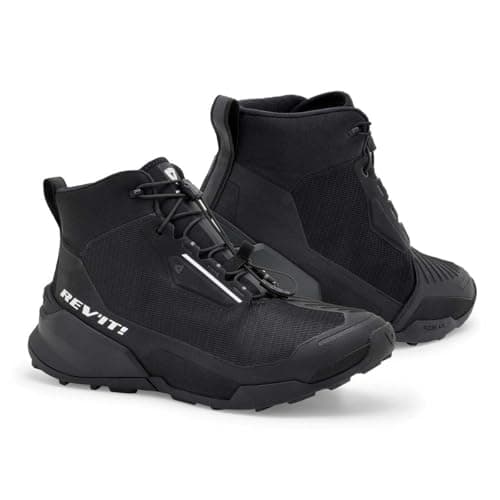
| 02 | REV'IT! SubductionThe most specific certification claim on this page. REV'IT publishes an actual EN 13634:2017 level string instead of a bare CE badge, and the FLEXBLADE structure under the sole targets the one thing a sneaker normally gives up first: resistance to being crushed sideways. | Highest published certification | | $260.21·Amazon |
| 03 | Alpinestars Stella SMX-6 V3 DrystarThe women's version of the boot that tops our main boots ranking, with the most named protection on this page: a TPU lateral ankle brace, a race-derived TPU shin plate and replaceable toe sliders, over a Drystar waterproof liner, CE certified to EN 13634:2017 on a last Alpinestars calls a dedicated female fit. | Best women's sport-touring boots | | $394.95·Amazon |
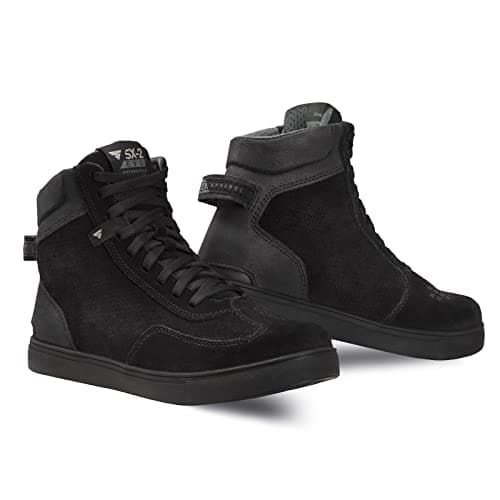
| 04 | SHIMA SX-2 EVOThe cheapest genuinely certified shoe here, and the most transparent about what that certification is worth: SHIMA publishes the full level string and every digit is a 1. That is the floor of the standard — and the floor of a real standard is still a great deal more than a fashion sneaker with a moto badge on it. | Best certified budget pick | | $104.99·Amazon |
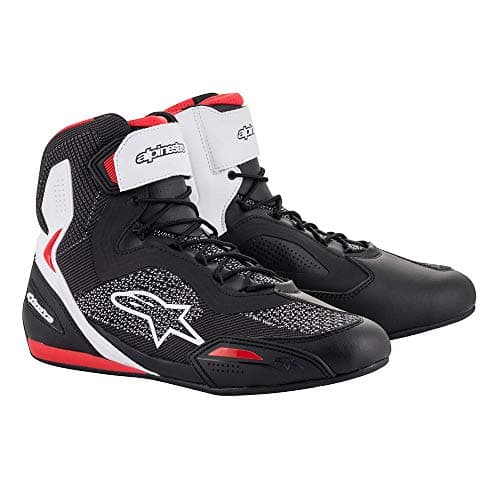
| 05 | Alpinestars Faster-3 RideknitThe hot-weather answer: knitted mesh panels and a 3D mesh lining over a certified chassis with a TPU ankle and a support shank. This is the shoe for riders whose alternative, on a 95-degree commute, is riding in actual sneakers. | Best for hot weather | | $199.00·Amazon |
#ad · Live prices from the Amazon Product API, as of November 19, 2026. Where we have no verified live price we show none — we would rather leave a gap than print a number that has rotted.
In detail
Best overall boot
EN 13634 CETall shaftAnkle armorTorsion-controlled sole
The do-most sport-touring boot: CE-certified, tall enough to guard the shin, stiff enough to resist a twist, and comfortable enough to walk in — the boot most street riders should buy.
- Protection
- 9
- Fit/comfort
- 8.4
- Weather
- 8.4
- Walkability
- 7.6
- Value
- 8.2
Pros
- +CE-certified with ankle protection and a controlled-flex sole
- +Tall shaft guards the shin and ankle without feeling like a race boot
- +Reasonably walkable off the bike
Cons
- −Pricey
- −Stiffer than a casual boot until broken in
Don't buy this if…
…you want a low, casual boot you can wear all day off the bike — this leans sport.
Highest published certification
EN 13634:2017, level 1|1|2|2FLEXBLADE sole structureSEESOFT ankle discsNo membrane
The most specific certification claim on this page. REV'IT publishes an actual EN 13634:2017 level string instead of a bare CE badge, and the FLEXBLADE structure under the sole targets the one thing a sneaker normally gives up first: resistance to being crushed sideways.
- Certification
- 9.4
- Protection
- 9
- Weather
- 6.6
- Walkability
- 9
- Value
- 7.8
Pros
- +REV'IT publishes "Level 1 | 1 | 2 | 2 certified according to standard EN 13634:2017" — the only per-test level string among the premium picks here
- +FLEXBLADE sole technology is built around transversal rigidity, which is the protection a low-cut shoe usually trades away first
- +SEESOFT ankle discs and an external TPU heel bumper, on a strobel-constructed shoe that still walks like a sneaker
Cons
- −No waterproof membrane — the Subduction H2O is a separate, dearer shoe, and this one wets through
- −REV'IT does not say which digit belongs to which test. Read in the standard's usual marking order, the two Level 2 ratings land on impact cut and transverse rigidity — but that is our reading, not a REV'IT statement
- −A polyester upper is a technical textile, not leather, and it looks it: this is a sneaker with a certificate rather than a shoe that passes for dress-casual
Don't buy this if…
…you commute in weather. The TCX Dartwood WP and the Alpinestars Chrome Drystar both keep water out, and this one does not.
Best women's sport-touring boots
EN 13634:2017Dedicated female fitTPU ankle brace + shin plateDrystar liner, EU 36-43
The women's version of the boot that tops our main boots ranking, with the most named protection on this page: a TPU lateral ankle brace, a race-derived TPU shin plate and replaceable toe sliders, over a Drystar waterproof liner, CE certified to EN 13634:2017 on a last Alpinestars calls a dedicated female fit.
- Certification
- 8.4
- Women's fit & sizing
- 9
- Protection hardware
- 9.2
- Weather
- 8.8
- Value
- 6.6
Pros
- +Alpinestars names the standard and its 2017 revision, and is the only maker here to state in writing that the boot is built on a dedicated female fit
- +TPU lateral ankle brace, a race-derived TPU shin plate and replaceable dual-density TPU toe sliders: the longest list of named hardware on this page
- +Drystar waterproof and breathable liner behind a microfiber upper, on a boot that averages about 13 inches tall
- +Alpinestars publishes a separate women's footwear chart, so the EU-to-US conversion on the box is the right one for this boot
Cons
- −The most expensive boot in this ranking by a wide margin
- −No per-test level published: EN 13634:2017 and nothing more, where the RST prints its four digits
- −A single-sided ankle brace on the lateral side only, per the spec sheet, not a brace on both sides
- −Medium-stiffness sport sole and a tall shaft: it walks, but it is not the boot to spend a day off the bike in
Don't buy this if…
…you want a boot you will happily walk around in all afternoon: this leans sport, and the Sidi and Tourmaster are the touring picks.
Best certified budget pick
EN 13634:2017, level 1111ArmorPlus ankle absorbersPerforated suede upperReinforced heel and toe
The cheapest genuinely certified shoe here, and the most transparent about what that certification is worth: SHIMA publishes the full level string and every digit is a 1. That is the floor of the standard — and the floor of a real standard is still a great deal more than a fashion sneaker with a moto badge on it.
- Certification
- 8.6
- Protection
- 7.6
- Weather
- 5.8
- Walkability
- 8.8
- Value
- 9.4
Pros
- +SHIMA publishes "certified according to EN 13634:2017, protection level 1111" — the complete string, which almost nothing at this price does
- +ArmorPlus impact absorbers at the ankle with TPU reinforcement, reinforced heel and toe areas, and a transversely reinforced sole
- +Perforated suede with reflective detailing and a spare set of fluo laces, at roughly half the price of the premium picks here
Cons
- −Level 1 across all four rated areas is the minimum a shoe can score and still be certified — it passes every test at the lower level
- −Perforated suede is a summer upper: no membrane, and it soaks through in sustained rain
- −EU sizing and thin per-size stock on Amazon, so the size you want may not come in the color you want
Don't buy this if…
…you ride through winter or in regular rain — this is a ventilated warm-weather shoe and it will not keep your feet dry.
Best for hot weather
CE EN13634:2017Knitted mesh upperTPU + dual-density ankleIntegrated support shank
The hot-weather answer: knitted mesh panels and a 3D mesh lining over a certified chassis with a TPU ankle and a support shank. This is the shoe for riders whose alternative, on a 95-degree commute, is riding in actual sneakers.
- Certification
- 8.2
- Protection
- 8.2
- Weather
- 5.6
- Walkability
- 9.2
- Value
- 8.2
Pros
- +Knitted mesh panels and a 3D mesh lining make it the airiest shoe here by a wide margin
- +Enhanced TPU ankle extended into the lower lateral area plus medial dual-density ankle protectors, over a rubber sole with an integrated support shank
- +Alpinestars states the certification precisely on its own product page — "CE EN13634:2017" with an issue date — rather than leaving it to the retailer
Cons
- −No membrane and no water resistance: knit panels wet through in the first shower and stay wet
- −Alpinestars publishes the standard but not the level reached in each rated area, so you cannot compare it directly against the REV'IT or the SHIMA
- −The lowest-cut shoe in this group, so ankle coverage is the least here, and the lateral strap-over-laces closure is fussier than a quick lace
Don't buy this if…
…you want one pair of shoes for the whole year — this is a warm, dry-weather shoe, and the Dartwood or the Chrome Drystar covers far more of the calendar.
Which sport boot, and why
The default: Alpinestars SMX-6 V3. CE-certified to EN 13634 with ankle protection and a controlled-flex sole, a shaft tall enough to guard the shin, and enough walkability that you will actually keep wearing it. It is stiff until broken in and it is not cheap. If you want the same boot built on a last Alpinestars states is a dedicated female fit, the Stella SMX-6 V3 Drystaradds a TPU lateral ankle brace, a race-derived shin plate, replaceable toe sliders and a Drystar waterproof liner — the most named protection of anything here. The women's field in full is in our women's boot ranking.
The highest published certification: REV'IT! Subduction.REV'IT publishes an actual level string — level 1 | 1 | 2 | 2 to EN 13634:2017 — rather than a bare CE badge, and the FLEXBLADE sole structure is built specifically around transverse rigidity, which is the property a low-cut shoe normally gives up first. There is no waterproof membrane, so this is a dry-weather or summer choice.
Hot weather: Alpinestars Faster-3 Rideknit. Knitted mesh panels over a certified chassis with a TPU ankle and a support shank. The honest reason it is on a sport page is that it is the boot for the rider whose realistic alternative on a 95-degree commute is riding in actual sneakers — and that comparison, not the comparison with a race boot, is the one that matters.
Spending the least: SHIMA SX-2 EVO."Certified according to EN 13634:2017, protection level 1111" is the complete string, which almost nothing at this price publishes, with ArmorPlus ankle absorbers and a reinforced heel and toe. Level 1 across the board means it reached the standard's floor on crush and rigidity, not its higher grade — so it is a certified sport shoe, not a race boot, and we rank it as one.
What a sport boot will not do
It will not make up for a bad fit, and it will not replace the rest of the kit. Two things worth saying plainly. A boot has to close properly around your calf — a tall shaft you cannot fasten is a shaft that can be pulled off in a slide, and how boots should fit covers what to check. And no boot protects your shin above its shaft, which is why riders who spend real time at speed pair sport boots with knee and shin armor. If your boots arrive stiff — all of these will — how to break in boots is the method that does not involve soaking them.
How we picked
Everyone in this category says they tested twenty helmets. We haven't tested any — and we say so. What we do instead: compile the published DOT, ECE 22.06 and Snell certifications, the manufacturer's fit, weight and shell specs, the CE armor levels, and reputable published reviews, then score each pick against a published rubric. The scores are judgments from documented research — not measurements we took, because we do not run a lab and we are not going to pretend we do. Every certification and spec claim traces to a source we name and link.
Questions
What is the difference between a sport boot and a touring boot?+
Priorities, not price. A touring boot is built around a waterproof membrane, all-day comfort and walkability; a sport boot is built around torsional rigidity, ankle bracing and shaft height, because a sportbike crash twists and crushes a foot rather than soaking it. Many sport-touring boots — the SMX-6 V3 among them — deliberately sit in the middle. Our
touring ranking is the other side of the trade.
Do I need a race boot for track days?+
Check your track day organizer's tech rules first — most require boots that cover the ankle, and many specify a dedicated motorcycle boot rather than a shoe. Of the picks here, the tall SMX-6 V3 and Stella SMX-6 V3 are the ones built for that use; the Subduction, SX-2 EVO and Faster-3 are shoes, and a shoe will not satisfy a rule written for boots no matter what its certification string says.
What does level 1|1|2|2 mean on a motorcycle boot?+
It is EN 13634:2017's four-property score: height, impact abrasion, crush resistance and transverse rigidity, each graded 1 or 2. So 1|1|2|2 means the boot reached the higher grade on crush resistance and transverse rigidity — the two properties that matter most in a sport crash — and the lower grade on height and abrasion. Our
EN 13634 explainer goes through each digit, and it is the single most useful thing to look for on a spec sheet.
Can I ride sport in riding shoes instead of boots?+
You can, and a certified riding shoe is dramatically better than sneakers. But a shoe covers the ankle and nothing above it, so it gives up shin coverage and usually a grade of transverse rigidity. If your riding is commuting plus the occasional spirited ride, our
riding shoe ranking is the honest place to shop. If you ride at speed often, buy the boot.
Receipts
We do not run a testing lab, and we do not pretend to. Our picks are built from published certifications, manufacturer spec sheets, the standards documents themselves, and reputable published reviews — named and linked above. Where we could not verify something, we say so on the page rather than quietly leaving it out. Read our full method.