Start here, because it is the thing almost nobody gets right: if your riding gear has "stopped being waterproof," the most likely cause is not the membrane. It is the outer face fabric wetting out— the water-repellent finish on the surface has worn off, so the shell soaks instead of beading. A soaked outer face feels wet, conducts cold, and stops the membrane breathing, so you get clammy from the inside and conclude it is leaking. The fix for that is a DWR reproofing treatment, it costs very little, and it is the first thing to try on any jacket, pant, boot or glove that has gone from beading to blotching.
The second thing to understand is that "waterproof" means three different constructions, and they fail differently. A laminatehas the membrane bonded to the shell — the outer fabric is the rain layer, so a wetted-out face is immediately noticeable. A drop liner has a separate membrane layer hanging inside the shell; the shell soaks on purpose and the water is stopped further in, which is why a drop-liner jacket can look drenched and keep you dry. A zip-out liner is a removable rain jacket inside a non-waterproof shell, which is why a mesh jacket with a waterproof liner is, as we put it on our own ranking, a rain jacket under a sieve. Which one you own decides what reproofing can do for it.
We do not run wash tests and we are not going to tell you a treatment restored a garment to factory spec, because we have not measured it. What follows is the published construction logic from the makers whose gear we rank, plus the care instructions garment and footwear makers publish themselves. Where the honest answer is "this cannot be fixed," we say so instead of selling you a bottle of spray.
What to look for before you treat anything
- Which construction is it? Look for the words. Tourmaster publishes "waterproof/breathable laminate" with electronically seam-sealed construction on the Mariner pant; Alpinestars publishes a Drystar membrane that sits between the upper and the lining on the Radon boot. Laminate, membrane-between-layers, or removable liner — the label usually says.
- Is it wetting out or leaking? Hold the garment under a tap. If the water soaks in and darkens the fabric immediately, it is wetting out and a DWR treatment is the answer. If water beads on the surface and you are still getting wet inside, the membrane or the seam tape is the problem and a spray will not touch it.
- Where exactly is it getting wet inside? Seams, zips and cuffs are the usual culprits and none of them is the membrane. Water running down a sleeve and in at the cuff is a fit-and-overlap problem; water at the shoulder seams is seam tape.
- Is it clean? This is the step everyone skips and it matters most. Road grime, body oils and detergent residue all attract water and defeat a DWR finish. Reproofing dirty gear wastes the treatment. Our jacket washing guide covers doing it without wrecking the garment.
- Does the armor come out? Remove every protector before washing or treating. Soaking foam armor is a good way to degrade it, and a soaked back protector takes days to dry.
Boots have their own routine because the materials differ so much from garment to garment — our boot care guide covers leather, microfiber and membrane boots separately.
The short answer
| # | Product | Best for | Score | Price |
|---|
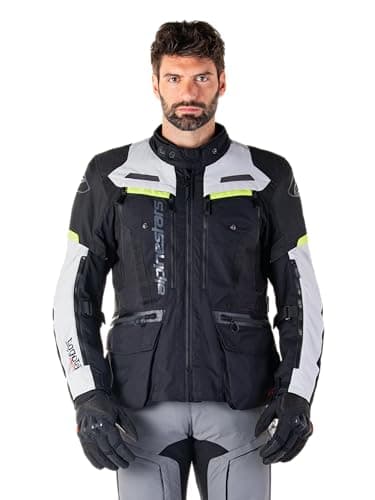
| 01 | Alpinestars Bogota Pro DrystarCE Category II certified to EN 17092 AA class with CE Level 2 shoulder and elbow armor and a Drystar membrane — a genuine four-season touring shell that publishes every number that matters. | Best waterproof jacket overall | | $485.00·Amazon |
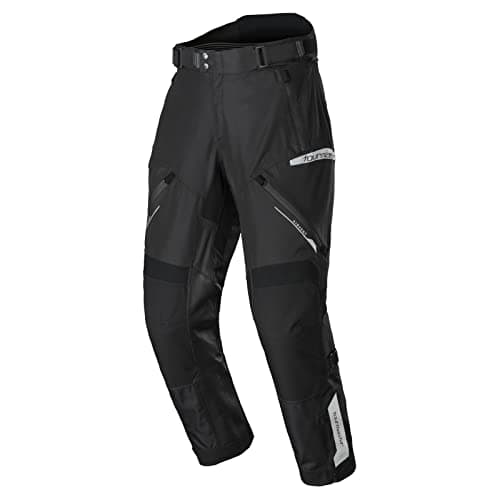
| 02 | Tourmaster Mariner Laminated PantsA genuinely laminated pant at a mid price, with Armanox CE Level-2 knee armor and the longest vent list here. The catch is at the hip, where Tourmaster fits EVA foam rather than a certified protector and says so. | Best laminate for the money | | $191.99·Amazon |
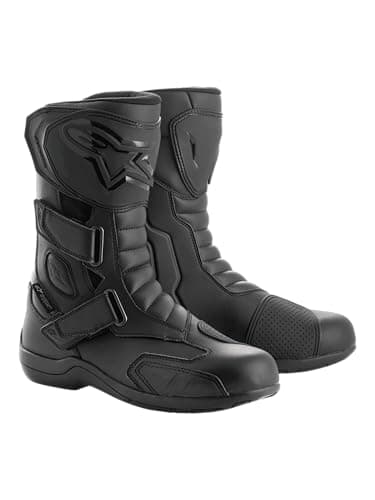
| 03 | Alpinestars Radon DrystarThe certified waterproof default: CE certified to EN 13634:2010 with a Drystar membrane, dual-density ankle protectors and a TPU shin plate — a real protective boot that happens to also keep the rain out. | Best waterproof boot overall | | $259.95·Amazon |
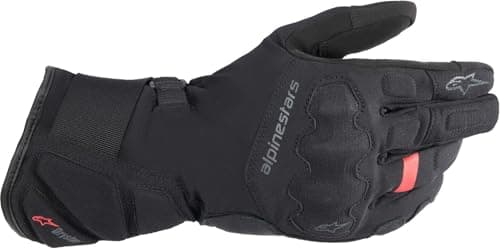
| 04 | Alpinestars Tourer W-7 V2 DrystarThe cold-and-wet answer: a waterproof, insulated Drystar touring glove with knuckle protection that keeps your hands working when the temperature drops and the road is wet. | Best winter / waterproof | | $129.95·Amazon |
#ad · Live prices from the Amazon Product API, as of October 19, 2026. Where we have no verified live price we show none — we would rather leave a gap than print a number that has rotted.
In detail
Best waterproof jacket overall
EN 17092 AA classNucleon Flex Pro CE L2Drystar membraneTech-Air ready
CE Category II certified to EN 17092 AA class with CE Level 2 shoulder and elbow armor and a Drystar membrane — a genuine four-season touring shell that publishes every number that matters.
- Certification
- 9.7
- Waterproofing
- 9.4
- Armor
- 9.4
- Versatility
- 9.2
- Value
- 7.4
Pros
- +AA garment class plus CE Level 2 shoulder and elbow armor — the strongest published pair here
- +Three-layer liner-to-drop system reconfigures for wet, cold or dry without changing jackets
- +Tech-Air 5 and Tech-Air 3 ready, with a back-protector pocket in the lining
Cons
- −The most expensive jacket on this page by a wide margin
- −Back protector is sold separately despite the pocket
Don't buy this if…
…your wet riding is an occasional commute — you are paying for a four-season touring shell you will not use.
Best laminate for the money
450 denier Cordura laminate shellArmanox CE Level-2 knee armorEVA foam hip pads (not certified armor)Front and back thigh vents
A genuinely laminated pant at a mid price, with Armanox CE Level-2 knee armor and the longest vent list here. The catch is at the hip, where Tourmaster fits EVA foam rather than a certified protector and says so.
- Published certification
- 7.6
- Armor included
- 8.2
- Weather range
- 9
- Fit/adjustment
- 8.8
- Value
- 9.4
Pros
- +A true laminate: Tourmaster publishes an abrasion-resistant 450 denier Cordura polyester waterproof/breathable laminate shell with electronically seam-sealed construction and a DWR coating
- +Armanox CE Level-2 knee armor on a three-position adjustable mount - the highest published knee level on this page alongside the REV'IT!
- +The best-ventilated pant here: large vertical front AND back thigh zippered air vents, which the three liner-based pants cannot match once zipped up
- +Full-circumference and standard 8-inch jacket-to-pant connection zippers, waterproof leather inner leg panels and a reinforced gripper seat panel
- +Full-length zip-out thermal liner and a 4-year warranty, the longest here
Cons
- −Hip protection is EVA foam, not a certified EN 1621-1 protector - the only pant here with a Level 2 knee and no certified hip
- −Tourmaster publishes no EN 17092 garment class at all, so there is no published evidence of how the shell resists abrasion
- −450 denier is the lightest published fabric weight on the page; the FLY runs 1680D at its wear areas
- −A laminate cannot be stripped down on a hot day - you open the vents and that is the whole adjustment range
Don't buy this if…
…you want certified protection at the hip as well as the knee: the REV'IT! ships both, and the Alpinestars at least sells you the hip piece separately.
Best waterproof boot overall
CE EN 13634:2010Drystar membraneDual-density ankleTPU shin plate
The certified waterproof default: CE certified to EN 13634:2010 with a Drystar membrane, dual-density ankle protectors and a TPU shin plate — a real protective boot that happens to also keep the rain out.
- Protection
- 9
- Fit/comfort
- 8.2
- Weather
- 9.6
- Walkability
- 7.4
- Value
- 8.4
Pros
- +Published CE EN 13634:2010 certification — not just a waterproof claim
- +Drystar waterproof and breathable membrane sits between the upper and the lining
- +Dual-density ankle protectors on both sides, plus a TPU shin plate and shift pad
- +Three lateral hook-and-loop straps let you dial the closure around your calf
Cons
- −Microfiber upper does not develop the character of leather
- −Stiffer to walk in than a touring boot with a softer sole
Don't buy this if…
…you want a boot that passes for street footwear off the bike — this looks like what it is.
Best winter / waterproof
Waterproof DrystarInsulatedKnuckle protectionTouring cut
The cold-and-wet answer: a waterproof, insulated Drystar touring glove with knuckle protection that keeps your hands working when the temperature drops and the road is wet.
- Protection
- 8.2
- Fit/feel
- 8
- Weather
- 9.6
- Durability
- 8.6
- Value
- 8.2
Pros
- +Waterproof, windproof Drystar membrane with insulation
- +Keeps dexterity better than most winter gloves
- +Knuckle protection and a long, sealing cuff
Cons
- −Too warm for summer
- −Bulkier feel than a summer glove
Don't buy this if…
…you only ride in warm, dry weather — this is a cold-and-wet specialist.
What works, by item
| Item | What reproofing restores | What it cannot fix | Honest expectation |
|---|
| Textile jacket or pants | Surface water repellency, breathability, cold-conduction | A punctured membrane, failed seam tape, a dead zip | Very good. The most worthwhile reproofing you will do |
| Leather jacket | Suppleness and some water resistance via wax or conditioner | Leather is not waterproof and never was | Partial. Leather is for abrasion, not for rain |
| Membrane boots | Surface repellency on the upper | A membrane cracked at the flex point | Good on the upper; a leaking membrane is terminal |
| Non-membrane boots | Real water resistance from wax on leather | Water entering over the top of the shaft | Decent. Reapply often |
| Waterproof gloves | Surface repellency, which stops the shell going heavy | Water running down the sleeve into the cuff | Modest. Glove cuff order matters more |
| Mesh jacket with a zip-in liner | Nothing useful — the shell is not the rain layer | The shell was never meant to stop water | None. Use the liner or an oversuit |
The method, in order
- Empty it and strip it. All armor out, all liners unzipped and treated separately, pockets emptied, every zip closed.
- Wash it with a technical cleaner, not detergent. Ordinary detergent leaves a residue that attracts water; fabric softener is worse. Use a cleaner made for technical outerwear, on the cycle the maker specifies.
- Apply the DWR — wash-in or spray-on. Spray-on is the better choice for anything with a drop liner or a non-waterproof inner layer, because it only treats the outer face. Wash-in is simpler for a laminate.
- Activate it with low heat if the maker allows it. Most DWR finishes need gentle warmth to cure — a tumble dryer on low, or an iron on a low setting through a cloth. Check the garment label first; some membranes and all armor say no heat.
- Test it with a tap before you trust it with a commute. Water should bead and run. If it still soaks in, repeat once. If it still soaks after that, the fabric face is worn out rather than dirty.
Boots and gloves need a different plan
Bootsfail at the flex point. A membrane boot creases across the ball of the foot thousands of times a ride, and that is where a membrane eventually cracks — which is also why a boot that leaks on one foot and not the other is almost always a genuine membrane failure rather than a care problem. Treat the upper, dry them at room temperature and never on a radiator, and accept that a cracked membrane is the end of the boot's waterproofing. Our waterproof boots ranking explains how the membranes are built and our break-in guide covers why heat and soaking are bad ideas for glued construction generally.
Glovesmostly do not leak — they fill. Water runs down the outside of your sleeve and in at the cuff, and no treatment on earth stops that. The fix is mechanical: a gauntlet glove worn over the jacket sleeve, or a short glove worn under a storm cuff, with no gap. Get the order wrong and the most expensive waterproof glove made will be full of water in twenty minutes. Our short vs gauntlet gloves guide covers which way round for which jacket, and our winter glove ranking names which membranes the makers publish.
When the honest answer is replacement
Four failures are not fixable at home, and we would rather say that than imply a spray bottle solves everything:
- Seam tape lifting. If you can see the tape peeling inside, water is coming through the stitch holes. Some makers will re-tape under warranty; nobody does it well in a kitchen.
- A cracked or delaminated membrane. Usually at a flex point, and usually in one spot. Terminal.
- A failed main zip or storm flap. A zip that no longer closes under the flap lets water straight in. Replaceable by a tailor, not by you.
- A shell whose face fabric is simply worn through. DWR sits on fibres. When the fibres are abraded flat, there is nothing for it to sit on.
If you are replacing rather than reproofing, the construction to buy depends on how much rain you ride in: a true laminate like the Tourmaster Mariner pant keeps the water out of the shell itself and ventilates through zips, while a drop-liner jacket like the Alpinestars Bogota Pro Drystar lets the shell soak and stops the water further in. Our waterproof jacket ranking and gear for rain guide set out the whole wet-weather kit, and mesh vs textile explains why a summer jacket with a rain liner is not a rain jacket.
How we picked
Everyone in this category says they tested twenty helmets. We haven't tested any — and we say so. What we do instead: compile the published DOT, ECE 22.06 and Snell certifications, the manufacturer's fit, weight and shell specs, the CE armor levels, and reputable published reviews, then score each pick against a published rubric. The scores are judgments from documented research — not measurements we took, because we do not run a lab and we are not going to pretend we do. Every certification and spec claim traces to a source we name and link.
Questions
Can you make a motorcycle jacket waterproof?+
You can restore the water repellency of a jacket that was built waterproof, with a wash and a DWR treatment. You cannot make a jacket waterproof that was not built that way — there is no membrane to restore. For a mesh or non-membrane shell the answer is a zip-in liner or a rain oversuit worn on top.
My jacket beads water but I still get wet. Why?+
Beading means the DWR is working, so the problem is further in: seam tape, a zip, a storm flap, or water running in at the cuffs and collar. Check the inside of the seams for lifting tape, and check whether the wet patch is where water would run rather than where it would soak through.
How often should I reproof motorcycle gear?+
When it stops beading, not on a schedule. For a daily commuter that tends to be once or twice a season; for occasional use, far less. The trigger to watch for is the outer fabric darkening in the rain instead of shedding it.
Can you waterproof leather motorcycle gear?+
You can make it water resistant with a wax or a leather-specific treatment, and you should condition it either way so it does not dry out. You cannot make it waterproof. Leather is bought for abrasion resistance and for how it ages, not for rain — see our
leather vs textile comparison.
Will a hairdryer or radiator help gear dry faster?+
Dry everything at room temperature, away from direct heat. Membranes, glued boot construction and impact armor are all damaged by heat, and the damage is invisible from the outside. Low-heat tumble drying is sometimes specified to cure a DWR finish — that is a different, maker-approved step, and only if the label allows it.
Why do my waterproof gloves still fill with water?+
Because water is running down your sleeve and in at the cuff rather than through the glove. Wear gauntlets over the jacket sleeve, or short gloves under a storm cuff, with no gap. Our
short vs gauntlet guide covers which order for which jacket.
Receipts
We do not run a testing lab, and we do not pretend to. Our picks are built from published certifications, manufacturer spec sheets, the standards documents themselves, and reputable published reviews — named and linked above. Where we could not verify something, we say so on the page rather than quietly leaving it out. Read our full method.