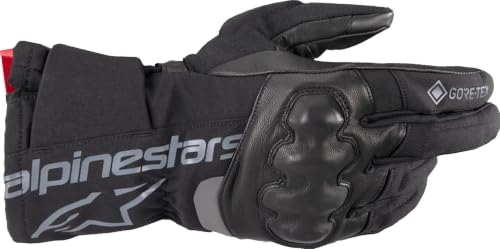
The best waterproof motorcycle glove is the Alpinestars WT-4 Gore-Tex — a genuine GORE-TEX glove with GORE GRIP construction and 80 g PrimaLoft Silver insulation, which means it stays waterproof through a long wet day instead of wetting out and still lets you feel the levers. It is the pick for a rider whose wet days are also cold days. The budget pick is the INBIKE Waterproof Winter glove, the cheapest waterproof glove here worth wearing: fleece-lined with a hard knuckle and TPR palm padding, and no published CE level, which its card says plainly. We have not tested any of these gloves in the rain or anywhere else. Every membrane name, insulation weight and certification line below comes from the maker's published specification, and the prices in the table are live Amazon figures with the date they were pulled.
The one fact that shapes this whole page
There is no waterproof standard for a motorcycle glove. EN 13594 does not test water. The standard that governs riding gloves measures abrasion resistance, impact protection, seam strength and restraint — see EN 13594 explained— and a glove can carry a Level 2 rating and leak in ten minutes. “Waterproof” on a glove listing is a marketing claim with no certification behind it, every single time.
So this page ranks the only evidence that exists: whether the maker names the membrane, how the membrane is built in, and where the cuff seals. A glove that says “GORE-TEX” or “hydratex Z-liner” has told you a checkable thing. A glove that says “waterproof” has told you nothing, and two of the five picks here are in that position — stated on their cards rather than left for you to find out.
How this ranking was built
First, is the membrane named?GORE-TEX, Drystar, hydratex — a named membrane is a supplier with a reputation and a specification attached. GORE in particular licenses its name and audits the construction, which is why a GORE-TEX glove is the only kind where the membrane maker has a say in how the glove is built.
Second, how the membrane is laminated. This is the spec almost nobody explains and it decides how the glove behaves in hour three. A Z-liner is a membrane floating between the outer shell and the lining: the shell soaks through first, the membrane holds the water out, and your hand stays dry inside a heavy, cold, saturated glove. A laminated or GORE GRIP construction bonds the membrane closer to the outer layer, so the glove takes on far less water and keeps more bar feel. Both keep your hands dry. Only one keeps the glove usable.
Third, and this is where most waterproof gloves actually fail: the cuff. Water does not come through a membrane, it comes in at the wrist and runs down your sleeve. A long gauntlet seals overa jacket sleeve and sheds water outward; a short or “regular” cuff is designed to sit underthe sleeve and relies on the jacket. Read this carefully, because it is the reason riders say a glove leaked when the membrane was fine: REV'IT! classes both of its gloves here as regular rather than gauntlet length, and says so on its own spec sheets.
Then the published EN 13594 level, then insulation, then value. Protection still matters and two picks here publish a full certification line including the revision year. Insulation is a separate axis from waterproofing entirely, which is the next section.
Waterproof is not the same as warm, and the pages are different
A membrane keeps water out. It does not make heat.Riders conflate these two because the same gloves often do both, but they are independent specs and buying the wrong one is expensive. The REV'IT! Convergent H2O here is fully waterproof with no insulation at all— a rain glove for mild days — while the Stratos 3 GTX adds 3M Thinsulate G in two weights over its GORE-TEX liner and the WT-4 adds 80 g PrimaLoft.
If cold is your actual problem rather than wet, our winter glove ranking ranks on insulation and is the page you want; if heat is the problem, heated gloves and heated grips are a different answer again. And if you ride wet weather all year, the honest conclusion is the one our touring glove page reaches: one pair cannot do a whole year, because insulation cannot be vented away.
Which pair, for whom
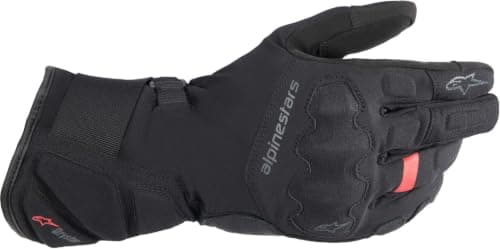
Cold and wet, best construction: the Alpinestars WT-4 Gore-Tex.For the rider who commutes or tours through genuine winter rain. GORE-TEX with GORE GRIP construction so bar feel survives, 80 g PrimaLoft Silver Insulation Active that vents excess heat rather than trapping sweat, a mid cuff that wears over or under a sleeve, and conductive thumb and index fingertips. It costs three to four times what a value winter glove costs and it is far too warm above cool spring weather — both in its cons.
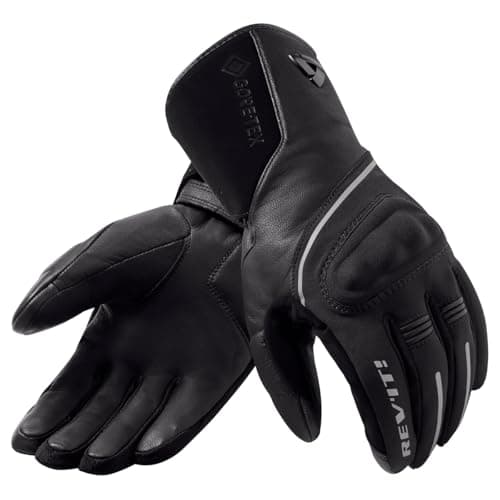
Cold and wet, women's pattern: the REV'IT! Stratos 3 GTX Women's. For a woman who rides through winter and wants a complete certification line. A GORE-TEX Z-liner, 3M Thinsulate G in 300 g and 80 g weights, water-repellent goatskin, a Temperfoam palm slider and a visor wiper, with Level 1 KP to EN 13594:2015published in one line. Two honest limits: REV'IT! classes the cuff as regular rather than gauntlet, so it will not seal over a sleeve on a cold wet highway, and sizes start at small.
The sealing cuff: the Alpinestars Tourer W-7 V2 Drystar.For the touring rider who wants a long cuff that actually closes over a jacket. A waterproof, windproof Drystar membrane with insulation, knuckle protection and a long sealing cuff, with better dexterity than most insulated gloves. Drystar is Alpinestars' own membrane rather than a licensed one, which is a step below GORE-TEX on documentation and a step above an unnamed liner.
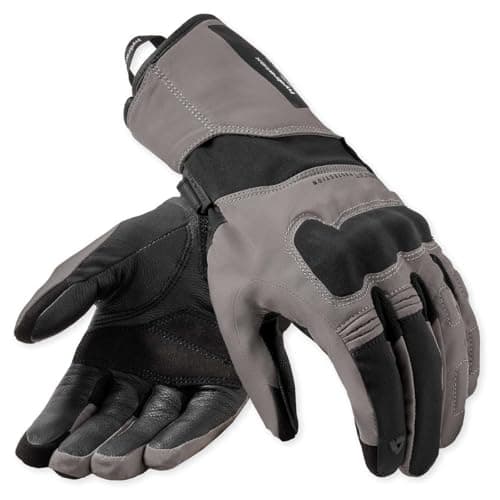
Rain without the bulk: the REV'IT! Convergent H2O Women's.For mild wet riding, and for the smallest hands on this page — the size run starts at 2XS, which nothing else here matches. A hydratex Z-liner inside goatskin and PWR|shell ripstop with CE Level 1 knuckle protection certified to EN 13594:2015. There is no insulation anywhere on the spec list and the knuckle protector is soft rather than a hard shell: both stated on its card.
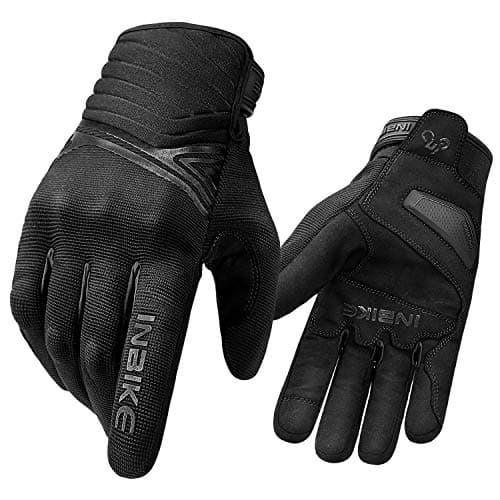
The cheapest waterproof glove worth wearing: the INBIKE Waterproof Winter.For the rider deciding between a cheap waterproof glove and giving up until spring. Waterproof with a thermal fleece lining, a hard knuckle, TPR palm padding rather than bare fabric, and touchscreen fingertips. No CE level is stated, the membrane is not named, and it is bulkier than leather so bar feel drops noticeably — all three in its cons. It is on this page because a waterproof glove you own beats a GORE-TEX glove you are still saving for.
Two things that matter more than the glove
Get the overlap right at the wrist. If your glove has a gauntlet, it goes over the jacket sleeve so water runs off the outside. If it has a regular cuff, it goes under, and the jacket cuff has to close over it. Getting this backwards is the most common reason a genuinely waterproof glove fills with water, and it costs nothing to fix. Short vs gauntlet covers the trade in full, and our waterproof jacket ranking explains the laminate-versus-drop-liner split on the garment that has to seal over it.
Then get the size right, because a wet glove is a loose glove.Leather and textile both relax when soaked, and a glove that was snug dry can rotate on the bar wet, which is exactly when you want it not to. Size on a snug dry fit with the fingers just short of the ends — our sizing guide has the method, and how to choose motorcycle gloves covers the protection features to insist on at any price.