Skip to content
LID & LEATHER

The lid · Helmets

The Best Dirt Bike Helmets

An off-road lid is a different machine from a road helmet — no shield, a peak that catches, and goggles doing the eye protection. Ranked on the homologations each one publishes.

By Stephen V.Updated How we research
#ad

We earn a commission when you buy through our Amazon links, at no extra cost to you. It never affects our rankings, and we say so when the cheaper gear is the better buy. How this works.

A dirt bike helmet is not a road helmet with a peak glued on. It has no face shield, so goggles do the eye protection. It has a huge eye port and an extended chin bar, because you breathe hard at low speed and the chin bar sits further out to make room for that. And it has a peak, which shades your eyes and blocks roost — and which, in an angled impact, can catch the ground and twist the helmet. That last point is why rotational protection has become close to standard equipment on serious off-road lids while road helmets are still catching up.

We ranked these on the homologations each helmet actually publishes, because that is the part of the spec sheet you can verify. The Fox Racing V1 takes the top spot for pairing DOT with the newer ECE 22.06 and including MIPS, across four shells and five EPS sizes. The Alpinestars S-M3 is sold in an explicitly labeled ECE06/DOT version and publishes a low-friction liner aimed at oblique impacts. The FLY Racing Kinetic delivers DOT and ECE 22.06 with four shells and four EPS sizes at close to entry-level money. And the O'Neal 3 SRS is the cheapest helmet here that still publishes three separate homologations.

One thing worth saying plainly before the picks: an off-road helmet with no shield is not a highway helmet. If your riding is mostly pavement with some gravel, you want an adventure helmetinstead — same silhouette, but with a face shield and aerodynamics built for road speed.

The short answer

Quick picks

#ProductBest forScorePrice
01
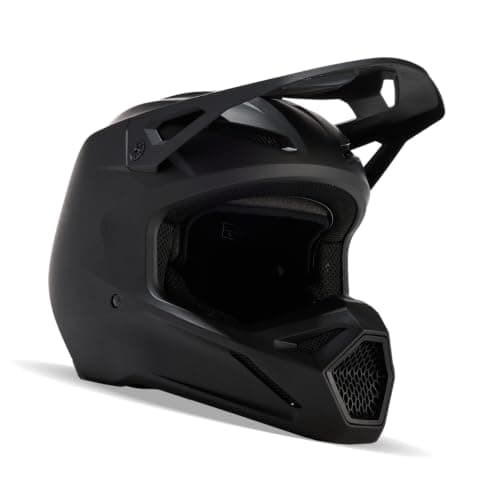
Fox Racing Fox Racing V1 MIPS
Fox Racing V1 MIPS

The reference mid-price motocross lid: DOT and ECE 22.06, MIPS as standard, and four shells with five EPS sizes so the fit tracks your head instead of the nearest shell.

Best dirt bike helmet overall
9.0
$249.95Amazon
02
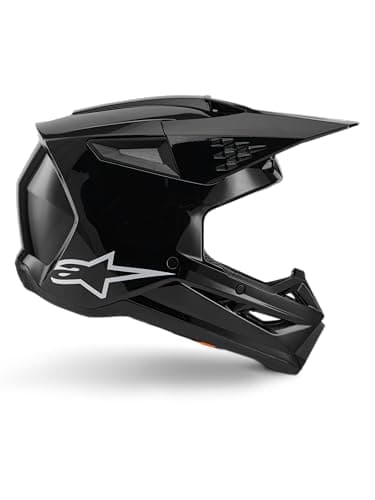
Alpinestars Alpinestars S-M3
Alpinestars S-M3

Alpinestars sells this one in an explicit ECE06/DOT version, and it pairs a multi-density EPS structure with a low-friction liner aimed squarely at oblique impacts — rotational management without a licensed badge on the box.

Best rotational management
8.7
$229.95Amazon
03
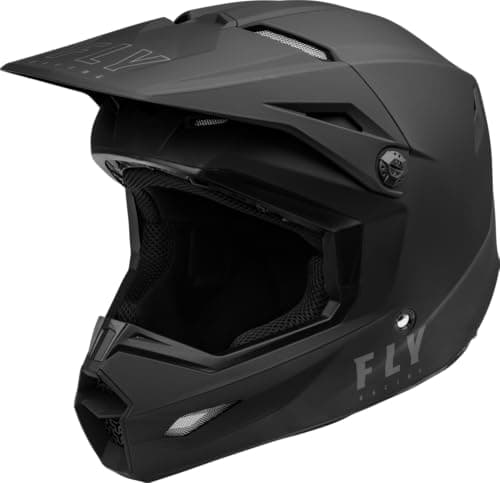
FLY Racing FLY Racing Kinetic Solid
FLY Racing Kinetic Solid

FLY publishes this as DOT and ECE 22.06 approved for all regions, with four shells and four EPS sizes — a certification and fit spec you normally have to pay twice as much for.

Best value dirt bike helmet
8.5
$129.95Amazon
04
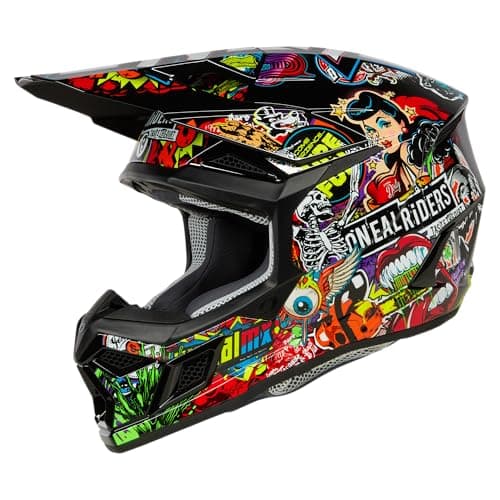
O'Neal O'Neal 3 SRS
O'Neal 3 SRS

The cheapest helmet here that still publishes three separate homologations — DOT, ECE 22-05 and AS/NZS — in a light ABS shell. The honest first dirt lid.

Best budget dirt bike helmet
8.0
$134.99Amazon

#ad · Live prices from the Amazon Product API, as of Sep 4, 2026. Where we have no verified live price we show none — we would rather leave a gap than print a number that has rotted.

In detail

The picks, in full

01
Fox Racing Fox Racing V1 MIPS

Best dirt bike helmet overall

Fox Racing V1 MIPS

DOT · ECE 22.06MIPS4 shells / 5 EPS sizes7 intake · 4 exhaust vents
9.0/10

The reference mid-price motocross lid: DOT and ECE 22.06, MIPS as standard, and four shells with five EPS sizes so the fit tracks your head instead of the nearest shell.

Certification
9.4
Rotational mgmt
9.2
Fit range
9
Ventilation
8.8
Value
8.6

Pros

  • DOT and ECE 22.06 — the pair to want on an off-road lid sold in the US
  • MIPS included rather than reserved for the flagship trim
  • Four shell and five EPS sizes, which is unusual generosity at this money

Cons

  • Polycarbonate/ABS shell rather than composite
  • Graphics trims cost noticeably more

Don't buy this if…

you want a road helmet — this has no face shield and needs goggles, so it is the wrong tool for a highway commute.

$249.95View on Amazon

Price as of Sep 4, 2026. Prices change — Amazon's is the one that counts.

#ad · we may earn a commission from this link to Fox Racing V1 MIPS

02
Alpinestars Alpinestars S-M3

Best rotational management

Alpinestars S-M3

ECE 22.06 · DOTLow-friction linerMulti-density EPS10 intake · 7 exhaust
8.7/10

Alpinestars sells this one in an explicit ECE06/DOT version, and it pairs a multi-density EPS structure with a low-friction liner aimed squarely at oblique impacts — rotational management without a licensed badge on the box.

Certification
9.3
Rotational mgmt
9
Ventilation
9
Shell/weight
8
Value
8.4

Pros

  • Sold in an explicitly labeled ECE06/DOT version — no guessing at the homologation
  • Low-friction liner plus multi-density EPS, published as targeting oblique impacts
  • Seventeen vents total, which is a lot of airflow for slow, hot trail work

Cons

  • Thermoplastic shell, so heavier than a composite MX lid
  • The DOT version weighs meaningfully more than the ECE-only one

Don't buy this if…

you are chasing the lightest possible helmet — the DOT-homologated version carries a real weight penalty over ECE-only trims.

$229.95View on Amazon

Price as of Sep 4, 2026. Prices change — Amazon's is the one that counts.

#ad · we may earn a commission from this link to Alpinestars S-M3

03
FLY Racing FLY Racing Kinetic Solid

Best value dirt bike helmet

FLY Racing Kinetic Solid

DOT · ECE 22.06Polymer shell4 shells / 4 EPS sizes1,450 ±50 g (L)
8.5/10

FLY publishes this as DOT and ECE 22.06 approved for all regions, with four shells and four EPS sizes — a certification and fit spec you normally have to pay twice as much for.

Certification
9.3
Fit range
9
Ventilation
8.4
Rotational mgmt
6.5
Value
9.5

Pros

  • DOT and ECE 22.06 at close to entry-level money
  • Four shells and four EPS sizes — most helmets here use two
  • Dual-density EPS and a washable liner and cheek pads

Cons

  • No rotational-management system
  • Polymer shell, so no weight advantage

Don't buy this if…

rotational protection is a priority — the Fox V1 adds MIPS for a moderate step up in price.

$129.95View on Amazon

Price as of Sep 4, 2026. Prices change — Amazon's is the one that counts.

#ad · we may earn a commission from this link to FLY Racing Kinetic Solid

04
O'Neal O'Neal 3 SRS

Best budget dirt bike helmet

O'Neal 3 SRS

DOT · ECE 22-05 · AS/NZSABS shell~1,340 ±50 g (L)Washable liner
8.0/10

The cheapest helmet here that still publishes three separate homologations — DOT, ECE 22-05 and AS/NZS — in a light ABS shell. The honest first dirt lid.

Certification
8.2
Shell/weight
8.6
Fit range
7.6
Rotational mgmt
6
Value
9.4

Pros

  • Three published homologations at the lowest price on this list
  • Light for the money — around 1,340 g in a size large
  • Enormous colorway range, so a kid or a first-timer gets a helmet they like

Cons

  • ECE 22-05, not the newer 22.06 with its oblique impact test
  • No rotational-management system
  • Fewer shell sizes than the Fox or the FLY

Don't buy this if…

you want the current European standard — 22.06 adds the rotational test that 22-05 never had.

$134.99View on Amazon

$149.9910% off

Price as of Sep 4, 2026. Prices change — Amazon's is the one that counts.

#ad · we may earn a commission from this link to O'Neal 3 SRS

DOT, ECE 22.06 and why off-road certification is confusing

Off-road helmets are where certification gets genuinely muddled, because many are sold in more than one homologation and the packaging does not always make it obvious which one you are buying. Alpinestars, for instance, publishes the S-M3 in an ECE-only trim and an ECE06/DOT trim, and the two do not weigh the same. Bell sells variants of the same model to different standards in different markets. Read the actual listing title and the label inside the helmet rather than assuming.

For US riders the practical rule is: if the bike is ever on a public road, DOT is not optional. If the helmet also carries ECE 22.06, you get the newer European battery on top — more impact points, more speeds, and an oblique impact test that measures rotational acceleration. ECE 22-05, which you will still see on cheaper lids like the O'Neal, is the previous revision and has no rotational test at all. Our DOT vs ECE vs Snell guide lays out what each one proves, and how to read a certification sticker shows you where to find them on the helmet in your hands.

Rotational protection matters more off-road than anywhere else

Dirt riding produces a specific crash profile: lots of low-speed, angled impacts, often onto soft ground that grabs rather than slides. Add a peak that can catch a rut and you have the textbook case for a rotational-management system. That is why MIPS is near-universal on motocross helmets and still an upsell on road lids.

The Fox V1 includes MIPS as standard. The Alpinestars S-M3 uses its own low-friction liner plus a multi-density EPS structure, published as targeting oblique impacts — the same job by a different route, without a licensed badge. The FLY and the O'Neal have neither, and we scored them accordingly. If you want the mechanism explained properly, our MIPS explainer covers what the layer does and, just as usefully, what it does not.

Shell sizes are the fit spec that actually matters

Look past the size letters to how many shells and EPS sizesthe maker uses. A helmet built on two shells stretches one exterior across three or four head sizes by padding the difference, which means a small head gets a large shell with thick foam — more mass, more leverage, worse aerodynamics. The Fox V1 uses four shells and five EPS sizes; the FLY Kinetic uses four and four. That is a real, published fit advantage that costs the maker money and costs you nothing.

Shape still matters too, and dirt helmets are not exempt. Work out whether you are round, intermediate or long oval in head shapes explained and measure properly with how to measure helmet size before you order anything you cannot try on.

Ventilation is a protection issue, not a comfort issue

Off-road riding is hard physical work at speeds too low to generate airflow. You are standing on the pegs, fighting the bike and breathing like you are running — and doing it inside a closed helmet. That is why the good MX lids count their vents in double figures: the S-M3 publishes ten intake ports and seven exhausts, the V1 seven intake and four exhaust. An overheated rider makes worse decisions and gets tired faster, and a helmet you take off at the top of the trail is protecting nothing.

The extended chin bar and the big mouth vent are part of the same system. Both exist to move the volume of air you actually need when you are working, which is why an MX helmet feels drafty and loud on the road — it is optimized for the opposite problem.

Goggles are not an accessory

None of these helmets has a face shield, so eye protection is a separate purchase and it is not optional. Budget for goggles at the same time you budget for the helmet, and check the eye port shape against the goggle frame — a goggle that does not seat flush leaves a gap at the brow that fills with dust and roost. Riders coming from a road helmet routinely forget this line item and end up riding a first session squinting.

Which one should you buy?

Buy the Fox Racing V1if you want the best-rounded off-road helmet here — DOT, ECE 22.06, MIPS and a generous shell count in one package. Buy the Alpinestars S-M3 in its ECE06/DOT trim if rotational management and ventilation are your priorities and you want the homologation spelled out on the box. Buy the FLY Racing Kinetic if you want DOT and ECE 22.06 with four shell sizes for the least money we could find it. And buy the O'Neal 3 SRSif this is a first dirt helmet, a spare, or a helmet for someone who will outgrow it — three published homologations at the bottom of the price range is an honest deal, as long as you understand that ECE 22-05 is the older standard. If you also ride the road, our types of motorcycle helmets guide explains why you probably need two helmets rather than one compromise.
How we picked

We don't test helmets. Here's what we do instead.

Everyone in this category says they tested twenty helmets. We haven't tested any — and we say so. What we do instead: compile the published DOT, ECE 22.06 and Snell certifications, the manufacturer's fit, weight and shell specs, the CE armor levels, and reputable published reviews, then score each pick against a published rubric. The scores are judgments from documented research — not measurements we took, because we do not run a lab and we are not going to pretend we do. Every certification and spec claim traces to a source we name and link.

Questions

Frequently asked

What is the difference between a dirt bike helmet and an adventure helmet?
A dirt bike helmet has no face shield and expects goggles, has a large eye port and an extended chin bar for heavy breathing, and has a peak sized for roost. An adventure helmet keeps the peak but adds a face shield and road-speed aerodynamics so it works on the highway. If most of your miles are pavement, you want the adventure version — see our adventure helmet ranking.
Do dirt bike helmets need to be DOT certified?
On private land, no law compels it. The moment the bike touches a public road in a helmet-law state, DOT applies. Since every helmet on this page publishes DOT anyway, the simplest answer is to buy one that does and stop thinking about it.
Is ECE 22-05 good enough on a dirt helmet?
It is a real standard and a real bar — but it is the previous revision. ECE 22.06 adds more impact points, more test speeds and an oblique impact test that measures rotational acceleration, which is exactly the mechanism a caught peak produces. If the price difference is small, take 22.06.
Why do dirt bike helmets have a peak?
It shades your eyes from a low sun, deflects roost thrown up by the bike in front, and sheds branches on tight trails. The trade is that a peak can catch the ground in an angled crash and twist the helmet, which is the main argument for buying an off-road lid with rotational protection.
Can I fit a Bluetooth intercom to a dirt bike helmet?
Usually yes, but it is fiddlier than on a road helmet: there is no shell edge to clamp to in some designs, and the speaker pockets are shallower. Our intercom install guide covers the clamp-versus-adhesive decision, which is the one that matters here.

Keep reading

Receipts

Sources

We do not run a testing lab, and we do not pretend to. Our picks are built from published certifications, manufacturer spec sheets, the standards documents themselves, and reputable published reviews — named and linked above. Where we could not verify something, we say so on the page rather than quietly leaving it out. Read our full method.