Skip to content
LID & LEATHER

The lid · Helmets

Dirt Bike Helmet vs Motorcycle Helmet

They look like cousins and they are built for opposite crashes. What actually differs, what the certifications do and do not say, and which one belongs on your head.

By Stephen V.Updated How we research
#ad

We earn a commission when you buy through our Amazon links, at no extra cost to you. It never affects our rankings, and we say so when the cheaper gear is the better buy. How this works.

Short answer: if you ride on pavement, buy a street full-face — the Shoei RF-1400is the best-documented one we rank, with DOT and Snell M2020 and a Pinlock insert in the box. If you ride off-road, buy a dirt helmet — the Fox Racing V1 MIPS publishes DOT, ECE 22.06 and MIPS across four shells and five EPS sizes. And if you genuinely do both in one day, the Bell MX-9 Adventure MIPS is the only helmet here designed for that: a face shield and a peak on one DOT and ECE 22.06 shell. A dirt bike helmet is not a bad helmet for the street in the sense of being uncertified — most sold in the US carry DOT — it is a helmet optimised for a different crash, a different speed and a different amount of fresh air, and it leaves your eyes uncovered.

The confusion is understandable, because both are full-face helmets with a chin bar. The differences are in four places: the eye port, the chin bar, the amount of ventilation, and what happens at 70 mph.

We compared them on the five things that actually change between the two shapes:

  1. Certification. Does the maker publish a standard, and which one? Street helmets more often carry Snell; modern dirt helmets more often carry ECE 22.06. Our DOT vs ECE vs Snell guide explains what each one actually tests.
  2. Eye protection. A street helmet has a face shield. A dirt helmet has an open port and requires goggles, which are a separate purchase and a separate decision.
  3. Chin bar geometry. A dirt chin bar is long and projected forward to make room to breathe hard; a street chin bar is close and sealed to manage air and noise.
  4. Ventilation. Dirt riding is slow, hot work with no airflow, so dirt helmets carry far more vents. Our dirt pick publishes seven intakes and four exhausts; the Alpinestars publishes ten and seven.
  5. Aerodynamics and noise. A peak is a sail. At highway speed it lifts and tugs, and the open port lets in the kind of wind roar a sealed street shell is tuned to avoid.

We have not crash-tested anything and we do not run a lab. Every specification here is quoted from a maker or retailer spec sheet and sourced at the bottom of the page.

The short answer

Quick picks

#ProductBest forScorePrice
01
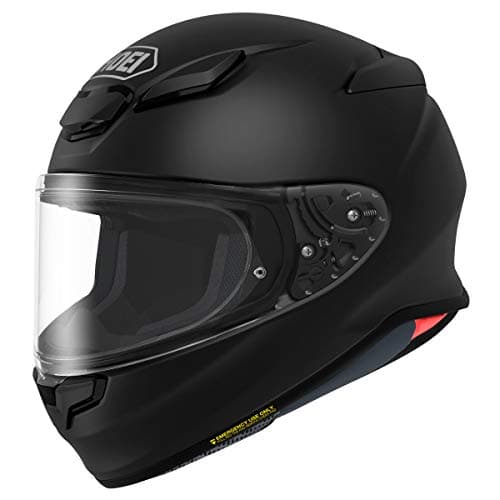
Shoei Shoei RF-1400
Shoei RF-1400

The reference full-face. DOT and Snell M2020 certified, a hand-laid fiberglass composite shell, and a fit-and-finish nobody at this price beats — if it suits your head shape, it is the safe default.

The all-round best
9.1
$549.99Amazon
02
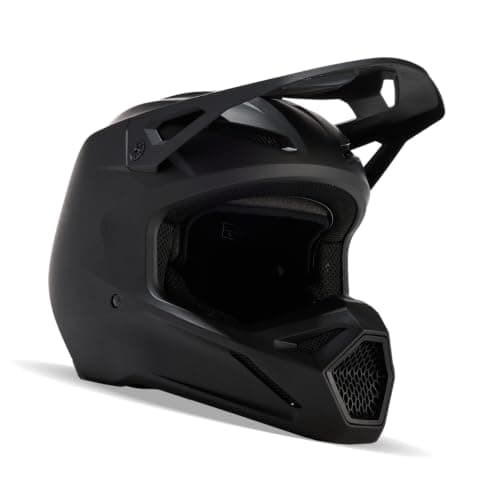
Fox Racing Fox Racing V1 MIPS
Fox Racing V1 MIPS

The reference mid-price motocross lid: DOT and ECE 22.06, MIPS as standard, and four shells with five EPS sizes so the fit tracks your head instead of the nearest shell.

Best dirt bike helmet overall
9.0
$249.95Amazon
03
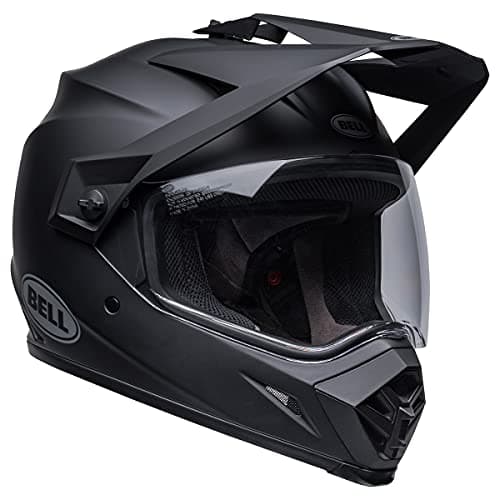
Bell Bell MX-9 Adventure MIPS
Bell MX-9 Adventure MIPS

The adventure helmet most riders should buy: DOT and ECE certified, MIPS rotational-impact liner as standard, a removable peak and a real face shield, at a price that leaves money for the rest of the kit.

Best adventure helmet overall
8.7
$249.95Amazon
04
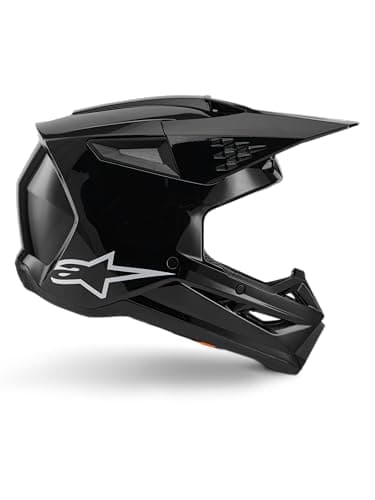
Alpinestars Alpinestars S-M3
Alpinestars S-M3

Alpinestars sells this one in an explicit ECE06/DOT version, and it pairs a multi-density EPS structure with a low-friction liner aimed squarely at oblique impacts — rotational management without a licensed badge on the box.

Best rotational management
8.7
$229.95Amazon

#ad · Live prices from the Amazon Product API, as of October 5, 2026. Where we have no verified live price we show none — we would rather leave a gap than print a number that has rotted.

In detail

The picks, in full

01
Shoei Shoei RF-1400

The all-round best

Shoei RF-1400

DOT · Snell M2020AIM+ fiberglass shell~3.7 lb / 1,680 gPinlock included
9.1/10

The reference full-face. DOT and Snell M2020 certified, a hand-laid fiberglass composite shell, and a fit-and-finish nobody at this price beats — if it suits your head shape, it is the safe default.

Certification
9.6
Shell/weight
9.2
Noise/aero
9
Fit range
8.6
Value
8

Pros

  • Both DOT and Snell M2020 certified — a genuinely rigorous pair
  • Multi-ply matrix fiberglass shell in five sizes, so small heads get a small shell
  • Emergency quick-release cheek pads and excellent aero/noise control

Cons

  • Premium price
  • Intermediate-oval fit does not suit round heads

Don't buy this if…

…you have a round head shape or a tight budget — a helmet that fits your head beats a prestige badge that does not.

$549.99View on Amazon

Price as of October 5, 2026. Prices change — Amazon's is the one that counts.

#ad · we may earn a commission from this link to Shoei RF-1400

02
Fox Racing Fox Racing V1 MIPS

Best dirt bike helmet overall

Fox Racing V1 MIPS

DOT · ECE 22.06MIPS4 shells / 5 EPS sizes7 intake · 4 exhaust vents
9.0/10

The reference mid-price motocross lid: DOT and ECE 22.06, MIPS as standard, and four shells with five EPS sizes so the fit tracks your head instead of the nearest shell.

Certification
9.4
Rotational mgmt
9.2
Fit range
9
Ventilation
8.8
Value
8.6

Pros

  • DOT and ECE 22.06 — the pair to want on an off-road lid sold in the US
  • MIPS included rather than reserved for the flagship trim
  • Four shell and five EPS sizes, which is unusual generosity at this money

Cons

  • Polycarbonate/ABS shell rather than composite
  • Graphics trims cost noticeably more

Don't buy this if…

…you want a road helmet — this has no face shield and needs goggles, so it is the wrong tool for a highway commute.

$249.95View on Amazon

Price as of October 5, 2026. Prices change — Amazon's is the one that counts.

#ad · we may earn a commission from this link to Fox Racing V1 MIPS

03
Bell Bell MX-9 Adventure MIPS

Best adventure helmet overall

Bell MX-9 Adventure MIPS

DOT · ECE 22.06MIPS3 shell sizesRemovable peak
8.7/10

The adventure helmet most riders should buy: DOT and ECE certified, MIPS rotational-impact liner as standard, a removable peak and a real face shield, at a price that leaves money for the rest of the kit.

Certification
9
Weight
7.4
Versatility
9.2
Ventilation
8.8
Value
9

Pros

  • MIPS low-friction layer is standard, not an upcharge
  • Two-point removable peak plus an adjustable face shield — three configurations from one lid
  • Velocity-flow venting and NutraFog II anti-fog coating
  • Now listed to ECE 22.06, the current revision with its own oblique-impact test

Cons

  • Polycarbonate shell, so heavier than a composite ADV lid (Bell lists 3.74 lb)
  • No internal drop-down sun visor — you swap the shield or ride in sunglasses

Don't buy this if…

…you want the lightest possible helmet for all-day highway miles — a composite shell saves real weight on your neck.

$249.95View on Amazon

Price as of October 5, 2026. Prices change — Amazon's is the one that counts.

#ad · we may earn a commission from this link to Bell MX-9 Adventure MIPS

04
Alpinestars Alpinestars S-M3

Best rotational management

Alpinestars S-M3

ECE 22.06 · DOTLow-friction linerMulti-density EPS10 intake · 7 exhaust
8.7/10

Alpinestars sells this one in an explicit ECE06/DOT version, and it pairs a multi-density EPS structure with a low-friction liner aimed squarely at oblique impacts — rotational management without a licensed badge on the box.

Certification
9.3
Rotational mgmt
9
Ventilation
9
Shell/weight
8
Value
8.4

Pros

  • Sold in an explicitly labeled ECE06/DOT version — no guessing at the homologation
  • Low-friction liner plus multi-density EPS, published as targeting oblique impacts
  • Seventeen vents total, which is a lot of airflow for slow, hot trail work

Cons

  • Thermoplastic shell, so heavier than a composite MX lid
  • The DOT version weighs meaningfully more than the ECE-only one

Don't buy this if…

…you are chasing the lightest possible helmet — the DOT-homologated version carries a real weight penalty over ECE-only trims.

$229.95View on Amazon

Price as of October 5, 2026. Prices change — Amazon's is the one that counts.

#ad · we may earn a commission from this link to Alpinestars S-M3

The two shapes, side by side

 Street full-faceDirt / motocrossAdventure (both)
Eye protectionFace shield includedNone — goggles requiredFace shield, goggle-compatible port
Peak / visorNoneFixed or adjustable peakRemovable peak
Chin barClose, sealed, breath-guardedLong, projected, heavily ventedIntermediate, vented
Typical certification on this pageDOT + Snell M2020DOT + ECE 22.06, MIPS commonDOT + ECE 22.06 + MIPS
Published ventilationShell-tuned, fewer ports7-10 intakes, 4-7 exhaustsPeak-fed intakes, oversized port
Highway mannersDesigned for itPeak lift, high wind noisePeak removable for highway

Is a dirt bike helmet street legal?

In the US, the question that matters is whether the helmet carries a DOT FMVSS 218 label, not whether it has a peak. Every dirt helmet on this page publishes DOT, so all three would satisfy a helmet law that requires a DOT-labelled helmet. What a helmet law generally does not require is eye protection, and this is where riders get caught out: many states have a separate statute requiring a face shield, goggles or glasses when the bike has no windscreen. A dirt helmet with nothing in the eye port can be a legal helmet and still leave you non-compliant and, far more to the point, unable to see when a stone or an insect arrives at speed. Read your own state statute; our certification sticker guide covers how to confirm the DOT label is real rather than a novelty sticker.

Why the dirt chin bar is shaped like that

Off-road riding is anaerobic. You are standing on the pegs, fighting the bars, moving your body weight constantly, and at 15 mph there is almost no airflow to help you. A rider working that hard is breathing like a sprinter, and the dirt chin bar is pushed forward and perforated to give that breath somewhere to go. The same geometry also keeps the bar away from your face in a crash where your chin is likely to hit the bars rather than the road.

A street chin bar is the opposite design brief. It sits close, it is sealed, and it usually carries a breath guard specifically to redirect your exhaled air away from the shield so it does not fog. On the road the crash to design for is a slide along abrasive tarmac at speed, where a projected chin bar is a lever that can catch.

Goggles are not an accessory, they are half the helmet

A dirt helmet is sold as an incomplete system. The eye port is an empty hole, and everything that would have hit a face shield — roost, grit, branches, bugs — arrives at your eyes instead. Goggles are also better than a shield at the specific job of off-road riding, because you can carry tear-offs, swap lenses for flat light and get a foam seal against dust that a shield cannot match. They are worse at highway speed, where the foam loads up with wind and the strap moves. Our goggles ranking is the companion purchase if you go the dirt route, and it is a real cost to add to the helmet price before you compare the two shapes on money.

Noise, and why this is the thing riders underestimate

A dirt helmet at 70 mph is loud. The peak catches air and generates turbulence directly above the port, the port is open, and there is nothing sealing the bottom of the shell. Wind noise on a motorcycle is already loud enough at highway speed to cause permanent hearing damage on long rides in any helmet, which is why we recommend earplugs on every touring page we publish. In a dirt helmet on the highway, they stop being a recommendation. If you want the quiet end of the trade, our quietest helmets page ranks street shells on the published shape and sealing features that cause the difference.

The adventure helmet is the honest middle, not a compromise

If your answer to "which one" is "both, on the same ride," the adventure shape exists for exactly that. The Bell MX-9 Adventure MIPS here publishes DOT and ECE 22.06 with MIPS across three shell sizes, carries a face shield so you are legal and comfortable on the road, and has a removable peak so you can take the sail off before a highway slog and put it back on for the trail. The cost is that it is not as quiet as a dedicated street helmet and not as light or as ventilated as a dedicated dirt lid. Our adventure helmets ranking goes deeper into that family, and our dirt bike helmets ranking covers the no-shield end in full.

Which one should you buy?

Buy the Shoei RF-1400 if the riding is road riding. It publishes DOT and Snell M2020, an AIM+ fiberglass shell at about 1,680 g, and comes with the Pinlock insert that keeps the shield clear. Buy the Fox Racing V1 MIPS if the riding is dirt: DOT, ECE 22.06 and MIPS, four shells and five EPS sizes so the fit is genuinely sized rather than padded, and the vent count the job needs. Buy the Bell MX-9 Adventure MIPS if one helmet has to do both and you are willing to accept highway noise for trail capability. And buy the Alpinestars S-M3 if rotational management is your priority off-road: it publishes ECE 22.06 and DOT with a low-friction liner, multi-density EPS and the longest vent list here. Whatever you choose, confirm the fit first with our helmet fit guide— a dirt helmet and a street helmet in the same nominal size do not fit the same way.
How we picked

We don't test helmets. Here's what we do instead.

Everyone in this category says they tested twenty helmets. We haven't tested any — and we say so. What we do instead: compile the published DOT, ECE 22.06 and Snell certifications, the manufacturer's fit, weight and shell specs, the CE armor levels, and reputable published reviews, then score each pick against a published rubric. The scores are judgments from documented research — not measurements we took, because we do not run a lab and we are not going to pretend we do. Every certification and spec claim traces to a source we name and link.

Questions

Frequently asked

Can I use a dirt bike helmet on the street?
Legally, usually yes if it carries a DOT FMVSS 218 label — and all three dirt and adventure picks here do. Practically, you still need eye protection, because the eye port is empty and many states require a shield or goggles separately when the bike has no windscreen. Add the peak lift and the wind noise at highway speed and it is a poor road helmet, not an illegal one.
Can I use a street helmet for dirt riding?
You can, and people do on fire roads, but you will overheat. A street shell is sealed and aerodynamically tuned for airflow you only get above 40 mph, and trail riding is slow, hot and physically hard. The chin bar also sits close to your face, which is exactly wrong when you are breathing like a sprinter. For occasional light trails an adventure helmet is the sensible middle.
Are dirt bike helmets safer than street helmets?
Neither is safer in the abstract — they are certified to the same kinds of standards and built for different crashes. What is comparable is what each maker publishes. On this page the street pick publishes DOT and Snell M2020; the dirt and adventure picks publish DOT and ECE 22.06, two of them with MIPS. Our safest helmets guideranks the variables by effect size, and shell type is not top of that list — fit and fastening it are.
Why do dirt bike helmets have a peak?
Three jobs: it shades your eyes from a low sun when you are looking a long way ahead, it deflects roost thrown up by the rider in front, and it keeps branches off the goggle lens. All three are off-road problems. On the highway the same peak becomes a sail that lifts and tugs at your neck, which is why adventure helmets make it removable.
Do I need goggles with a dirt bike helmet?
Yes. The eye port is open by design and nothing else will keep roost, grit and insects out of your eyes. Budget for them as part of the helmet, not as an extra — our goggles ranking covers lens options, foam seals and the helmets they fit.
Is a dirt bike helmet lighter than a street helmet?
Often, but not always, and the published numbers are the only honest way to compare. Dirt shells skip the face shield, the shield mechanism and usually the sunshield, which removes weight; street shells in composite or carbon claw a lot of it back. Compare the maker's published grams for the size you actually wear, not the headline figure for the smallest shell.

Keep reading

Receipts

Sources

We do not run a testing lab, and we do not pretend to. Our picks are built from published certifications, manufacturer spec sheets, the standards documents themselves, and reputable published reviews — named and linked above. Where we could not verify something, we say so on the page rather than quietly leaving it out. Read our full method.